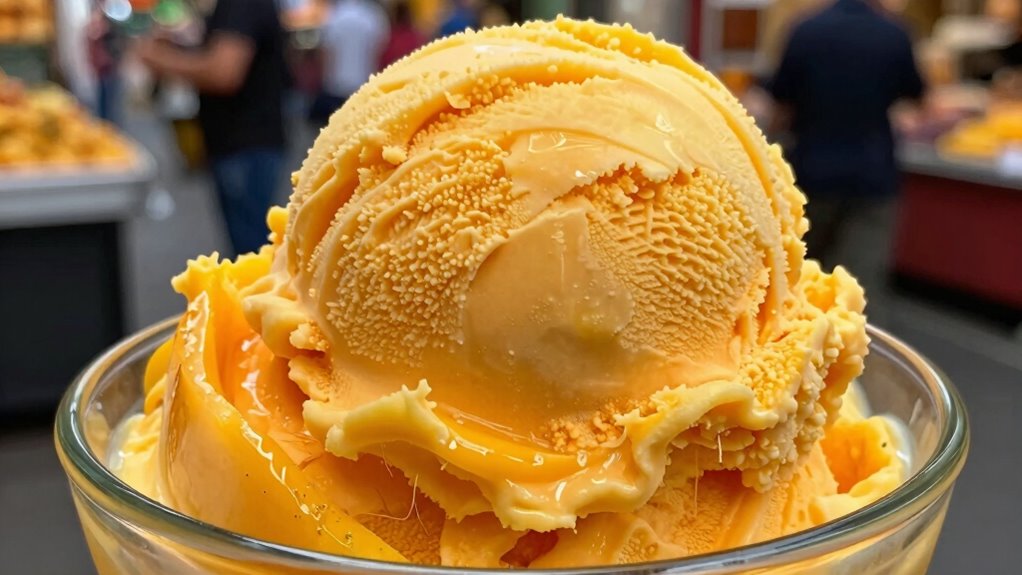

You’ll notice mango gelato tastes different across regions because of local mango varieties, climate, and soil conditions. Each area grows specific types, like aromatic Alphonso or milder Tommy Atkins, which add unique flavors. The environment and how the mangoes are harvested also play a big role in their sweetness and ripeness. These factors combine to create distinct regional flavors, making every scoop a reflection of its local environment—if you want to understand what shapes these tastes, keep exploring further.

Get baking supplies delivered free with Prime
- Fast, free delivery on millions of items
- Prime Video, Amazon Music and more included
- Member-only deals all year
Key Takeaways
- Regional mango varieties impart unique aromatic, sweet, and tangy flavor profiles to the gelato.
- Local soil and climate conditions influence mango ripeness and sugar content, affecting taste.
- Traditional versus commercial farming methods impact the intensity and complexity of mango flavor.
- Harvesting at peak ripeness and processing techniques preserve regional flavor nuances.
- Overall regional practices create distinctive flavor profiles, making each gelato taste unique.
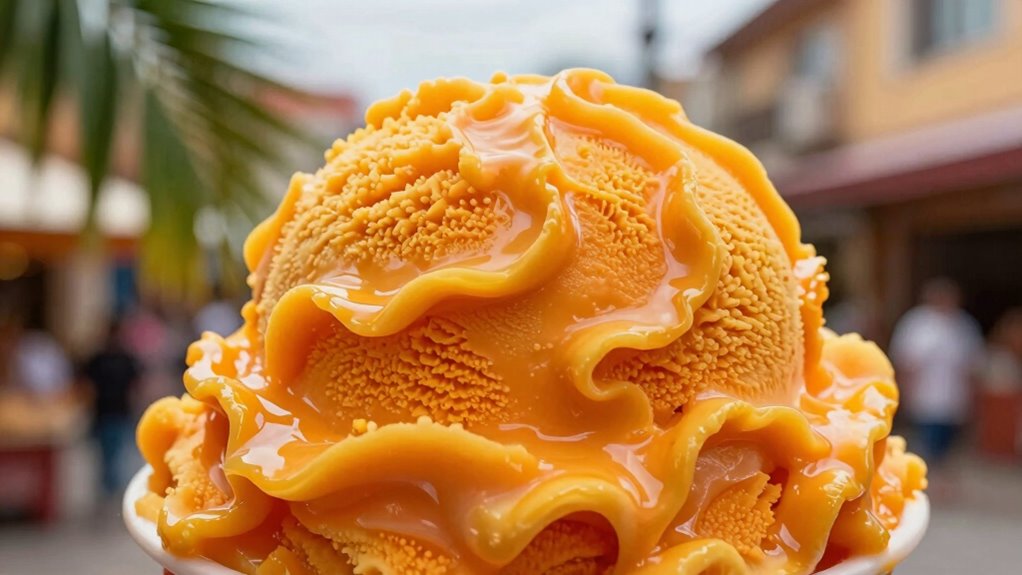
Mango gelato offers a delightful experience, but its flavor can vary considerably across different regions. When you indulge in this creamy treat, you’re tasting more than just sweet fruit—you’re experiencing a reflection of local mango cultivation practices, climate, and soil. Each region’s unique approach to growing mangoes influences the fruit’s ripeness, sugar content, and overall flavor, which in turn affects the gelato’s taste. The specific varieties grown locally, whether Alphonso, Kent, or Tommy Atkins, bring distinct notes that translate into the final product. This means that a mango gelato from one part of the world might taste markedly different from another, even if the recipe is similar. Additionally, the harvesting methods employed can impact the freshness and intensity of the flavor, further differentiating regional tastes.
Regional mango cultivation shapes unique flavors, making each gelato a delicious reflection of local climate, soil, and varieties.
The way mangoes are cultivated plays a significant role in defining regional flavor profiles. In tropical areas like India or Southeast Asia, farmers often grow heirloom varieties that have been cultivated for generations. These mangoes tend to develop richer, more complex flavors because of the specific soil conditions, climate, and traditional farming methods used. For example, the soil quality in certain regions can significantly influence the mango’s flavor profile. Conversely, in regions where commercial cultivation prioritizes high yield over flavor, the mangoes might have a milder, less intense taste. When you taste mango gelato made from these different fruits, you notice the differences—more aromatic and flavorful in some, subtly sweet or even slightly tangy in others. The agricultural practices employed in different regions also contribute to the variation in flavor, shaping the overall profile of the gelato. These practices, combined with environmental factors, create a diverse range of flavor experiences in mango gelato.
Climate and soil conditions also influence mango flavor. Warm, sunny climates with well-draining soil help mangoes ripen evenly and develop concentrated sugars, resulting in a sweeter, more vibrant gelato. Cooler or less ideal soils can produce mangoes with a more subdued flavor. As a result, the regional flavor profiles of mango gelato are deeply rooted in these environmental factors, making each region’s version unique. Local processing methods, such as how the fruit is harvested and stored, further impact the final flavor. For example, mangoes picked at peak ripeness and processed quickly tend to produce a more intense and fresh-tasting gelato. This emphasizes the importance of post-harvest handling in preserving the fruit’s optimal flavor. Moreover, the processing techniques used can also influence texture and overall sensory experience, highlighting the importance of traditional methods in certain regions.
Ultimately, when you try mango gelato from different regions, you’re experiencing a combination of local mango cultivation, climate, and traditional techniques. These elements shape the fruit’s intrinsic qualities, which are then captured in the gelato. Recognizing these regional differences enriches your tasting experience, reminding you that what might seem like a simple dessert is actually a complex reflection of geographic and agricultural diversity. Each spoonful offers a taste of the place and the practices that bring that particular mango flavor to life.
As an affiliate, we earn on qualifying purchases.
Frequently Asked Questions
How Do Local Mango Varieties Influence Gelato Flavor?
You’ll notice that local mango varieties profoundly influence gelato flavor because mango cultivar differences affect sweetness, acidity, and aroma. Harvest timing variations also play a role—mangoes picked at peak ripeness develop richer flavors. When these factors combine, they create distinct taste profiles across regions. So, the specific mango types and when they’re harvested shape the unique, regional flavors you experience in mango gelato.
Does Climate Affect Mango Sweetness in Gelato?
Imagine a mango farm in India experiencing a hotter, drier climate; this climate variation can increase sugar concentration, making the mango sweeter. Climate affects mango cultivation by altering sugar levels, which directly influence gelato sweetness. In regions with cooler or more humid conditions, mangoes might be less sweet, resulting in a different gelato flavor. So, yes, climate plays a vital role in shaping mango gelato’s taste across different regions.
Are Traditional Recipes Used in Regional Mango Gelatos?
Yes, traditional recipes are often used in regional mango gelatos, highlighting local flavors and techniques. You’ll notice that Mango cultivation practices and regional ingredients influence the gelato’s taste and texture. These recipes preserve authenticity, ensuring a rich, creamy gelato with distinct regional characteristics. The use of traditional methods helps maintain the ideal gelato texture, making each regional variation unique and flavorful, reflecting local mango varieties and culinary heritage.
How Does Mango Ripeness Impact Gelato Taste?
When mangoes are riper during harvesting, they bring out a sweeter, more intense flavor in your gelato, enhancing its overall taste. Ripe mangoes also improve the gelato texture, making it creamier and smoother. If you pick underripe mangoes, the gelato might taste less vibrant and feel less luscious. So, the ripeness at harvest directly influences how rich and velvety your mango gelato turns out.
Do Regional Flavor Additives Alter the Mango Profile?
Did you know that over 80% of regional gelato shops modify flavors using local additives? These flavor additives, often unique to each region, substantially alter the traditional mango profile. They impact flavor consistency, as sourcing ingredients locally introduces variations. So, if you notice differences in mango gelato taste, it’s likely due to regional flavor additives and ingredient sourcing, which reflect local preferences and available ingredients rather than the mango itself.
Conclusion
So, next time you savor mango gelato from different regions, remember that variations in climate, soil, and mango varieties truly shape its unique flavor. While some might argue that ingredients are standardized, it’s the subtle regional differences that elevate each scoop’s character. Embrace these nuances as a proof of nature’s influence, and you’ll develop a deeper appreciation for the rich diversity behind every delicious bite. After all, authenticity often resides in the details.
Halloween Picks
halloween
As an affiliate, we earn on qualifying purchases.