
TL;DR

Get baking supplies delivered free with Prime
- Fast, free delivery on millions of items
- Prime Video, Amazon Music and more included
- Member-only deals all year
The key to perfect ice cream storage is using airtight, insulated containers that prevent ice crystals and freezer burn. Recent innovations include vacuum-sealed and eco-friendly options, making storage smarter and more sustainable.
Nothing kills the joy of ice cream faster than freezer burn and texture loss. You scoop out a perfect, creamy bite, only to find it icy and grainy the next day. That frustration ends with the right storage containers. They’re more than just boxes—they’re the secret to keeping your favorite treat tasting fresh and luscious, whether it’s homemade or store-bought.
In this guide, you’ll learn how different materials, designs, and features impact your ice cream’s quality. Plus, I’ll share recent innovations that make storing ice cream easier, smarter, and more eco-friendly. Ready to stop wasting ice cream? Let’s dive in.
Use airtight, insulated containers to extend ice cream’s freshness and prevent freezer burn.
Choose materials based on your priorities: stainless steel for insulation, plastic for affordability, or glass for visibility.
Vacuum-sealed and smart containers are the latest tech, offering longer shelf life and real-time condition monitoring.
Minimize air exposure and keep the freezer temperature steady at -18°C (0°F).
Properly storing ice cream can extend its best quality from 1-2 months up to 3-4 months with the right container.
What Makes a Good Ice Cream Container? Focus on Material and Sealing
When it comes to storing ice cream, the material and seal are king. They protect your frozen dessert from air, moisture, and temperature swings that cause freezer burn. Think of your container as the shield that keeps your ice cream tasting fresh.
Plastic containers are common—durable, affordable, and available in all shapes. Polypropylene is especially popular because it’s lightweight and freezer-safe. Stainless steel offers excellent insulation and durability, perfect if you want to keep your ice cream at a steady temperature. Glass is non-reactive and easy to clean but heavier and breakable, so it’s better for short-term storage or at home.
Equally important is the airtight seal. Containers with secure, leak-proof lids prevent air from sneaking in. This reduces ice crystal formation and keeps your ice cream creamy longer. According to food safety experts, airtight containers can extend ice cream’s freezer life by up to 50%.
Choosing the right material and seal matters because it directly influences how well your ice cream retains its texture, flavor, and appearance. For example, while glass might be perfect for quick visual checks, it’s more fragile and less insulating, which could lead to temperature fluctuations that cause ice crystals. Conversely, stainless steel offers superior insulation but may be heavier and more expensive. The seal’s effectiveness determines how much air is kept out; a poor seal allows moisture and oxygen to enter, accelerating freezer burn and flavor degradation. Therefore, investing in a container with both good material properties and a reliable seal is crucial for maintaining optimal ice cream quality over time.
airtight ice cream storage containers
As an affiliate, we earn on qualifying purchases.
As an affiliate, we earn on qualifying purchases.
How to Pick the Perfect Size and Design for Your Freezer
Size matters. Do you prefer individual servings or big family-sized tubs? Smaller containers make portion control easier and reduce waste. Larger ones save space and are great for bulk ice cream lovers.
Design features can make a big difference. Stackable containers help organize your freezer, saving space and making scooping easier. Clear lids or bodies let you see what’s inside without opening multiple containers—saving time and temperature fluctuations.
For example, a friend of mine keeps a set of small, stackable, airtight tubs, which makes her freezer look like a colorful puzzle. She can grab just what she needs without exposing the rest to air.
Choosing the right size and design isn’t just about convenience; it impacts how well your ice cream stays fresh. Smaller containers reduce the amount of air exposure each time you open them, minimizing ice crystal formation and flavor loss. Stackable designs optimize space, preventing overcrowding that can lead to uneven freezing. Clear lids or bodies allow quick visual checks, reducing the need to open multiple containers, which helps maintain a consistent temperature. When selecting design features, consider your storage habits and freezer space to balance accessibility with preservation, ensuring your ice cream stays as fresh as possible for longer periods.
Latest Innovations in Ice Cream Storage: What’s New and Why It Matters
Technology is changing how we store ice cream. Recent breakthroughs include vacuum-sealed containers that remove air, significantly extending shelf life. Some products now incorporate insulated, portable containers with built-in cooling elements—perfect for picnics and outdoor adventures.
Eco-friendly materials are on the rise. Brands now offer biodegradable plastics, recycled plastics, or stainless steel options that cut down on waste. Plus, smart containers with temperature sensors or app connectivity are hitting the market, giving you real-time updates on your ice cream’s condition.
Imagine opening your freezer to find your favorite flavor still perfectly creamy, thanks to a container that actively monitors and maintains ideal conditions. That’s the future of ice cream storage.
These innovations are significant because they address common storage issues: spoilage, texture degradation, and environmental impact. Vacuum-sealing and insulation extend shelf life by reducing air and temperature fluctuations, which are primary causes of freezer burn and ice crystal formation. Eco-friendly materials help reduce plastic waste, aligning with sustainability goals. Smart containers offer peace of mind by alerting you to temperature changes or potential spoilage, allowing proactive adjustments. Embracing these technologies means you can enjoy higher-quality ice cream longer, reduce waste, and make more eco-conscious choices—all of which enhance your overall storage experience.
How to Prevent Ice Crystals and Keep Your Ice Cream Smooth
Ice crystals are the enemy of creamy ice cream. To keep them at bay, always use airtight, insulated containers. Minimize the number of times you open your freezer, and try to keep the temperature steady at -18°C (0°F).
For example, a friend swears by vacuum-sealed containers. She claims her homemade ice cream stays smooth for at least two months, compared to just one with standard plastic tubs. Also, wrapping the container in a layer of foil or plastic wrap before sealing adds extra protection.
Remember, the less air exposure, the better. Maintaining a consistent, cold environment prevents the formation of those pesky ice crystals that ruin texture.
Deeply understanding how ice crystals form helps in choosing the right storage methods. Ice crystals develop when moisture in the ice cream sublimates or when temperature fluctuations cause existing crystals to grow. This process is accelerated by exposure to air, which introduces moisture and oxygen, and by temperature swings that melt and refreeze parts of the ice cream. To counteract this, using airtight, insulated containers minimizes moisture exchange, preventing the formation and growth of crystals. Keeping your freezer at a steady -18°C (0°F) slows down molecular movement, reducing the chances of crystals forming. Additionally, handling ice cream with minimal exposure to air and rapid freezing techniques help lock in the smooth, creamy texture you desire. Understanding these mechanisms empowers you to choose storage solutions that truly preserve quality over time.
Comparison Table: Plastic, Glass, Stainless Steel — Which Is Best?
| Feature | Plastic | Glass | Stainless Steel |
|---|---|---|---|
| Insulation | Moderate; some have double walls | Low; usually uninsulated | Excellent; often double-walled or vacuum-sealed |
| Durability | High; resistant to shattering | Brittle; can crack or break | Very high; nearly indestructible |
| Ease of Cleaning | Simple; dishwasher safe | Easy but can stain; dishwasher safe | Easy; usually dishwasher safe |
| Weight | Light | Heavy | Heavy |
| Eco-Friendly Options | Recyclable plastics, biodegradable options | Recyclable, but breakable | Recyclable, sustainable material |
Choosing depends on your priorities: durability, insulation, or eco-friendliness. For instance, stainless steel offers the best insulation but is heavier. Plastic wins for ease and cost, while glass is perfect for quick visual checks.
Understanding the tradeoffs between these materials helps you make an informed decision. For example, if you value durability and insulation for long-term storage, stainless steel might be worth the investment despite its weight. If cost and ease of cleaning are more important, plastic containers are practical. Glass offers excellent visibility, but its fragility means it’s best for short-term or at-home use. Recognizing these differences allows you to select a container that aligns with your priorities, ensuring your ice cream stays fresh and your storage process is efficient.
Simple Steps to Properly Store Your Ice Cream and Maximize Freshness
- Choose an airtight, insulated container suitable for your ice cream’s size and your freezer’s space.
- Ensure your ice cream is at its coldest point before transferring—ideally, right after returning from the store or making it at home.
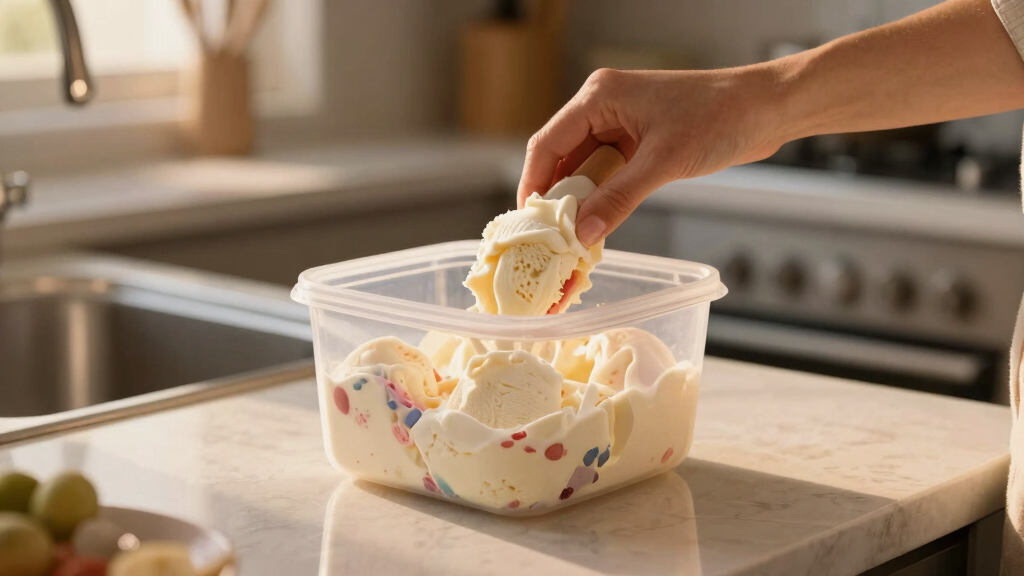
- Fill the container to the top to minimize air space, then seal tightly.
- Wrap the container with foil or plastic wrap for an extra layer of protection.
- Label with date—ice cream is best within 1-2 months, but can last longer if stored well.
- Keep the freezer temperature steady at or below -18°C (0°F). Avoid frequent opening.
Imagine a busy weekend. You prep your favorite homemade vanilla, pack it into a vacuum-sealed, stackable container, and label it. When the craving hits, it’s ready—just grab, open, and enjoy that creamy scoop, no ice crystals or freezer burn in sight.
Following these steps isn’t just about convenience; it’s about understanding how proper storage impacts the quality of your ice cream. Properly sealed and stored, ice cream retains its smooth texture and flavor, reducing waste and ensuring every scoop is as delightful as the first. Each step helps maintain the ideal environment, preventing moisture loss, flavor degradation, and texture changes. When you understand the science behind storage, you can make smarter choices that elevate your ice cream experience, turning a simple frozen treat into a long-lasting indulgence.
Frequently Asked Questions
What is the best material for storing ice cream?
Insulated stainless steel and high-quality plastics are top choices. They help maintain a steady temperature and prevent freezer burn, keeping your ice cream creamy and flavorful longer.Can I reuse plastic containers from store-bought ice cream?
Yes, but make sure they are thoroughly cleaned, free from cracks, and suitable for freezing. Using them can be convenient, but avoid those with scratches or damage that could harbor bacteria or leak.How do I prevent ice crystals from forming in my stored ice cream?
Use airtight, insulated containers, and minimize opening the freezer. Keeping the temperature at or below -18°C (0°F) and wrapping the container in foil adds extra protection against ice crystals.Are eco-friendly options available for ice cream storage?
Yes, biodegradable plastics, glass, and stainless steel containers are sustainable choices that reduce plastic waste while keeping your ice cream fresh.How long can ice cream be stored in these containers?
For the best quality, aim for 1-2 months. Properly stored, it can last up to 3-4 months, especially with newer vacuum-sealed or insulated containers.Conclusion
The secret to perfect ice cream isn’t just in the flavor—it’s in how you store it. Investing in the right container, sealing it tight, and keeping your freezer steady can turn a mediocre scoop into a lifelong treat. So next time you fill your freezer, think beyond the tub—think about the shield that keeps your ice cream at its best.
Good storage isn’t just practical; it’s an act of respect for that creamy, chilly joy. Keep your ice cream cold, sealed, and ready for the next indulgence. After all, a great scoop starts with a smart container.
Fall Picks
fall essentials
As an affiliate, we earn on qualifying purchases.