
TL;DR

Get baking supplies delivered free with Prime
- Fast, free delivery on millions of items
- Prime Video, Amazon Music and more included
- Member-only deals all year
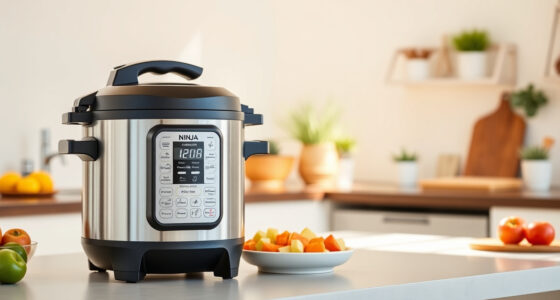
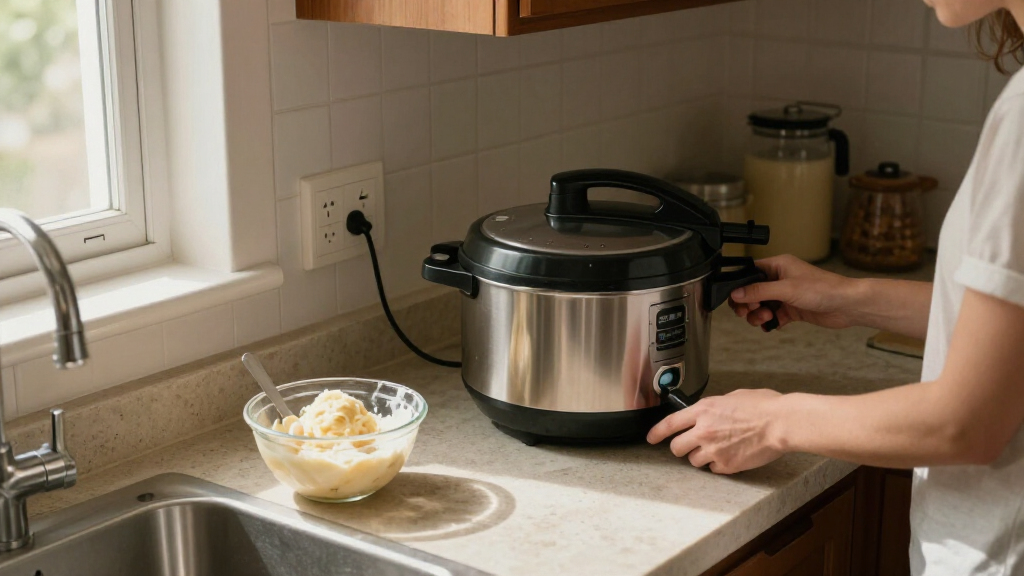
A Good Housekeeping report advises plugging electric pressure cookers directly into a suitable wall outlet, not an indoor extension cord. Some cookers draw 1,250 watts or more, while certain 10-amp extension cords are rated for only about 1,200 watts; the report also cautions against running multiple high-powered appliances on the same circuit.
Good Housekeeping has warned that electric pressure cookers should not be powered through an indoor extension cord that is not rated for the appliance’s draw, because an under-rated cord may overheat and create a fire risk. The report says some pressure cookers use 1,250 watts or more, while certain 10-amp indoor cords may be rated for around 1,200 watts.
The report compares that appliance demand with the capacity of common household electrical equipment. It says a typical 15-amp, 120-volt kitchen outlet can handle around 1,500 watts, while some indoor extension cords are rated for 10 amps. At 120 volts, that rating corresponds to about 1,200 watts, below the draw of some pressure cookers. Cord ratings vary, so the report’s figures do not establish that every extension cord is under-rated or that every pressure cooker has the same power requirement.
According to the report, an appliance drawing more power than an extension cord is rated to carry could stress its wiring, potentially damaging the cord and creating a risk of overheating or fire. It recommends using a suitable wall outlet rather than relying on an extension cord to place the cooker elsewhere. Readers should check their appliance instructions and the cord’s rating; the report does not provide a model-by-model compatibility list.
The article also warns against operating two or more high-powered appliances at the same time on the same electrical circuit. Its author describes a toaster oven and pressure cooker running on separate backsplash outlets that shared one circuit; the circuit breaker tripped. The account illustrates that separate sockets do not necessarily mean separate circuits. It does not establish that every combination of appliances will trip a breaker.
Reducing Cord and Circuit Risks
The advice matters because pressure cookers are often moved around to free up counter space, and an extension cord can make that seem convenient. But the appliance’s wattage and the cord’s rating need to be compatible. If they are not, the cord may be exposed to a load beyond its stated capacity. The report identifies overheating and fire as potential consequences, not as an outcome that has occurred in every such use.
Kitchen circuit capacity is a separate concern. A cooker and another high-powered appliance can draw power through different outlets that are connected to the same circuit. A tripped breaker is one possible warning that the circuit has been overloaded; the report says older homes with ungrounded outlets may face additional hazards if overloaded wiring heats up. The condition of any particular home’s wiring cannot be inferred from the article alone.
The practical takeaway is to follow the pressure cooker manufacturer’s electrical instructions, use an appropriately rated outlet, and avoid improvised placements that leave a cord exposed or near heat. If breakers trip repeatedly or wiring appears damaged, the report’s general cautions do not replace an assessment by a qualified electrician.
electric pressure cooker wall outlet
As an affiliate, we earn on qualifying purchases.
As an affiliate, we earn on qualifying purchases.
The Ratings Behind the Warning
The source is a Good Housekeeping home-safety report about where and how to plug in a pressure cooker. Its author says the appliance is stored in a cabinet when not in use and considers whether an extension cord could allow it to operate away from the countertop. The report rejects that approach on electrical-capacity grounds.
The figures in the article provide a general comparison: a common 120-volt, 15-amp outlet is described as handling around 1,500 watts, while some indoor extension cords rated at 10 amps top out at around 1,200 watts. The report also notes that multi-cookers with high-powered sear settings can raise similar concerns. These are general ratings cited by the source, not a substitute for checking the labels and instructions for a specific appliance, outlet, or cord.
The article includes several additional precautions: unplug the cooker when it is not being used; keep its cord from dangling where a child or pet could pull it; keep the cord away from burners and hot cooktops; and avoid using low outlets near the floor where a cord may be exposed. These points are presented as safety guidance, rather than reports of a specific injury or fire.
“That’s a hard no.”
— Good Housekeeping report
What the Report Does Not Specify
The supplied report does not give a publication date, identify a specific pressure cooker model, or list the rating of every extension cord. Its figures describe some appliances and some cords; they do not show that every pressure cooker draws at least 1,250 watts or that every indoor cord is limited to 1,200 watts. The appropriate setup depends on the equipment’s actual labels and manufacturer guidance.
The article also does not document a pressure-cooker fire or injury tied to extension-cord use. It describes a potential hazard based on electrical ratings. Its account of a breaker tripping is the author’s personal experience, not a report of a widespread incident. It is also unclear from the supplied material whether any appliance makers or electrical-safety authorities issued a specific advisory alongside the article.
Check the Cooker and Outlet
Before using a pressure cooker, check its manual and label for electrical requirements, and compare those requirements with the rating of the outlet and any cord. The report’s recommendation is to plug the cooker directly into a suitable wall outlet rather than use an under-rated indoor extension cord. Avoid running other high-powered appliances on the same circuit if doing so causes a breaker to trip.
Keep the cord away from hot surfaces and open flames, prevent it from hanging where it can be pulled, and unplug the appliance when it is not in use, consistent with the report’s advice. The source provides no further announced action or follow-up. For repeated breaker trips, damaged cords, or uncertainty about a home’s wiring, seek advice from a qualified electrician rather than guessing at circuit capacity.
Key Questions
Can I plug a pressure cooker into an extension cord?
The Good Housekeeping report advises against using an under-rated indoor extension cord. Check the cooker’s instructions and the cord’s electrical rating; the report recommends a suitable wall outlet.
Why could an extension cord be a problem?
Some pressure cookers draw 1,250 watts or more, while the report says some 10-amp indoor cords are rated for around 1,200 watts. A cord carrying more than its rating may overheat and pose a fire risk.
Can two appliances in separate outlets overload a circuit?
They can share one circuit even when plugged into separate outlets. The report’s author says a pressure cooker and toaster oven on separate sockets tripped the breaker because the outlets were on the same circuit.
What other pressure cooker cord precautions does the report give?
It advises unplugging the cooker when it is not in use, keeping the cord away from burners and hot cooktops, preventing it from dangling where a child or pet could pull it, and avoiding low outlets that leave the cord exposed.
Source: rss
Columbus Day / Indigenous Peoples' Day Picks
long weekend sales
As an affiliate, we earn on qualifying purchases.