For most small homes, my best overall pick is the Rheem RTEX-11, a 240V multi-fixture model that offers a more practical balance of capacity and compact design than low-wattage sink heaters. The Rheem 18 kW is the stronger candidate when a home needs more output and its electrical service can support it, while the ThermoMate 4.5 kW suits a single sink without a whole-home upgrade. The main tradeoff is simple: higher-power 240V units can serve more demand but may call for substantial wiring and panel capacity, while 110V and small point-of-use models are limited to modest, localized jobs. I ranked these options by how well their stated power and intended use fit small-home needs, not by wattage alone. Read on for the full breakdown, selection criteria, and guidance on matching a heater to your plumbing and electrical setup.

Get baking supplies delivered free with Prime
- Fast, free delivery on millions of items
- Prime Video, Amazon Music and more included
- Member-only deals all year
Complete the kit


Key Takeaways
- The Rheem RTEX-11 leads for small-home flexibility: its 11 kW, 240V multi-fixture design is a better fit for broader use than the lineup’s sink-only and low-wattage models, though household demand and incoming water temperature still limit output.
- The Rheem 18 kW is the higher-capacity choice, not an automatic upgrade: its greater power may suit larger simultaneous hot-water needs, but it also makes electrical-service compatibility a more pressing question.
- Point-of-use models fill a different role from whole-home heaters: the ThermoMate 4.5 kW under-sink unit and 6 kW sink model make more sense for one fixture than for showers or multiple outlets.
- Several 110V 3000W listings share a narrow use case: they may appeal for modest, localized hot-water needs, but their voltage and wattage do not make them substitutes for higher-output 240V units.
- Electrical capacity is the main sorting factor in this roundup: the 14 kW SIVUATEK, 6 kW CAMPLUX, and 3800W ECOAPTUNIT each sit between or alongside other power tiers, so buyers should check voltage, circuit requirements, and intended fixture count before choosing by compact size.


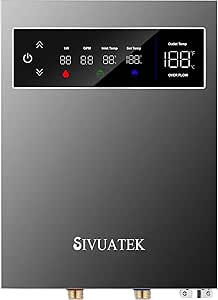

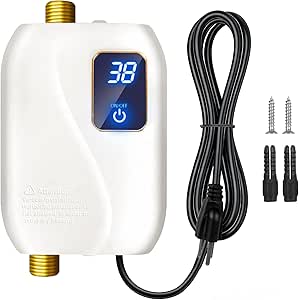

| tankless water heaters for small home | Power | Voltage | Dimensions | Flow rate |
|---|---|---|---|---|
| Rheem RTEX-11 11 kW Multi-Fixt | 11 kW | 240V, single-phase | 8.25 in W × 12.63 in H | Up to 2.68 GPM |
| Rheem 18 kW 240 V Tankless Ele | 18 kW | 240V | 14.5 in W × 18.25 in H | Up to 4.4 GPM |
| ThermoMate 6kW Electric Tankle | 6 kW | 240V | 10.96 × 7.4 × 2.52 in | Up to 1.07 GPM |
| 110V 3000W Tankless Electric W | 3000W | 110V | 4.32 in W × 7.86 in H | — |
| ThermoMate 4.5 kW Tankless Und | 4500W | 110–120V | 10.95 × 2.52 × 7.4 in | 0.26–1.0 GPM; 0.85 GPM at 35°F rise |
| 3000W Electric Tankless Water | 3000 W | 110 V | 4.32 in W × 7.86 in H × 1 in depth | — |
| 110V 3000W Electric Tankless W | 3000 W | 110 V | 4.32 in W × 7.86 in H | 0.5 GPM |
| SIVUATEK 14 kW Electric Tankle | 14 kW | 240 V | — | 3.3 GPM |
| CAMPLUX 6kW Electric Tankless | 6 kW (6000 W) | 240 V | — | 1.5 GPM |
| 110V 3000W Tankless Electric W | 3000 W | 110 V | — | — |
| ECOAPTUNIT 220V Electric Tankl | 3,800 watts | 220 volts | 4.53" W × 7.86" H | — |
More Details on Our Top Picks
Rheem RTEX-11 11 kW Multi-Fixture Tankless Electric Water Heater, 240V
The Rheem RTEX-11 suits a small home where a compact, wall-mounted unit needs to serve more than one nearby hot-water use, without the footprint or venting needs of a tank heater. Its 11 kW output and flow up to 2.68 GPM give it more reach than the sink-only ThermoMate 6kW, though that capacity still calls for sensible scheduling when several fixtures run at once. Digital settings from 80°F to 140°F let owners choose a target temperature, while its 8.25-inch width helps when wall space is limited. The main compromise is electrical: it needs a dedicated 50-amp double-pole breaker, #8 copper conductors, and a recommended 100-amp service panel. I’d choose it for modest, localized demand, not as a confident whole-home solution in a cold-climate household.
Pros:- Compact wall-mounted body frees floor space compared with a storage tank.
- Up to 2.68 GPM supports more than a single low-flow sink use.
- Digital temperature control spans 80°F to 140°F.
- No venting is required.
Cons:- The 50-amp circuit and recommended 100-amp service panel can make installation a substantial electrical project.
- Its flow capacity may fall short for whole-home use or simultaneous high-demand fixtures.
Best for: Owners of small homes who want one compact heater for a bathroom sink and another nearby fixture, and have sufficient 240V electrical service.
Not ideal for: Households expecting simultaneous showers and kitchen use, or homes whose electrical panel cannot support the specified 50-amp circuit and recommended service capacity.
- Model:RTEX-11
- Power:11 kW
- Voltage:240V, single-phase
- Flow rate:Up to 2.68 GPM
- Temperature range:80°F–140°F
- Dimensions:8.25 in W × 12.63 in H
- Electrical requirements:One 50-amp double-pole breaker; #8 AWG copper conductors with ground; recommended minimum 100-amp household service panel
- Warranty:5-year leak; 1-year parts
Our verdict“Choose the RTEX-11 for compact, localized multi-fixture demand if your electrical service can support it; skip it for reliable simultaneous whole-home use.”
Rheem 18 kW 240 V Tankless Electric Water Heater
Among these picks, the Rheem RTEX-18 offers the strongest stated flow capacity, making it the better fit for a small home with more than one regular hot-water demand. Its up to 4.4 GPM is a step above the RTEX-11’s 2.68 GPM, while self-modulating power adjusts to demand rather than running at full output continuously. The LED display and digital control with stated ±1-degree accuracy also make temperature setting more precise than the simpler sink-focused options. That extra capacity comes with a larger body—14.5 by 18.25 inches—and does not guarantee whole-home performance: incoming water temperature affects usable flow. I’d put it ahead of smaller units when the home has adequate electrical capacity and space, but not for buyers seeking a tiny under-sink heater or a solution that avoids an electrical upgrade.
Pros:- Stated flow capacity of up to 4.4 GPM exceeds the RTEX-11 and the sink-focused models in this group.
- Self-modulating operation adjusts power to hot-water demand.
- LED temperature display and digital control provide clear, precise setting adjustments.
- Wall-mounted design requires no venting.
Cons:- Its 14.5-by-18.25-inch body needs more wall space than the RTEX-11 or compact sink heaters.
- Actual whole-home suitability depends on incoming water temperature and household demand.
Best for: Small-home owners with several routine hot-water uses who have room for a larger wall-mounted unit and suitable 240V electrical service.
Not ideal for: Buyers seeking an under-sink appliance, or households with a constrained electrical panel or very cold incoming water that limits usable flow.
- Model:RTEX-18
- Power:18 kW
- Voltage:240V
- Flow rate:Up to 4.4 GPM
- Maximum temperature:140°F
- Efficiency:99.8%
- Dimensions:14.5 in W × 18.25 in H
- Control:Digital thermostatic control with LED display
Our verdict“Pick the RTEX-18 when a small home needs more capacity than the RTEX-11 provides and has the electrical service and wall space to accommodate it.”
ThermoMate 6kW Electric Tankless Water Heater for Sink
The ThermoMate 6kW is a more focused choice than either Rheem: it is built for a point-of-use sink, not for supplying several household fixtures. Its 1.07 GPM maximum flow is modest, but that can be a useful match for handwashing or light sink tasks where a larger unit would take up more space and demand more power. At 10.96 by 7.4 by 2.52 inches, it can fit under a cabinet, and its self-modulating operation responds to demand. The separated cast-aluminum heating element is designed to reduce scale and corrosion exposure, though it does not change the basic flow limitation. Compared with the 110V 3000W heater in this roundup, it offers a higher stated flow, but requires a 240V hardwired 30A circuit. I’d reserve it for one sink with compatible wiring.
Pros:- Compact dimensions suit under-cabinet and other tight point-of-use locations.
- Up to 1.07 GPM is better suited to sink tasks than a very low-flow auxiliary heater.
- Self-modulating power adjusts to demand.
- Heating element is separated from the water line to help limit scale and corrosion exposure.
Cons:- A 240V hardwired installation with a 30A breaker and minimum 10AWG wire is required.
- Limited flow and a stated 35°F temperature rise constrain the tasks it can support.
Best for: Owners adding hot water to a remote or frequently used sink who can provide a 240V, 30A hardwired circuit.
Not ideal for: Households needing shower supply, multiple simultaneous fixtures, or a plug-in 110V installation.
- Power:6 kW
- Voltage:240V
- Flow rate:Up to 1.07 GPM
- Temperature range:85°F–131°F
- Temperature rise:35°F
- Dimensions:10.96 × 7.4 × 2.52 in
- Water connections:1/2-inch NPT
- Electrical requirement:30A circuit breaker; 10AWG minimum wire
Our verdict“Choose this ThermoMate for one sink when its 240V wiring requirement is practical, but look to a higher-capacity Rheem for multiple fixtures.”
110V 3000W Tankless Electric Water Heater with Digital Display
This 110V 3000W heater is the most limited-duty option here, but its low-power, compact format can suit a small home that needs supplemental hot water at a sink rather than a replacement for a whole-home heater. Its 4.32-by-7.86-inch body and LED display make it easy to place and set, while protections for leakage, dry-boil, and overheating add safeguards for an appliance used at the point of use. Unlike the 240V ThermoMate 6kW, it is explicitly not suitable for showers, and output temperature falls as flow rises. It must also be installed vertically. The provided heat-output figures depend on flow, so I’d treat it as a narrow-use fixture heater, not as a route to serving multiple rooms or replacing a more capable unit.
Pros:- Very compact wall-mounted body suits tight under-sink locations.
- LED display supports Fahrenheit or Celsius settings.
- Leakage, dry-boil, and overheat protections are specified.
- On-demand operation avoids preheating a tank.
Cons:- Not suitable for showers, and outlet temperature decreases as flow increases.
- Vertical-only mounting limits placement options.
- Its stated heat output is tied to low flow rates, restricting practical use.
Best for: Small-home owners who need a compact auxiliary heater for a sink and can mount it vertically in the specified electrical setup.
Not ideal for: Anyone seeking shower hot water, multiple-fixture capacity, or consistent high flow with a high outlet temperature.
- Power:3000W
- Voltage:110V
- Maximum temperature:122°F
- Heat output:Up to 131°F
- Temperature rise:82°F at 0.3 GPM; 131°F at 0.5 GPM
- Dimensions:4.32 in W × 7.86 in H
- Water connection:1/2-inch NPT
- Installation:Wall-mounted; vertical installation only
Our verdict“Use this unit for a vertically mounted auxiliary sink, not for showers or household-wide hot-water supply.”
ThermoMate 4.5 kW Tankless Under-Sink Water Heater – Electric, ETL Approved
The ThermoMate 4.5 kW is aimed at buyers who want a dedicated under-sink heater with more control over the set temperature than the basic 110V 3000W model provides. Its touch panel adjusts in 1-degree increments, and the compact 10.95-by-2.52-by-7.4-inch form can fit beneath a sink or countertop. The stated flow range is 0.26–1.0 GPM, with 0.85 GPM at a 35°F rise, so this remains a point-of-use appliance—not a substitute for the Rheem RTEX-11 when multiple fixtures need hot water. Its electrical details call for a 40A double-pole breaker and minimum 8AWG wire, a notable installation commitment for a 110–120V unit. I’d choose it for controlled sink use only after confirming the circuit requirement with a qualified installer.
Pros:- Touch controls allow temperature adjustment in 1-degree increments.
- Compact dimensions are suited to under-sink or countertop installations.
- Self-modulating operation adjusts power to demand.
- Stated flow range supports dedicated point-of-use service.
Cons:- The specified 40A double-pole breaker and minimum 8AWG wire make installation demanding.
- Flow capacity is limited for households with simultaneous hot-water needs.
- The stated 110–120V configuration and circuit requirement merit installer verification before purchase.
Best for: Homeowners who want fine digital temperature adjustment at one sink and can accommodate the specified dedicated electrical circuit.
Not ideal for: Buyers needing shower or multi-fixture capacity, or those expecting a simple plug-in heater without dedicated hardwiring.
- Power:4500W
- Voltage:110–120V
- Maximum temperature:131°F
- Flow rate:0.26–1.0 GPM; 0.85 GPM at 35°F rise
- Dimensions:10.95 × 2.52 × 7.4 in
- Water connection:1/2-inch NPT
- Heating element material:Cast aluminum
- Circuit requirement:40A double-pole breaker; minimum 8AWG wire
Our verdict“Choose this ThermoMate for precise, dedicated sink temperature control if the unusual circuit requirement fits your home; otherwise, compare simpler auxiliary heaters.”
3000W Electric Tankless Water Heater with Digital Display
For a small home where hot water is needed at just one sink, this model’s 4.32-by-7.86-inch footprint is its clearest advantage: it can fit where a tank would take up valuable cabinet or wall space. Its 110V, 3000W design suits point-of-use jobs such as a bathroom or kitchen sink, and the display switches between Fahrenheit and Celsius. Compared with the 240V CAMPLUX 6kW, it needs less power but offers less useful flow, so it is not a substitute for a shower heater or a whole-home unit. Temperature performance depends heavily on flow: the listed rise is 82°F at 0.3 GPM and 131°F at 0.5 GPM. I’d shortlist it for a single low-flow fixture, but check the electrical setup: the specified breaker is 32A or greater, and installation must be vertical.
Pros:- Very small wall-mounted body helps preserve scarce cabinet and utility-room space.
- 110V supply suits a point-of-use setup where 240V service is not the chosen option.
- Digital display offers Fahrenheit and Celsius readings.
- Leakage, dry-burning, and over-temperature protections are specified.
Cons:- Low flow and temperature-rise limits make it unsuitable for showers.
- Requires vertical mounting and a 32A-or-greater circuit breaker.
- Serves a sink-scale need rather than several fixtures.
Best for: Small-home owners who need a compact, dedicated heater for one low-flow kitchen or bathroom sink, or an RV sink.
Not ideal for: Anyone seeking shower water, multiple fixtures at once, or a straightforward low-current installation; its flow is limited and it calls for a 32A-or-greater breaker.
- Power:3000 W
- Voltage:110 V
- Maximum temperature:131 °F
- Temperature rise:82 °F at 0.3 GPM; 131 °F at 0.5 GPM
- Thermal efficiency:98%
- Mounting:Wall-mounted; vertical installation only
- Dimensions:4.32 in W × 7.86 in H × 1 in depth
- Connections:1/2 in NPT
- Electrical requirements:2.5 mm² (13 AWG) or larger wiring; 32 A or greater circuit breaker
Our verdict“Choose this model for a single sink where compact size and 110V operation matter more than flow capacity.”
110V 3000W Electric Tankless Water Heater with Digital Display
This is another 110V, 3000W sink-scale heater, but the listed 0.5 GPM flow rate and 24-month warranty make its buying details clearer than those supplied for the B0GT1WLCF2 model. Its small wall-mounted body is aimed at under-sink use in kitchens, bathrooms, and RVs, where a short run to one tap can be more practical than adding a tank. The Fahrenheit/Celsius display and protections against leakage, dry burning, and overheating cover useful basics. The limitation is capacity: 0.5 GPM is a narrow target, not a shower-ready flow. Compared with the CAMPLUX 6kW, this unit uses 110V but gives up flow headroom; compared with the nearly identical B0GT1WLCF2, it lists a warranty but not a temperature-rise curve. Installation still calls for vertical positioning and substantial dedicated wiring.
Pros:- Compact dimensions suit under-sink and other space-constrained locations.
- Listed 0.5 GPM flow gives buyers a defined sink-use reference point.
- Display supports Fahrenheit and Celsius.
- Leakage, dry-burning, and overheating protections are included.
Cons:- 0.5 GPM capacity limits it to modest point-of-use demand.
- Requires vertical installation and wiring of at least 2.5 mm² with a trip switch over 32A.
- Its 24-month warranty is shorter than the 10-year product-service term listed for B0GT1WLCF2.
Best for: A renter or small-home owner adding hot water to one under-sink fixture where 110V power and a compact wall-mounted form are priorities.
Not ideal for: Households needing shower capacity, concurrent hot-water use, or an installation that cannot support the specified wiring and over-32A trip switch.
- Power:3000 W
- Voltage:110 V
- Flow rate:0.5 GPM
- Maximum temperature:131 °F
- Maximum pressure:1200 kPa
- Mounting:Wall-mounted
- Dimensions:4.32 in W × 7.86 in H
- Water connection:1/2 in NPT
- Warranty:24 months
Our verdict“Pick this for a compact, single-sink installation when its 110V supply and listed 0.5 GPM flow fit the job.”
SIVUATEK 14 kW Electric Tankless Water Heater, 240 V
Among these five picks, the SIVUATEK is the clearest step up from a single-sink heater: its 14 kW, 240V output is specified for up to 1–2 usage points, with a listed 3.3 GPM flow rate. That makes it better suited than the 110V 3000W options when a small home needs more than one modest draw, while its wall or under-sink mounting keeps the unit compact relative to a tank. The 86°F–131°F range and 1°F display adjustments give more control at the tap. The tradeoff is electrical commitment: a 60A breaker is required, so this is not a simple plug-in upgrade. Its capacity also remains limited to one or two points, unlike a whole-home heater intended to serve broader demand. Leak detection and automatic shutoff add useful protection, but buyers should match the unit to their actual simultaneous use.
Pros:- 14 kW output and listed 3.3 GPM flow offer more headroom than the 3000W, 110V sink models.
- Wall or under-sink placement can preserve floor space in a small home.
- Temperature range and 1°F adjustment support more precise setting.
- Leak detection, overheating protection, and automatic shutoff are specified.
Cons:- Requires 240V power and a 60A circuit breaker.
- Designed for only 1–2 usage points, not broad whole-home demand.
- Larger than the 110V compact sink heaters in this lineup.
Best for: Owners of compact homes with 240V service who want to supply one or two nearby fixtures rather than only a single low-flow sink.
Not ideal for: People without room in their electrical service for a 60A breaker, or households expecting multiple showers and fixtures to run together.
- Model:TSB-140
- Power:14 kW
- Voltage:240 V
- Flow rate:3.3 GPM
- Temperature range:86 °F–131 °F
- Thermal efficiency:Up to 99.8%
- Circuit breaker:60 A
- Mounting and dimensions:Wall mount; 15.87 × 11.14 × 2.87 in
- Certification:ETL certified
Our verdict“Choose the SIVUATEK when a small home needs more than one point of use and can support its 60A electrical requirement.”
CAMPLUX 6kW Electric Tankless Water Heater, 240V
The CAMPLUX occupies the middle ground between tiny 110V sink heaters and the higher-output SIVUATEK: its 6kW, 240V design is listed at 1.5 GPM, making it a more capable point-of-use choice for a small household without stepping up to a 14kW unit. Self-modulating power adjusts to water flow, so it can vary its draw rather than operating as a fixed-output heater. Its 10.95-by-7.4-inch body and 3.9 lb weight make wall placement manageable, while touch controls and a temperature display simplify adjustments. Still, this is not a whole-home replacement. The specified temperature rise is only 50°F at 1.0 GPM, and the unit needs hardwiring, a dedicated 30A breaker, and 10 AWG wire. Compared with the SIVUATEK, it asks for less circuit capacity but provides less listed flow; compared with the 3000W models, it has more point-of-use headroom.
Pros:- Listed 1.5 GPM flow exceeds the 0.5 GPM figures for the 110V 3000W models.
- Self-modulating operation adjusts power to water flow.
- Compact, lightweight body suits wall mounting near a fixture.
- Touch temperature controls and overheat protection are included.
Cons:- Point-of-use capacity does not make it a whole-home or multi-fixture solution.
- Requires hardwiring, a dedicated 30A breaker, and 10 AWG wire.
- Listed temperature rise is 50°F at 1.0 GPM, which may not suit every incoming-water condition.
Best for: Small households wanting a 240V heater for a nearby sink or other point of use, with more flow capacity than a 3000W unit.
Not ideal for: Buyers who need a shower or whole-home supply, or who want a plug-in appliance rather than hardwired installation.
- Model:TE06ProN2
- Power:6 kW (6000 W)
- Voltage:240 V
- Flow rate:1.5 GPM
- Temperature rise:50 °F at 1.0 GPM
- Dimensions and weight:10.95 × 7.4 × 2.52 in; 3.9 lb
- Mounting and connection:Wall-mounted; 1/2 in NPT
- Electrical requirements:Hardwired; 30A circuit breaker; 10 AWG wire
- Warranty:2-year limited
Our verdict“Choose the CAMPLUX for a hardwired 240V point-of-use upgrade that offers more flow than the 110V sink heaters without moving to 14 kW.”
110V 3000W Tankless Electric Water Heater with Digital Display
This compact 110V heater makes the most sense when hot water is needed at a single sink in an apartment, RV, or occasional-use space—not as a home’s main water heater. Its 3000W output and 4.32-by-7.86-inch wall-mounted body resemble the B0GT1WLCF2 model, including the same listed temperature-rise figures, but this product specifies stainless steel and ABS construction and a 24-month warranty rather than a 10-year service term. The display supports Fahrenheit and Celsius, while dry-boil, leak, and overheat protections cover common operating risks. At 0.5 GPM, the listed rise reaches 131°F; lower flow changes the result, and the product is explicitly not suitable for showers. Compared with the CAMPLUX 6kW, it needs 110V but offers much less flow. Vertical-only mounting and a breaker over 32A also narrow its installation fit.
Pros:- Small wall-mounted size fits tight kitchen, bathroom, and RV spaces.
- 110V, 3000W output is aimed at local sink use rather than broader demand.
- LED display supports Fahrenheit and Celsius.
- Dry-boil, leak, and overheat protections are specified.
Cons:- Not suitable for showers, and its low flow limits hot-water output.
- Requires vertical installation, wiring of at least 2.5 mm², and a breaker over 32A.
- 24-month warranty is shorter than the 10-year product-service term listed for B0GT1WLCF2.
Best for: RV owners, apartment residents, and occasional-use households adding hot water to one sink with a compact 110V unit.
Not ideal for: Families seeking shower or multi-fixture capacity, or buyers who need a product with a longer stated service term than its 24-month warranty.
- Power:3000 W
- Voltage:110 V
- Maximum temperature:131 °F
- Temperature rise:82 °F at 0.3 GPM; 131 °F at 0.5 GPM
- Material:Stainless steel and ABS
- Display:LED digital display; Fahrenheit and Celsius
- Mounting:Wall-mounted; vertical installation only
- Connections:1/2-inch NPT
- Warranty:24 months
Our verdict“Pick this for occasional hot water at one compact sink, but skip it if you need shower capacity or a longer stated service term.”
ECOAPTUNIT 220V Electric Tankless Water Heater, 3800W
The ECOAPTUNIT is best viewed as a point-of-use heater, not a whole-home solution: its 3,800-watt output is designed for a sink, and the listed temperature rise is just 33°F at 0.6 GPM. That makes it a fit for a small hand-washing or utility sink where a compact wall-mounted unit can avoid storing hot water. Compared with the Rheem RTEX-11, it takes far less space but cannot serve multiple fixtures or meet shower demands. Its LED readout, dual Fahrenheit/Celsius settings, and safeguards for low flow, dry operation, leaks, and overheating add useful control in a tight installation. The tradeoff is substantial: it needs professional hardwiring on a dedicated circuit, and its modest output limits where it can provide meaningfully warm water.
Pros:- Compact 4.53-inch-wide wall-mounted body suits tight under-sink spaces
- On-demand heating avoids keeping a tank of water hot
- LED display supports Fahrenheit and Celsius settings
- Includes leak, dry-boil, overheat, and low-flow protections
Cons:- Not suitable for showers or whole-home hot-water service
- Requires professional hardwiring to a dedicated circuit rated at 20 amps or higher
- Temperature rise is limited, especially at higher flow rates
Best for: Owners of small homes who want on-demand hot water at one under-sink hand-washing or utility sink and have access to a dedicated 220V circuit.
Not ideal for: Households seeking shower water, simultaneous hot water at multiple fixtures, or a unit that plugs into a standard outlet.
- Power:3,800 watts
- Voltage:220 volts
- Circuit requirement:Dedicated circuit, 20 amps or higher
- Maximum temperature:131°F
- Temperature rise:33°F at 0.6 GPM; 22°F at 0.4 GPM
- Dimensions:4.53″ W × 7.86″ H
- Mounting and connections:Wall-mounted; 1/2″ NPT
- Safety and certification:IPX4 waterproofing; ETL certified
- Warranty:24 months
Our verdict“Choose the ECOAPTUNIT for a compact, single-sink installation, but pick a higher-output model such as the Rheem RTEX-11 if you need more than point-of-use hot water.”

How We Picked
I ranked these heaters by fit for small-home use, separating units intended for multiple fixtures from models described for a sink or under-sink installation. I weighed stated wattage and voltage as practical indicators of the electrical setup and likely scope of use, while treating them as insufficient on their own to promise a particular flow rate or number of simultaneous fixtures. A heater that looks compact can still demand a dedicated high-capacity circuit, and a low-power unit can be a sensible choice when it serves just one tap.
The ranking favors options with a clearly useful role and a plausible match to common small-home needs, then places narrower or less clearly differentiated listings lower. I also considered installation demands, usability cues, and role clarity; the digital-display listings may offer a straightforward interface, but their repeated 3000W specifications do not distinguish them as whole-home solutions. Product details provided here do not establish flow-rate curves, temperature-rise performance, warranty terms, or every installation requirement, so I avoid treating those as proven advantages. Buyers should confirm the manufacturer’s current specifications and have an electrician check service capacity before purchase.
Factors to Consider When Choosing Tankless Water Heaters For Small Homes
Choosing among compact electric tankless heaters starts with the job you want the unit to do, not with the smallest dimensions or the largest wattage. These broader checks can help prevent a heater that fits the wall but cannot meet your household’s demand—or one that forces electrical work you did not plan for.
Decide Whether You Need One Fixture or Several
Write down which outlets need hot water and which ones might run at the same time. A sink-only heater can be a sensible way to shorten the wait at a distant tap, but it should not be expected to serve a shower and kitchen together unless its specifications support that use. Small homes often have fewer fixtures, yet morning routines can still create overlapping demand. Think about the coldest-season inlet water, since colder water leaves less capacity for simultaneous use at a comfortable temperature. If the heater will serve more than one outlet, verify its rated flow at the temperature rise your home needs rather than relying on a broad fixture count. A local plumber can also advise whether a point-of-use setup or a central heater better suits the pipe layout.
Check Electrical Service Before Choosing a Wattage
Electric tankless units can place a substantial load on a home’s panel, and a 240V label alone does not tell you whether your existing service is adequate. Compare the unit’s specified amperage, breaker size, conductor requirements, and number of required circuits with the panel’s available capacity. Do not assume that removing a tank heater frees enough electrical capacity for a powerful tankless model. A licensed electrician can assess the full service load and quote any panel or wiring changes before you buy. This check matters especially when comparing the 11 kW and 18 kW options with lower-power sink units. Choosing a smaller heater to avoid electrical work can backfire if its output does not meet the actual hot-water job.
Match Flow and Temperature Rise to Local Conditions
Tankless output depends on how much water flows through the heater and how many degrees it must be heated. A model that performs adequately in a mild climate may supply less hot water where incoming winter water is cold. Ask for the manufacturer’s flow-rate figures at a temperature rise close to your local conditions; a maximum flow number without that context can mislead. Also account for flow-restricting fixtures, shower preferences, and whether appliances draw hot water at the same time. For one sink, a modest unit may be enough, but showers typically demand a different performance level. When published specifications do not show temperature-rise data, treat capacity claims cautiously and ask the manufacturer or installer for clarification.
Compare Central and Point-of-Use Installation Costs
A central heater can serve several fixtures from one location, while a point-of-use unit may reduce the wait for a remote sink and avoid heating water through a long pipe run. The better arrangement depends on plumbing distance, available wall space, drain and shutoff access, and the cost of running new electrical circuits. Adding a small heater at each outlet can create more equipment and maintenance points than expected. Replacing a central tank with a high-output electric unit may call for major electrical work even when the heater itself is physically compact. Ask installers to compare the complete job—including wiring, plumbing changes, permits, and removal of existing equipment—rather than quoting the appliance alone. In a small home, the shortest route is not always the least disruptive one.
Look Beyond the Display and Compact Housing
A digital display may make temperature settings easier to read, but it does not establish that a heater can serve more fixtures or maintain temperature under changing flow. Check whether the controls offer the adjustment range you need and whether the manual explains fault codes and reset steps clearly. Review required maintenance, access for servicing, approved installation locations, and the manufacturer’s warranty before deciding. For hard-water areas, ask how scale affects service intervals and whether the unit calls for periodic descaling. Confirm the relevant electrical and safety certifications for the exact model and installation. These details can make a modest heater easier to live with than a more powerful unit whose service requirements are unclear.
Frequently Asked Questions
Can a 110V 3000W tankless heater replace a conventional water heater in a small home?
These 110V, 3000W listings are better approached as limited-use or point-of-use options unless the manufacturer provides performance data showing they can meet your household’s full demand. Their stated power is far below the 240V, higher-kilowatt models in this roundup, so they are not interchangeable choices for showers and multiple fixtures. Check the flow rate at your required temperature rise and confirm the intended installation type in the manual. If you want a whole-home replacement, get an installer to size the unit against your fixtures and winter inlet-water temperature. A compact appearance does not establish whole-home capacity.
How do I know whether my electrical panel can support an 11 kW or 18 kW heater?
Start with the product manual’s required voltage, amperage, breaker size, and circuit count, then have a licensed electrician assess your panel and the home’s existing loads. Available breaker spaces alone do not prove the service has enough capacity. The 18 kW Rheem is the more demanding choice in this lineup, but the 11 kW model can also require electrical work. Ask for a written assessment before ordering, including any panel, wiring, or service changes. If upgrades are not practical, a point-of-use unit may be a better fit for one sink than an undersized whole-home heater.
Should I choose a point-of-use heater or one central unit for a small home?
Choose based on the fixtures served and the distance hot water must travel, rather than home size alone. A point-of-use heater can suit an isolated sink or a space where a long wait is frustrating, while a central heater may be simpler when several fixtures need hot water. A point-of-use unit may not provide enough output for a shower, and installing several units can add wiring, service access, and maintenance needs. Compare the complete plumbing and electrical work for both layouts. If you have overlapping demand, ask a plumber to size a central option against the actual flow requirements.
Will an 11 kW heater reliably run a shower and a kitchen tap at the same time?
The 11 kW rating alone cannot answer that: available flow depends on inlet-water temperature, the temperature rise required, and each fixture’s flow rate. The Rheem RTEX-11 is described as a multi-fixture model, but that does not guarantee every combination will stay comfortable in every climate. Check the manufacturer’s performance chart for your expected winter water temperature and add the flows of the fixtures likely to run together. If the chart does not cover your conditions, ask the manufacturer or installer before purchase. A higher-capacity model may help, but only if the home’s electrical service supports it.
What should I verify before ordering a compact electric tankless heater online?
Confirm the exact model’s voltage, wattage, required breaker and wiring, installation location, and whether the unit is intended for a single fixture or multiple outlets. Look for flow-rate data tied to temperature rise rather than relying on a headline capacity claim. Check the manual for required clearances, service access, maintenance, and any restrictions that affect your home. Verify current safety certifications and warranty conditions directly with the manufacturer, since listing details may not cover every requirement. If the electrical or plumbing work is unfamiliar, get an installer’s assessment before the return window closes.
Conclusion
For the broadest small-home use in this lineup, I’d start with the Rheem RTEX-11 as best overall, provided an electrician confirms the 240V installation suits the home. The best higher-capacity option is the Rheem 18 kW for households with greater simultaneous demand and enough electrical service; it is not the right pick when wiring upgrades outweigh the added output. For a localized sink job, the ThermoMate 4.5 kW is my best value-style fit, while the 6 kW ThermoMate or 6 kW CAMPLUX may suit buyers comparing sink-focused alternatives. The best for beginners is a clearly specified point-of-use model matched to one fixture, because its job is easier to size than a whole-home installation. Choose the 110V 3000W or ECOAPTUNIT 3800W listings only after confirming their intended use and performance data; if you need multiple fixtures, prioritize verified capacity and electrical compatibility over a compact footprint.
Halloween Picks
halloween
As an affiliate, we earn on qualifying purchases.