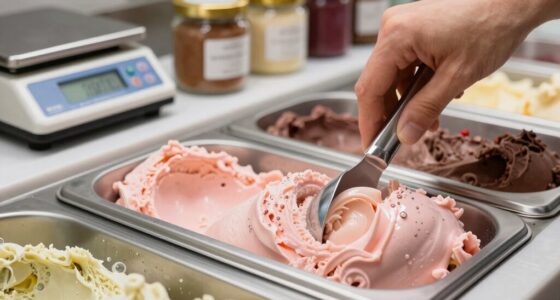

As a gelato maker, you understand that mouthfeel goes beyond just sweetness. You focus on creating a smooth, velvety texture that melts seamlessly, balanced with slight firmness for added richness. Controlling temperature during churning and serving is key to maintaining the perfect contrast. You also incorporate ingredients like nuts or fruit bits for subtle variety, keeping the experience engaging. If you’re curious about refining this balance further, there’s more to explore.

Get baking supplies delivered free — and shop member deals
- Fast, free delivery on millions of items
- Access to Prime Big Deal Days deals on October 6–7
- Prime Video, Amazon Music and more included
Key Takeaways
- Gelato makers prioritize a smooth, velvety texture that melts seamlessly, enhancing overall flavor perception beyond just sweetness.
- Achieving slight firmness and textural contrast, such as with nuts or fruit bits, keeps the mouth engaged.
- Temperature control during churning and serving influences firmness, creaminess, and sensory balance.
- Ingredient quality and stability directly impact the development of desirable mouthfeel and texture over time.
- Fine-tuning freezing and serving temperatures helps balance a rich, indulgent experience with refreshing firmness.

When it comes to making gelato, the texture—or mouthfeel—is what truly sets it apart from traditional ice cream. You might think sweetness is the main factor, but for gelato makers, the way it feels in your mouth carries just as much weight. Achieving that perfect mouthfeel involves a careful balance of texture contrast and temperature control. As a maker, you understand that the interplay between smoothness and slight firmness creates a richer, more satisfying experience. It’s not just about the ingredients but how they’re combined and chilled.
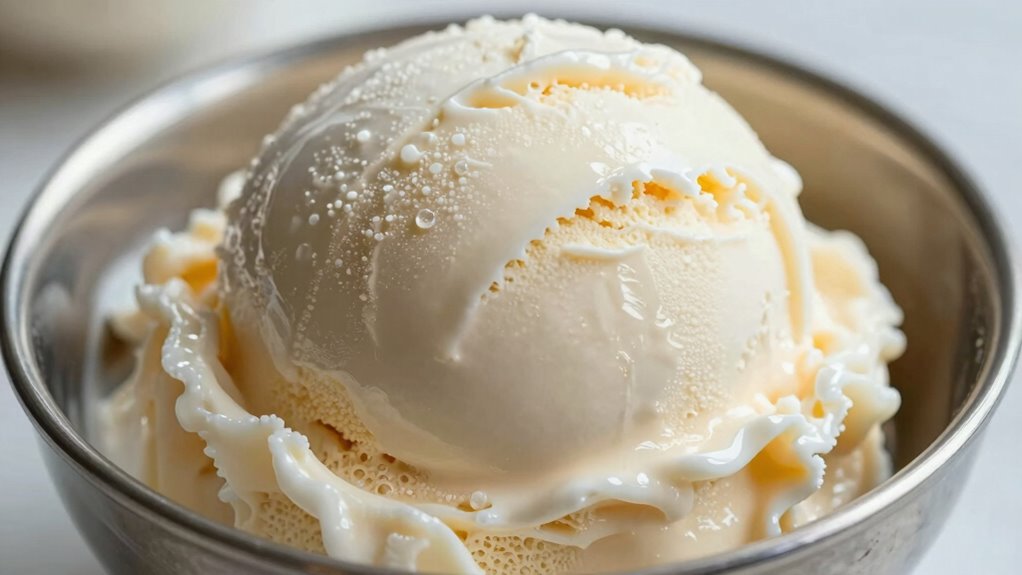
Texture contrast is essential. You want your gelato to be smooth yet have a gentle, almost velvety consistency that melts seamlessly, revealing layers of flavor. But you also aim for slight firmness — not to the point of crunchiness, but enough to give a pleasant resistance. This contrast heightens your senses and makes each spoonful intriguing. You might incorporate ingredients like nuts or fruit bits intentionally, not just for flavor but to add subtle textural variety. These small, intentional contrasts keep the mouth engaged, preventing the experience from feeling monotonous. Additionally, understanding the stability of ingredients can help you better control how textures develop in your gelato. Recognizing how ingredient stability impacts texture can guide you in selecting ingredients that maintain their desired consistency over time.
Achieve smooth, velvety gelato with slight firmness and intentional texture contrasts for a captivating sensory experience.
Temperature control plays a pivotal role in achieving that ideal mouthfeel. When you churn your gelato, maintaining the right temperature ensures the texture remains consistent. Too cold, and it becomes too firm, dulling the delicate contrast you seek. Too warm, and it loses its structure, turning into a runny mess. You need to monitor and adjust your freezer’s temperature precisely, often experimenting with different settings to find that perfect point where the gelato is firm but still soft enough to melt beautifully. This careful control allows the flavors to shine without sacrificing the luxurious mouthfeel. Fine-tuning your freezing process can also help in maintaining ingredient stability, ensuring that each batch has optimal texture from the first scoop to the last.
As you refine your technique, you realize that even small adjustments in temperature can markedly impact texture contrast. For instance, slightly raising the serving temperature just before serving can enhance the creaminess and make the gelato feel more indulgent. Conversely, serving it very cold emphasizes firmness and refreshes the palate. Balancing these factors requires a keen understanding of your ingredients and equipment, along with a disciplined approach to temperature management. Ingredient quality also influences how well you can control and optimize the mouthfeel, emphasizing the importance of selecting high-quality ingredients.
Furthermore, understanding how hive stability influences the quality of ingredients can inspire new approaches to maintaining optimal textures in your gelato. Ultimately, gelato makers view mouthfeel as a multi-layered aspect of craftsmanship. It’s about more than just sweetness or flavor; it’s about creating a sensory experience where texture contrast and temperature control work together seamlessly. When you master these elements, you craft gelato that not only delights the palate but also elevates the entire dessert experience.
gelato maker with temperature control
As an affiliate, we earn on qualifying purchases.
As an affiliate, we earn on qualifying purchases.
Frequently Asked Questions
How Does Fat Content Influence Gelato’s Mouthfeel?
Fat content directly influences gelato’s mouthfeel by enhancing its creamy richness and smooth texture. When you increase fat, it creates a more luscious, velvety sensation on your palate. Proper fat distribution guarantees this richness is evenly spread, preventing any greasy or heavy feeling. As a result, you experience a balanced, indulgent mouthfeel that makes each spoonful feel satisfyingly luxurious without overpowering the other flavors.
What Role Does Temperature Play in Mouthfeel Perception?
Temperature considerably impacts your perception of mouthfeel and flavor complexity in gelato. When served slightly colder, the texture feels creamier and more luxurious, enhancing visual appeal and making flavors pop. If it’s too cold, flavors may seem muted, reducing complexity. Conversely, warmer gelato can release richer aromas, but may feel less smooth. You’ll notice a balance where the ideal temperature heightens both mouthfeel and visual appeal, elevating your overall experience.
Can Ingredients Like Alcohol Alter Gelato’s Texture?
Yes, ingredients like alcohol can alter gelato’s texture by influencing flavor intensity and ingredient synergy. Alcohol reduces the freezing point, creating a softer, creamier mouthfeel while enhancing flavor complexity. It also interacts with fats and proteins, balancing richness and preventing iciness. You notice this effect when adding spirits, as they amplify the overall sensory experience, making each bite smoother, more harmonious, and uniquely satisfying.
How Do Different Stabilizers Affect Mouthfeel?
Different stabilizers influence mouthfeel by providing texture enhancement and controlling ice crystal formation. They create a smoother, creamier sensation, making the gelato feel richer on your palate. Stabilizers can also mask unwanted flavors or icy textures, enhancing overall flavor perception. By balancing water binding and fat interactions, they guarantee your gelato maintains a desirable, velvety consistency throughout each scoop, elevating the sensory experience beyond just sweetness.
What Sensory Cues Complement Mouthfeel in Gelato Tasting?
You notice that flavor complexity and visual appeal naturally enhance mouthfeel in gelato tasting. As you savor each spoonful, the vibrant colors and intricate textures create a visual rhythm, making the experience more engaging. The layered flavors and subtle aroma cues work together, enriching the overall sensation. This combination of visual cues and flavor depth heightens your perception of creaminess and balance, making every bite more memorable and satisfying.
Conclusion
As a gelato maker, you realize that mouthfeel is like the harmony of a symphony—each element working together beyond just sweetness. You’re not just creating a dessert; you’re crafting an experience that dances on the palate. Every texture, from creaminess to smoothness, shapes the pleasure. By paying attention to these subtle details, you turn simple ingredients into memorable moments, much like a delicate melody lingering long after the last note fades.
Fall Picks
fall essentials
As an affiliate, we earn on qualifying purchases.