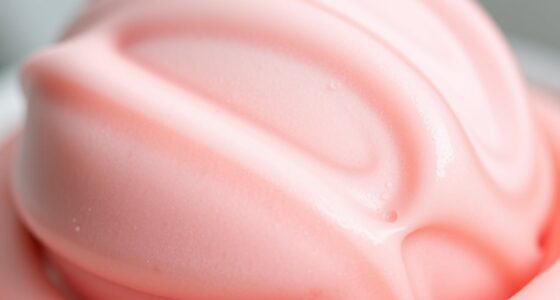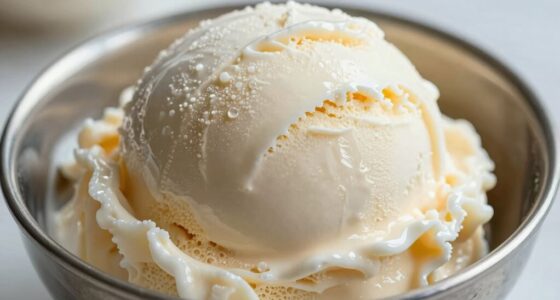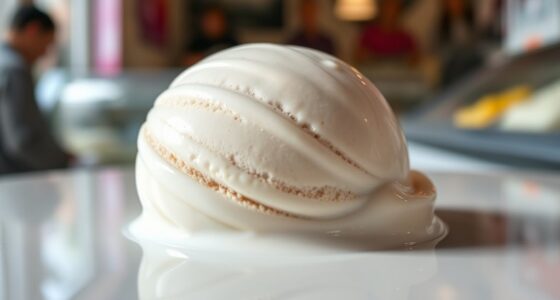
To achieve the perfect gelato texture, serve it at just the right temperature—slightly softer than ice cream but still firm enough to hold shape. This balance enhances creaminess, prevents icy crunchiness, and preserves rich flavors. Properly stored and briefly softened before serving helps you enjoy the ideal contrast of smoothness and firmness. If you want to learn more about hitting that perfect temperature and texture on every scoop, keep exploring the details below.

Get baking supplies delivered free — and shop member deals
- Fast, free delivery on millions of items
- Access to Prime Big Deal Days deals on October 6–7
- Prime Video, Amazon Music and more included
Key Takeaways
- Serve gelato slightly warmer than ice cream, around 10-15°F (-12 to -9°C), for optimal texture and flavor.
- Proper serving temperature prevents large ice crystals, ensuring a smooth, velvety mouthfeel.
- Briefly soften gelato after removal from the freezer to enhance texture and flavor release.
- Overly cold gelato becomes hard and masks flavors, while too warm results in a runny, unstructured dessert.
- Maintaining ideal temperature maximizes gelato’s contrast of firm yet creamy, enriching the sensory experience.
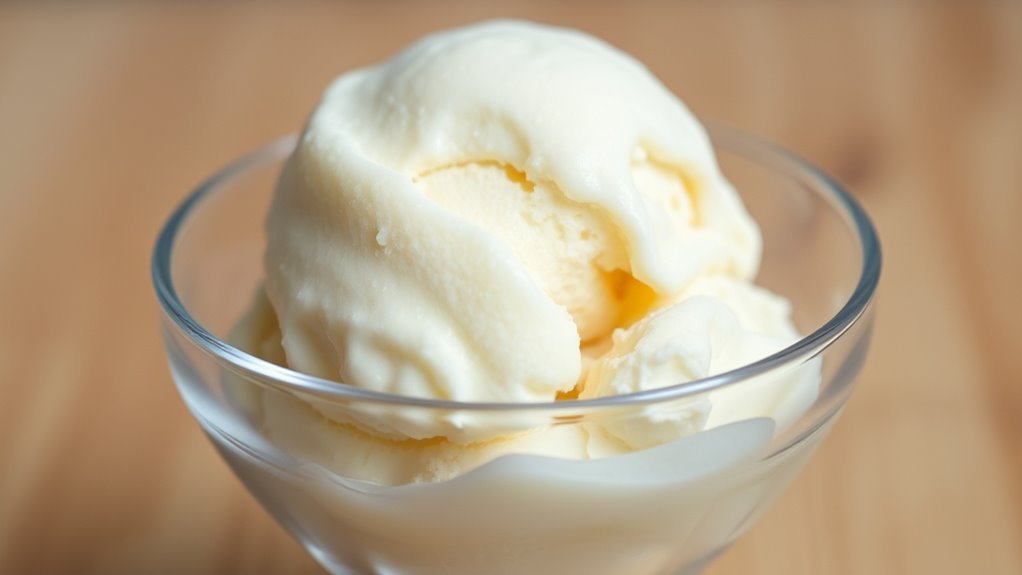
Ever wonder how the right serving temperature can transform the texture of your favorite foods? When it comes to desserts like gelato, temperature plays a vital role in delivering that perfect bite. Serving gelato at just the right temperature enhances its gelato contrast—where it’s creamy yet firm—making each spoonful a delightful experience. If you serve it too cold, it becomes rock-hard, masking its smooth, velvety qualities. Too warm, and it turns into a soupy mess, losing its structure and flavor. The key is finding that ideal temperature that balances firmness and creaminess, allowing you to appreciate the full spectrum of textures.
The perfect gelato temperature balances firmness and creaminess for optimal texture and flavor.
One of the biggest challenges in serving frozen desserts is controlling ice crystal formation. When gelato or ice cream is stored at improper temperatures, large ice crystals develop, disrupting the delicate texture that makes these treats so appealing. These crystals can create a gritty, icy mouthfeel that detracts from the smoothness you crave. Proper serving temperature minimizes ice crystal growth, preserving the gelato’s fine, dense structure. When served at the right warmth—usually around 10-15°F (-12 to -9°C)—the ice crystals are small and evenly distributed, giving you that luscious, velvety mouthfeel. This temperature allows the flavors to be more pronounced and the texture to be just firm enough to hold its shape without being icy or overly soft. Controlling ice crystal formation is crucial for maintaining that ideal texture.
To achieve this ideal serving temperature, you might need to let your gelato sit out for a few minutes after removing it from the freezer. This brief period allows it to soften slightly, revealing its true texture and flavor. A good rule of thumb is to serve gelato when it’s slightly softer than ice cream but still firm enough to hold its shape on the spoon. This way, you get a satisfying contrast—where the coldness enhances the flavor and the texture remains luxuriously smooth. Proper storage also matters; keeping gelato at the correct temperature in your freezer and serving it at the right moment guarantees you experience that perfect gelato contrast every time.
In the end, understanding how serving temperature impacts ice crystal formation and gelato contrast empowers you to serve your desserts effectively. The right temperature doesn’t just make your gelato taste better; it transforms the entire sensory experience, making each spoonful a rich, creamy delight. By paying attention to these details, you’ll elevate your dessert game and enjoy every bite to its fullest.
gelato serving temperature thermometer
As an affiliate, we earn on qualifying purchases.
As an affiliate, we earn on qualifying purchases.
Frequently Asked Questions
How Does Humidity Affect Ice Cream Serving Temperature?
Humidity effects can influence how you serve ice cream because higher humidity makes the environment more humid, which can cause the ice cream to melt faster if served at the same temperature. In humid conditions, you might need to keep the ice cream slightly colder to prevent melting, especially when ambient temperature is warm. Adjusting the serving temperature based on humidity guarantees your ice cream stays firm and delicious longer.
What’s the Ideal Scoop Size for Perfect Texture?
For perfect texture, choose a scoop size around 1.5 to 2 ounces. This size guarantees consistent texture, making the ice cream easy to serve and enjoy. Smaller scoops create a smoother, creamier mouthfeel, while larger ones give a more substantial bite. Using the right scoop size helps maintain your ice cream’s ideal texture consistency, whether you’re serving a single scoop or multiple.
Can Toppings Change the Serving Temperature of Ice Cream?
Toppings can totally change the serving temperature of your ice cream! When you add a topping, especially warm or room temperature ones, it dramatically affects the topping temperature, causing rapid topping melting. This can make your ice cream go from perfectly frosty to a melty mess in seconds. Keep in mind, the topping temperature directly influences how quickly it melts, so choose your toppings wisely to keep that ideal ice cream texture!
How Does Storage Temperature Impact Ice Cream’s Texture?
You’ll notice that storage temperature directly impacts ice cream’s texture by influencing ice crystal formation and fat separation. When stored too warm, ice crystals grow larger, making your ice cream icy and gritty. Conversely, colder storage keeps crystals small and maintains smoothness. Proper temperature control prevents fat separation, ensuring your ice cream stays creamy and enjoyable. Always keep your freezer at the right temperature for ideal texture and flavor.
What Are Common Mistakes That Ruin Ice Cream Texture?
You might ruin your ice cream by overmixing, which breaks down its smooth, churned consistency, making it icy and grainy. Improper stabilizer use can cause ice crystals to form and create a gritty texture. Picture a silky swirl turning into a frozen mess—avoid these mistakes by mixing just enough and using stabilizers properly. Your ice cream should stay creamy and inviting, not icy or crumbly.
Conclusion
Now that you know the ins and outs of serving temperature and texture, you’re ready to impress with every scoop. Remember, getting the perfect ice cream is a balancing act—you don’t want it to melt too fast or be too hard to scoop. When you master these details, you’ll turn every dessert into a true crowd-pleaser. So, don’t be afraid to play around and find your sweet spot—after all, crafting the perfect treat is half the fun!
Halloween Picks
halloween
As an affiliate, we earn on qualifying purchases.