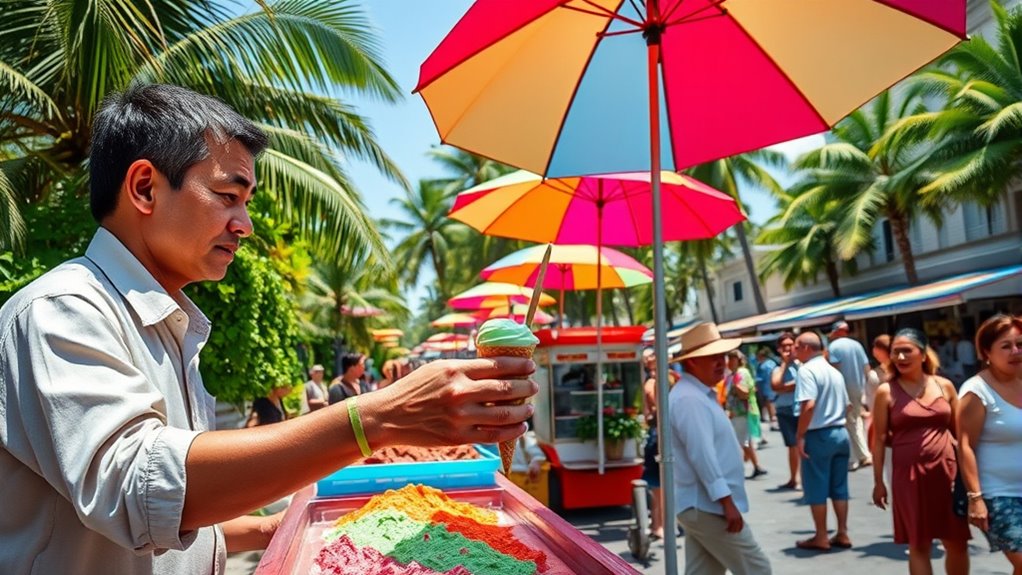
Selling gelato in the tropics presents tough challenges like intense heat, humidity, and unreliable refrigeration, which threaten your product’s quality and your business’s success. To overcome this, you should invest in insulated carts, portable cooling solutions, and develop shelf-stable or freeze-dried options that don’t require constant refrigeration. Using local shading methods and positioning your sales during peak heat times can boost sales. Keep exploring how to adapt further and turn these climate challenges into opportunities.
Key Takeaways
- Use portable, insulated carts and natural cooling methods to keep gelato cold in high temperatures.
- Develop shelf-stable or freeze-dried gelato options that don’t require constant refrigeration.
- Target busy outdoor areas like markets, beaches, and festivals during cooler parts of the day.
- Design high-temperature-resistant packaging to prevent melting and spoilage.
- Adapt flavors and presentation to local tastes, building loyalty despite climate challenges.

Have you ever wondered how people and ecosystems survive in some of the world’s most extreme climates? When it comes to challenging environments like the tropics, you might think that selling gelato or ice cream is impossible. But over the years, innovative ice cream innovations and clever climate adaptation strategies have turned this challenge into an opportunity. In hot, humid regions, traditional methods of storing and serving ice cream just don’t cut it. You need to think outside the box to keep your products fresh and appealing. This might mean investing in enhanced insulation, portable cooling units, or even natural cooling techniques that harness local materials and environmental conditions. These adaptations help maintain the quality and safety of your products despite the relentless heat.
Innovative climate strategies turn tropical challenges into opportunities for fresh, safe ice cream sales.
The key to thriving in such climates is understanding how to adapt your processes and offerings. For instance, some vendors have started using local, naturally cooling methods—like underground storage or shaded, open-air setups that leverage the coolness of the earth. Others have adopted ice cream innovations such as freeze-dried gelato or shelf-stable formulations that don’t require constant refrigeration. These innovations allow you to sell gelato even in remote areas where electricity might be unreliable or unavailable. Climate adaptation isn’t just about the physical storage; it’s also about how you position your business. Offering smaller portions, creating seasonal flavors inspired by local tastes, or customizing your packaging to withstand high temperatures are all ways to grow your presence despite the challenging environment.
You might also consider how the climate influences customer preferences and behavior. In tropical regions, people often seek out cooling treats during the hottest parts of the day, so aligning your sales with local routines can boost your success. Using portable, insulated carts or mobile setups allows you to bring your gelato directly to busy markets, beaches, or community events, making it easier to reach customers where they are. Incorporating climate adaptation into your business isn’t just practical; it can set you apart from competitors who stick to traditional methods. By embracing ice cream innovations designed for challenging climates, you demonstrate resilience and creativity. This approach not only ensures your products stay in top condition but also builds trust and loyalty among consumers who appreciate your ability to serve their needs despite the heat.
In the end, surviving and thriving in the tropics requires a mindset of continuous adaptation. By combining smart climate adaptation techniques with innovative ice cream solutions, you turn a formidable environment into a thriving market. The more you understand how to work with the climate, the better you’ll be at satisfying your customers and growing your business—no matter how extreme the weather gets.
Frequently Asked Questions
How Do Tropical Temperatures Affect Gelato Shelf Life?
Tropical temperatures shorten gelato’s ice cream longevity because higher temperatures accelerate melting and spoilage. The temperature impact means your gelato can become soft or icy faster, risking quality loss. To counter this, you need to maintain consistent, cold storage and quick turnover. Keep your display cold and ensure proper packaging, so the gelato stays fresh longer despite the heat, preserving its quality and customer satisfaction.
What Packaging Options Best Preserve Gelato in Hot Climates?
Think of your gelato as a delicate treasure that needs protection. You should use eco-friendly packaging combined with insulated display cases to keep the cold in and heat out. These options act like a shield, maintaining ideal temperatures in hot climates. By choosing sustainable materials and proper insulation, you guarantee your gelato stays fresh and appealing, even under the relentless tropical sun.
Are There Flavor Preferences Unique to Tropical Regions?
You’ll find that tropical regions favor fruit flavors like mango, coconut, and pineapple, which resonate with local tastes. Spices such as ginger, cardamom, and cinnamon also appeal, adding warmth and depth. To succeed, incorporate these flavors into your gelato offerings, creating vibrant, authentic options that attract customers. Emphasizing fresh tropical fruits and spice profiles helps your gelato stand out and meet local preferences effectively.
How Can Gelato Be Stored Efficiently in Tropical Outdoor Markets?
Some believe traditional refrigeration isn’t feasible in tropical markets, but innovative insulation and alternative cooling methods prove otherwise. You can store gelato efficiently outdoors by using insulated containers, evaporative cooling, or portable ice packs. These techniques maintain ideal temperatures, preventing melting and spoilage. By combining innovative insulation with alternative cooling strategies, you guarantee your gelato stays fresh, appealing, and ready for customers, even in hot, outdoor tropical markets.
What Are Cost-Effective Cooling Solutions for Tropical Gelato Vendors?
You can use innovative insulation to keep your gelato cold without high energy costs. Solar-powered coolers are an excellent, eco-friendly option that harness sunlight, reducing expenses and ensuring your gelato stays fresh. Combining these solutions, you create a cost-effective cooling system perfect for tropical markets. Regular maintenance and strategic placement of coolers also optimize efficiency, helping you serve quality gelato despite the challenging climate.
Conclusion
Just as Icarus dared to reach for the sun, you must embrace the heat with resilience and innovation. Selling gelato in the tropics challenges you to think beyond the ordinary, turning obstacles into opportunities. Remember, every great explorer faced storms before discovering new worlds. With perseverance and ingenuity, you’ll transform the scorching climate from a hurdle into your greatest advantage, proving that even in the fiercest heat, success is within your grasp—just like reaching for the sky.