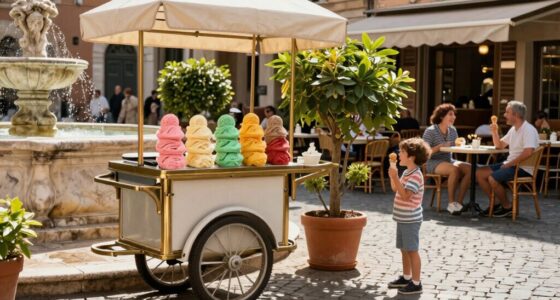
The passeggiata is Italy’s beloved tradition of strolling leisurely through lively streets, often with gelato in hand. As you walk, you embrace Italy’s love for community, effortless style, and simple pleasures. People dress stylishly yet comfortably, reflecting centuries of tradition. It’s a perfect way to connect with locals, enjoy the scenery, and soak up the vibrant atmosphere. To discover more about this charming custom and its history, keep exploring these timeless Italian moments.
Key Takeaways
- The passeggiata is a traditional Italian leisurely stroll often enjoyed with gelato or espresso.
- It offers a social and cultural opportunity to connect with community and observe local life.
- Participants dress stylishly yet comfortably, showcasing Italy’s effortless elegance.
- The activity originated from Renaissance aristocratic leisure and has evolved into a daily custom.
- Strolling through scenic streets or piazzas while savoring gelato embodies Italy’s appreciation for simple pleasures.
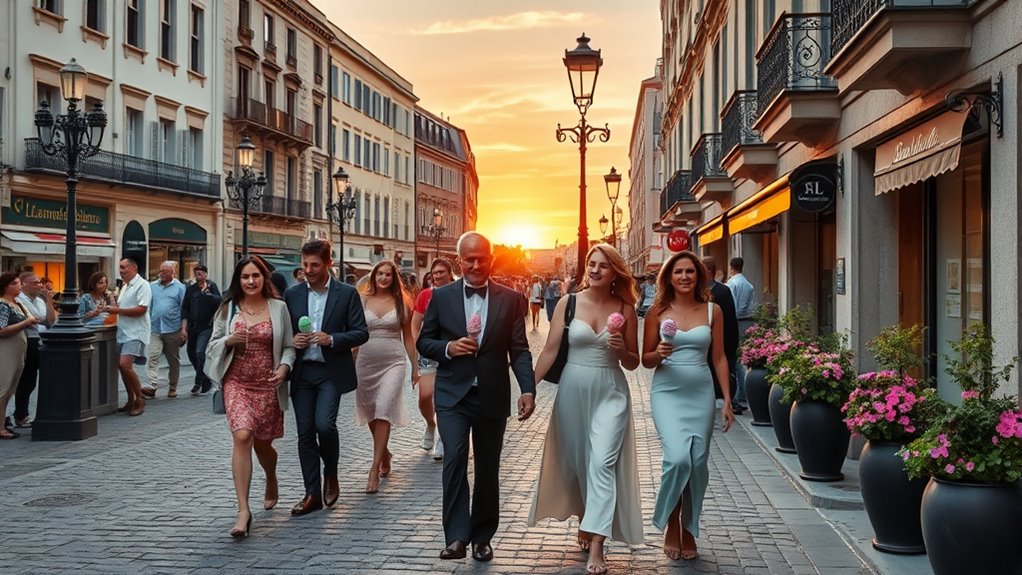
A passeggiata, or leisurely stroll, is a cherished Italian tradition that invites locals and visitors alike to unwind and enjoy the city or countryside. You’ll find that it’s more than just a walk; it’s a daily ritual woven into Italy’s social fabric. As you stroll through bustling piazzas or along scenic streets, you’ll notice how it serves as a window into Italian life, a moment to connect with community and culture. But beyond the social aspect, the passeggiata also reflects Italy’s deep-rooted fashion trends and historical origins.
Fashion in Italy has long been intertwined with the tradition of the passeggiata. During your walk, you’ll see locals dressed with effortless elegance—stylish yet comfortable—showing how fashion trends evolve while honoring tradition. Over centuries, the Italian sense of style has emphasized quality, craftsmanship, and timeless designs, and this is evident in how people present themselves during their evening strolls. Men often wear tailored blazers or smart jackets paired with crisp trousers, while women sport chic dresses or sophisticated skirts, all complemented by accessories that highlight their personal style. The tradition encourages a sense of pride in appearance, fostering a culture where dressing well is part of the social ritual.
Italian style blends effortless elegance with tradition, showcasing quality craftsmanship during passeggiata strolls.
The historical origins of the passeggiata date back to the Renaissance period, when it was common for aristocrats and wealthy citizens to take leisurely walks through city streets or gardens as a way to display their status and enjoy the fresh air. Over time, this practice trickled down to all social classes and became a daily custom. Today, the tradition continues, embodying a sense of community and leisure that’s deeply embedded in Italy’s history. It’s a way for people to unwind after work or daily chores, and it often coincides with the time for enjoying gelato or espresso at a nearby café. Additionally, the high-quality craftsmanship of Italian clothing enhances the elegance of the passeggiata, allowing participants to showcase their style with pride.
As you participate in the passeggiata, you’re joining a centuries-old practice that celebrates life’s simple pleasures—good company, beautiful surroundings, and perhaps, the taste of a cold gelato in hand. The blend of fashion, history, and social connection makes this walk more than just a physical activity; it’s a living tradition that captures Italy’s essence. Whether you’re in a historic city center or a quiet countryside village, the passeggiata invites you to slow down, observe, and savor every moment of your Italian experience.
Italian style casual blazer for men
As an affiliate, we earn on qualifying purchases.
As an affiliate, we earn on qualifying purchases.
Frequently Asked Questions
What Is the Best Time of Day for a Passeggiata?
You should go for a passeggiata in the early evening, around sunset, when locals typically take their strolls. This time aligns with local customs and makes for a lively atmosphere. Keep in mind seasonal variations; in summer, it’s best to go slightly later to avoid the heat, while in cooler months, an earlier stroll works well. It’s the perfect time to enjoy gelato and soak in the authentic Italian vibe.
Are There Specific Etiquette Rules for Italian Strolls?
Think of Italy’s strolls as a dance where etiquette guides your steps. Dress code is usually smart-casual, showing respect for the tradition. Keep social interactions friendly and relaxed, acknowledging others with a nod or a smile. Avoid blocking sidewalks or rushing past. Remember, a gentle pace invites connection, turning a simple walk into a cherished moment. Embrace these rules to blend seamlessly into Italy’s vibrant, respectful rhythm.
Can Locals Be Approached for Recommendations?
Yes, locals are usually happy to help with recommendations during your strolls. When approaching them, be polite and friendly, and start with a simple greeting. Use local interaction tips like asking for their favorite gelato spot or hidden gems nearby. This not only enriches your experience but also fosters genuine connections, making your walk more memorable. Just remember to be respectful and appreciative of their advice.
How Long Does a Typical Passeggiata Last?
A typical passeggiata lasts about an hour or two, depending on local customs and the lively street scene. Don’t worry if it feels short—you can extend it by stopping for gelato or chatting with street performers. Locals often enjoy leisurely strolls, so keep your pace relaxed. Embrace the vibrant atmosphere, soak in the sights, and enjoy the spontaneous interactions that make each passeggiata uniquely memorable.
Are There Any Traditional Costumes Worn During Passeggiata?
During passeggiata, you might see some people wearing traditional dress or regional costumes, especially during festivals or special occasions. While most locals dress casually, in certain areas, you’ll notice vibrant traditional garments that reflect regional history and culture. These costumes often feature intricate embroidery, bright colors, and unique accessories, making your stroll even more charming and authentic as you experience Italy’s rich cultural heritage firsthand.
Conclusion
As you stroll through Italy’s lively streets, imagine the sunset painting the sky with warm hues while laughter and footsteps create a symphony around you. The passeggiata isn’t just a walk; it’s a dance of life, a moment where time slows down and flavors of gelato taste even sweeter. So, keep your eyes open and your heart ready, because every step in Italy is like turning a page in a beautiful, unfolding story—yours to savor.