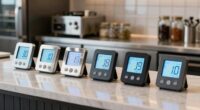
For cafés seeking high-end dessert photography lights, I’d put the Amaran Halo 200x first for its balance of controllable bi-color output and practical single-light setup. The Nanlite FS-300B is a strong choice when you need more output for larger sets, while the Lume Cube Studio Panel kit suits compact workspaces that benefit from two-point lighting. The main tradeoff is between power and flexibility on one side, and simple setup, smaller footprints, and lower demands on the café space on the other. A softbox can soften pastry highlights, but it may take up more room than a panel. Read on for the full breakdown of where each option fits.

Get baking supplies delivered free with Prime
- Fast, free delivery on millions of items
- Prime Video, Amazon Music and more included
- Member-only deals all year
Complete the kit


Key Takeaways
- The Amaran Halo 200x leads this lineup for café owners who want a capable bi-color COB light without starting with the highest-output or most elaborate fixture.
- The Nanlite FS-300B is the stronger fit for larger setups or modifiers that need more light, but that capacity can be more than a small menu shoot requires.
- The Lume Cube kit and Dazzne two-light kit offer paired-light approaches, useful for controlling shadows and adding fill without relying on one fixture.
- The NiceVeedi kit and Skytex softbox kit favor approachable, broad lighting over the control and output of the COB options.
- The Amaran Ray 660c stands apart for buyers who need RGB color flexibility; cafés focused on natural-looking food photos may get more practical value from a bi-color model.
| Dazzne D50 Bi-Color LED Video Lights with Barn Doors, Remote, and Tripods, 2-Pack |  | Best Two-Light Starter Kit | Number of lights: 2 | Power: 45W | Color temperature: 3000K–8000K | VIEW ON AMAZON | See Our Full Breakdown |
| Nanlite FS-300B 350W Bi-Color LED Video Light |  | Best for Large, Modifier-Shaped Setups | Power: 350W | Color temperature: 2700K–6500K | Illuminance: 38,720 lux at 1 m (5600K) | VIEW ON AMAZON | See Our Full Breakdown |
| Lume Cube Studio Panel 2-Point Bicolor LED Lighting Kit |  | Best Portable Two-Light Kit | Panels: 2 | LEDs per panel: 204 bicolor LEDs | Color temperature: 3200K–5600K | VIEW ON AMAZON | See Our Full Breakdown |
| NiceVeedi 2-Pack 36W Bi-Color LED Photography Lighting Kit |  | Best for Precise Panel Adjustments | Number of lights: 2 | Power: 36W | Color temperature: 2700K–6500K | VIEW ON AMAZON | See Our Full Breakdown |
| Amaran Halo 200x 200W Bi-Color COB LED Monolight |  | Best Premium Single-Light Control | Power: 200W | Maximum light output: 179W | Illuminance: 10,530 lux at 1 m (bare) | VIEW ON AMAZON | See Our Full Breakdown |
| Skytex 16-Inch Softbox Lighting Kit with Adjustable LED Bulb |  | Best Compact Softbox Kit | Softbox size: 16 x 16 in (40 x 40 cm) | LED bulb power: 135 W | Color temperature: 2700–6400 K | VIEW ON AMAZON | See Our Full Breakdown |
| Amaran Ray 660c RGB COB LED Monolight |  | Best Premium High-Output RGB Light | Power: 660 W | Illuminance: Up to 38,500 lux at 1 m (bare) | Color temperature: 2,300–10,000 K standard; 1,800–20,000 K with CCT+ Mode | VIEW ON AMAZON | See Our Full Breakdown |
| high end dessert photography lights for caf%c3%a9 | Color temperature | Power |
|---|---|---|
| Dazzne D50 Bi-Color LED Video | 3000K–8000K | 45W |
| Nanlite FS-300B 350W Bi-Color | 2700K–6500K | 350W |
| Lume Cube Studio Panel 2-Point | 3200K–5600K | — |
| NiceVeedi 2-Pack 36W Bi-Color | 2700K–6500K | 36W |
| Amaran Halo 200x 200W Bi-Color | 2700K–6500K | 200W |
| Skytex 16-Inch Softbox Lightin | 2700–6400 K | — |
| Amaran Ray 660c RGB COB LED Mo | 2,300–10,000 K standard; 1,800–20,000 K with CCT+ Mode | 660 W |
More Details on Our Top Picks
Dazzne D50 Bi-Color LED Video Lights with Barn Doors, Remote, and Tripods, 2-Pack
The Dazzne D50 is the most ready-to-arrange two-panel option here for a café that wants separate key and fill lights without building a modifier setup. Its 3000K–8000K range gives more freedom to match mixed café lighting than the NiceVeedi kit’s 2700K–6500K range, while barn doors help keep light off nearby tables and backgrounds. Remote and master/slave controls also make paired adjustments less fiddly during a shoot. The tradeoff is output: its stated 3600 lux at 0.5 m is not directly comparable to the spotlight figures from the Nanlite FS-300B or Amaran Halo 200x, and this is a panel kit rather than a Bowens-mount source for larger modifiers. It suits controlled tabletop work, but battery operation requires separately purchased NP-F batteries.
Pros:- Two panels support separate key and fill lighting
- Wide 3000K–8000K color-temperature range
- Barn doors and coordinated remote controls help manage paired lights
- Tripods and travel case are included
Cons:- NP-F batteries for portable operation are sold separately
- Remote dimming to 0% does not switch the lights off
- Panel output and form factor are less suited to large modifiers than COB spotlights
Best for: Café owners who want two adjustable panels, stands, and light-shaping doors in one kit for tabletop dessert shoots.
Not ideal for: Photographers who need high-output spotlighting for large softboxes or untethered sessions without buying extra batteries.
- Number of lights:2
- Power:45W
- Color temperature:3000K–8000K
- Dimming range:0%–100%
- Brightness:3600 lux at 0.5 m
- Panel size:15.4 inches
- Tripod height:20–80 inches
- Power options:AC or NP-F series batteries, sold separately
Our verdict“Choose the Dazzne D50 if you want a complete two-panel setup for controlled café dessert photography and can work near outlets or supply your own batteries.”
Nanlite FS-300B 350W Bi-Color LED Video Light
For a café staging a larger dessert scene, the Nanlite FS-300B is the strongest modifier-first pick in this group. Its Bowens mount opens the door to softboxes and other compatible modifiers, letting a photographer shape broad, soft illumination rather than rely on the built-in panel doors of the Dazzne D50 or NiceVeedi kit. The stated 38,720 lux at 1 m and CRI 96+ / TLCI 97 support a brighter, color-conscious studio setup, while app control can help adjust the light from the camera position. That output comes with practical limits: this is a 3.03 kg AC-powered spotlight, not a portable two-light kit, and its 10% minimum dimming level gives less low-output control than the Amaran Halo 200x’s 0–100% stepless range. Its power and modifier compatibility make the most sense in a dedicated shooting area.
Pros:- Bowens mount supports a broad range of light modifiers
- Stated 38,720 lux at 1 m provides substantial output for shaping
- CRI 96+ and TLCI 97 ratings support color-conscious food photography
- App control and 12 built-in lighting effects
Cons:- Requires AC power
- Dimming stops at 10%, limiting very low-output adjustments
- A single spotlight does not provide the two-source coverage of the Dazzne D50 or Lume Cube kit
Best for: Café photographers building a fixed tabletop studio who want a bright Bowens-mount source for softboxes and other modifiers.
Not ideal for: Shooters who need a self-contained two-light kit, battery operation, or fine dimming below 10%.
- Power:350W
- Color temperature:2700K–6500K
- Illuminance:38,720 lux at 1 m (5600K)
- Dimming range:10%–100%
- Color accuracy:CRI 96+; TLCI 97
- Mount:Bowens
- Control:On-panel controls and 2.4G wireless app control
- Weight:3.03 kg
Our verdict“Pick the Nanlite FS-300B for a powered café studio where modifier choice and strong output matter more than portability or a two-light bundle.”
Lume Cube Studio Panel 2-Point Bicolor LED Lighting Kit
The Lume Cube Studio Panel 2-Point Kit is the clearest choice for cafés that need to move a setup between a counter, dining area, or off-site location. Unlike the AC-dependent NiceVeedi and Dazzne kits, each panel has a rechargeable battery, and the included stands, barn doors, angle mounts, remote, and travel bag make the package useful straight away. Two panels are also easier to position as separate key and fill sources than the single Nanlite FS-300B or Amaran Halo 200x. The compromise is runtime: the stated maximum is up to 80 minutes at full brightness, so a long session may call for charging breaks or AC adapters. Its 3200K–5600K range is narrower than the Dazzne D50’s, which leaves less room to match warmer or cooler ambient café light.
Pros:- Two panels allow separate key and fill placement
- Rechargeable batteries support portable shooting
- Includes stands, barn doors, angle mounts, adapters, and a travel bag
- Wireless remote supports adjustments from the shooting position
Cons:- Battery life is up to 80 minutes at full brightness and 5600K
- 3200K–5600K range is narrower than the Dazzne D50’s
- Panels are not a direct substitute for the high-output Bowens-mount Nanlite FS-300B
Best for: Café content creators who regularly relocate a two-light tabletop setup and value battery-powered panels over spotlight output.
Not ideal for: Photographers shooting long sessions at full brightness or needing a broad color-temperature range and Bowens-mount modifiers.
- Panels:2
- LEDs per panel:204 bicolor LEDs
- Color temperature:3200K–5600K
- Battery life:Up to 80 minutes at 100% brightness and 5600K
- Included stands:Two 70-inch light stands
- Light shaping:Two barn doors and two angle mounts
- Included control:Wireless remote
- Warranty:One year
Our verdict“Choose the Lume Cube kit if portability and a ready-made two-panel arrangement matter more than extended full-power runtime.”
NiceVeedi 2-Pack 36W Bi-Color LED Photography Lighting Kit
The NiceVeedi 2-Pack stands out for hands-on control of two panel lights without moving up to a separate COB spotlight and modifier. Its 1% brightness setting, LED display, 180° tilt, and built-in barn doors let café photographers make fine tabletop adjustments and limit spill onto a background. Compared with the Dazzne D50, it offers a slightly narrower color range but specifies CRI 95+ and practical stand adjustments from 41 to 72 inches. It also provides two-source coverage that the Nanlite FS-300B and Amaran Halo 200x do not deliver on their own. The tradeoff is a wired setup: the panels need AC adapters, and the infrared remote works only within 26 feet. This is a convenient studio kit, not a mobile battery-powered choice like Lume Cube.
Pros:- Two 36W panels provide separate key and fill sources
- 1% brightness setting supports fine adjustments
- Built-in barn doors and 180° tilt help direct light
- LED display, remote, and manual controls offer multiple adjustment options
Cons:- Requires AC adapters, limiting placement away from outlets
- Infrared remote range is limited to 26 ft
- No Bowens mount for the modifier options available with the Nanlite FS-300B
Best for: Café owners who want two adjustable panels with fine brightness control and straightforward operation in a fixed, outlet-equipped shooting area.
Not ideal for: Photographers who need battery power, radio-style remote control, or Bowens-mount flexibility for larger modifiers.
- Number of lights:2
- Power:36W
- Color temperature:2700K–6500K
- Color rendering:CRI 95+
- Brightness adjustment:1% precise setting with 25% increments
- Tripod height:41–72 in (105–183 cm)
- Light angle adjustment:180°
- Remote control range:26 ft (8 m)
Our verdict“Pick the NiceVeedi kit for precise, adjustable two-panel lighting in a café studio where mains power is readily available.”
Amaran Halo 200x 200W Bi-Color COB LED Monolight
The Amaran Halo 200x is the most control-oriented single source here for a café photographer who wants to shape light precisely and may later add it to a larger studio system. Its full-size Bowens mount supports a broad choice of modifiers, while NFC app control, USB-C DMX support, and quiet selectable fan modes suit a working set where light adjustments should not interrupt a shoot. Compared with the Nanlite FS-300B, it offers stepless dimming down to 0% and quieter listed Smart-mode cooling, though the Nanlite’s stated illuminance is higher. Against the two-panel Dazzne or NiceVeedi kits, the Halo gives modifier flexibility rather than ready-made key-and-fill coverage. It remains AC-powered, and DMX needs an optional adapter, so this premium control package is best for a more permanent studio setup.
Pros:- Full-size Bowens mount supports many light modifiers
- 0–100% stepless dimming allows fine output control
- NFC app control and DMX support suit more involved studio workflows
- Selectable cooling modes include 28 dBA Smart mode
Cons:- Requires AC power
- DMX control needs an optional USB-C to 5-pin DMX adapter
- A single light does not provide the immediate two-source coverage of the Lume Cube or Dazzne kits
Best for: Café photographers building a higher-end, modifier-based studio who value quiet operation, fine dimming, app control, and DMX compatibility.
Not ideal for: Buyers who need battery-powered lighting, two included sources, or the higher stated illuminance of the Nanlite FS-300B.
- Power:200W
- Maximum light output:179W
- Illuminance:10,530 lux at 1 m (bare)
- Color temperature:2700K–6500K
- Color accuracy:CRI 96+; TLCI 97+
- Dimming:0–100% stepless
- Mount:Full-size Bowens
- Cooling:Silent, Smart, and High modes; 28 dBA in Smart mode
Our verdict“Choose the Halo 200x if your café setup calls for one quiet, modifier-ready source with refined controls rather than a bundled pair of panels.”
Skytex 16-Inch Softbox Lighting Kit with Adjustable LED Bulb
For cafés that need a compact, quick-to-position light for close-up pastry shots, the Skytex 16-inch softbox offers a softer source than a bare COB light without requiring a separate modifier. Its 2700–6400 K color range and 1–100% brightness adjustment let you tune the look for warm café interiors or brighter, cleaner icing detail. Compared with the Amaran Halo 200x, it is a simpler, smaller kit with its stand and carrying bag included, but it cannot match a higher-output monolight for lighting larger scenes or overpowering bright ambient light. The stand reaches just 60 inches, and the remote batteries are not included, so this is better as a tabletop or close-range setup than a flexible overhead rig. I’d choose it for a dedicated dessert corner, not a café needing broad, high-output coverage.
Pros:- 16 x 16-inch softbox softens light for close-up dessert texture and glaze
- Adjustable brightness and color temperature suit varied café lighting
- Includes a light stand and carrying bag for a portable, ready-to-assemble setup
- Two remote controls allow brightness and color adjustments from a distance
Cons:- 60-inch maximum stand height restricts overhead and taller set arrangements
- Remote batteries are not included
- Compact softbox is less suited to evenly lighting large displays or full tables
Best for: Café owners and small content teams photographing individual pastries at a counter or compact tabletop setup who want a softbox, stand, and bag in one kit.
Not ideal for: Photographers lighting wide dessert spreads, shooting from high overhead positions, or needing a powerful source to compete with strong daylight; the stand tops out at 60 inches and the compact softbox limits coverage.
- Softbox size:16 x 16 in (40 x 40 cm)
- LED bulb power:135 W
- Color temperature:2700–6400 K
- Brightness adjustment:1–100%
- Light stand height:18–60 in
- Cable length:8.5 ft (250 cm)
- Lamp holder adjustment:210°
- Included accessories:Light stand, 2 remote controls, Oxford cloth carrying bag
Our verdict“Choose the Skytex for close-range café dessert photography when compact, softened light matters more than broad coverage or high output.”
Amaran Ray 660c RGB COB LED Monolight
The Amaran Ray 660c is the high-output choice for cafés producing polished campaign images, large dessert-table scenes, or video where controlled color matters as much as brightness. Its 660W output, broad CCT range, and HSI/RGB controls give a photographer room to shape both exposure and atmosphere; CRI 95+ and TLCI 95+ support faithful-looking frosting and fruit colors. A full-size Bowens mount also opens the door to a wide range of modifiers, unlike the self-contained Skytex softbox kit. That flexibility comes with a larger fixture, AC-only operation, and the need to supply a suitable modifier for softened light. Compared with the Amaran Halo 200x, the Ray 660c offers far more output and full-color control, but it is a less compact fit for a small counter or a quick single-product setup.
Pros:- 660W output and up to 38,500 lux at 1 meter provide substantial lighting capacity
- Wide standard and extended CCT ranges plus HSI/RGB control support precise color shaping
- CRI 95+ and TLCI 95+ support accurate dessert color reproduction
- Full-size Bowens mount works with a broad range of light modifiers
Cons:- Requires AC power, limiting placement away from outlets
- Large fixture is less convenient for compact café shooting spaces
- A softbox or other modifier may be needed for soft dessert lighting
Best for: Café marketing teams and food photographers lighting large dessert displays or video sets who need substantial output, precise color control, and Bowens-mount modifier options.
Not ideal for: Solo café owners with a small shooting corner, limited room, or a need for a portable battery-powered setup; this large 660W fixture requires AC power and is more elaborate than a compact kit.
- Power:660 W
- Illuminance:Up to 38,500 lux at 1 m (bare)
- Color temperature:2,300–10,000 K standard; 1,800–20,000 K with CCT+ Mode
- Color accuracy:CRI 95+, TLCI 95+
- Color control:360° HSI/RGB and green-magenta adjustment
- Lighting effects:12 built-in FX
- Connectivity:NFC app control
- Weather resistance:IP54
- Mount:Full-size Bowens
Our verdict“Pick the Ray 660c for demanding café sets that need high output and full-color control, but choose a smaller kit for occasional close-up pastry shots.”

How We Picked
I ranked these lights around the needs of a café photographing pastries, plated desserts, and menu items in a space that may also serve customers. I weighed usable output, color-temperature control, the ability to soften or shape light, setup demands, and how easily a buyer could build a repeatable lighting arrangement. For food, a flattering highlight on glaze and cream matters as much as raw brightness, while footprint and setup time can decide whether a light is practical for routine menu updates.
The order favors adaptable fixtures with a useful balance of control and output, then paired or beginner-oriented kits, followed by options with a narrower fit. The Halo 200x ranks first for that balance; the FS-300B earns a higher place for larger, more demanding setups, while the compact panel kits suit different spatial needs. The Ray 660c’s color range is a distinct strength, but it is less central for buyers seeking consistent, natural food color. Since a product’s performance depends on modifiers, room size, and placement, I treated kit contents and likely setup complexity as part of the ranking rather than assuming one light works equally well in every café.
Factors to Consider When Choosing High End Dessert Photography Lights For Caf%c3%a9s
Choosing a light for café photography is partly a lighting decision and partly a workflow decision. Before comparing fixtures, I’d look at the shooting area, the range of desserts, and how often the setup needs to be assembled and put away. These broader factors can matter more than a headline wattage figure.
Match Output to Your Shooting Distance
Light output matters most when the fixture must sit farther from the subject, pass through a modifier, or illuminate a wider scene. A close-up of one tart on a counter needs less coverage than a full table of plated desserts or a café team shooting from several feet away. A common mistake is buying the most powerful fixture without checking whether the room can accommodate its stand and modifier. More output can give you flexibility to soften light or lower its intensity, but it also asks more of your space and setup. I’d prioritize usable output at your planned distance, rather than comparing wattage alone. If you regularly change from tight product shots to wide menu scenes, extra headroom can justify a more capable COB light.
Choose Softness Before Chasing Brightness
Glossy icing, fruit, chocolate, and glass display cases can all produce distracting hard reflections under a small or bare source. A larger diffuser or softbox spreads the light and can make those highlights easier to manage, though the effect depends on placing the source close enough and at a useful angle. Buyers sometimes expect a softbox by itself to create soft light; source size relative to the dessert is what matters. A compact panel may be easier to position in a crowded prep area, while a COB fixture with a suitable modifier can offer more shaping options. Consider where the stand can go without blocking staff or casting unwanted shadows across the food. For consistent menu work, repeatable placement is more useful than an elaborate setup that is rarely practical to assemble.
Plan for Color Consistency Across Menu Updates
Bi-color control lets you adjust the light’s warmth to work with daylight, existing café fixtures, or a chosen visual style. This helps reduce mismatched color casts between a dessert and its surroundings, but it does not replace careful white balance and consistent shooting conditions. Mixed sources are a frequent source of frustration: window light may shift during the day while overhead bulbs remain warm or tinted. Decide whether you can turn off or control the room lights, then choose a lighting plan you can repeat during later shoots. RGB capability is useful for colored backgrounds and creative accents, but it may not add much to a workflow built around true-to-life food color. For routine menu photography, dependable bi-color adjustment is often the more direct priority.
Count the Space and Setup Time as Part of the Kit
A café light needs room for the fixture, stand, modifier, power connection, and the person arranging the food. Measure the shooting corner and consider whether equipment must be stored between sessions or moved away during service. Two smaller fixtures can make it easier to balance a key light and fill, but they also mean more stands, cables, and positioning decisions. A one-light setup is simpler to maintain, though it may leave stronger shadows that require a reflector or another source. Before buying a kit, check what is included and what you would need to add, particularly stands and diffusion. The best setup is often the one staff can recreate quickly without disrupting café operations.
Spend More Only When the Extra Control Solves a Real Problem
A more capable light makes sense when you need extra output, frequent modifier changes, wider scene coverage, or creative color effects. It is less compelling if your usual job is a small dessert shot in one fixed corner with the same lighting arrangement. Lower-complexity kits can help a new photographer learn placement and shadow control without building a larger rig immediately. On the other hand, replacing an undersized light can cost time and limit the range of shots a café can produce. I’d list the scenes you shoot most often and the ones you expect to add before deciding how much flexibility to buy. Pay for features that support those scenes, not for capability that will sit unused.
Frequently Asked Questions
Is one light enough for photographing desserts in a café?
One light can be enough for a controlled shot of a single dessert, especially when you add a reflector to lift shadows on the opposite side. This keeps the setup compact and makes it easier to repeat for menu updates. A second light can help when you need more even coverage, a separate background treatment, or faster control over shadows across several dishes. It also adds stands and placement decisions, which may be awkward in a working café. I’d start with one adaptable key light if your shots are mostly individual items, and add another source only when a reflector no longer solves the problem.
Should I choose a bi-color light or an RGB light for food photos?
For natural-looking desserts, bi-color control is usually the more direct tool because it helps match the light’s warmth to daylight or a chosen indoor setting. RGB can add colored backgrounds, accents, or branded visual effects, but those effects may distract from the food or complicate color consistency. Neither feature removes the need to set white balance consistently. If the café’s images should show accurate pastry and fruit colors, I’d prioritize dependable bi-color adjustment. Choose RGB when creative color work is part of the intended look, not just because the feature is available.
How much light output do I need for a small café photography corner?
There is no single output figure that fits every café because distance, modifiers, and the size of the scene all affect how much light reaches the subject. A close setup for one plate requires less output than a wide table scene or a large softbox placed farther away. Start by measuring your working distance and deciding whether you need to light one dessert or several items at once. A fixture with extra headroom can help when you add diffusion or expand the setup, but it may bring more bulk than a small corner can use comfortably. Test the intended arrangement, if possible, before treating wattage as the deciding factor.
Can a softbox kit work for both menu photos and social media content?
A softbox can produce gentle, appealing light for both still photos and video, provided its size and placement suit the shooting area. For menu images, stable placement and repeatable color matter more than constantly changing the setup. For short-form video, you may also need to account for camera position, movement, and whether the light creates reflections in glass or shiny toppings. A larger modifier can soften light but may crowd a narrow café corner or become inconvenient to store. Check that the kit’s footprint fits your actual workflow before choosing it as an all-purpose solution.
When does it make sense to buy a higher-output COB light instead of a panel kit?
A higher-output COB fixture makes sense when you need more reach, want to use larger modifiers, or shoot wider scenes that a compact panel cannot cover comfortably. It can also leave more room to reduce intensity after diffusion, depending on the setup. A panel kit may be easier to position in a tight corner and can offer a simpler route to paired lighting. The tradeoff is that COB fixtures often call for more deliberate stand and modifier planning. I’d choose a COB model for varied, growing production needs and a panel kit when portability and straightforward placement matter more.
Conclusion
For most cafés building a flexible dessert-photo setup, I’d choose the Amaran Halo 200x as the best overall because it balances output and bi-color control without centering the decision on maximum power. The NiceVeedi two-light kit is my best value-oriented pick for buyers who want a straightforward paired-light arrangement, while the Amaran Ray 660c is the best premium choice for teams that will use its RGB flexibility as well as its output. Beginners may find the Skytex softbox kit a simple way to start shaping soft light, though its basic approach has less room to grow than a COB setup. For compact two-point lighting, look to the Lume Cube kit; for larger scenes that need more output, the Nanlite FS-300B is the stronger match. Choose the Dazzne two-light kit if you prefer barn-door control and a paired setup, and skip extra power or color features unless your actual shooting needs call for them.