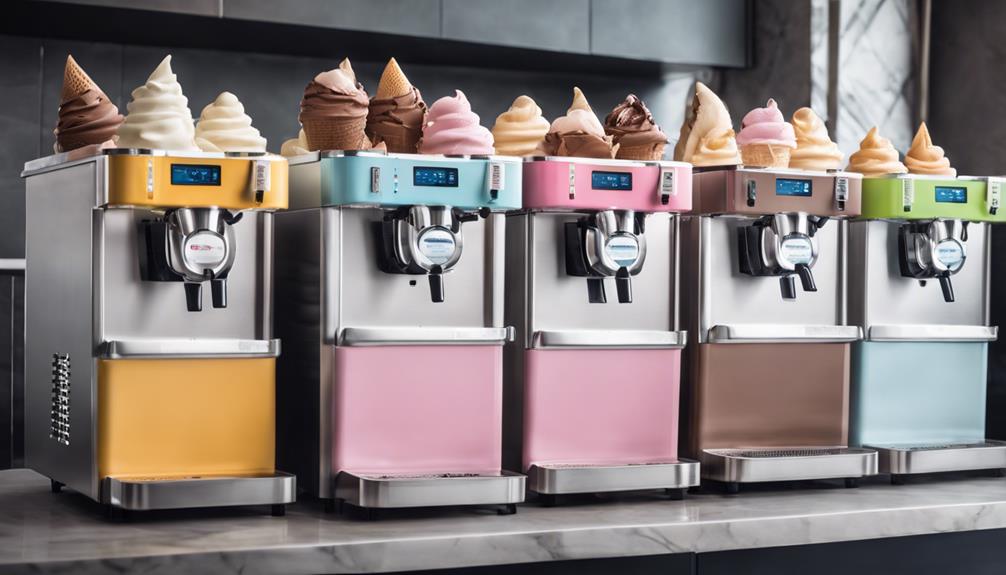

A commercial soft serve ice cream machine needs to match your service volume, menu, and available power—not just promise a high output figure. My best overall pick is the XPW 2200W, 3-flavor model with an LCD touch screen, which pairs a flexible menu with a more modern control interface. The VEVOR rated at 21 QT/H stands out for buyers focused on stated production capacity, while the XPW 1000W single-flavor model is a simpler fit for a limited menu or smaller operation. The main tradeoffs are single versus multiple flavors, throughput versus footprint, and convenience features versus operating complexity. Read on for the full comparison and guidance on matching a machine to your service pattern.

Get baking supplies delivered free with Prime
- Fast, free delivery on millions of items
- Prime Video, Amazon Music and more included
- Member-only deals all year
Complete the kit


Key Takeaways
The roundup’s strongest all-round fit is the XPW 2200W three-flavor model with an LCD touch screen; it balances menu flexibility and accessible controls rather than specializing only in capacity or low complexity.
Machines with three flavors or three heads offer more menu options, but buyers should confirm whether their service volume and cleaning routine justify the added system complexity.
The VEVOR 21 QT/H and EKway 28 QT/H stand out for stated output, but capacity claims matter only when they align with demand and the machine’s real operating conditions.
The XPW 1000W single-flavor machine favors a focused menu and simpler setup; it is a different kind of value from higher-powered, multi-flavor options.
Several models share similar three-flavor or high-power positioning, so the deciding details are likely to be hopper capacity, electrical requirements, cleaning access, and service support, not headline wattage alone.
| XPW Commercial Soft Serve Ice Cream Machine – 2200W, 3 Flavors, LCD Touch Screen |  | Best for Texture Control | Brand: XPW | Power: 2200W | Voltage: 110V | VIEW ON AMAZON | See Our Full Breakdown |
| GSEICE Soft Serve Ice Cream Machine |  | Best Compact Pick | Hopper capacity: 1.6 gallons | Freezing cylinder capacity: 0.42 gallons | Stated output: 4–4.5 gallons per hour | VIEW ON AMAZON | See Our Full Breakdown |
| Festisoul 3-Head Commercial Soft Serve Ice Cream Machine |  | Best for High-Volume Service | Brand: Festisoul | Power: 2450W | Stated production capacity: 5.8–7.9 gallons per hour (22–30 L/h) | VIEW ON AMAZON | See Our Full Breakdown |
| VEVOR Commercial Soft Serve Ice Cream Machine, 21 QT/H |  | Best for Steady Two-Flavor Service | Brand and model: VEVOR BQL-7220T | Stated output: Up to 20 L (5.3 gallons) per hour | Hopper capacity: 2 × 4 L (1.1 gallons) | VIEW ON AMAZON | See Our Full Breakdown |
| XPW Commercial Soft Serve Ice Cream Machine, 3 Flavors |  | Best for Mobile Setup | Brand and model: XPW, vertical | Voltage: 110V | Total power: 2450W | VIEW ON AMAZON | See Our Full Breakdown |
| Festisoul Commercial 3-Flavor Soft Serve Ice Cream Machine |  | Best for High-Volume Service | Power: 2200W | Output capacity: 5.3–7.4 gal/hr (20–28 L/hr) | Flavor configuration: 3 flavors: 2 single and 1 mixed | VIEW ON AMAZON | See Our Full Breakdown |
| GSEICE Commercial Soft Serve Ice Cream Maker |  | Best for Smaller-Scale Commercial Use | Model: GT | Output: 3.5–4 gallons per hour | Hopper: 6-liter stainless steel | VIEW ON AMAZON | See Our Full Breakdown |
| FOHERE Commercial Soft Serve Ice Cream Machine, 3 Flavors, 14 L Hopper, 2200 W |  | Best for Long Service Runs | Model: 825B | Hopper capacity: 7 L × 2 (14 L total) | Production capacity: 25–32 L per hour | VIEW ON AMAZON | See Our Full Breakdown |
| AnyDoor Commercial Soft Serve Ice Cream Maker, 3 Flavors, 2450W |  | Best for Adjustable Three-Flavor Service | Power: 2450W | Voltage: 110V | Capacity: 12 L (2 × 6 L) | VIEW ON AMAZON | See Our Full Breakdown |
| XPW Commercial Soft Serve Ice Cream Machine, 1000W, 110V, Single Flavor |  | Best for a Single-Flavor Menu | Model: BQL-9200ST | Power: 1000W | Voltage: 110V | VIEW ON AMAZON | See Our Full Breakdown |
| Commercial Soft Serve Ice Cream Machine, 4 L Hopper |  | Best for Smaller Service Counters | Hopper capacity: 4 L | Freezer tank capacity: 1.6 L | Production capacity: 10–20 L per hour | VIEW ON AMAZON | See Our Full Breakdown |
| EKway Commercial Soft Serve Ice Cream Machine, 28 QT/H, 2450W |  | Best for Three-Flavor Service | Yield: 20–28 quarts per hour | Power: 2450 W | Hoppers: 2 × 6 L | VIEW ON AMAZON | See Our Full Breakdown |
| commercial soft ice cream machine | Power | Hopper capacity | Material |
|---|---|---|---|
| XPW Commercial Soft Serve Ice | 2200W | 2 × 1.6 gallons (6 L) | Food-grade 304 stainless steel |
| GSEICE Soft Serve Ice Cream Ma | — | 1.6 gallons | — |
| Festisoul 3-Head Commercial So | 2450W | 2 × 1.85 gallons (7 L) | 304 stainless steel |
| VEVOR Commercial Soft Serve Ic | 1800W | 2 × 4 L (1.1 gallons) | — |
| XPW Commercial Soft Serve Ice | — | 2 × 1.6 gallons (6 L) | — |
| Festisoul Commercial 3-Flavor | 2200W | — | Stainless steel |
| GSEICE Commercial Soft Serve I | — | — | — |
| FOHERE Commercial Soft Serve I | 2200 W | 7 L × 2 (14 L total) | 304 stainless steel |
| AnyDoor Commercial Soft Serve | 2450W | — | Stainless steel |
| XPW Commercial Soft Serve Ice | 1000W | 4.5 L (1.2 gal) | — |
| Commercial Soft Serve Ice Crea | — | 4 L | 304 stainless steel |
| EKway Commercial Soft Serve Ic | 2450 W | — | Food-grade 304 stainless steel |
More Details on Our Top Picks
XPW Commercial Soft Serve Ice Cream Machine – 2200W, 3 Flavors, LCD Touch Screen
The XPW countertop model is a strong fit for cafés that want three serving choices without stepping up to the heavier floor-oriented Festisoul 3-Head Commercial Soft Serve Ice Cream Machine. Its dual 1.6-gallon hoppers supply two base flavors and a mixed option, while adjustable hardness settings let operators tune texture to the menu. The 5.3–7.4-gallon-per-hour stated output suits steady service, and overnight freshness preservation can reduce the need to discard mix at closing. One-touch cleaning also cuts down on a repetitive closing task. The tradeoff is the combination of a substantial countertop footprint and 2200W draw, which may call for checking circuit capacity and available workspace before purchase. I’d choose it for control and manageable countertop service, not for a compact station.
Pros:- Two 1.6-gallon hoppers provide two single flavors plus a mixed option
- LCD panel adjusts hardness and texture
- One-touch automatic cleaning simplifies routine cleanup
- Overnight freshness preservation supports next-day service
Cons:- 2200W power demand may require a dedicated circuit
- Countertop format still takes up substantial workspace
- Output is stated as a range, so production needs should be checked against peak demand
Best for: Cafés and dessert counters that need three flavor options, adjustable texture, and overnight mix preservation in a countertop machine.
Not ideal for: Small kiosks with limited counter space or operators who cannot accommodate the machine’s 2200W electrical demand.
- Brand:XPW
- Power:2200W
- Voltage:110V
- Stated output:5.3–7.4 gallons per hour
- Hopper capacity:2 × 1.6 gallons (6 L)
- Material:Food-grade 304 stainless steel
- Noise level:68 dB
- Controls and functions:LCD touch screen, automatic cleaning, pre-cooling, shortage alarm
Our verdict“Choose this XPW for a three-flavor café station that values texture adjustment and overnight preservation over a small footprint.”
GSEICE Soft Serve Ice Cream Machine
For a narrow service line, the GSEICE Soft Serve Ice Cream Machine has the clearest space-saving case in this group: its listed width is just 8.3 inches, unlike the broad VEVOR Commercial Soft Serve Ice Cream Machine, which measures 27.2 inches across. It pairs a 1.6-gallon hopper with a 0.42-gallon freezing cylinder and claims 4–4.5 gallons per hour, making it better suited to a focused menu or smaller rushes than a high-throughput operation. A 7-inch touch display, pre-cooling, and three-step one-button cleaning reduce routine operator work; the stated first batch time is 10 minutes, with later batches as quick as two minutes. The narrow footprint does not remove the need for rear heat clearance, and missing power and full dimension details make installation planning less certain than with the XPW models.
Pros:- Listed 8.3-inch width suits narrow counters
- Stated output of 4–4.5 gallons per hour for a compact unit
- Pre-cooling and mix fresh-keeping support service readiness
- Three-step one-button cleaning reduces routine cleaning effort
Cons:- One 1.6-gallon hopper does not offer multiple base flavors
- Requires clearance at the rear for heat
- Power requirements and dimensions beyond width are not provided
Best for: Small cafés, event vendors, and compact counters that need a slim single-hopper machine with touchscreen controls and simplified cleaning.
Not ideal for: High-volume venues needing multiple flavors or buyers who need confirmed electrical requirements and full installation dimensions before ordering.
- Hopper capacity:1.6 gallons
- Freezing cylinder capacity:0.42 gallons
- Stated output:4–4.5 gallons per hour
- First batch time:10 minutes
- Subsequent batch time:As little as 2 minutes
- Maximum overrun:32%
- Width:8.3 inches
- Display and cleaning:7-inch touch display; one-button, three-step cleaning
- Noise level:Around 62 dB
Our verdict“Pick the GSEICE when counter width matters more than flavor variety or clearly specified installation requirements.”
Festisoul 3-Head Commercial Soft Serve Ice Cream Machine
The Festisoul 3-Head is the volume-first choice here, with a stated 5.8–7.9 gallons per hour and three dispensing heads for serving two base flavors alongside a mixed option. Its two 1.85-gallon hoppers also hold more mix than the 1.6-gallon hoppers in the XPW three-flavor models, which can mean fewer refills during busy shifts. Night pre-cooling and automatic cleaning address two practical demands of extended commercial operation. That capacity comes with a major footprint and handling commitment: at 287.3 lb, this is not a machine for a casual countertop setup, and its 2450W rating calls for electrical planning. Compared with the VEVOR countertop model, Festisoul offers more stated output and a three-head format, but the VEVOR is the less heavy-duty choice for operators with tighter space or lower demand.
Pros:- Three dispensing heads support two single flavors and a mixed option
- Stated output reaches 5.8–7.9 gallons per hour
- Two 1.85-gallon hoppers provide more capacity than the XPW models’ hoppers
- Night pre-cooling and automatic cleaning support routine commercial operation
Cons:- At 287.3 lb, moving and positioning the machine requires planning
- Large listed dimensions demand substantial installation space
- 2450W power rating may raise electrical and operating demands
Best for: Busy restaurants and snack bars that need three dispensing heads, larger hoppers, and high stated hourly output.
Not ideal for: Small cafés, temporary vendors, or locations without room, moving equipment, and electrical capacity for a 287.3-pound, 2450W machine.
- Brand:Festisoul
- Power:2450W
- Stated production capacity:5.8–7.9 gallons per hour (22–30 L/h)
- Hopper capacity:2 × 1.85 gallons (7 L)
- Dispensing heads:3
- Material:304 stainless steel
- Dimensions:28.35 × 59.06 × 24.41 inches
- Weight:287.3 lb
- Features:Auto clean, night pre-cooling, touch LCD panel, 4 casters
Our verdict“Choose Festisoul for a permanent, high-demand service location that can handle its size and power needs.”
VEVOR Commercial Soft Serve Ice Cream Machine, 21 QT/H
The VEVOR BQL-7220T makes sense for operators who want two flavors and a clear batch rhythm rather than the three-head setup of the Festisoul. It is rated for up to 5.3 gallons per hour, with two 4 L hoppers and two 1.8 L cylinders; the listed initial freeze time is 15 minutes, followed by batches in six minutes or less. That combination supports continued service, though the stated capacity is below Festisoul’s upper output range. The LCD panel, timer settings, automatic cooling, and one-click cleaning give staff practical controls without relying on a more elaborate description of texture adjustments. Its 187.4-pound weight and 27.2 × 20.3 × 29-inch dimensions are the main constraints: this is a substantial countertop unit, not a space-saving alternative like GSEICE.
Pros:- Two hoppers and two cylinders support two-flavor service
- Stated output reaches up to 5.3 gallons per hour
- Subsequent batches are listed at six minutes or less
- LCD controls, automatic cooling, and one-click cleaning simplify operation
Cons:- 187.4-pound weight makes installation and movement difficult
- Large countertop dimensions consume substantial work surface
- Two-flavor setup lacks the mixed third option offered by the XPW and Festisoul machines
Best for: Restaurants and snack bars with room for a heavy countertop machine that need two flavors and repeatable batch service.
Not ideal for: Compact cafés or operators who need three dispensing heads, a lightweight unit, or a machine that can be repositioned easily.
- Brand and model:VEVOR BQL-7220T
- Stated output:Up to 20 L (5.3 gallons) per hour
- Hopper capacity:2 × 4 L (1.1 gallons)
- Cylinder capacity:2 × 1.8 L
- Power:1800W
- Initial freeze time:15 minutes
- Subsequent batch time:6 minutes or less
- Dimensions:27.2 × 20.3 × 29 inches
- Weight:187.4 lb
Our verdict“Choose VEVOR for a fixed commercial counter that needs two flavors and steady output without a three-head machine.”
XPW Commercial Soft Serve Ice Cream Machine, 3 Flavors
This vertical XPW keeps the same useful three-flavor arrangement found on the XPW 2200W countertop model—two single flavors plus a mixed option—but adds four caster wheels, including two with brakes. That mobility is a practical advantage for a kitchen that needs to move equipment for cleaning or rearrange a service area, though it does not make the machine small or light; the product data gives no dimensions or weight. Its 2450W total rating, 110V supply, and 1200W compressor power are useful planning details, while the LCD controls cover hardness and freshness and one-touch cleaning eases daily upkeep. Compared with the GSEICE, it offers more flavor choice but is a larger commercial commitment. The listed 7.4-gallon capacity is not clearly stated as an hourly rate, so I would confirm expected throughput before relying on it for peak service.
Pros:- Two single flavors plus a mixed flavor from two hoppers
- Four caster wheels, with two brakes, support repositioning
- LCD panel controls hardness and freshness
- One-touch automatic cleaning and a shortage alarm aid daily operation
Cons:- 2450W total power rating requires electrical planning
- Full dimensions and weight are not provided, making space planning harder
- The stated 7.4-gallon capacity is not identified as an hourly production rate
Best for: Cafés or food-service kitchens that want three flavors and need to roll the machine for cleaning or layout changes.
Not ideal for: Small counters or high-volume buyers who need verified hourly output, full dimensions, or a low-power machine.
- Brand and model:XPW, vertical
- Voltage:110V
- Total power:2450W
- Compressor power:1200W
- Pre-cooling compressor power:170W
- Capacity:7.4 gallons
- Hopper capacity:2 × 1.6 gallons (6 L)
- Flavors:2 single flavors and 1 mixed flavor
- Mobility:4 caster wheels, 2 with brakes
Our verdict“Pick this XPW if three-flavor service and repositioning matter, but confirm footprint and hourly capacity before committing.”
Festisoul Commercial 3-Flavor Soft Serve Ice Cream Machine
The Festisoul suits restaurants and cafes that need three flavor choices without slowing a busy service. Its stated 5.3–7.4 gallons per hour output and 2200W compressor put it in a higher-throughput category than the GSEICE, which is rated for 3.5–4 gallons per hour. Two single flavors plus a twist give operators a menu option for mixed servings, while the LCD touch screen keeps adjustments accessible. Rapid freeze technology and one-touch cleaning also target speed between service periods and routine upkeep.
The tradeoff is its substantial 221.3-pound weight and roughly 32-by-24-inch footprint: it needs a stable, roomy commercial station. Compared with the FOHERE, the Festisoul shares a similar output claim but its supplied data does not specify hopper capacity, so buyers planning long runs may prefer the FOHERE’s documented 14-liter total hopper volume.
Pros:- Stated output of 5.3–7.4 gallons per hour suits busy service periods
- Two single flavors and a mixed twist expand serving choices
- LCD touch controls make operation adjustments straightforward
- One-touch self-cleaning and rapid freeze technology support quicker service routines
Cons:- At 221.3 pounds, it needs sturdy support and is difficult to reposition
- Its 32.28-by-24.21-inch footprint can crowd smaller work areas
- Hopper capacity is not provided in the supplied product data
Best for: Busy restaurants and cafes with sturdy counters, enough floor or counter space, and demand for three flavor choices.
Not ideal for: Small cafes or mobile operators with limited space, or buyers who need a clearly specified hopper volume before planning extended service.
- Power:2200W
- Output capacity:5.3–7.4 gal/hr (20–28 L/hr)
- Flavor configuration:3 flavors: 2 single and 1 mixed
- Controls:LCD touch screen
- Material:Stainless steel
- Dimensions:32.28 × 24.21 × 38.19 inches
- Weight:221.3 lb
Our verdict“Choose the Festisoul for high-throughput three-flavor service if your setup can accommodate its weight and footprint.”
GSEICE Commercial Soft Serve Ice Cream Maker
The GSEICE GT is a better fit for a cafe or dessert counter with moderate demand than for a venue that needs the highest listed throughput. Its 3.5–4 gallons per hour output is below the Festisoul’s 5.3–7.4 gallons per hour, but the first batch is stated to be ready in about 10 minutes, with later batches taking 2–3 minutes. That timing may suit steady service where frequent replenishment matters more than maximum hourly volume. A 6-liter stainless steel hopper, pre-cooling, and freshness mode support mix readiness, while automatic cleaning avoids disassembly.
At 100 pounds, it is lighter than the Festisoul, though still not an easy appliance to move around. Its 30-inch length also claims considerable counter space, so the relatively moderate output does not make it a compact choice. The stated noise level is about 62 dB; buyers should still account for its commercial-machine footprint.
Pros:- Stated output of 3.5–4 gallons per hour fits moderate service volume
- First batch is stated to take about 10 minutes, with later batches in 2–3 minutes
- Pre-cooling and freshness modes help keep mix ready for service
- One-touch automatic cleaning runs without disassembly
Cons:- Lower stated hourly output than the Festisoul and FOHERE
- At 100 pounds, it is still cumbersome to relocate
- Its 30-inch length needs substantial counter space
Best for: Small cafes, dessert counters, or mixed commercial-and-home operators with steady but moderate serving demand.
Not ideal for: High-volume venues that need output closer to the Festisoul or FOHERE, or operators with short counters and limited space.
- Model:GT
- Output:3.5–4 gallons per hour
- Hopper:6-liter stainless steel
- Batch timing:About 10 minutes for the first batch; 2–3 minutes for subsequent batches
- Dimensions:30 × 8 × 22 inches
- Weight:100 lb
- Noise level:Approximately 62 dB
- Cleaning:Automatic one-touch, 3-step cycle
- Warranty:1 year
Our verdict“Pick the GSEICE for steady, moderate-volume service where quick subsequent batches matter more than maximum throughput.”
FOHERE Commercial Soft Serve Ice Cream Machine, 3 Flavors, 14 L Hopper, 2200 W
The FOHERE 825B is the clearest choice here for operators who want both three flavors and a stated hopper volume suited to sustained service. Its two 7-liter hoppers provide 14 liters total, while the listed production rate is 25–32 liters per hour. Like the Festisoul and AnyDoor, it dispenses two single flavors and a mixed option, but the FOHERE supplies more detail on hopper capacity and adds casters for repositioning. Its LCD panel adjusts serving size, hardness, and temperature, and pre-cooling and cleaning functions help manage routine operation.
The initial freezing time is listed as 25 minutes, with later batches in six minutes or less, so it is not an instant-start option. Buyers also need a suitable commercial environment within its 41–95°F operating range. The product data says alcohol must not be added to the mix, a limitation for menus built around alcoholic frozen desserts.
Pros:- Two 7-liter hoppers provide 14 liters of total mix capacity
- Three flavor options include two single flavors and a mixed twist
- LCD controls adjust serving size, hardness, and temperature
- Casters, removable drip tray, cone holders, pre-cooling, and automatic cleaning add practical service features
Cons:- Initial freezing is listed at 25 minutes
- Requires ambient temperatures between 41°F and 95°F
- Alcohol must not be added to the ice cream mix
Best for: Commercial operators serving multiple flavors across extended service periods who value a documented 14-liter hopper and casters.
Not ideal for: Small counters, operators needing immediate first servings, or businesses whose recipes include alcohol in the mix.
- Model:825B
- Hopper capacity:7 L × 2 (14 L total)
- Production capacity:25–32 L per hour
- Flavor configuration:2 single flavors and 1 mixed flavor
- Power:2200 W
- Controls:LCD touch screen
- Material:304 stainless steel
- Freezing time:25 minutes initially; subsequent batches in 6 minutes or less
- Operating ambient temperature:41–95°F (5–35°C)
Our verdict“Choose the FOHERE for long commercial runs when its operating-temperature limits and recipe restriction fit your service.”
AnyDoor Commercial Soft Serve Ice Cream Maker, 3 Flavors, 2450W
The AnyDoor combines a three-flavor setup with adjustable hardness and temperature, making it a practical candidate for operators who want control over serving texture. Its stated 5.3–7.4 gallons per hour output matches the Festisoul’s listed range, while its 12-liter capacity is split between two 6-liter hoppers. The 2450W rating is higher than the Festisoul’s 2200W, but the supplied data does not establish that this alone yields better real-world output. Its pre-cooling and freshness modes, LCD status display, and one-touch cleaning focus on operating convenience.
The main distinction from the FOHERE is capacity: the AnyDoor’s 12 liters is less than the FOHERE’s 14 liters, though both offer three flavors. Cleaning is listed as automatic, but the product data also says hand wash only; buyers should clarify which parts the cycle covers and plan for manual washing. Its capacity may also be more than a small counter needs.
Pros:- Two single flavors and one mixed flavor provide menu variety
- Stated production rate of 5.3–7.4 gallons per hour
- LCD controls adjust hardness and temperature and show operating status
- Pre-cooling and freshness modes support mix readiness
Cons:- 12-liter total capacity is larger than many small-scale sellers need
- Product data lists hand washing despite an automatic cleaning function
- Hopper volume is lower than the FOHERE’s 14-liter total
Best for: Operators who want three flavors, adjustable texture settings, and a 12-liter total hopper in a commercial countertop setup.
Not ideal for: Small-volume sellers who will not use its hopper capacity, or buyers seeking a clearly hands-off cleaning routine.
- Power:2450W
- Voltage:110V
- Capacity:12 L (2 × 6 L)
- Flavor configuration:3 flavors: 2 single and 1 mixed
- Production rate:5.3–7.4 gal/hr
- Pre-cooling compressor:170W
- Controls:LCD touch screen
- Material:Stainless steel
- Cleaning:Automatic one-touch cleaning; hand washing also specified
Our verdict“Choose the AnyDoor for adjustable three-flavor service if you can accommodate its capacity and accept manual washing.”
XPW Commercial Soft Serve Ice Cream Machine, 1000W, 110V, Single Flavor
The XPW BQL-9200ST is the lineup’s focused option for a business that can build its menu around one flavor. Its 1000W power rating and 4.5-liter hopper make it a different proposition from the three-flavor Festisoul, FOHERE, and AnyDoor: it gives up flavor variety and larger batch capacity in exchange for a simpler single-flavor setup. The stated output is 10–15 liters per hour, and a 7-inch touch LCD displays temperatures and production information. Pre-cooling, an ingredient-shortage alarm, and one-touch cleaning address routine operation without the additional flavor controls found on the larger machines.
This is still a commercial-style machine, not a compact home appliance. Its output is below the stated rates for the three-flavor models, and the supplied data lists a 66 dB noise level. The 110V specification may suit some installations, but buyers should check their available circuit and operating conditions before choosing it.
Pros:- Single-flavor setup suits a focused menu without managing multiple mixes
- Stated output of 10–15 L/hr and a 4.5-liter hopper suit moderate serving needs
- Seven-inch touch LCD displays temperatures and production
- Pre-cooling, shortage alarm, removable drip tray, and one-touch cleaning support routine operation
Cons:- Only produces one flavor, unlike the Festisoul, FOHERE, and AnyDoor
- Lower stated output than the listed three-flavor commercial machines
- At 66 dB, it may be noticeable in quieter service areas
Best for: Small cafes, kiosks, or dessert counters that sell one core soft-serve flavor and want a 110V machine with a modest hopper.
Not ideal for: Businesses whose menu depends on multiple flavors, high throughput, or a compact, quiet machine for home use.
- Model:BQL-9200ST
- Power:1000W
- Voltage:110V
- Flavor:Single
- Hopper capacity:4.5 L (1.2 gal)
- Freezing cylinder capacity:1.6 L (0.4 gal)
- Output:10–15 L/hr
- Display:7-inch touch LCD
- Noise level:66 dB
Our verdict“Pick the XPW when a single-flavor menu and moderate output matter more than variety or maximum throughput.”
Commercial Soft Serve Ice Cream Machine, 4 L Hopper
This countertop model pairs a 4 L hopper with a stated output of 10–20 L per hour, making it a more compact-volume option than the larger EKway Commercial Soft Serve Ice Cream Machine, which has two hoppers and three flavor choices. That simpler setup may suit a café or restaurant serving one flavor without giving up adjustable serving size, hardness, and temperature controls. Pre-cooling and automatic cleaning can reduce routine handling, while the removable drip tray helps with cleanup around the counter. The tradeoff is limited menu flexibility: there is no stated dual-flavor or mixed-flavor dispensing. The machine also has a defined 41–95°F operating range, and its mix must not contain alcohol, so it is less adaptable than a machine suited to broader recipes or environments.
Pros:- Stated production capacity of 10–20 L per hour
- Touch-screen adjustments for serving size, hardness, and temperature
- Pre-cooling and automatic cleaning features
- 304 stainless steel body and removable drip tray
Cons:- Single-flavor setup offers less menu flexibility than the EKway model’s three flavor options
- Alcohol cannot be added to the ice cream mix
- Operating conditions are limited to an ambient range of 41–95°F
Best for: Cafés, dessert counters, and small restaurants that want one adjustable soft-serve flavor with a stated output of up to 20 L per hour.
Not ideal for: Businesses that need several flavors from one machine, plan to use alcohol-containing mixes, or operate outside the specified 41–95°F ambient range.
- Hopper capacity:4 L
- Freezer tank capacity:1.6 L
- Production capacity:10–20 L per hour
- First freeze time:12 minutes
- Subsequent batch time:6 minutes or less
- Operating ambient temperature:41–95°F (5–35°C)
- Material:304 stainless steel
- Controls and features:LCD touch screen; pre-cooling, freshness system, automatic cleaning, and timer
Our verdict“Choose this countertop machine for adjustable, single-flavor service when its stated output and temperature limits fit your operation.”
EKway Commercial Soft Serve Ice Cream Machine, 28 QT/H, 2450W
The EKway is the stronger fit for operators who need menu variety: its two 6 L hoppers feed two single flavors and a mixed option, unlike the single-flavor Commercial Soft Serve Ice Cream Machine, 4 L Hopper. Its stated yield of 20–28 quarts per hour and 2450 W power suit a busier service counter, while LCD controls, pre-cooling, and one-touch cleaning add operating conveniences. Those advantages come with a substantial space and handling cost. At 234 pounds and 55.9 inches wide, this is a floor-standing commitment, not a machine to tuck onto a small countertop or move casually. The product data lists a 12-month maintenance warranty, but does not specify cleaning-cycle time or installation requirements. I’d choose it for flavor choice and throughput, not for a compact footprint.
Pros:- Three dispensing options: two single flavors and one mixed flavor
- Two 6 L hoppers support more ingredient capacity than the 4 L single-hopper model
- LCD panel includes texture adjustment and pre-cooling
- One-touch self-cleaning and food-grade 304 stainless steel construction
Cons:- 234-pound weight makes placement and relocation difficult
- 55.9-inch width and overall dimensions require substantial floor space
- Listed 12-month maintenance warranty does not specify broader coverage details
Best for: Restaurants, cafés, and snack bars with floor space for a heavy machine and steady demand for two individual flavors plus a mixed flavor.
Not ideal for: Small cafés, mobile vendors, or counters with limited floor space that need a lightweight or easily relocated machine.
- Yield:20–28 quarts per hour
- Power:2450 W
- Hoppers:2 × 6 L
- Cylinder capacity:2 × 2 L
- Flavor options:Two single flavors and one mixed flavor
- Material:Food-grade 304 stainless steel
- Dimensions:55.9 × 24.8 × 22.6 inches
- Item weight:234 pounds
- Model and warranty:ABQL-8218; 12-month maintenance
Our verdict“Pick the EKway if three-flavor service and higher stated yield justify its heavy build and large footprint.”

How We Picked
I ranked these machines around the decisions that affect daily commercial service: flavor capacity, stated output, power needs, ease of operation, and cleaning demands. A machine’s listed throughput or wattage can help narrow a shortlist, but neither proves how it will perform in a particular shop. I gave more weight to combinations that appear useful across a range of small and mid-sized service settings, while treating specialized capacity or single-flavor designs as better fits for narrower needs.
The ordering also reflects menu flexibility and practical tradeoffs. The XPW 2200W three-flavor model leads because its stated configuration and touch controls offer a balanced starting point; high-output VEVOR and EKway models suit buyers who place more weight on capacity claims. Compact or single-flavor choices rank for focused menus, while similar three-flavor machines need closer checks of hopper size, power compatibility, cleaning, warranty, and parts availability before a buyer can distinguish them confidently.
Factors to Consider When Choosing Commercial Soft Ice Cream Machine
Product specifications can narrow the field, but the right choice depends on how your business serves customers over a full shift. I would start with service patterns and operating constraints, then compare machines on the details that affect setup, cleaning, and ongoing use.
Match Capacity to Your Rush Pattern
Estimate servings during your busiest hour rather than relying on a daily average. A machine that keeps pace during a short rush may be a better fit than a larger unit that takes up valuable counter space during most of the day. Ask the seller how stated output was measured and whether it assumes specific mix temperature, ambient conditions, or continuous operation. Treat figures such as 21 or 28 QT/H as comparison points, not guaranteed service rates. If demand swings sharply, ask how the machine handles idle periods and recovery after a burst of orders. A sensible capacity match can help avoid both slow queues and unnecessary equipment demands.
Choose Flavor Count Around Your Menu
More flavors can support variety, but each added option can bring extra ingredient handling, cleaning, and staff decisions. A single-flavor machine may suit a limited menu, seasonal special, or operation where consistency and a straightforward workflow matter more than choice. Before choosing a three-flavor or multi-head model, check whether it can serve each flavor independently and how its layout handles a combined option, if offered. Consider how often your menu changes and whether staff can keep every hopper supplied during peak service. Avoid paying for unused flexibility if customer demand centers on one dependable flavor. The best flavor count is the one your team can manage well every day.
Check Electrical Fit Before Ordering
Wattage alone does not tell you whether a machine will work in your space. Confirm voltage, plug type, circuit requirements, and any installation instructions with the seller and a qualified electrician before purchase. Higher-powered units may place different demands on a kitchen than a 110V single-flavor model, even when both appear suitable on paper. Check the machine’s dimensions and required clearance as well, including space for ventilation, ingredient loading, and cleaning access. A common buying mistake is measuring only the countertop footprint and overlooking doorways or service access. Resolve these fit questions before comparing convenience features.
Treat Cleaning as Part of the Workflow
Ask for the cleaning procedure and approximate labor involved, not just a claim that a machine is easy to clean. Find out which parts detach, which areas require manual access, and whether the schedule changes with the mix or local food-safety rules. Multi-flavor designs can make menu service more flexible while increasing the number of product paths and components staff must maintain. Build cleaning time into staffing plans so it does not collide with opening or closing duties. Confirm that replacement seals and other wear parts are available through a clear support channel. A machine that is easier to maintain can be more useful than one with a higher advertised output.
Compare Hopper Size With Refill Rhythm
A larger hopper can reduce refill interruptions, but it does not automatically mean better product handling or faster service. Compare hopper capacity with expected sales by flavor and how frequently staff can check and replenish ingredients. If a machine has three flavors, look at each hopper’s capacity rather than assuming the total volume is shared evenly. Smaller operations may prefer manageable batches that limit leftover mix, while busy venues may value fewer refills during peak periods. Ask how the machine stores or chills mix and what operating guidance applies when service pauses. Let actual menu demand, not the largest capacity number, guide this choice.
Check Service Support and Ownership Needs
Commercial equipment decisions should include what happens when a machine needs maintenance. Before ordering, verify the warranty terms, service contact, availability of replacement parts, and whether local technicians can work on the model. Ask what routine maintenance the operator is expected to perform and whether special tools or supplies are needed. A low-complexity design may be easier for a small team, while a feature-rich model can be worthwhile if support is accessible and staff training is available. Request the manual and confirm that its instructions match your intended use and local requirements. These checks can separate similar-looking machines more meaningfully than a small difference in wattage.
Frequently Asked Questions
Is a three-flavor commercial soft serve machine worth choosing over a single-flavor model?
It is worth choosing when customers regularly ask for variety or when multiple flavors are central to your menu. A three-flavor configuration can also give you more room for specials, but it may bring extra ingredient handling, cleaning steps, and space requirements. If most sales come from one flavor, a single-flavor machine such as the XPW 1000W may fit the workflow better. Compare the capacity of each hopper and the machine’s cleaning routine before treating extra flavors as a benefit. The choice should reflect menu demand, not simply the number of options available.
Can I use a listed QT/H output figure to predict how many servings I can sell?
Use a stated QT/H figure as a reference for comparing models, not as a direct serving guarantee. Output can depend on operating conditions, mix preparation, serving size, and how continuously the machine runs. Ask the seller how the figure was measured and whether it describes peak production or sustained operation. Then compare that information with your own busiest-hour demand and the time customers can wait. If possible, request operating documentation or a demonstration under conditions close to your intended use. This helps prevent a high headline figure from driving a poor capacity match.
Should I pick the highest-wattage machine for a busy shop?
Not automatically. Wattage indicates electrical demand, but by itself it does not establish serving speed, recovery time, or suitability for your circuit. Confirm the machine’s voltage and installation requirements, then review output and operating guidance alongside those details. A higher-powered machine may make sense for a demanding service pattern, but it can also require electrical work or a setup your location cannot support. Compare the 2200W and 2450W options with the stated capacity and service needs rather than ranking them by wattage alone. Have a qualified electrician check compatibility before ordering.
What should I verify before buying a machine from an unfamiliar commercial brand?
Confirm that you can obtain the user manual, warranty terms, replacement parts, and responsive technical support. Ask who handles repairs in your area and whether common wear parts can be shipped without long delays. Review cleaning instructions and verify that the unit meets the electrical and food-service requirements for your location. Get the machine’s full dimensions, clearance needs, and shipping or installation details in writing. These checks matter for every model, including machines with attractive output or feature claims. A clear support path can reduce the risk of an equipment issue interrupting service.
When does a larger hopper make more sense than a smaller one?
A larger hopper is most useful when sales stay steady enough to use the mix and refills would otherwise interrupt busy service. For a menu with several flavors, evaluate capacity per hopper and demand per flavor rather than relying on a combined volume. A smaller hopper may suit a shop with uneven traffic, frequent flavor changes, or low sales of certain options. Ask how mix should be handled during pauses and what the manufacturer’s operating guidance says about replenishment. The right size reduces unnecessary refills without pushing you into carrying more mix than your business can use efficiently. Match capacity to your refill rhythm and storage practices.
Conclusion
For the broadest balance in this lineup, I would start with the XPW 2200W three-flavor machine with an LCD touch screen as best overall. Buyers focused on stated production capacity should compare the VEVOR 21 QT/H with the EKway 28 QT/H, then confirm real operating conditions and electrical fit before choosing. For a focused menu or a smaller setup, the XPW 1000W single-flavor model is the clearest beginner-friendly direction; value depends on whether its simpler format matches your demand, not on feature count. As a premium-style choice, consider the higher-powered, multi-flavor configurations only if your service volume and support arrangements justify the added demands. For a specific need—more flavor options, a stated high-output target, or a single-flavor workflow—choose the model built around that requirement, and verify cleaning, parts, and installation details before placing an order.
Halloween Picks
halloween
As an affiliate, we earn on qualifying purchases.