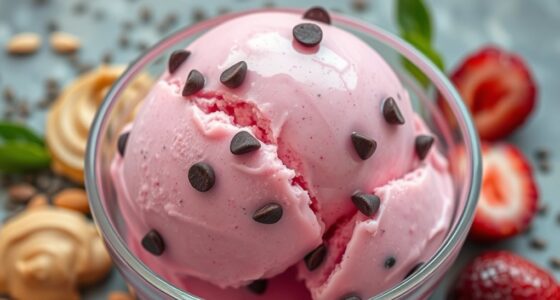
When you choose sugar-free gelato with natural sweeteners like stevia, monk fruit, or erythritol, you’ll notice differences in taste and texture. These alternatives can add subtle aftertastes, such as bitterness or licorice notes, and may change the creamy mouthfeel you’re used to. Chefs often blend sweeteners or add flavor enhancers to help mimic traditional sweetness. To discover how these choices influence your gelato experience and how to enjoy it fully, keep exploring the options.
Key Takeaways
- Natural sweeteners like stevia, monk fruit, and erythritol reduce sugar content but can introduce bitterness or aftertaste.
- They may alter gelato’s texture and mouthfeel, requiring formulation adjustments to maintain creaminess.
- Combining sweeteners or using flavor masking agents helps mimic the full-bodied sweetness of sugar.
- Proper formulation minimizes flavor differences, ensuring a satisfying, guilt-free dessert experience.
- Ongoing recipe improvements aim to closely replicate traditional gelato’s taste and texture with natural, sugar-free alternatives.
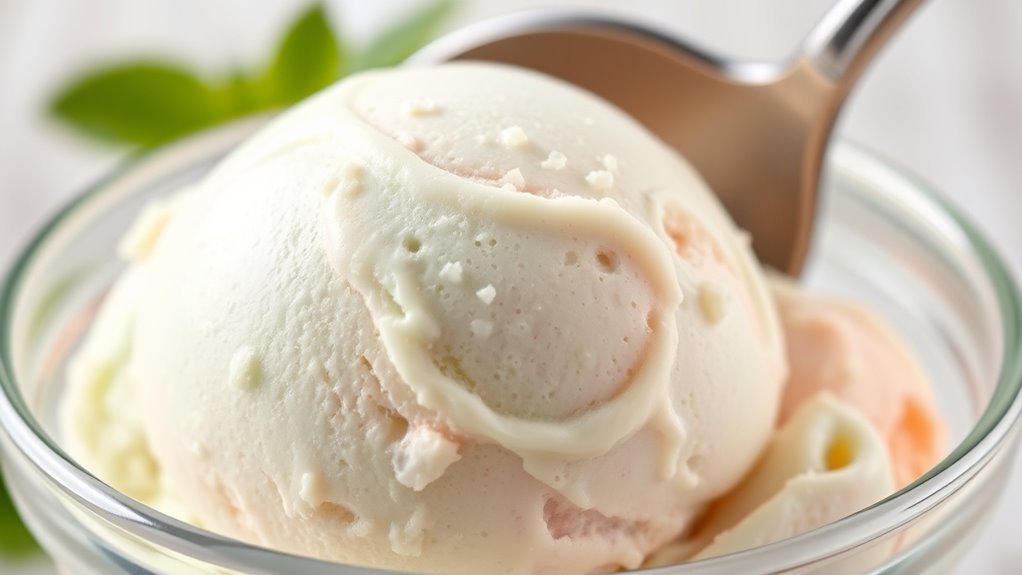
If you’re craving a sweet treat without the sugar spike, sugar-free gelato offers a delicious solution. Many people turn to these options because they want to enjoy dessert without the guilt or blood sugar fluctuations. When it comes to sweeteners, manufacturers often use natural alternatives like stevia, monk fruit, or erythritol. These options appeal to those seeking a more natural approach to their indulgence, avoiding artificial additives that can sometimes leave a bitter aftertaste or cause digestive issues. By using natural alternatives, the goal is to preserve the authentic, creamy texture of gelato while reducing or eliminating sugar.
Craving guilt-free sweetness? Natural sweeteners help preserve gelato’s creamy texture without sugar.
However, incorporating these sweeteners can lead to taste modification, which is a common concern for many consumers. Unlike traditional sugar, which provides a clean, sweet flavor, some natural alternatives have distinct profiles that can influence the overall taste of the gelato. For instance, stevia can sometimes impart a slight bitterness or licorice-like aftertaste, especially if used in excess. Monk fruit, on the other hand, tends to be more neutral but can still vary depending on the concentration and processing. To compensate for these taste differences, manufacturers often blend sweeteners or add natural flavor enhancers to mimic the full-bodied sweetness of sugar. This process helps maintain the rich, satisfying flavor you expect from gelato without compromising on taste.
The challenge lies in balancing sweetness with flavor authenticity. Taste modification occurs because natural sweeteners don’t always behave exactly like sugar during preparation. Sugar not only sweetens but also contributes to the texture and mouthfeel of gelato, so replacing it requires careful formulation. Some brands experiment with flavor masking agents or subtle flavor adjustments to improve the overall experience. Additionally, understanding the divorce statistics can be helpful for those who are navigating personal life changes while seeking comfort in indulgent treats. As a consumer, you might notice that sugar-free gelato isn’t always as intensely sweet as traditional versions, but many find that the trade-off is worth it for the health benefits and the ability to indulge guilt-free.
In the end, the success of sugar-free gelato hinges on how well the natural alternatives and taste modifications are managed. When done correctly, they deliver a creamy, satisfying dessert that aligns with a healthier lifestyle. While some slight differences in flavor or texture might occur, many brands are continually refining their recipes to bring you a product that closely resembles traditional gelato, just without the added sugar. So, if you’re seeking a delicious, lower-sugar option that still hits the spot, sugar-free gelato made with natural alternatives is a compelling choice worth exploring.
![The Perfect Scoop, Revised and Updated: 200 Recipes for Ice Creams, Sorbets, Gelatos, Granitas, and Sweet Accompaniments[A Cookbook]](https://m.media-amazon.com/images/I/41ypbZfII5L._SL500_.jpg)
The Perfect Scoop, Revised and Updated: 200 Recipes for Ice Creams, Sorbets, Gelatos, Granitas, and Sweet Accompaniments[A Cookbook]
As an affiliate, we earn on qualifying purchases.
Frequently Asked Questions
Do Sugar-Free Gelatos Contain Any Hidden Carbs?
Yes, sugar-free gelatos can contain hidden carbs, depending on the gelato flavor and ingredient transparency. Some sweeteners used may have small amounts of carbs, which can add up if you’re sensitive or counting carbs carefully. Always read labels and ask about ingredient transparency to avoid surprises. Being aware helps you enjoy your gelato without unintended carbs, ensuring it fits your dietary needs.
Are Sugar Alcohols in Gelato Safe for Diabetics?
Yes, sugar alcohols in gelato are generally safe for diabetics. They offer benefits like lower glycemic impact and can help maintain stable blood sugar levels. Plus, sugar alcohols enhance gelato flavor by mimicking sweetness without adding hidden carbs. Just remember to consume them in moderation, as excessive intake might cause digestive discomfort. Overall, they’re a smart choice for enjoying sweet treats while managing diabetes.
How Do Artificial Sweeteners Impact Overall Health?
Ever wonder how artificial sweeteners impact your health? They’re metabolized differently than natural sugars, often leading to fewer calories and blood sugar spikes. However, their long-term health effects remain uncertain, with some studies suggesting possible links to digestive issues or changes in gut bacteria. While they can help reduce sugar intake, it’s wise to use them sparingly and stay informed about ongoing research on their safety and overall impact.
Can Sugar-Free Gelato Cause Digestive Issues?
Yes, sugar-free gelato can cause digestive issues like bloating and gas. The sugar alcohols or artificial sweeteners used in sugar-free treats often ferment in your gut, leading to digestive discomfort. If you’re sensitive to these ingredients, you might experience increased bloating, gas, or even stomach cramps. To avoid this, opt for small portions or look for gelato made with natural sweeteners that are gentler on your digestive system.
Are Natural Sweeteners Better for Taste Than Artificial Ones?
Natural sweeteners often provide a more genuine natural sweetness, enhancing the true flavor of gelato without the artificial aftertaste. You’ll likely find that natural options like stevia or honey blend better, offering a smoother, more authentic taste experience. Artificial flavoring can sometimes create an overly sweet or chemical flavor, which may diminish the overall quality of the gelato. For a better, more natural taste, choose natural sweeteners whenever possible.

The Amorino Guide to Gelato: Learn to Make Traditional Italian Desserts―75 Recipes for Gelato and Sorbets
As an affiliate, we earn on qualifying purchases.
Conclusion
Remember, beauty is in the eye of the beholder—and in your taste buds. Sugar-free gelato offers a delightful treat without the sugar crash, thanks to various sweeteners. While some may notice subtle differences in flavor, experimenting lets you find your perfect balance. Don’t forget, “You are what you eat,” so choose wisely and enjoy the guilt-free sweetness. Indulge in guiltless pleasure and savor every spoonful!

Cuisinart Ice Cream Cookbook for Beginners: Create Perfect Frozen Treats with Cuisinart Ice Cream Recipes | Enjoy Classic Ice Creams, Fruity Sorbets, Rich Gelatos, Creamy Frozen Yogurts & More
As an affiliate, we earn on qualifying purchases.

The Complete Cuisinart Homemade Frozen Yogurt, Sorbet, Gelato, Ice Cream Maker Book: 100 Decadent and Fun Recipes for your 2-Quart ICE-30BC
As an affiliate, we earn on qualifying purchases.