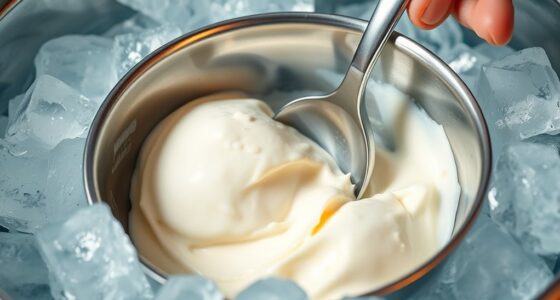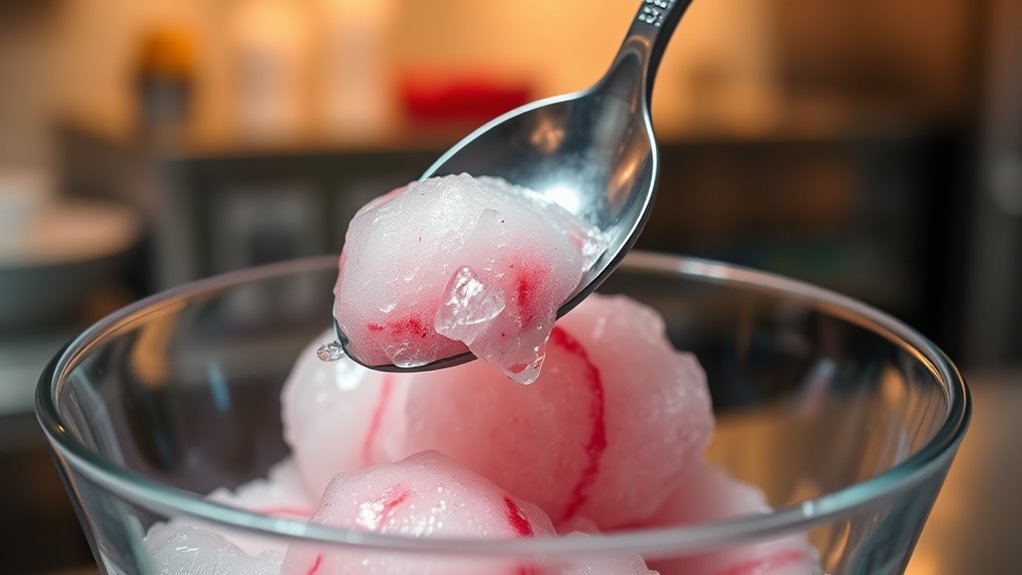

If your sorbet turns out icy, use the rapid reblend technique to fix it. First, let the sorbet soften at room temperature for about 10–15 minutes until it’s scoopable. Then, transfer it to a blender or food processor and blend until smooth and creamy. This process breaks up large ice crystals, improving texture. Afterward, refreeze for a few hours to set. To discover more tips and tricks for perfectively smooth sorbet, keep exploring the details below.

Get baking supplies delivered free with Prime
- Fast, free delivery on millions of items
- Prime Video, Amazon Music and more included
- Member-only deals all year
Key Takeaways
- Let the sorbet soften at room temperature for 10–15 minutes before reblending.
- Transfer the softened sorbet to a blender or food processor for smooth reblending.
- Blend until the mixture is creamy, breaking up large ice crystals for better texture.
- Refreeze the reblended sorbet for a few hours to restore optimal consistency.
- Use ingredient substitutions like fruit puree or alcohol to prevent further ice crystal formation.
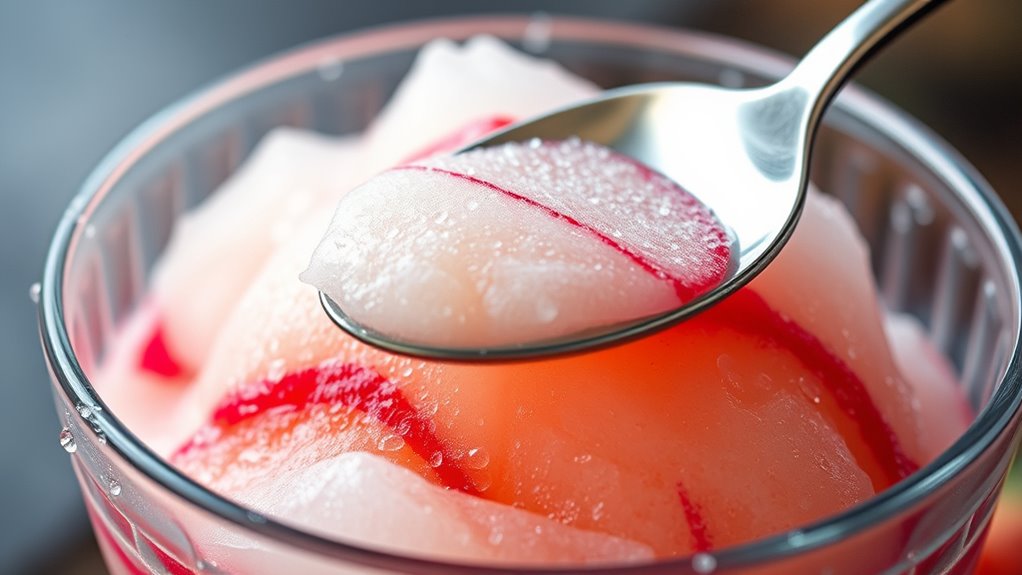
If your sorbet becomes too icy, it’s usually because the mixture froze too quickly or contained excess water, which caused large ice crystals to form. To fix this, let the sorbet soften slightly at room temperature for about 10–15 minutes, then transfer it to a blender or food processor. Blend until the mixture regains a smooth, creamy texture. This process breaks up the large ice crystals, restoring a better mouthfeel. Once blended, refreeze the sorbet for a few hours, and you’ll notice a significant improvement. Incorporating ingredients with a wide color gamut or those that enhance texture can also help prevent icy textures in the first place. Ingredient substitutions can also help prevent icy textures in the first place. For example, replacing some of the water-heavy ingredients with fruit purees or adding a splash of alcohol can lower the freezing point and improve texture. Using dairy or coconut milk instead of water can make your sorbet richer and less prone to ice formation. If you’re using sweeteners, opt for those that don’t freeze hard, like honey or corn syrup, rather than straight sugar. These small tweaks in ingredient substitutions can make a big difference in achieving a smooth, scoopable sorbet.
Storage tips are equally important to avoid excessive ice formation. Always store your sorbet in an airtight container to prevent moisture from the air from forming ice crystals on the surface. Covering the surface directly with plastic wrap before sealing can further reduce ice buildup. When you’re ready to serve, let the sorbet sit at room temperature for a few minutes, which softens it enough to scoop easily. Avoid repeatedly thawing and refreezing the sorbet, as this process encourages ice crystal growth and compromises texture. Instead, scoop what you need and reseal the container immediately.
As an affiliate, we earn on qualifying purchases.
Frequently Asked Questions
Can Rapid Reblending Fix Overly Icy Sorbet Textures?
If your sorbet is too icy, rapid reblending can help improve its texture. By using effective reblending techniques, you break up the ice crystals and incorporate air, leading to a smoother, creamier consistency. You should reblend in short bursts, checking frequently to avoid overmixing. This method allows you to fix the overly icy texture and achieve a more desirable, velvety finish.
How Long Should I Reblend My Sorbet for Best Results?
Your reblend duration can feel like an eternity when you’re trying to fix icy sorbet, but don’t worry—just a quick 30 to 60 seconds usually does the trick. During this time, you’ll see the texture improve dramatically, turning icy chaos into smooth, scoopable goodness. Keep an eye on the consistency, and reblend until you reach that perfect, velvety texture. It’s a small effort for a huge flavor payoff!
Does Adding Alcohol Help Reduce Iciness in Sorbet?
Adding alcohol can help reduce iciness in your sorbet because the alcohol content lowers the freezing point, preventing large ice crystals from forming. Just remember, the more alcohol you add, the softer the sorbet will become. Use a moderate amount—about 1-2 tablespoons per cup of mixture—to achieve a smoother texture without compromising flavor. Adjust based on your desired consistency and flavor profile.
Can Rapid Reblending Affect the Flavor of My Sorbet?
Rapid reblending can impact your sorbet’s flavor if you’re not careful. While it helps with texture and reduces iciness, it may slightly alter ingredient stability and flavor preservation. You might notice subtle changes in taste because of the additional mixing, which can introduce air or cause slight temperature shifts. To minimize flavor loss, blend quickly and gently, ensuring your sorbet retains its original flavor and ingredient integrity.
Is Rapid Reblending Suitable for All Types of Sorbets?
You might wonder if rapid reblending suits all sorbets. It works well for fruit-based blends and dairy-free options, helping to smooth out ice crystals and improve texture. However, for creamy or custard-like sorbets, this method can alter flavor and consistency. So, consider your sorbet type before reblending—it’s great for some textures, but not ideal for all, especially those with delicate or complex flavors.
Conclusion
Now that you know how to troubleshoot icy sorbets with the rapid reblend technique, you’ll be able to enjoy smooth, creamy desserts every time. Did you know that properly blended sorbets can reduce ice crystal formation by up to 30%? That means your treats stay velvety longer. So next time you face icy sorbet, remember this quick fix—you’ll impress everyone with perfectly luscious results, making your frozen creations the highlight of any dessert table.
Columbus Day / Indigenous Peoples' Day Picks
long weekend sales
As an affiliate, we earn on qualifying purchases.