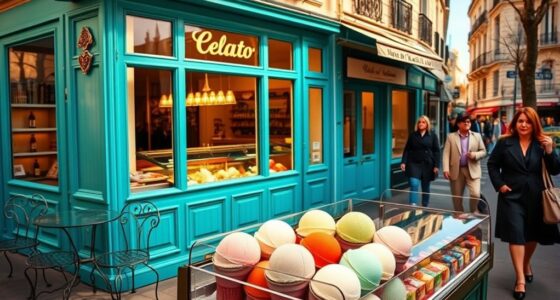

In French culture, “glace” emphasizes refinement, artistry, and seasonal ingredients, making it different from Italian gelato’s dense, intense flavors. French “glace” is often served in elegant portions, highlighting craftsmanship and presentation, and is tied to tradition and celebrations. It balances tradition with sophistication, reflecting France’s culinary elegance. If you want to discover how this cultural approach shapes the experience of “glace,” there’s much more to explore.
Key Takeaways
- French “glace” emphasizes refinement, balance, and artistic presentation, contrasting with the dense, intensely flavored Italian gelato.
- “Glace” in France is served in small, elegant portions, highlighting craftsmanship and aesthetic appeal.
- French “glace” focuses on seasonal ingredients and high-quality produce, reflecting culinary artistry.
- The cultural significance of “glace” is rooted in tradition, celebration, and community, unlike the more flavor-centric Italian gelato.
- French “glace” often pairs with other desserts and is crafted with a focus on elegance and savoring each bite.

Gelato might be more closely associated with Italy, but it has found a charming place in French culture as well. When you think of France, you might picture elegant pastries, delicate éclairs, or rich creams, but ice cream—particularly “glace”—also holds a special spot in French dessert traditions. Unlike Italian gelato, which emphasizes a dense, creamy texture and intense flavor, French “glace” often balances tradition with refinement, reflecting the country’s deep appreciation for culinary artistry. You’ll notice that in France, ice cream isn’t just a simple treat; it’s woven into the cultural fabric, marking celebrations, casual afternoons, and seasonal festivals. The cultural significance of ice cream in France goes beyond taste, embodying conviviality, artistry, and tradition.
In French dessert traditions, ice cream is served with an air of elegance. It’s common to find it accompanying a slice of tart, layered atop a warm crêpe, or served in a refined glass with fresh fruit or a touch of liqueur. French chefs often craft ice cream with seasonal ingredients, respecting the quality and origin of produce—this approach highlights the country’s dedication to fresh, high-quality ingredients and sophisticated presentation. You might notice that French “glace” often appears in small, beautifully crafted portions, emphasizing quality over quantity. This reflects the French philosophy of savoring and appreciating each bite, turning a simple dessert into a memorable experience.
The cultural significance of ice cream in France also lies in its history. It’s been part of French culinary life for centuries, evolving from royal court treats to accessible pleasures enjoyed by all social classes. Festivals like “Fête de la Glace” celebrate this tradition, emphasizing the importance of ice cream as a symbol of joy and community. When you indulge in French “glace,” you’re participating in a tradition that’s rooted in history, artistry, and shared pleasures. The French take pride in their dessert craftsmanship, often making ice cream in-house at patisseries and cafés, showcasing their mastery of flavor and technique.
Frequently Asked Questions
How Do French and Italian Ice Cream Preparation Methods Differ?
You’ll notice French and Italian ice cream preparations differ in their techniques, impacting dessert consistency. Italian gelato uses slow churning at a slightly warmer temperature, resulting in a denser, creamier texture. French glace often employs different churning methods and ingredients, creating a lighter, more aerated dessert. These Italian and French techniques shape the final product, giving each its unique mouthfeel and flavor experience you enjoy.
Is “Glace” Always Sweet, or Are There Savory Options?
Is “glace” always sweet? Not necessarily, and that’s where the plot thickens—imagine a world of savory ice cream and unconventional flavors. While most “glace” is sweet, French cuisine occasionally explores savory options like herbes, cheese, or smoked ingredients. These inventive twists challenge the stereotype of ice cream as solely dessert, inviting you to experience a unique fusion where sweet and savory collide in a delightful, unexpected dance.
How Do French Ice Cream Flavors Compare to Italian Gelato Varieties?
You’ll find French ice cream flavors often reflect French pastry craftsmanship, emphasizing elegance and subtlety, while Italian gelato showcases rich, bold flavors rooted in Italian dessert traditions. French varieties tend to be more refined, featuring ingredients like lavender or pistachio with delicate textures. Italian gelato offers a broader spectrum, from fruity sorbets to creamy chocolate, highlighting a lively, artisanal approach that celebrates bold, authentic flavors.
Are There Regional Differences in French “Glace” Customs Across France?
Yes, you’ll find regional flavor variations and distinct local ice cream traditions across France. In Provence, lavender and honey flavors are popular, while in Brittany, sea salt caramel stands out. In Alsace, apple and cherry flavors reflect local produce, and in the Alps, you might encounter more creamy, rich options. These regional differences give you a delicious variety to explore, showcasing France’s diverse culinary heritage in each area.
How Has French Culture Influenced Modern Gelato Trends Worldwide?
You’re likely to notice how French culture has subtly shaped modern gelato trends worldwide, especially through French pastry influence and Parisian café culture. This blend encourages innovative flavors, elegant presentations, and a focus on quality ingredients. As a result, gelato becomes more than just a treat; it embodies a sophisticated, worldly charm that appeals globally, inviting you to indulge in a cultural experience that’s both refined and delightfully indulgent.
Conclusion
You might be surprised to learn that France consumes over 400 million liters of ice cream annually, yet gelato remains a unique treat with its rich, creamy texture and lower fat content. Understanding how “glace” differs from gelato helps you appreciate this beloved dessert even more. So next time you enjoy a scoop, remember you’re part of a long-standing cultural tradition that celebrates craftsmanship and flavor—something truly worth savoring.