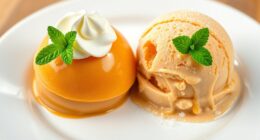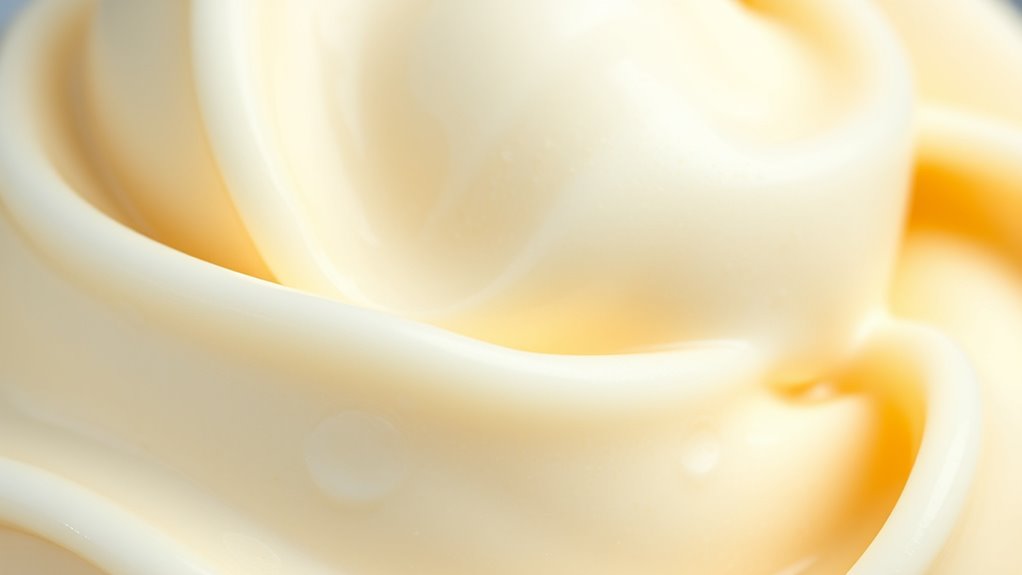
The creamy texture of gelato comes from thermodynamics controlling heat transfer, phase changes, and molecular interactions. Slow, steady cooling creates small ice crystals that give the gelato a smooth mouthfeel, while rapid freezing leads to larger, coarse crystals. Ingredients like sugars, fats, and emulsifiers influence how molecules interact during freezing, affecting texture. Understanding these processes reveals how precise temperature management and ingredient balance produce that perfect, melt-in-your-mouth creaminess—exploring further uncovers how each factor shapes your gelato experience.
Key Takeaways
- Heat transfer rate during freezing controls ice crystal size, affecting gelato’s creaminess and smoothness.
- Proper temperature management ensures uniform phase transitions, preventing large crystals and icy textures.
- Molecular interactions among sugars, fats, and emulsifiers influence crystal formation and gelato stability.
- Slow, controlled cooling promotes smaller crystals, resulting in a silky, uniform texture.
- Efficient heat removal and ingredient balance optimize the thermodynamic conditions for a cold, creamy gelato.
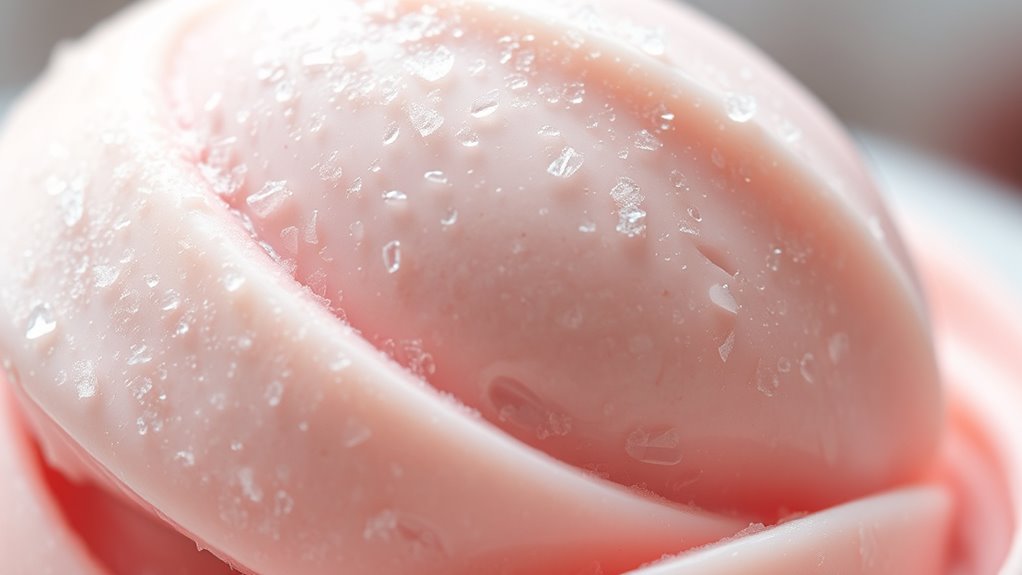
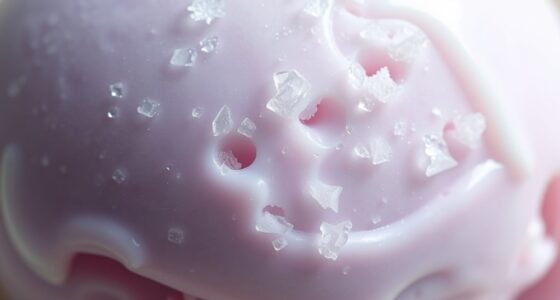
Understanding the thermodynamics behind gelato texture reveals how heat transfer, phase changes, and molecular interactions influence its smoothness and firmness. When you scoop gelato, you’re experiencing the result of complex processes involving heat transfer and phase transitions that control its consistency. As the gelato cools during freezing, heat transfer slows down, allowing the mixture to reach temperatures where water molecules begin to form ice crystals. These phase transitions from liquid to solid are essential because they determine the size and distribution of ice crystals, which directly impact the gelato’s texture. Smaller, uniformly distributed ice crystals create that characteristic smoothness, while larger ones can make it feel gritty or icy.
Heat transfer, especially during the freezing process, is what governs how quickly the gelato cools and how these phase transitions unfold. If heat is removed too rapidly, ice crystals form quickly, resulting in a coarse texture. Conversely, controlled, gradual cooling allows for the formation of smaller crystals, leading to a creamier mouthfeel. This process relies on precise temperature control and efficient heat transfer mechanisms—like agitation or consistent cooling—to guarantee uniform freezing. As heat is extracted from the mixture, the molecular interactions change: water molecules slow down, cluster, and eventually freeze, while other ingredients like sugars and fats influence the freezing point and crystal growth. Efficient heat transfer plays a crucial role in achieving the ideal gelato texture by controlling the rate of cooling and crystal formation.
The interactions among molecules also play a key role. Sugars lower the freezing point, preventing the mixture from becoming too solid and helping maintain a smooth texture. Fats and emulsifiers further influence how molecules interact, stabilizing the mixture and preventing large crystal formation. These molecular interactions are directly affected by temperature changes during phase transitions, which is why temperature management is so essential in gelato making.
Frequently Asked Questions
How Does Air Incorporation Affect Gelato’s Coldness and Creaminess?
Incorporating air bubbles into gelato makes it feel creamier and lighter, enhancing its texture stability. This process traps air, which lowers the density and helps it stay cold longer. As a result, your gelato appears more luscious and smooth. The air also prevents ice crystals from forming too large, maintaining a consistent, velvety texture. So, by adding air, you boost both coldness retention and overall creaminess in your gelato.
What Role Does Fat Content Play in Gelato’s Texture?
Imagine sinking your spoon into a rich, velvety gelato—that’s the magic of fat content shaping its texture. Higher fat levels promote fat crystallization, creating a smooth, buttery mouthfeel, while protein interactions stabilize the structure. This balance prevents ice crystallization from becoming coarse, keeping your gelato irresistibly creamy. So, your fat not only adds flavor but also orchestrates the delicate dance of texture and stability.
Can Temperature Fluctuations Change Gelato’s Thermodynamic Properties?
Yes, temperature fluctuations can change gelato’s thermodynamic properties. When temperatures vary, they affect thermal stability, causing phase shifts like melting or recrystallization. These shifts alter the gelato’s texture, making it less smooth or more icy. You’ll notice these changes if gelato warms slightly or cools unevenly, disrupting its ideal structure. To maintain perfect texture, you should keep gelato at consistent, cold temperatures to prevent undesirable phase transitions.
How Does Sugar Concentration Influence Gelato’s Melting Behavior?
Think of sugar concentration as a key that unlocks gelato’s melting point. When you add more sugar, it lowers the melting point, making the gelato melt faster like snow in the sun. Higher sugar levels also inhibit sugar crystallization, creating a smoother texture. So, by adjusting sugar, you control how quickly your gelato transitions from solid to liquid, ensuring each scoop stays just right on a warm day.
What Are the Microscopic Mechanisms Behind Gelato’s Smooth Texture?
You notice gelato’s smooth texture because molecular interactions between fats, proteins, and sugars create a stable network. These interactions inhibit large crystal formation, resulting in tiny ice crystals that feel creamy. As you freeze the gelato, these molecules limit crystal growth, maintaining a fine, smooth consistency. This delicate balance guarantees your gelato remains velvety on your palate, with microscopic interactions working behind the scenes to deliver that signature texture.
Conclusion
As you savor that perfect scoop of gelato, remember it’s more than just flavor—it’s science in every bite. Just like a finely tuned engine, the right balance of temperature and ingredients creates that creamy, smooth texture you love. Think of it as a delicate dance, where each thermodynamic step guarantees your treat stays luscious and firm. Next time you indulge, appreciate the science behind the bliss—cold, creamy, and precisely engineered for perfection.