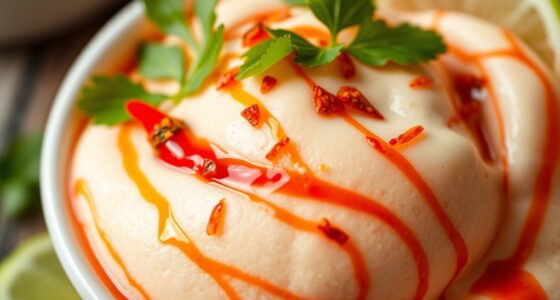
Middle Eastern flavors like pistachio, rose, and saffron define a rich culinary heritage that blends tradition, artistry, and history. You’ll find these ingredients in gelatos, pastries, and desserts, bringing vibrant colors and complex tastes. Pistachios symbolize prosperity, while rosewater and saffron add floral and earthy notes rooted in centuries of craftsmanship. Exploring these flavors reveals the region’s cultural depth and culinary secrets—uncover how history shapes each sweet bite.
Key Takeaways
- Pistachio, rose, and saffron are iconic flavors deeply rooted in Middle Eastern dessert traditions.
- These ingredients are valued for their aromatic, vibrant, and culturally significant qualities.
- Pistachios symbolize prosperity and are used in various sweets and garnishes.
- Rosewater and saffron add floral and luxurious notes to gelato, reflecting centuries-old craftsmanship.
- Combining these flavors creates a sensory experience that celebrates Middle Eastern culinary heritage.
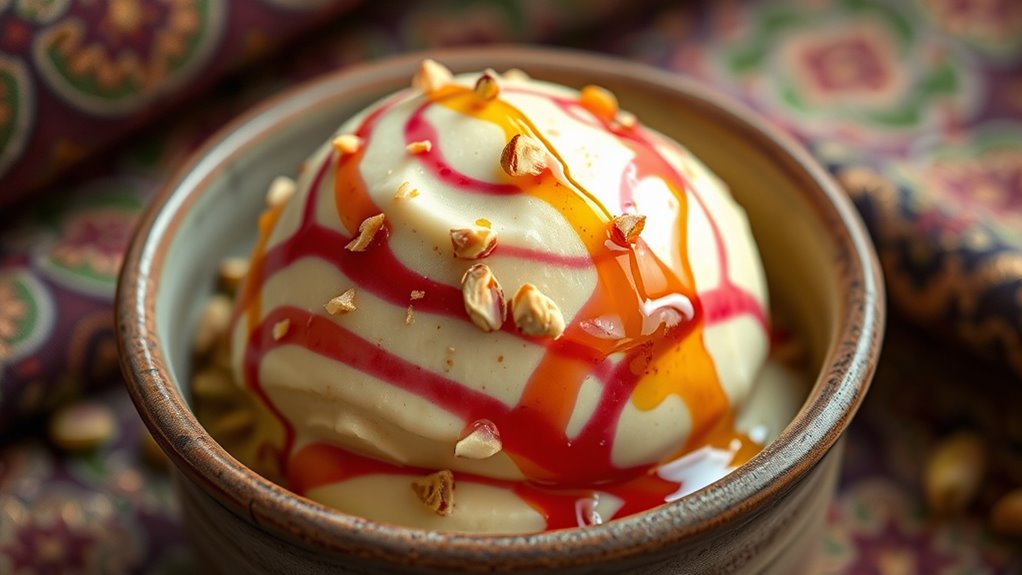
Middle Eastern flavors offer a vibrant and aromatic palette that instantly transports your taste buds to a region rich in history and tradition. When you explore desserts from this part of the world, you’re diving into a culinary heritage that dates back centuries. The history of Middle Eastern desserts is deeply intertwined with the region’s social and religious customs. Many sweets originally served as offerings during festivals or special occasions, and over time, they became everyday indulgences. Dishes like baklava, knafeh, and ma’amoul showcase the artistry and rich flavors that have been passed down through generations. These desserts often incorporate ingredients like honey, nuts, and spices, which reflect the region’s access to fertile lands and trading routes. As you savor these treats, you’re experiencing a legacy of craftsmanship and cultural exchange that has shaped Middle Eastern sweet-making for centuries. Authentic recipes often emphasize traditional techniques passed down through families, ensuring the preservation of regional flavors.
A key ingredient that defines many Middle Eastern desserts is pistachios. Their cultural significance extends beyond flavor; pistachios symbolize prosperity, fertility, and hospitality in many Middle Eastern communities. You’ll notice them prominently featured in a variety of sweets, from layered pastries to ice creams. Their vibrant green hue adds visual appeal, but it’s their complex, slightly sweet flavor that truly elevates the desserts. Pistachios are often used as a garnish, ground into pastes, or incorporated into doughs, ensuring each bite is rich with tradition and meaning. When you include pistachios in your own culinary creations, you’re connecting with a history that celebrates both nature’s bounty and the region’s artistry. Their enduring popularity highlights their importance not just as an ingredient but as a cultural emblem.
In essence, exploring Middle Eastern desserts is like taking a journey through history and culture. The flavors of pistachios, rose, and saffron are more than just ingredients—they’re stories in themselves. As you taste a saffron-infused gelato or a rosewater-flavored pastry, you’re experiencing centuries of tradition, craftsmanship, and cultural significance woven into every bite. These sweets are a tribute to the region’s ability to turn simple ingredients into extraordinary delights. So, next time you indulge in a Middle Eastern dessert, remember that you’re not just savoring a treat; you’re participating in a centuries-old celebration of flavor, history, and cultural pride.
Frequently Asked Questions
What Is the History Behind Middle Eastern Gelato Flavors?
You’re curious about the history behind Middle Eastern gelato flavors, which reflect rich cultural significance and culinary evolution. These flavors, like pistachio, rose, and saffron, have been treasured for centuries, symbolizing luxury and tradition. Over time, they’ve blended local ingredients with modern techniques, creating a unique dessert experience that honors history while evolving with contemporary tastes. This blend keeps Middle Eastern flavors vibrant and relevant today.
How Are Pistachios Traditionally Prepared for Gelato?
You start by roasting pistachios to enhance their flavor and bring out their natural oils. Once cooled, you blend them into a smooth paste, ensuring a rich texture for the gelato. To add a delicate floral note, you infuse the cream with rose petals, creating a fragrant base. This combination results in a creamy, aromatic pistachio gelato that captures traditional Middle Eastern flavors beautifully.
What Are the Health Benefits of Saffron in Desserts?
Imagine a spice that not only delights your senses but also nurtures your well-being. Saffron offers remarkable antioxidant properties that combat oxidative stress, helping your body stay healthy. Plus, its mood enhancement benefits can lift your spirits, making desserts more than just a treat—they’re a mood booster. Incorporating saffron into your dishes can elevate both your mental and physical health, turning each bite into a moment of joy.
Can These Flavors Be Used in Other Desserts Besides Gelato?
Absolutely, you can use pistachio, rose, and saffron in various desserts beyond gelato. Think about creating delightful dessert pairings like pistachio baklava, rosewater macarons, or saffron-infused puddings. These flavor combinations add depth and elegance to cakes, tarts, and mousses. Experimenting with these flavors allows you to craft unique treats that highlight the rich, aromatic qualities of each ingredient, elevating your dessert menu.
Are There Regional Variations of These Flavors Across the Middle East?
You might think these flavors are uniform across the Middle East, but regional ingredient sourcing and cultural flavor adaptations create distinct variations. In Persia, saffron is more intensely used, while in Lebanon, rose water is milder. Pistachios vary in quality and flavor depending on local harvests. So, yes, you’ll find regional differences that reflect local tastes and traditions, making each rendition uniquely authentic.
Conclusion
So, next time you crave a scoop of adventure, skip the mundane vanilla and immerse yourself in Middle Eastern magic. Pistachio, rose, and saffron aren’t just flavors—they’re a passport to a land of rich traditions and bold tastes. Who knew a simple gelato could turn your day around? Trust me, your taste buds will thank you, and your friends will wonder where you’ve been hiding such exotic secrets. It’s not just ice cream; it’s a flavor revolution.