

To avoid brain freeze, slow down when you eat or drink cold foods. Take smaller bites or sips, and keep cold items towards the back of your mouth or on your tongue rather than the roof. Using a straw can help limit cold contact with the palate. Pressing your tongue against the roof of your mouth or warming the area can also ease the sensation. If you want more tips, you’re about to discover some effective strategies.
Key Takeaways
- Eat cold foods slowly and take smaller bites or sips to minimize the cold stimulus.
- Keep cold items toward the back of the mouth or on the tongue to avoid direct contact with the palate.
- Use a straw to limit cold contact with the roof of the mouth.
- Press your tongue against the roof of your mouth or warm the area with your tongue when feeling the sensation.
- Gradually introduce cold foods to allow your nervous system to adapt and reduce the likelihood of brain freeze.
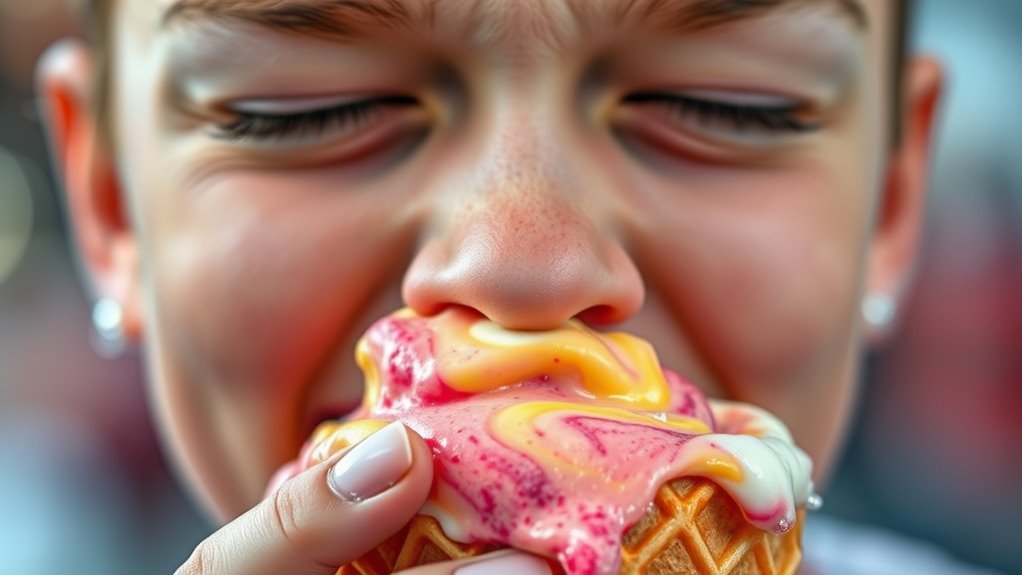
Have you ever experienced that sudden, sharp headache after eating or drinking something cold? If so, you’re not alone. That intense, fleeting pain is what many call brain freeze or ice cream headache. It happens when a cold sensation hits the roof of your mouth, triggering a sensory response that causes blood vessels in your head to react quickly. The cold sensation stimulates nerves in your palate, setting off a chain reaction that results in pain radiating into your forehead or temples. Understanding this process can help you prevent or minimize the discomfort next time you indulge in a chilly treat.
Your body’s sensory response to cold is quite sensitive, especially in the mouth and throat. When you take a bite of icy ice cream or sip a frozen drink, the cold quickly cools the palate, sending signals to your brain that something is happening. To protect itself, your body reacts by dilating blood vessels in the area, which can cause a rapid increase and then a decrease in blood flow. This sudden vascular change is what causes the pain — a sharp, stabbing headache that can catch you off guard. Knowing this, you can take steps to reduce the cold sensation and slow down your sensory response, giving your mouth and brain more time to adjust.
One effective way to avoid brain freeze is to eat or drink cold items more slowly. When you take smaller bites or sips, the cold reaches the roof of your mouth gradually, giving your body a chance to adapt without triggering a strong sensory response. Keep the cold food or drink in your mouth for a few seconds before swallowing, allowing your tongue and palate to warm the area slightly. If you notice the cold sensation intensifying, pause and press your tongue against the roof of your mouth. The warmth from your tongue can help warm the cold area, reducing the intensity of the sensory response and preventing the headache.
Another tip is to keep the cold item away from the very front of your mouth. Instead, try to keep it in the back of your mouth or on your tongue, where the cold impact is less direct. Drinking through a straw can also help, as it limits the contact of the cold with the roof of your mouth. Additionally, warming the item slightly or letting it sit at room temperature for a few moments before eating can make a significant difference. These strategies slow the cold’s effect, giving your nervous system time to process the sensation more gradually, which reduces the likelihood of triggering a brain freeze.
Top picks for "avoid brain freeze"
Open Amazon search results for this keyword.
As an affiliate, we earn on qualifying purchases.
Frequently Asked Questions
Can Brain Freeze Occur From Cold Drinks Besides Ice Cream?
Yes, brain freeze can happen from cold beverages like chilled drinks, not just ice cream. When you quickly swallow or sip a cold beverage, it causes rapid cooling of the palate, triggering the same nerve response as with ice cream. To prevent this, take small sips and avoid holding cold drinks against the roof of your mouth. This way, you reduce the risk of that sudden, painful brain freeze.
Does Eating Ice Cream Slowly Prevent Brain Freeze?
Think of your mouth as a race car speeding toward the finish line; eating ice cream slowly is like easing off the accelerator. Yes, eating slowly can prevent brain freeze because it reduces your sensory sensitivity and the rapid cold transfer to the palate. When you take small bites, you give your mouth time to warm up, avoiding that sharp, sudden ache. So, savor each spoonful to keep the headache at bay.
Are Certain People More Prone to Brain Freeze?
Yes, some people are more prone to brain freeze due to genetic predisposition and age-related sensitivity. If you have a family history of migraines or sensitivity to cold, you might experience brain freeze more intensely. Younger individuals and those with thinner palate tissues also tend to be more affected. Knowing your predisposition helps you take precautions, like eating ice cream slowly or avoiding overly cold treats altogether.
How Long Does a Typical Brain Freeze Last?
Imagine you’re living in a time when ice cream was a rare treat—your brain freeze typically lasts about 5 to 30 seconds. You should stay aware of the symptom duration, as it’s usually brief but can feel longer if you don’t stop eating cold treats quickly. The key is to recognize the duration awareness, so you can enjoy your ice cream without discomfort. Usually, it resolves on its own, just like a quick flash of lightning.
Can Drinking Warm Liquids Reduce Brain Freeze Symptoms?
Drinking warm liquids can help reduce brain freeze symptoms by warming the palate and easing the cold shock that triggers the headache. When you feel a brain freeze coming on, sip slowly on warm fluids to promote circulation and prevent the sudden constriction of blood vessels. Incorporating warm liquids into your ice cream routine acts as a simple brain freeze prevention method, allowing you to enjoy frozen treats without discomfort.
Conclusion
Now that you know how to prevent brain freeze, you’re armed with the secret to enjoying ice cream without the icy pain. Think of your palate as a fortress, guarding your enjoyment from the icy invader. By taking small bites and warming your mouth, you’ll outsmart that sudden headache. So go ahead, indulge in your favorite frozen treats—just remember, with these tips, you hold the power to conquer the chill. Savor every spoonful, pain-free!