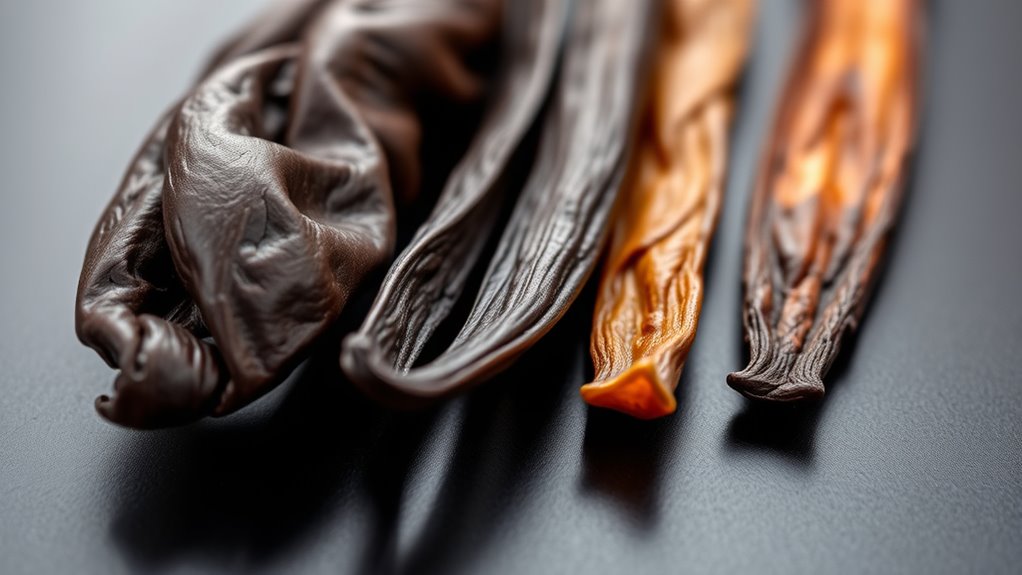

Bourbon vanilla offers a smooth, creamy sweetness with caramel and spice hints, perfect for baking. Tahitian vanilla is floral and fruity with a perfumed aroma, ideal for adding a vibrant, exotic touch. Mexican vanilla provides bold, smoky, and earthy flavors with a spicy undertone, great for deep, complex recipes. Each variety’s unique environment influences its taste, so understanding these differences helps you choose the perfect vanilla. Keep exploring to discover how each type can elevate your dishes.
Key Takeaways
- Bourbon vanilla from Madagascar has a rich, creamy, sweet aroma with caramel and spice notes.
- Tahitian vanilla features plumper beans with floral, fruity, and perfumed scents, ideal for delicate dishes.
- Mexican vanilla offers a bold, earthy flavor with smoky, spicy, and woody undertones.
- Cultivation methods and environment significantly influence each vanilla variety’s unique flavor profile.
- Understanding these differences helps select the best vanilla type for specific culinary applications.

Vanilla beans are often considered a simple ingredient, but there’s more to their story than meets the eye. When you explore vanilla cultivation, you discover that this delicate crop requires specific conditions, which influence the flavor profiles that make each variety unique. Vanilla cultivation involves careful tending of the orchids, often in tropical climates, where temperature, humidity, and soil quality play essential roles. These factors impact not only the growth but also the aromatic qualities of the beans. As you explore different types, you’ll notice how the environment shapes their distinct characteristics, making vanilla more complex than just a sweet flavoring.
Bourbon vanilla, for instance, is primarily cultivated in Madagascar and the surrounding islands. It’s known for its rich, creamy, and sweet aroma, with subtle hints of caramel and spice. This variety’s flavor profile is often described as smooth and well-rounded, making it a favorite for baking and desserts. The term “Bourbon” doesn’t refer to the liquor but rather to the region’s historical ties to the Bourbon dynasty, and it highlights the beans’ deep, luscious flavor. The vanilla cultivation process here is meticulous, with curing methods that enhance the beans’ natural sweetness and complexity.
Tahitian vanilla offers a stark contrast. Grown mainly in French Polynesia, it produces beans that are plumper and darker, with a more floral and fruity aroma. Its flavor profile is often described as more perfumed, with a hint of cherry or berry-like undertones. This variety’s cultivation involves slightly different techniques to preserve its delicate, aromatic qualities. You’ll find that Tahitian vanilla is prized for its vibrant, exotic scent, which lends a unique dimension to culinary creations. Its flavor profile tends to be more intense and less sweet than Bourbon, making it perfect for adding a fragrant touch to both sweet and savory dishes.
Finally, Mexican vanilla stands out for its rich history and distinctive flavor. It’s often considered the original vanilla, with a deep, complex profile featuring smoky, spicy, and woody notes alongside sweetness. Mexican vanilla cultivation is rooted in tradition, with curing methods that bring out its full-bodied aroma. When you use Mexican vanilla, you’re experiencing a taste that’s more robust and earthy, ideal for adding depth to your recipes.
Understanding these differences helps you pick the right vanilla for your needs. Whether you prefer the smooth, sweet notes of Bourbon, the floral and fruity essence of Tahitian, or the bold, spicy character of Mexican vanilla, appreciating the nuances begins with knowing how vanilla cultivation shapes their unique flavor profiles.
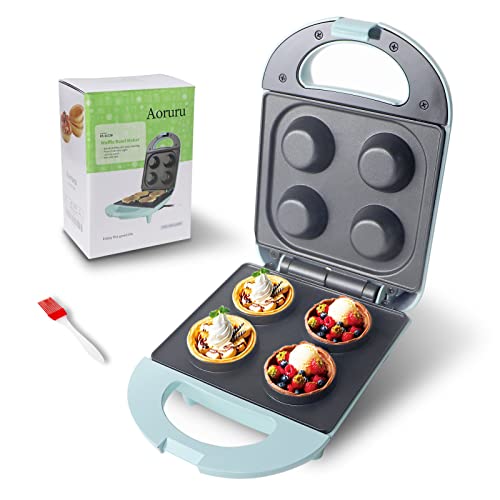
Aoruru Mini Waffle Bowl Maker 4 Belgium Waffle Bowls
KIDS LOVE IT: This waffle bowl maker is perfect for a birthday party and kids will love it....
As an affiliate, we earn on qualifying purchases.
Frequently Asked Questions
How Should I Store Vanilla Beans for Maximum Freshness?
To keep your vanilla beans fresh, store them properly by following simple storage tips. Keep them in an airtight container or glass jar to prevent exposure to air, which can reduce freshness. Avoid refrigerating, as moisture can spoil the beans. Instead, store them in a cool, dark place, like a pantry. This preserves their aroma and flavor, ensuring maximum freshness and potency whenever you need them.
Can Vanilla Beans Be Used as a Natural Food Coloring?
You might think vanilla beans are only for flavor, but they can also serve as a natural food coloring. When you scrape the seeds and steep the pods, you create a vanilla bean dye that imparts a subtle, warm hue to baked goods and desserts. This natural food coloring adds depth and aroma, making your recipes not just colorful but also richer in flavor. Give it a try for a beautiful, natural touch.
Are There Health Benefits Associated With Different Vanilla Varieties?
You might wonder if different vanilla varieties offer health benefits. While vanilla is known for its rich flavor, it also contains vanilla antioxidants, which can help fight free radicals. Some varieties, like Tahitian vanilla, may have higher levels of these antioxidants, potentially providing added health benefits. However, the overall health impact is modest, so enjoy vanilla for its flavor and aroma, but don’t rely solely on it for health improvements.
How Do Vanilla Beans Influence the Flavor Profile of Baked Goods?
Did you know that vanilla beans can contain over 250 different flavor compounds? When baking, you’ll notice vanilla bean varieties markedly influence your treats’ flavor profile. For instance, bourbon vanilla adds warmth and sweetness, while Tahitian vanilla offers floral and fruity notes. By choosing the right vanilla bean, you enhance your baked goods’ flavor, creating a richer, more complex taste that elevates your baking experience.
Are There Sustainable or Ethical Concerns With Vanilla Bean Cultivation?
You should consider the sustainable farming and ethical sourcing of vanilla beans. Some cultivation practices can harm the environment or exploit workers, so it is crucial to choose brands committed to fair labor and eco-friendly methods. By supporting companies that prioritize sustainable farming and ethical sourcing, you help promote better conditions for farmers and reduce environmental impact, ensuring vanilla production aligns with responsible and conscientious practices.

Dash Mini Waffle Maker- Compact Electric Iron for Creative Homemade Treats - Nonstick Surface - Easy-to-Clean - Perfect for Kids & Families - Aqua
Mini Waffle Magic: The Dash Mini Waffle Makeris a compact, lightweight device that quickly creates delicious waffles with...
As an affiliate, we earn on qualifying purchases.
Conclusion
Now that you know the differences between bourbon, Tahitian, and Mexican vanilla beans, you can choose the perfect one to elevate your culinary creations. Think of vanilla as the silent superstar in your kitchen, quietly transforming ordinary dishes into extraordinary treats. Whether you prefer the rich depth of bourbon, the floral charm of Tahitian, or the bold spiciness of Mexican, your choice will add a splash of magic. Let your taste buds be the guide and enjoy every flavorful bite!
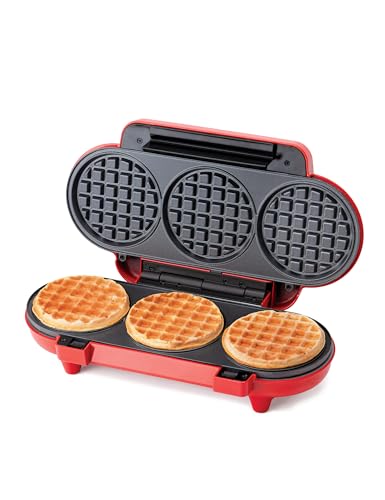
Betty Crocker Mini Multi-Waffle Maker, 1200W Kitchen Appliance for Home and Kitchen, Makes 3 Waffles at Once, Non-Stick Coating, Automatic Temperature Control, Cool Touch Handle, BC-5886R, Red
Wonderful Waffles: This mini waffle maker is perfect for tight spaces and small kitchens. Make three delicious 4"...
As an affiliate, we earn on qualifying purchases.

FineMade Mini Waffle Maker, Mini Waffle Iron, Waflera Electrica, Small Waffle Maker for Kids, Baby wafflera, Makes 8×2" Tiny Waffle Bites, Non-stick Surface, Ideal for Breakfast, Dessert and Snacks
[ONE BATCH FOR ALL]: This small waffle iron bakes 8 mini waffles at a batch. Quickly satisfying kids'...
As an affiliate, we earn on qualifying purchases.