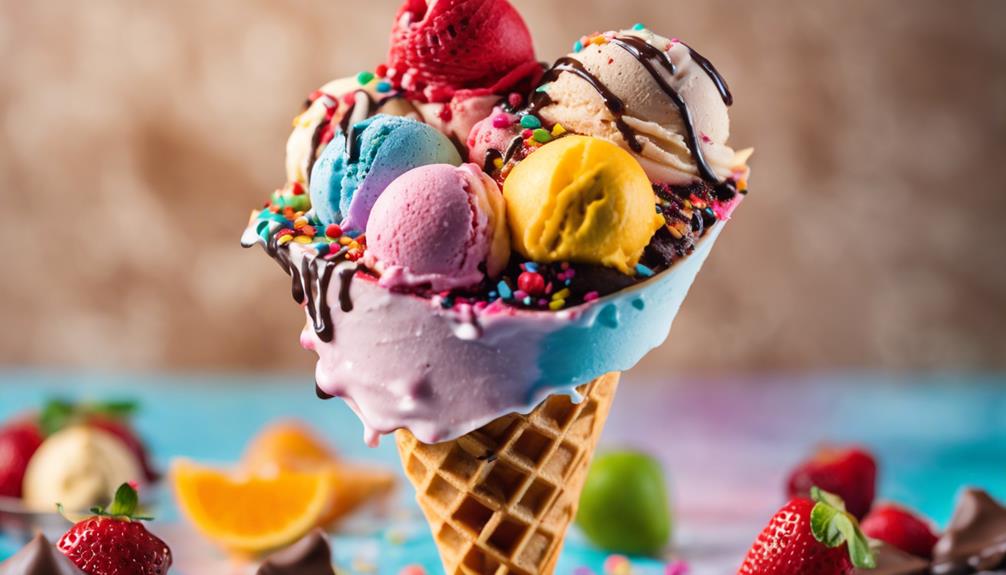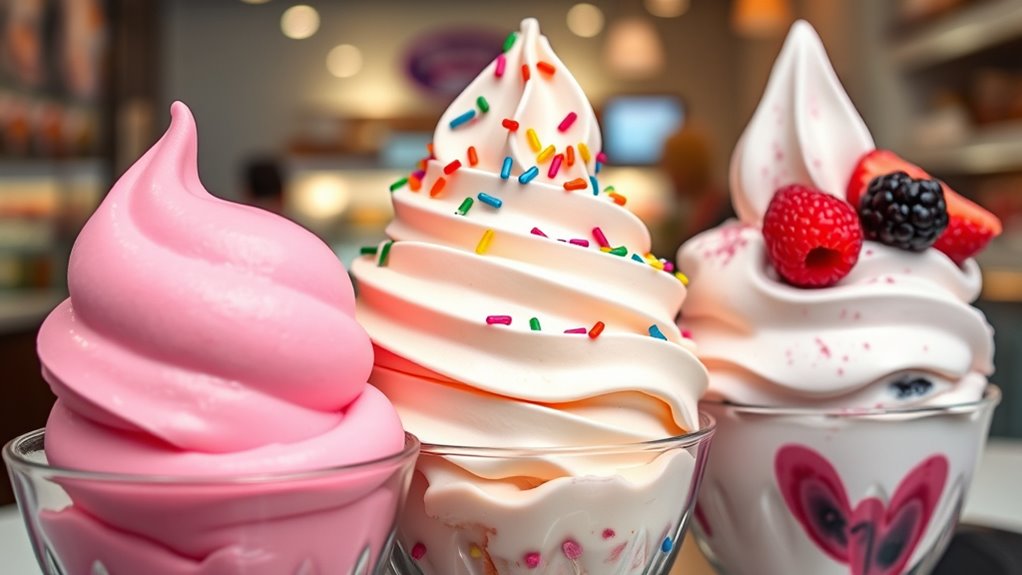

If you’re choosing between gelato, soft serve, and frozen yogurt, consider their textures and flavors. Gelato offers a dense, velvety texture with intense, vibrant flavors served at warmer temperatures. Soft serve is light, airy, and ideal for quick enjoyment, while frozen yogurt provides a tangy, revitalizing taste with health benefits. Each has its unique appeal, and exploring their differences helps you pick the perfect treat—stick around to learn more about what sets them apart.
Key Takeaways
- Gelato has a dense, velvety texture with intense flavors, served slightly warmer for enhanced taste.
- Soft serve is lighter, airy, and served colder, offering a quick, melt-in-your-mouth experience.
- Frozen yogurt features a tangy, creamy texture with probiotics, making it a healthier and customizable option.
- Flavor profiles vary: gelato highlights rich, vibrant tastes; soft serve offers simple, classic flavors; frozen yogurt balances fruitiness and tang.
- Texture and fat content differ, with gelato being smooth and low-fat, soft serve lighter and moderate in fat, and frozen yogurt lighter with probiotic benefits.
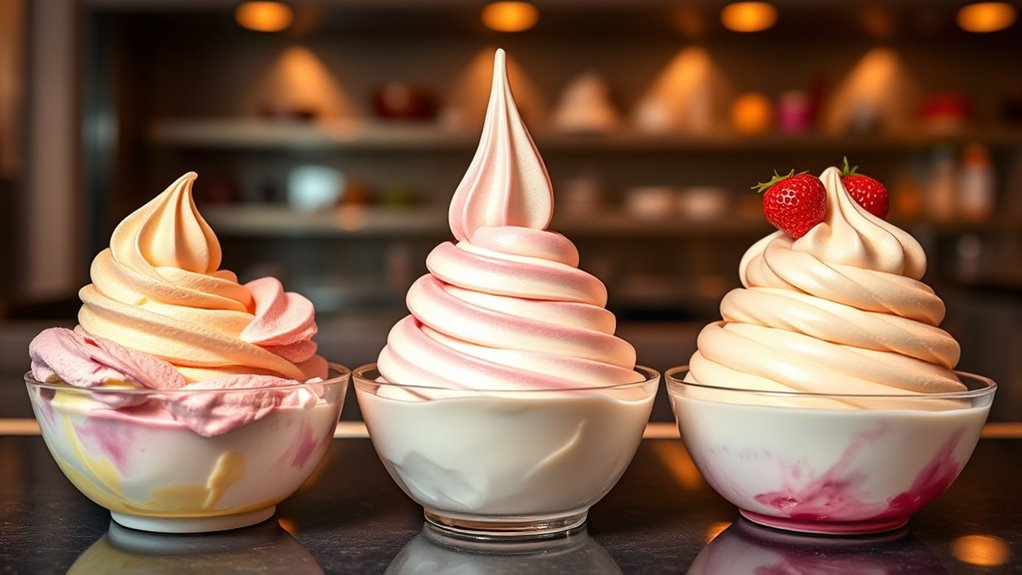
When it comes to beating the summer heat, few treats are as satisfying as a frozen delight. Whether you’re craving something creamy, icy, or somewhere in between, understanding the differences between gelato, soft serve, and frozen yogurt can help you choose the perfect cool-down. Each of these treats offers unique texture comparisons and flavor variations that appeal to different tastes and preferences.
Gelato is renowned for its dense, smooth texture. Unlike traditional ice cream, gelato is churned at a slower speed, which incorporates less air and results in a richer, creamier consistency. When you take a spoonful, you’ll notice its velvety feel and intense flavor concentration. The flavor variations in gelato tend to be more vibrant, often highlighting fresh fruits, nuts, or chocolates. Because it’s served at slightly warmer temperatures than ice cream, the flavors come across more pronounced, allowing you to savor each bite fully. Additionally, gelato generally contains less fat than ice cream, emphasizing the flavor even more.
Gelato’s dense, smooth texture and vibrant flavors create a velvety, intensely flavorful summer treat.
Soft serve, on the other hand, offers a lighter, fluffier texture. It’s churned quickly with more air, making it less dense and more airy on your tongue. This texture makes soft serve feel more delicate and easier to eat in larger quantities if you’re feeling especially indulgent. The flavor variations are often simpler but still delightful, with classic options like vanilla, chocolate, and swirl combinations. Soft serve’s smoothness and mild sweetness create a pleasant, melt-in-your-mouth experience that’s perfect for quick enjoyment or when you want something less heavy.
Frozen yogurt presents yet another distinct profile. Its texture is typically creamier than ice pops but lighter than gelato, thanks to the live cultures and added probiotics. The consistency tends to be slightly tangy, adding an invigorating twist to the cold treat. Flavor variations in frozen yogurt often include fruit-based options, like berries or mango, along with more traditional flavors. The tanginess complements the sweetness, giving it a balanced taste that feels a bit healthier. Plus, frozen yogurt is often served with toppings, allowing you to customize your experience and add a crunch or extra fruit to enhance the flavor.
In the end, your choice depends on what you’re craving. Do you want an intensely flavorful, velvety experience? Go for gelato. Prefer something light, airy, and quick to enjoy? Soft serve is your best bet. Looking for a tangy, customizable treat with probiotic benefits? Frozen yogurt fits the bill. Each offers a unique texture comparison and flavor variation, so why not try them all and see which one hits the spot on a hot summer day? Exploring indoor and outdoor plant options can also add a refreshing touch to your environment after enjoying your treat.
Frequently Asked Questions
Which Frozen Treat Has the Highest Sugar Content?
You’ll find that frozen yogurt generally has the highest sugar content among these treats. In a sugar content comparison, frozen yogurt often contains more added sugars to enhance flavor, while gelato and soft serve tend to have slightly lower amounts. Nutritional differences vary depending on recipes, but if you’re watching sugar intake, be aware that frozen yogurt might surprise you with its sweetness. Always check labels for the most accurate info.
Are There Dairy-Free Options for Each Treat?
You can find dairy-free alternatives and vegan options for all three treats. Gelato often has coconut or almond milk-based varieties, soft serve offers soy or cashew milk options, and frozen yogurt brands increasingly feature dairy-free formulations. While these alternatives may differ in texture and flavor, they’re perfect if you’re seeking dairy-free choices. So, whether you prefer gelato, soft serve, or frozen yogurt, plenty of vegan options are available to satisfy your craving.
How Do Storage Methods Affect Flavor Quality?
You should pay attention to storage temperature and container material, as they directly impact flavor quality. Keep your frozen treats at a consistent, cold temperature to prevent ice crystals that dilute taste. Use airtight, non-reactive containers like stainless steel or BPA-free plastic to avoid flavor transfer and preserve freshness. Proper storage guarantees your gelato, soft serve, or frozen yogurt stays flavorful and creamy every time you enjoy them.
Which Treat Is Best for Sensitive Teeth?
In the days of yore, soft serve was king, and today, it’s often best for sensitive teeth. If you have tooth sensitivity, opt for frozen yogurt or gelato, as they generally have lower sugar levels and smoother textures, reducing discomfort. Soft serve’s colder temperature and sugar content can trigger sensitivity. Choose treats with less sugar and a creamier consistency to enjoy your frozen delights without pain.
Do All Treats Contain Artificial Flavors or Preservatives?
Not all frozen treats contain artificial ingredients or preservatives. Many gelatos, soft serves, and frozen yogurts are made with natural ingredients, but some brands include artificial flavors and preservatives to enhance taste and shelf life. You should check labels carefully, as preservative presence varies by product. Opting for organic or homemade options can help you avoid artificial ingredients altogether, ensuring a more natural treat for sensitive teeth and health-conscious choices.
Conclusion
Now that you’ve explored gelato, soft serve, and frozen yogurt, you can pick your perfect summer companion. Each offers a unique flavor and texture, like different paints on an artist’s palette. Whether you crave the rich creaminess of gelato, the airy lightness of soft serve, or the tangy zest of frozen yogurt, it’s all about your personal preference. So go ahead, indulge—your ideal frozen treat is waiting, ready to cool you down like a invigorating splash on a hot day.