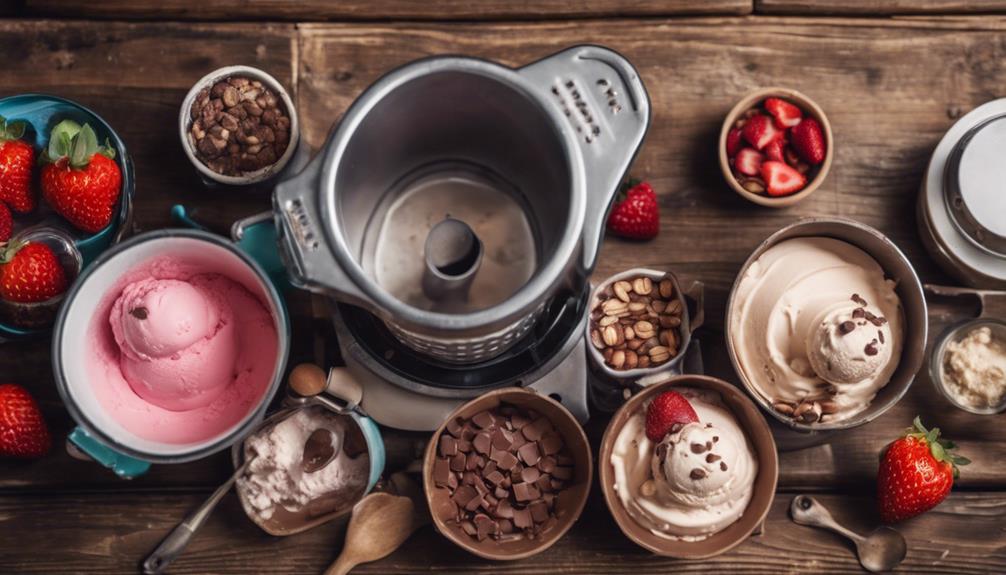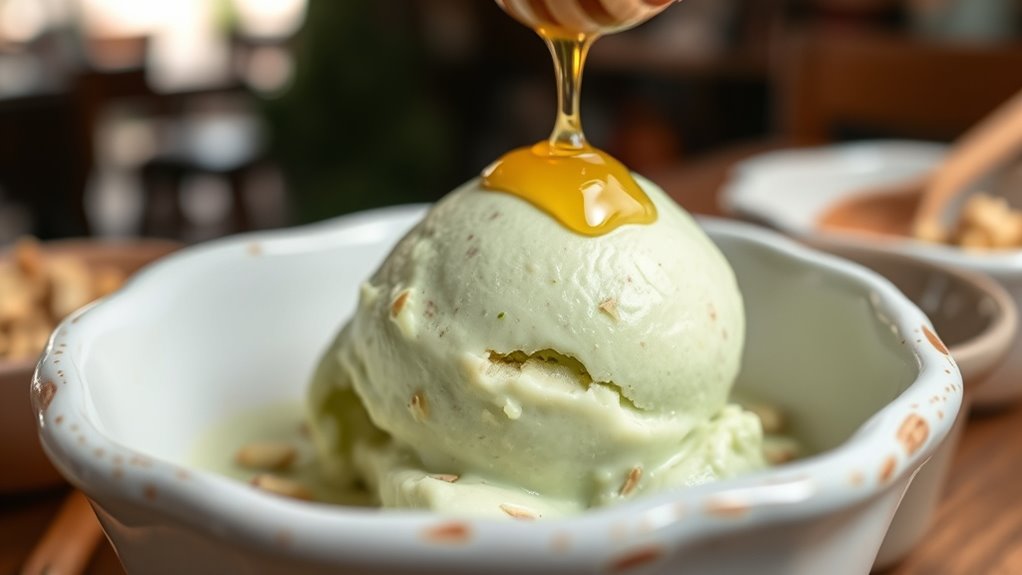

To make authentic Italian pistachio gelato, start with high-quality, fresh pistachios from trusted suppliers, preferably from regions like Sicily or California. Roast and ground them into a smooth paste, then fold this into a traditional custard base of milk, sugar, and cream. Keep the gelato stored at consistent freezing temperatures to maintain its creamy texture and vibrant color. For more tips on perfecting your pistachio gelato, continue exploring the details below.
Key Takeaways
- Use high-quality, fresh pistachios from reputable regions like Sicily or California for authentic flavor.
- Incorporate ground pistachio paste into a traditional custard base of milk, sugar, and cream.
- Maintain storage at -10°C to -15°C in airtight containers to preserve texture and flavor.
- Serve with a cold scoop, ensuring the gelato remains smooth, creamy, and vibrantly green.
- Follow proper handling and storage techniques to ensure authentic taste and velvety consistency.
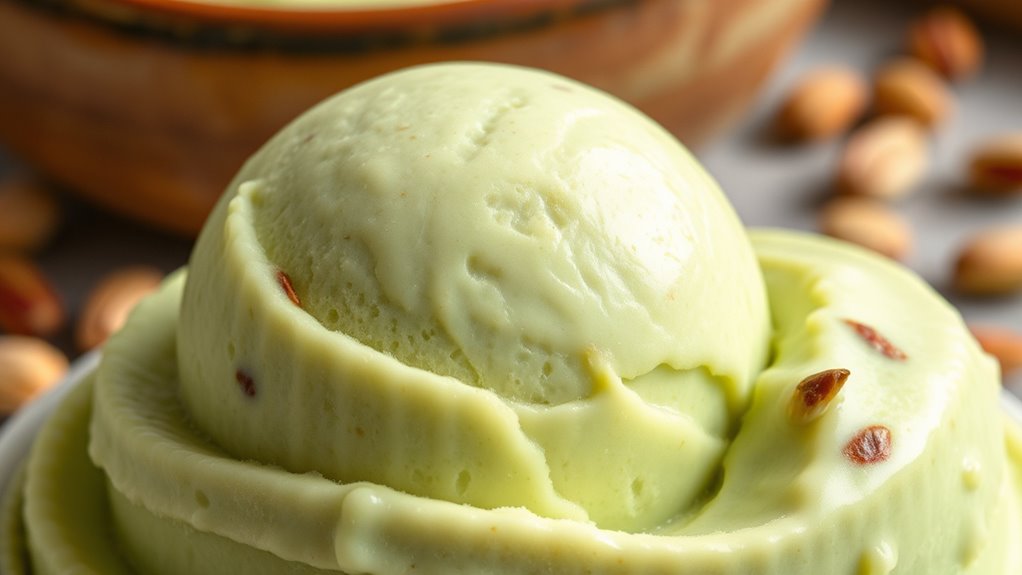
If you’re a fan of rich, nutty flavors, then classic pistachio gelato is a treat you won’t want to miss. Its vibrant green hue and luscious texture make it a standout among frozen desserts. To craft authentic pistachio gelato, the quality of ingredients is everything, starting with pistachio sourcing. You need to find reputable suppliers who provide high-quality, fresh pistachios, ideally from regions renowned for their nut cultivation, such as Sicily or California. These nuts should be shelled and roasted to enhance their flavor before being ground into a smooth paste. The better the pistachios, the richer and more authentic your gelato will taste. When sourcing pistachios, look for ones that are free from artificial additives or preservatives, as these can alter the natural flavor profile that makes pistachio gelato so special.
Once you’ve sourced the perfect pistachios, you’ll need to pay close attention to gelato storage. Proper storage is *essential* to maintaining the gelato’s creamy texture and vibrant flavor. Keep your gelato at a consistent, cold temperature, ideally around -10°C to -15°C. Fluctuations in temperature can cause ice crystals to form, which ruin the smoothness you’re aiming for. Store your gelato in airtight containers to prevent it from absorbing other odors in the freezer and to avoid freezer burn. If you plan to store it for an extended period, consider covering the surface with a thin layer of plastic wrap before sealing the lid to further protect against ice crystals and flavor loss. When serving, always use a clean, cold scoop—this helps prevent melting and keeps your gelato looking pristine.
The process of making authentic pistachio gelato involves blending the pistachio paste into a traditional custard base, which includes milk, sugar, and sometimes a touch of cream. It’s important to stir the mixture continuously during the churning process to achieve a dense and velvety consistency. Once churned, promptly transfer the gelato into your prepared storage containers, smoothing the surface for easy scooping later. Always label your containers with the date of production to track freshness. Proper gelato storage not only preserves the delicate flavors but also guarantees that every scoop you serve is as delightful and authentic as the first. Additionally, incorporating innovative storage techniques can help maintain optimal texture and flavor over time. By paying attention to pistachio sourcing and gelato storage, you’re well on your way to creating a truly classic Italian treat that impresses every time.
Frequently Asked Questions
Can I Use Roasted Pistachios Instead of Raw?
Yes, you can use roasted pistachios instead of raw, but keep in mind that pistachio roasting enhances flavor and changes texture. When choosing raw versus roasted, roasted pistachios bring a deeper, nuttier taste to your gelato. Just make sure to adjust the recipe if needed, as roasted nuts may be slightly oilier, which could affect the gelato’s consistency. Overall, roasted pistachios add a richer flavor to your homemade treat.
How Long Does Homemade Pistachio Gelato Last?
Think of your homemade pistachio gelato as a precious treasure that needs proper care. You should consume it within 1 to 2 weeks for ideal freshness and quality preservation. Store it in an airtight container to prevent ice crystals and flavor loss. After that, it may still be safe to eat, but the texture and taste could decline. So, enjoy your gelato promptly to savor its authentic flavor!
Is There a Vegan Version of This Gelato Recipe?
Yes, you can make a vegan version of pistachio gelato using vegan substitutions. Opt for dairy-free options like coconut milk, almond milk, or cashew cream to replace traditional dairy. You can also use agave or maple syrup for sweetness. Blend the pistachios with your chosen dairy-free base, then churn and freeze. This way, you get a delicious, creamy, vegan-friendly pistachio gelato that everyone can enjoy.
Can I Substitute Almond Milk for Dairy Milk?
Yes, you can substitute almond milk for dairy milk in your pistachio gelato. Using plant-based milk like almond milk offers a dairy alternative that works well for vegan versions. Just keep in mind that almond milk may alter the creaminess slightly, so choose a variety with no added sugars for the best flavor. This swap keeps your gelato dairy-free while maintaining a smooth, delicious texture.
What’s the Best Way to Store Leftover Gelato?
To store leftover gelato, use airtight containers to prevent ice crystals and maintain freshness. Employ proper storage techniques by pressing a piece of plastic wrap directly on the surface before sealing. For best results, follow freezing tips like keeping the gelato at a consistent temperature and avoiding frequent thawing and refreezing. This way, your pistachio gelato stays creamy and delicious for up to a month.
Conclusion
So, there you have it—your ticket to elevating any dessert game with this classic pistachio gelato. Who knew that simple ingredients and a bit of patience could transform into a scoop of pure Italian sophistication? Just remember, while you’re indulging in this creamy delight, you’re technically a culinary connoisseur—without the jet lag. So go ahead, impress your friends, and pretend you’re lounging in a quaint Italian piazza, one luscious bite at a time.