

Understanding Italian gelato terms like “coppa” (small bowl), “cono” (cone), and “gusto” (flavor) helps you appreciate the craftsmanship and cultural traditions behind each scoop. Knowing these words guides your orders, highlights flavor pairings, and emphasizes freshness like “fresco” or “giornata.” When you recognize these terms, you deepen your connection to Italy’s rich gelato heritage. Keep exploring and you’ll discover even more about the artistry behind every delicious serve.
Key Takeaways
- Familiarize yourself with terms like “coppa” (small bowl), “cono” (cone), and “gusto” (flavor) for accurate ordering and appreciation.
- Understand flavor pairing terms and common combinations to enhance your tasting experience.
- Recognize freshness indicators such as “giornata” or “fresco” to select high-quality, daily-made gelato.
- Learn cultural significance behind serving methods and terminology to deepen your connection to Italian gelato traditions.
- Knowing these Italian terms enriches your overall enjoyment and appreciation of authentic gelato craftsmanship.
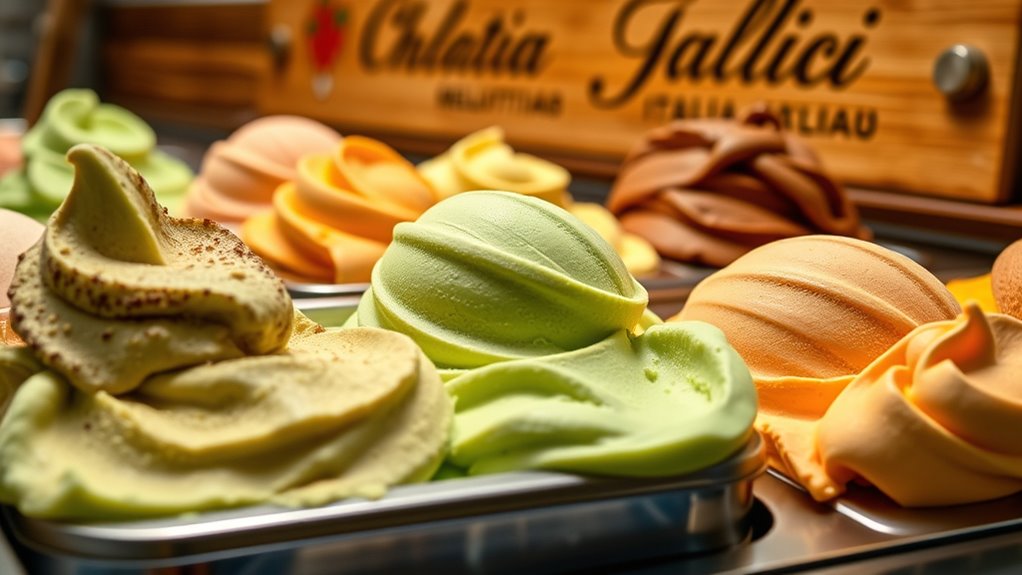
If you’re exploring Italian gelato, understanding some key terms can enhance your experience. Knowing the basics of gelato terminology helps you appreciate the cultural nuances and make more informed choices when ordering. For example, familiarizing yourself with traditional gelato serving methods not only elevates your enjoyment but also gives you insight into authentic Italian customs. In Italy, gelato isn’t just about flavor—it’s about presentation and tradition. Gelato shops often serve their creations in small, shallow cups or cones, emphasizing the importance of texture and temperature. These traditional serving methods aim to preserve the gelato’s creamy consistency and rich flavor, making each scoop a sensory delight. Understanding serving methods is crucial to fully appreciating the craftsmanship behind authentic gelato.
Understanding traditional gelato serving methods enhances your appreciation of Italian culture and preserves the authentic experience.
When discussing gelato flavor pairings, it’s essential to understand that Italians often combine flavors thoughtfully, balancing sweetness, acidity, and richness. For instance, pairing a fruity sorbetto with a nutty or chocolatey gelato is common, as it creates a harmonious contrast. Classic pairings might include pistachio with cherry, or lemon with raspberry—combinations that highlight the freshness of the ingredients. Recognizing these pairings allows you to enjoy the full depth of Italian gelato, appreciating how flavors complement each other in ways that enhance your palate.
As you navigate the gelato shop, you’ll encounter terms like “coppa” and “cono,” which refer to the serving vessels—small bowls and cones, respectively. Knowing these words helps you communicate your preferences clearly. Additionally, terms such as “gusto” describe the flavor, so if you’re craving a specific taste, you can confidently ask for your favorite “gusto di cioccolato” or “gusto di limone.” Understanding the language of gelato also involves recognizing the importance of freshness; many shops display “giornata” or “fresco,” indicating that their gelato is freshly made that day, ensuring a quality experience.
Finally, grasping these terms cultivates a deeper appreciation for Italian gelato’s artistry and tradition. Whether you’re sampling a classic stracciatella or an inventive seasonal flavor, knowing the language enhances your connection to the culture behind each scoop. Embracing traditional gelato serving methods and exploring flavor pairings with awareness of their significance ensures you’ll savor every bite, enriching your journey through Italy’s sweet culinary heritage.
Frequently Asked Questions
How Do Italian Gelato Terms Differ From Standard Ice Cream Terminology?
You’ll notice that Italian gelato terminology differs from standard ice cream terms through specific flavor descriptors and preparation styles. Terms like “stracciatella” describe particular textures or flavors, highlighting the Italian focus on authentic ingredients. Unlike American ice cream, which emphasizes creaminess and toppings, Italian gelato terminology emphasizes the natural, vibrant flavors and smooth texture, making each scoop a unique cultural experience. This distinction enriches your gelato experience and deepens your appreciation of Italian craftsmanship.
Are There Regional Variations in Gelato Terminology Across Italy?
Like a patchwork quilt, Italy’s gelato terminology varies by region. You’ll find different regional dialects and local flavor names that reflect local ingredients and traditions. In the North, terms might differ from those in the South, giving you a richer experience. Exploring these regional variations helps you connect more deeply with Italy’s gelato culture, making each visit a flavor-filled adventure tailored to that specific area’s unique language and tastes.
What Are Common Misinterpretations of Italian Gelato Terms by Tourists?
You might misinterpret Italian gelato terms because tourists often misuse terms like “gelato” and “granita,” confusing them with ice cream or slush drinks. Cultural misconceptions lead you to think “panna” always means whipped cream, but it can refer to cream in general. These misunderstandings can diminish your experience. To truly enjoy, learn the proper terminology and appreciate the cultural nuances behind each term.
How Can Understanding These Terms Enhance the Gelato Tasting Experience?
Understanding Italian gelato terms helps you better pair gelato flavors, making your tasting experience richer and more authentic. When you select authentic gelato, you can appreciate the true craftsmanship and regional nuances. Knowing these terms allows you to ask for specific flavors confidently, discover unique combinations, and deepen your connection to Italian culture. This knowledge transforms a simple treat into a memorable, immersive culinary journey.
Are There Specific Italian Terms for Gelato Ingredients or Flavor Profiles?
Think of Italian gelato terminology like a secret code. You’ll find specific ingredient naming conventions, such as “pistacchio” for pistachio or “cioccolato” for chocolate, and flavor descriptors like “cremoso” for creamy or “intenso” for intense. These terms help you identify authentic flavors and ingredients, much like a map guides you through a treasure hunt. Mastering them lets you appreciate each gelato’s unique character more deeply.
Conclusion
By mastering these Italian gelato terms, you’ll open a whole new level of appreciation for this incredible treat. Every scoop will feel like a secret handshake with Italian culture, making your gelato experience truly unforgettable. Soon, you might even find yourself dreaming in flavors and expressions. So go ahead—dive into the language of gelato and let every bite transport you to Italy’s sweetest paradise. Trust me, your taste buds will thank you for this delicious journey!