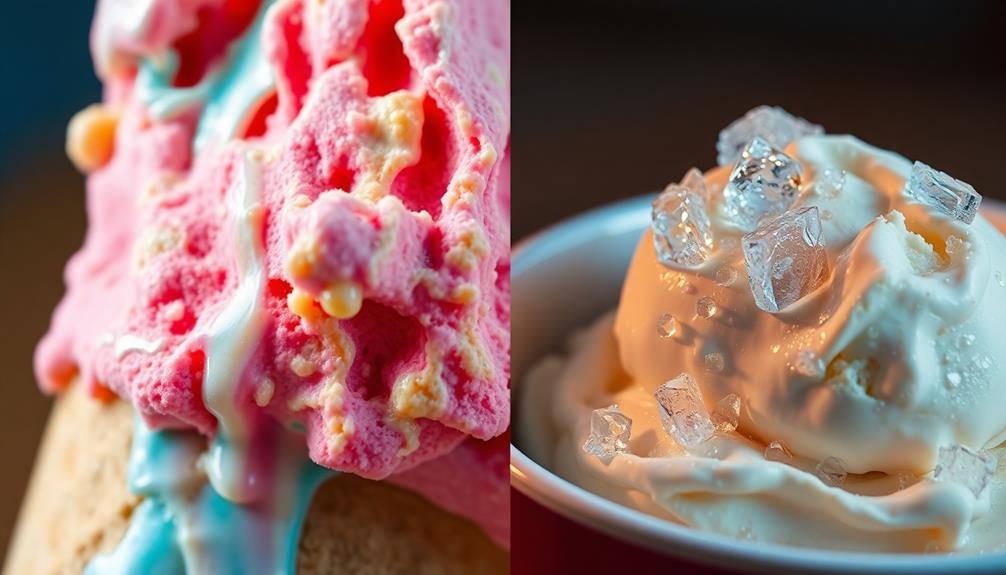
Gelato is often called ice cream, but it’s actually a distinct Italian dessert with unique qualities. Unlike typical ice cream, gelato uses more milk and less cream, giving it a denser, silkier texture. It’s churned slowly to preserve flavors and has a lower fat content, which enhances taste. Elsewhere, the term “gelato” can be used loosely, so understanding the traditional preparation helps clarify these differences—keep exploring to learn what truly makes authentic gelato special.
Key Takeaways
- Authentic gelato has a denser, silkier texture due to slower churning and lower fat content compared to traditional ice cream.
- In Italy, gelato is a distinct, craft-based frozen dessert emphasizing fresh ingredients and traditional methods.
- Outside Italy, “gelato” often refers to broader frozen treats, which may lack the authentic texture and flavor of true gelato.
- True gelato uses more milk than cream, resulting in lower fat content than standard ice cream.
- Cultural differences and commercial production have led to varied interpretations and terminology for gelato worldwide.

Have you ever wondered what makes gelato ice cream so uniquely delicious? The answer lies in its traditional preparation and the cultural differences that shape how it’s made and enjoyed. Unlike standard ice cream, gelato follows specific methods that give it its signature creamy texture and intense flavor. Traditional preparation involves using more milk than cream, which results in a lower fat content. This, combined with churning at a slower speed, creates a denser, silkier consistency that melts smoothly on your palate. These techniques are rooted in centuries of Italian culinary tradition, where gelato has been crafted with care and attention to detail. Incorporating mindfulness into the craft of gelato-making can heighten the appreciation of its sensory qualities and deepen the connection to its cultural roots.
Cultural differences play a significant role in how gelato is perceived around the world. In Italy, gelato isn’t just a treat; it’s a point of national pride, made with fresh, local ingredients and prepared daily in many shops. The emphasis on traditional methods and quality ingredients sets it apart from other frozen desserts. Meanwhile, in countries like the United States or Australia, the term “gelato” has been adopted more broadly, often used to describe a variety of frozen desserts that may not strictly follow the traditional Italian process. This divergence in terminology can sometimes lead to confusion—what’s called gelato elsewhere might be more like soft-serve or frozen yogurt, lacking the authentic texture and flavor profile that true Italian gelato offers.
Understanding these cultural differences is key to appreciating the true nature of gelato. In Italy, the focus on traditional preparation isn’t just about ingredients but also about maintaining a culinary heritage. Gelato shops often craft their flavors in small batches, emphasizing freshness and craftsmanship. In contrast, commercial versions in other countries might prioritize mass production, which can dilute the authenticity. Despite these differences, the essence of gelato remains rooted in its cultural origins—an art form that celebrates simplicity, quality, and tradition.
Frequently Asked Questions
How Do Gelato and Traditional Ice Cream Differ in Ingredients?
You’ll notice gelato has less dairy content than traditional ice cream, making it creamier yet lighter. It uses more milk and less cream, resulting in a lower fat percentage. Additionally, gelato often features more natural flavor additives and fewer artificial ones, which enhances its fresh taste. This difference in ingredients gives gelato its distinct texture and flavor profile, setting it apart from the richer, more indulgent traditional ice cream.
What Is the History Behind Gelato’s Origin?
Imagine tracing the footsteps of culinary history—gelato’s origins date back to ancient Rome, where emperors enjoyed chilled desserts. You discover that its historical recipes evolved through Renaissance Italy, blending regional ingredients. This rich heritage reveals how gelato became a beloved treat, distinguished by its unique method of slow churning. Understanding its origins helps you appreciate the cultural artistry behind each spoonful.
Are There Regional Variations in Gelato Recipes Worldwide?
You’ll find regional variations in gelato recipes worldwide, reflecting local ingredients and flavor preferences. In Italy, you’ll notice regional flavor profiles like Sicily’s pistachio or Tuscany’s chestnut, highlighting recipe regionality. In other countries, unique twists incorporate ingredients native to their area, creating diverse gelato styles. These variations make gelato a dynamic dessert, offering a taste of local culture with each scoop, emphasizing the rich diversity rooted in regional flavor profiles.
How Should Gelato Be Stored to Maintain Quality?
Don’t put all your eggs in one basket when storing gelato. To preserve flavor and texture, keep it in the coldest part of your freezer, ideally at -20°C (-4°F). Use an airtight container to prevent freezer burn and minimize air exposure. Cover the surface with plastic wrap before sealing to avoid ice crystals. Proper freezer storage guarantees your gelato stays fresh, creamy, and full of flavor for your next indulgence.
Can Gelato Be Considered a Healthy Dessert Option?
You can consider gelato a healthier dessert option because it offers nutritional benefits like lower fat content compared to traditional ice cream. However, you should watch the sugar content, as it can be high in some varieties. Opt for smaller portions and look for gelato made with natural ingredients to enjoy its flavors while minimizing added sugars and maximizing health benefits.
Conclusion
So there you have it—gelato and ice cream may share a spoon, but they certainly don’t share a language. Next time you’re savoring that creamy scoop, remember: calling it “ice cream” might make you sound like a tourist, while “gelato” could impress your friends with your worldly knowledge. Either way, just don’t get caught arguing over semantics—your dessert’s taste shouldn’t be a cultural battleground, even if your palate might be.