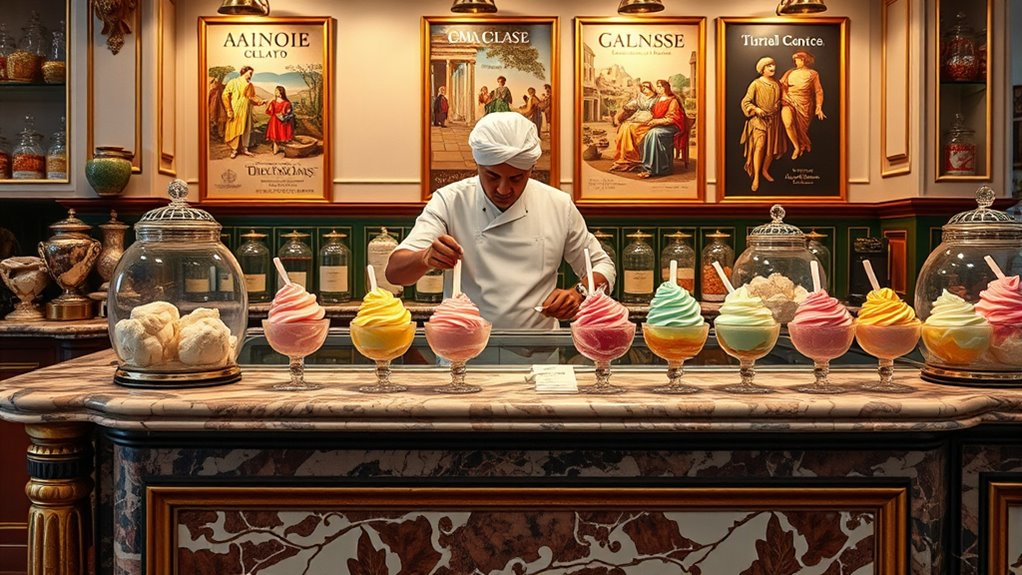

Gelato’s history begins in Renaissance Italy, where artisans developed techniques like slow churning and used fresh regional ingredients to create its signature creamy texture. Over centuries, these traditions remained central, shaping regional flavors that reflect Italy’s diverse landscape and culture. Today, modern artisans honor these origins while blending innovation with tradition, ensuring gelato continues as a symbol of Italy’s rich craftsmanship. Discover how these time-honored practices still influence every scoop you enjoy.
Key Takeaways
- Gelato’s origins date back to the Renaissance in Italy, where artisans developed slow churning methods for smoother textures.
- Regional ingredients like blood oranges and chestnuts shaped unique flavors reflecting Italy’s diverse landscape.
- Traditional techniques such as careful temperature control and natural ingredients have been preserved through generations.
- Modern artisans blend historical craftsmanship with contemporary tastes, maintaining authenticity and regional pride.
- Gelato embodies Italy’s cultural heritage, representing centuries of craftsmanship, regional flavors, and artisanal traditions.

Gelato, the beloved Italian frozen treat, has a rich history that dates back centuries. You might be surprised to learn that its roots stretch all the way to the Renaissance period, where artisans began experimenting with unique methods to craft smoother, more flavorful ice creams. Back then, master gelato makers relied on artisan techniques passed down through generations, using natural ingredients and meticulous processes to create a product that was both delicious and luxurious. These techniques involved slow churning and carefully controlled temperatures, which helped produce a dense, creamy texture that set gelato apart from traditional ice cream. As you explore its history, you’ll notice how regional flavors played a vital role in shaping gelato’s identity. Different parts of Italy brought their local ingredients and culinary traditions into the mix, resulting in a rich variety of flavors that reflect the country’s diverse landscape. From the citrusy notes of Sicily’s blood oranges to the earthy richness of Tuscany’s chestnuts, regional flavors became a defining feature of authentic gelato. These local ingredients weren’t just used for taste—they also told stories of the land and culture, making each scoop a small piece of history. Over the centuries, gelato evolved with the influence of different Italian regions and their distinct ingredients, but the core artisan techniques remained central. You can still see this heritage in traditional gelaterias today, where artisans continue to craft gelato with a focus on quality, natural flavors, and time-honored methods. The preservation of regional flavors and artisan techniques has helped maintain the authentic essence of gelato, even as commercial methods and mass production took hold elsewhere. Today, modern gelato makers draw inspiration from these historical practices, blending them with innovative approaches to meet contemporary tastes. Still, many artisans stay true to the roots of their craft, emphasizing slow churning, fresh ingredients, and regional flavors to create a product that’s both nostalgic and uniquely satisfying. As you enjoy gelato today, you’re tasting centuries of tradition, craftsmanship, and regional pride. Whether it’s a classic pistachio from Sicily or a tangy lemon from the Amalfi Coast, each flavor carries a story that connects you to Italy’s rich culinary history. This deep respect for artisan techniques and regional flavors continues to define the true essence of gelato, making it more than just a frozen treat—it’s a reflection of Italy’s vibrant culture and centuries-old craftsmanship.

The Amorino Guide to Gelato: Learn to Make Traditional Italian Desserts―75 Recipes for Gelato and Sorbets
As an affiliate, we earn on qualifying purchases.
Frequently Asked Questions
What Are the Main Differences Between Gelato and Traditional Ice Cream?
You’ll notice gelato has a denser, creamier texture compared to traditional ice cream, thanks to less air churned in during freezing. Its flavor profiles are richer and more intense because it’s served at a slightly warmer temperature, enhancing taste. Ice cream often feels lighter and colder. So, gelato offers a more vibrant flavor experience with a smoother, silkier texture, making it a delightful treat for your senses.
How Did Gelato Become Popular Outside Italy?
You see, gelato became popular outside Italy through exports and the rise of global gelato trends. Italian gelato shops started exporting their unique recipes, making it accessible worldwide. As more people experienced its rich flavors and smooth texture, interest grew, especially among health-conscious consumers. This global exposure helped gelato gain popularity, with international chains and local artisanal shops embracing the trend, spreading gelato’s popularity far beyond Italy’s borders.
What Are the Traditional Ingredients Used in Authentic Gelato?
Imagine you’re in a vintage ice cream parlor, and authentic gelato uses natural ingredients like fresh milk, sugar, and egg yolks, just like in Renaissance Italy. You’ll find traditional flavor combinations such as pistachio, stracciatella, and fruit purees. These ingredients create a creamy texture and rich taste, emphasizing quality over artificial additives. When making gelato, stick to these basics for true, authentic flavor that delights every time.
How Has Modern Technology Influenced Gelato Production?
Modern technology has transformed gelato production through gelato automation, making the process more efficient and consistent, so you get high-quality flavors every time. Digital flavor innovation allows creators to experiment with unique combinations, pushing traditional boundaries. These advances let you enjoy a wider variety of textures and tastes, and they help artisans produce gelato faster while maintaining authentic quality, enhancing your overall experience with innovative, delicious options.
Are There Regional Variations of Gelato Across Italy?
Ever think all gelato is the same? Think again! You’ll find regional flavors and local techniques across Italy, each adding a unique twist. From Sicily’s pistachio delights to Venice’s rich mascarpone, every area boasts its own signature. These regional variations reflect local ingredients and traditions, making gelato a deliciously diverse experience. So, next time you visit Italy, explore these differences—you might just discover your new favorite scoop!

50 The Best Italian Dessert Recipes
As an affiliate, we earn on qualifying purchases.
Conclusion
So, you’ve seen the sweet saga of gelato’s glorious growth from Renaissance roots to modern marvels. Its rich history highlights handcrafted heritage, innovative ideas, and irresistible indulgence. As you savor each spoonful, remember the timeless tradition that turns simple ingredients into sensational sensations. Embrace the evolution, enjoy the artistry, and let gelato’s glorious journey inspire your next delightful discovery. After all, this timeless treat truly tells a tale of taste, tradition, and tantalizing temptation.
![Southern Italian Desserts: Rediscovering the Sweet Traditions of Calabria, Campania, Basilicata, Puglia, and Sicily [A Baking Book]](https://m.media-amazon.com/images/I/51Hp3zgSI1L._SL500_.jpg)
Southern Italian Desserts: Rediscovering the Sweet Traditions of Calabria, Campania, Basilicata, Puglia, and Sicily [A Baking Book]
Used Book in Good Condition
As an affiliate, we earn on qualifying purchases.
![The Italian Baker, Revised: The Classic Tastes of the Italian Countryside--Its Breads, Pizza, Focaccia, Cakes, Pastries, and Cookies [A Baking Book]](https://m.media-amazon.com/images/I/51xGaJv6GlL._SL500_.jpg)
The Italian Baker, Revised: The Classic Tastes of the Italian Countryside--Its Breads, Pizza, Focaccia, Cakes, Pastries, and Cookies [A Baking Book]
As an affiliate, we earn on qualifying purchases.