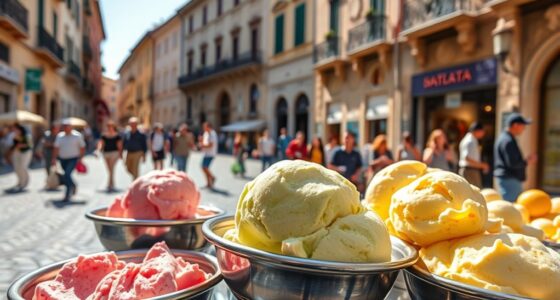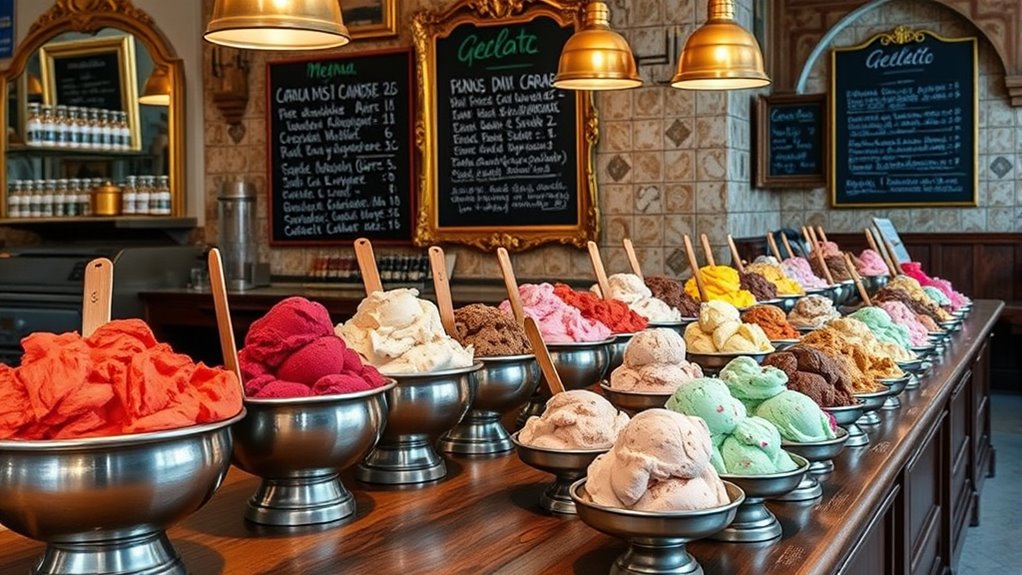

Gelato’s history begins in Renaissance Italy, where artisans perfected techniques to enhance texture and flavor, emphasizing regional ingredients and craftsmanship. Over centuries, it became a symbol of Italian cultural heritage, blending local traditions with outside influences like French and Arab flavors. Its artful craftsmanship and regional diversity helped it gain worldwide fame. If you want to discover how these traditions evolved and spread globally, you’ll find fascinating stories behind each scoop.
Key Takeaways
- Gelato originated in Italy centuries ago, evolving during the Renaissance with refined artisan techniques.
- Traditional methods emphasized flavor, texture, and regional ingredients, preserving Italy’s culinary heritage.
- Regional influences introduced diverse flavors like pistachio from Sicily and chocolate from Piedmont.
- The craft spread globally, maintaining artisanal roots and representing Italy’s cultural artistry.
- Modern gelato continues traditional practices, embodying centuries of history and cultural identity in every scoop.
Gelato, the rich and creamy Italian frozen treat, has a history that dates back centuries. Its origins are deeply rooted in Italy’s vibrant cultural tapestry, where artisan techniques and regional influences shaped its development. During the Renaissance period, skilled artisans began refining methods to create a denser, silkier texture that set gelato apart from regular ice cream. They employed traditional techniques, such as slow churning and carefully controlling air incorporation, which resulted in a product that was both flavorful and smooth. These artisan techniques weren’t just about craftsmanship; they reflected a desire to preserve local ingredients and culinary traditions, blending regional flavors and customs into every batch. As a result, gelato became more than just a frozen dessert—it became a symbol of Italy’s rich cultural heritage, showcasing the artistry passed down through generations of master gelato makers.
Cultural influences played a pivotal role in shaping gelato’s evolution. Italy’s diverse regions each contributed unique ingredients and flavor combinations, from the citrus and pistachios of Sicily to the rich chocolates of Piedmont. These local flavors became integral to gelato recipes, allowing each region to express its identity through taste. Over time, trade and cultural exchanges introduced new ingredients and techniques, enriching gelato’s repertoire. For instance, Arab influences brought the use of exotic spices, while French culinary trends inspired innovation in presentation and texture. You can see how these cultural influences melded seamlessly with artisan techniques, creating a dessert that’s both deeply local and globally appealing. As gelato spread beyond Italy’s borders, the essence of these regional traditions remained evident, even as international flavors and modern methods entered the scene.
Today, the story of gelato continues to evolve, but its roots in artisan techniques and cultural influences remain central. When you indulge in a scoop, you’re experiencing centuries of craftsmanship and cultural exchange. Modern gelato makers still honor these traditions, using time-honored methods to craft flavors that reflect Italy’s diverse regional heritage. Whether it’s a classic stracciatella or a seasonal fruit sorbet, each serving carries the legacy of artisan skill and cultural storytelling. The journey from Renaissance Italy to worldwide fame highlights how a simple frozen treat can embody artistry, history, and cultural identity. So, the next time you enjoy gelato, remember that you’re tasting centuries of tradition, skill, and cultural influences that have made this dessert an enduring symbol of Italy’s rich culinary legacy.
Frequently Asked Questions
What Are the Main Differences Between Gelato and Traditional Ice Cream?
You’ll notice that gelato has a denser, creamier texture compared to traditional ice cream because it uses less air and churns at a slower speed. It also features ingredient variations like more milk and fewer cream or eggs, resulting in a richer flavor. These texture differences and ingredient choices give gelato a smoother, silkier feel and a more intense taste, making it a unique and delightful treat.
How Has Gelato Evolved With Modern Culinary Trends?
You’ve seen gelato evolve through modern culinary trends by embracing gelato fusion and innovative flavor pairings. Chefs now experiment with unexpected ingredients, blending traditional Italian techniques with global influences to create unique, exciting flavors. This modern approach keeps gelato fresh and appealing, inviting you to explore new taste combinations while preserving its classic creamy texture. It’s a delicious way to enjoy the timeless treat in contemporary culinary style.
What Are the Health Benefits of Eating Gelato Compared to Other Desserts?
You might find gelato healthier than other desserts because it has lower dairy content and sugar levels, which can help you manage calorie intake. Its natural ingredients and smaller fat content mean you get a richer flavor without overloading on fats. Plus, the reduced sugar can lessen blood sugar spikes. Enjoying gelato in moderation can be a more mindful and satisfying treat compared to heavier, more processed desserts.
Which Countries Have Developed Their Own Unique Gelato Flavors?
You’ll find that Italy, of course, has the most iconic gelato flavors, but countries like Japan develop unique options influenced by regional ingredients like matcha and yuzu, blending cultural influences into their recipes. In the US, creative flavors often incorporate local fruits and candies, while Middle Eastern countries add flavors like pistachio and saffron. These regional ingredients and cultural influences make each country’s gelato distinct and exciting to try.
How Is Gelato Traditionally Made in Artisanal Italian Methods?
Making gelato the traditional Italian way is like crafting a fine symphony. You start with careful ingredient selection—fresh milk, sugar, and natural flavorings—and then use traditional churning methods, often in a marble-lined freezer. This slow process guarantees a dense, creamy texture. You must pay close attention to temperature and timing, blending the ingredients gently to preserve their pure flavors and achieve that signature smooth, luscious consistency.
Conclusion
Now, as you savor that next spoonful, imagine the centuries of passion and craftsmanship behind each bite. From Renaissance Italy’s secret recipes to today’s global obsession, gelato’s story is far from over. With every swirl and scoop, you become part of a centuries-old tradition that continues to evolve. Who knows what flavors, innovations, or surprises lie ahead? One thing’s certain — this timeless treat will keep enchanting us, one delicious spoonful at a time.