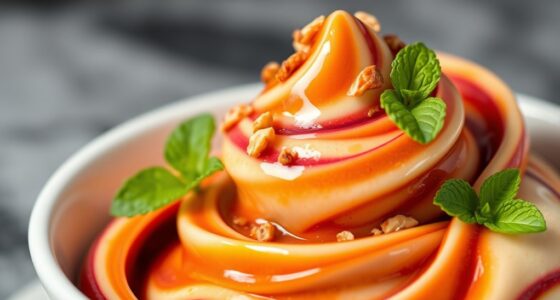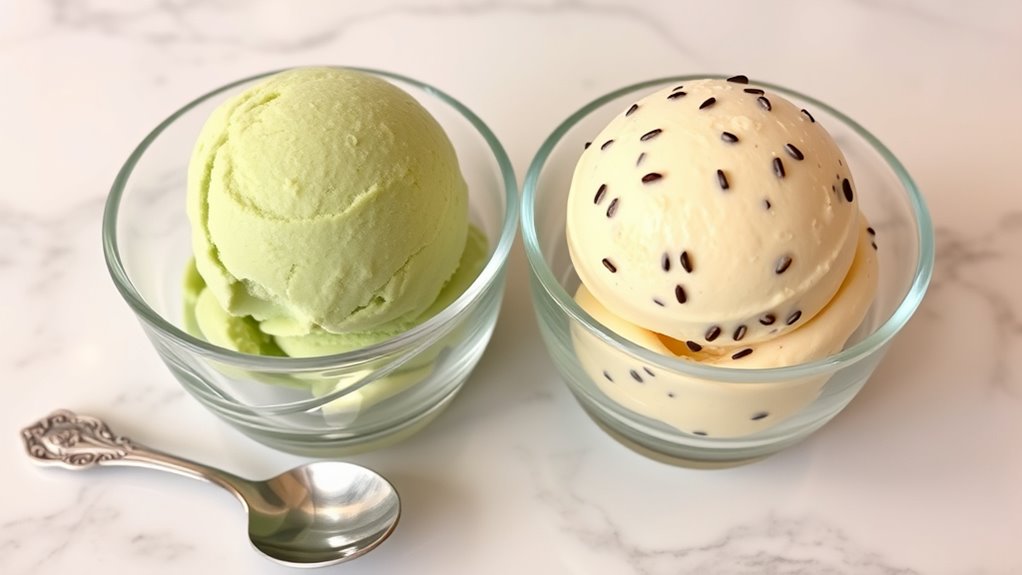

To enjoy halal and kosher gelato, you should check for specific ingredient sources and certifications to verify it meets your dietary needs. Look for recognized labels that confirm the product complies with halal or kosher standards, and ask whether equipment is dedicated or shared. Keep in mind that flavor variety doesn’t automatically mean it’s suitable for your diet—productions techniques and ingredient choices matter. If you’re curious about how to identify safe options, there’s more to uncover here.
Key Takeaways
- Verify ingredient lists and seek certification to ensure gelato meets halal and kosher standards.
- Choose artisan shops with transparent sourcing and dedicated equipment to prevent cross-contamination.
- Avoid pork-derived ingredients and alcohol for halal compliance; check for kosher certification from recognized authorities.
- Look for vegan and allergen-friendly options that align with dietary restrictions and preferences.
- Ask vendors about their production practices and certifications to confidently select suitable gelato for all diets.

Have you ever wondered if your favorite gelato meets your dietary requirements? Steering the world of gelato can be tricky, especially when you’re trying to find options that adhere to specific dietary laws like halal and kosher. One of the first things you’ll notice is the incredible range of gelato flavor varieties available. From classic chocolate and vanilla to more exotic options like pistachio, mango, or rose, gelato offers something for everyone. But not all gelato is created equally when it comes to dietary restrictions. That’s why understanding the nuances of artisan gelato techniques and ingredients becomes essential. Many artisanal gelato makers pride themselves on using traditional methods that respect certain dietary laws, but it’s always best to verify.
Discover how artisan gelato techniques ensure options that meet halal and kosher dietary standards.
When it comes to halal and kosher gelato, the ingredient list is your first checkpoint. Halal gelato must avoid ingredients derived from forbidden sources, such as pork or alcohol, and must be prepared with utensils and equipment that meet Islamic law. Kosher gelato, on the other hand, requires strict adherence to Jewish dietary laws, which can involve special certifications and supervising authorities. Both require ensuring that no cross-contamination occurs with non-halal or non-kosher ingredients during production. This is where artisan gelato techniques come into play. Artisans often craft their gelato in small batches, giving them more control over ingredient sourcing and handling practices. They may also use specific fats, sweeteners, and stabilizers that meet these dietary standards, but it’s essential to look for proper certifications. Additionally, tableware materials used in the production process can influence compliance with dietary laws.
Many gelaterias now offer halal and kosher options, but not all labels are transparent about the ingredients or preparation processes. When you’re searching for gelato that fits your dietary needs, ask questions about ingredient sources and whether the shop uses dedicated equipment or has certifications from recognized authorities. Some artisans go the extra mile by creating vegan or allergen-friendly gelato, which can also align with certain dietary laws. Keep in mind that even within artisan gelato techniques, the key is transparency—knowing exactly what goes into your gelato and how it’s made helps you make an informed choice.
Ultimately, whether you’re after a rich, creamy pistachio or a refreshing citrus flavor, the variety of gelato available today means you don’t have to compromise your dietary beliefs. By understanding the role of artisan gelato techniques and carefully checking for certifications, you can enjoy your favorite treat without worry. It’s all about finding those trusted sources that prioritize quality, authenticity, and adherence to your dietary standards, making every scoop a satisfying and compliant indulgence.
halal gelato certification
As an affiliate, we earn on qualifying purchases.
As an affiliate, we earn on qualifying purchases.
Frequently Asked Questions
Are All Flavors of Gelato Available in Halal and Kosher Options?
Not all gelato flavors are available in halal and kosher options, but many are. You’ll find a good flavor variety, especially in specialty shops that focus on ingredient sourcing compliant with dietary laws. Keep in mind that some flavors may contain additives or alcohol-based extracts that aren’t halal or kosher. Always check labels or ask the vendor to verify the ingredients meet your dietary needs.
How Is Cross-Contamination Prevented in Halal and Kosher Gelato Manufacturing?
You prevent cross-contamination in halal and kosher gelato manufacturing by strictly following certification standards and implementing rigorous cross-contamination protocols. Staff are trained to avoid contact between dairy, flavorings, and equipment that aren’t certified, guaranteeing all ingredients remain compliant. Regular cleaning and dedicated equipment further reduce risks. These practices help maintain product integrity and ensure that each batch meets the strict standards required for halal and kosher certification.
Can Vegetarians Consume Halal and Kosher Gelato?
Imagine savoring a creamy scoop of gelato, cool and sweet on your tongue. If it’s made with vegetarian ingredients and free from animal-derived additives, you can enjoy halal and kosher gelato. Just check that gelato flavoring doesn’t contain alcohol or animal-based products. When these conditions are met, you can indulge confidently, knowing your treat aligns with your vegetarian lifestyle while respecting halal and kosher standards.
Are There Any Additives in Gelato That Conflict With Halal or Kosher Standards?
Some gelato additives may conflict with halal or kosher standards, especially if they contain alcohol, gelatin, or non-certified emulsifiers. You should check the ingredient list carefully because certain additives aren’t always compliant with certification standards. Look for gelato brands that clearly specify their adherence to certification standards, ensuring all additives meet halal or kosher requirements. Always verify ingredient labels to avoid unintentional consumption of non-compliant additives.
How Do Certification Processes Ensure Gelato Meets Dietary Requirements?
Think of certification processes like a quality assurance guard dog, diligently sniffing out any non-compliant ingredients. Certification verification involves rigorous audits and ingredient checks to make certain the gelato adheres to dietary standards. This meticulous process guarantees that all ingredients meet specific requirements, giving you confidence in what you’re consuming. It’s like having a trusted inspector always watching, ensuring your gelato is safe and compliant with halal and kosher guidelines.
![Perfect Gelato [Gelato Stabilizer] Vegan OU Kosher Certified - 50g/2oz (stabilizes and prevents crystal formation in gelato recipes)](https://m.media-amazon.com/images/I/41XkNth40xL._SL500_.jpg)
Perfect Gelato [Gelato Stabilizer] Vegan OU Kosher Certified – 50g/2oz (stabilizes and prevents crystal formation in gelato recipes)
Perfect stabilizer for gelato products
As an affiliate, we earn on qualifying purchases.
As an affiliate, we earn on qualifying purchases.
Conclusion
So, savor the sweet serenity of selecting simple, sacred, and satisfying gelato that aligns with your beliefs. By understanding the distinct dietary demands, you can confidently choose creamy, comforting treats that cater to your conscience. Embrace the delicious dance of diversity, delighting in divine desserts that honor your values. Remember, whether halal or kosher, your perfect palate prefers pure, permissible pleasures—so indulge with intention and enjoy every luscious, lawful lick.
Perfect Gelato [Gelato Stabilizer] Vegan OU Kosher Certified – 50g/2oz (stabilizes and prevents crystal formation in gelato recipes)
Perfect stabilizer for gelato products
As an affiliate, we earn on qualifying purchases.
As an affiliate, we earn on qualifying purchases.
artisan gelato with certification
As an affiliate, we earn on qualifying purchases.
As an affiliate, we earn on qualifying purchases.