
Pairing gelato with traditional Italian desserts like tiramisu, panna cotta, or biscotti creates a delightful harmony of flavors and textures. You can enhance classics by matching rich or fruity gelato with contrasting desserts to excite your palate. Elegant presentation, such as layering gelato with tiramisu or garnishing with cocoa and fresh mint, adds visual appeal. Keep exploring to discover more tasty combinations and how to serve them perfectly for an authentic Italian experience.
Key Takeaways
- Pair robust espresso gelato with tiramisu to enhance coffee flavors and create a harmonious dessert experience.
- Use fruity sorbettos like lemon or berry to contrast creamy desserts such as panna cotta or biscotti.
- Serve gelato in elegant presentation with garnishes like cocoa powder, crushed biscotti, or fresh mint for visual appeal.
- Layer gelato with traditional sweets in glasses to showcase textures and create appealing flavor contrasts.
- Select gelato flavors that complement or elevate Italian favorites, balancing richness and freshness for memorable pairings.
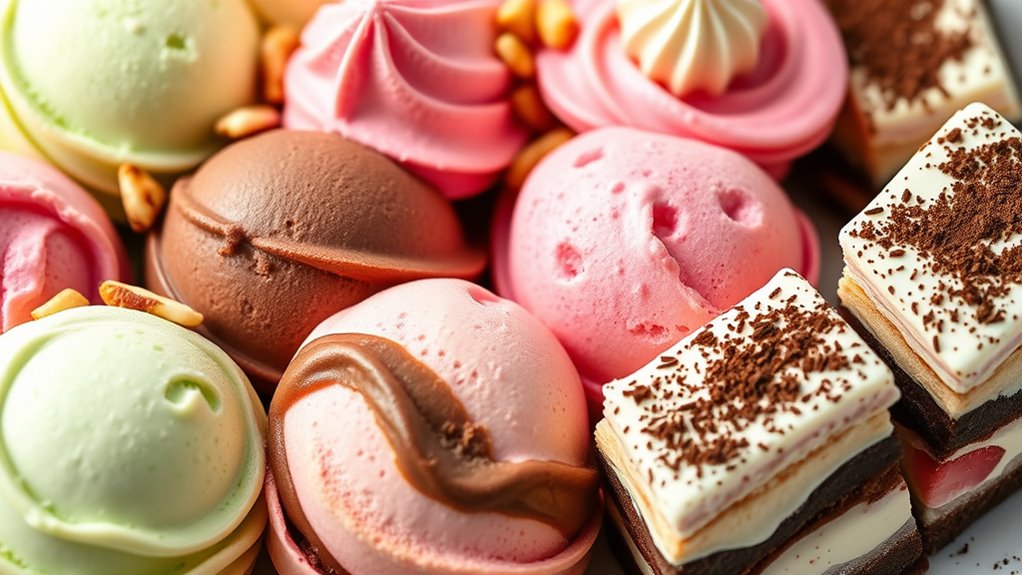
If you’re seeking a truly authentic Italian dessert experience, pairing gelato with traditional Italian sweets is the perfect choice. Combining the creamy richness of gelato with classic favorites like tiramisu, panna cotta, or biscotti elevates your dessert game and offers a truly indulgent treat. To make these pairings memorable, focus on gelato flavor pairings that complement the flavors of the traditional desserts. For example, a robust espresso gelato pairs beautifully with tiramisu, enhancing the coffee notes and adding depth. A fruity sorbetto, like lemon or berry, can contrast sweet, creamy desserts, providing an invigorating balance. When selecting gelato flavors, think about contrast and harmony—rich chocolate or vanilla bean can serve as a neutral backdrop, while more intense flavors like pistachio or caramel can add complexity.
Pair rich gelato flavors with traditional Italian sweets for a truly indulgent dessert experience.
Presentation plays a vital role in elevating your dessert experience, and dessert presentation techniques can help you impress both visually and flavor-wise. For traditional Italian sweets, consider serving gelato in elegant cups or bowls, topped with a dusting of cocoa powder, crushed biscotti, or a sprig of fresh mint to add visual appeal. Layering gelato with slices of tiramisu in a glass can create a striking visual, showcasing the contrasting textures and colors. You might also serve gelato alongside small portions of traditional sweets, allowing guests to sample different flavor combinations without feeling overwhelmed. Using decorative spoons, fresh fruit, or edible flowers can add a touch of sophistication and make your presentation more inviting.
When pairing gelato with traditional Italian desserts, keep in mind that the presentation techniques should highlight the textures and flavors. For instance, serve a scoop of mascarpone gelato alongside a slice of tiramisu on a clean white plate, garnished with a dusting of cocoa or a drizzle of espresso syrup. This not only enhances the visual appeal but also ties the flavors together seamlessly. Additionally, consider the serving temperature; gelato is best enjoyed cold, while some traditional desserts like panna cotta or biscotti are best slightly chilled or at room temperature, ensuring each component retains its prime texture and flavor.
Furthermore, understanding the 16PF personality traits can help in customizing your dessert presentation to better suit your guests’ preferences, making the experience more personalized and memorable. In the end, the key to successful pairing lies in balancing flavors and presentation. By thoughtfully selecting gelato flavor pairings and employing appealing dessert presentation techniques, you create a memorable Italian-inspired dessert experience that delights the senses and elevates your culinary repertoire.

The Amorino Guide to Gelato: Learn to Make Traditional Italian Desserts―75 Recipes for Gelato and Sorbets
As an affiliate, we earn on qualifying purchases.
Frequently Asked Questions
What Are the Key Differences Between Gelato and Ice Cream?
You’ll notice gelato has a denser, silkier texture compared to ice cream, because it’s churned at a slower speed. Gelato uses less cream and more milk, and typically fewer eggs, making its ingredients lighter. Ice cream often contains more fat and air, which creates a fluffier, colder feel. This difference in ingredients and process gives gelato its smooth, rich flavor without the icy bite of traditional ice cream.
Which Italian Desserts Pair Best With Specific Gelato Flavors?
You should pair pistachio gelato with a classic Italian cannoli for a rich flavor harmony that combines nutty and creamy textures. For a invigorating contrast, match lemon gelato with biscotti or panna cotta, enhancing pairing techniques that balance tartness and sweetness. Chocolate gelato pairs beautifully with tiramisu, creating indulgent harmony. Experiment with fruit-based gelatos like strawberry or raspberry alongside fruit tarts or sorbetto to elevate your tasting experience.
How Do Traditional Italian Desserts Influence Modern Gelato Recipes?
Did you know that 85% of modern gelato flavors are inspired by historical influences and cultural significance? Traditional Italian desserts like tiramisu and cannoli heavily influence contemporary recipes, blending classic ingredients with innovative techniques. This fusion preserves culinary heritage while appealing to modern tastes. As you enjoy gelato today, you’re tasting centuries of Italian history and culture, making every scoop a delicious connection to Italy’s rich dessert traditions.
Are There Regional Variations of Gelato Across Italy?
Yes, you’ll find regional variations of gelato across Italy. Each region showcases unique flavors using local ingredients, like pistachios from Sicily or chestnuts from Tuscany. You can explore these differences by trying gelato in different areas, where traditional recipes blend with local flavors. This regional diversity makes gelato a delicious way to experience Italy’s rich culinary traditions.
What Are Authentic Ingredients Used in Traditional Italian Gelato?
Imagine biting into a scoop of authentic Italian gelato; you’ll notice its creamy texture and genuine flavoring. The key ingredients include fresh milk, sugar, and high-quality natural flavorings like ripe fruit, pure vanilla, or rich cocoa. For a truly authentic experience, many artisans avoid artificial additives, focusing instead on natural ingredients that highlight the true essence of each flavor, ensuring your gelato offers an authentic, memorable taste.
![The Perfect Scoop, Revised and Updated: 200 Recipes for Ice Creams, Sorbets, Gelatos, Granitas, and Sweet Accompaniments[A Cookbook]](https://m.media-amazon.com/images/I/41ypbZfII5L._SL500_.jpg)
The Perfect Scoop, Revised and Updated: 200 Recipes for Ice Creams, Sorbets, Gelatos, Granitas, and Sweet Accompaniments[A Cookbook]
As an affiliate, we earn on qualifying purchases.
Conclusion
Just as a delicate brushstroke completes a masterpiece, pairing gelato with traditional Italian desserts adds the perfect harmony to your experience. Imagine each spoonful as a note in a symphony, where flavors dance and linger, creating a timeless melody. Embrace this sweet journey, letting each bite be a chapter in your own Italian story. With every dessert, you’re weaving memories like threads in a vibrant tapestry—delicious, rich, and unforgettable.

Cuisinart Ice Cream Cookbook for Beginners: Create Perfect Frozen Treats with Cuisinart Ice Cream Recipes | Enjoy Classic Ice Creams, Fruity Sorbets, Rich Gelatos, Creamy Frozen Yogurts & More
As an affiliate, we earn on qualifying purchases.
The Complete Cuisinart Homemade Frozen Yogurt, Sorbet, Gelato, Ice Cream Maker Book: 100 Decadent and Fun Recipes for your 2-Quart ICE-30BC
As an affiliate, we earn on qualifying purchases.