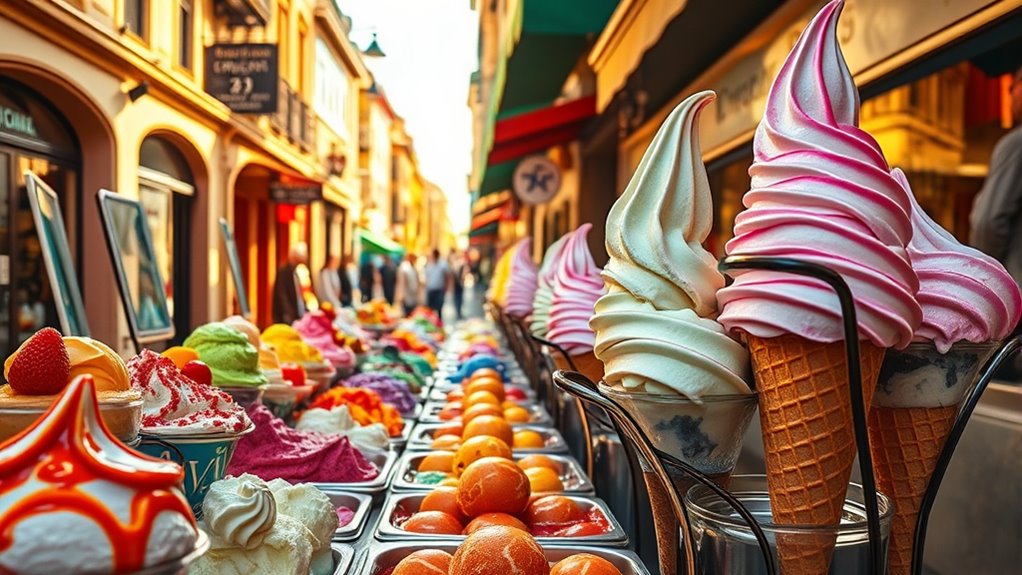

In the USA, ice cream is all about variety, larger servings, and quick indulgence, reflecting a culture that values convenience and social fun. In Italy, gelato emphasizes artisanal craftsmanship with intense flavors, a dense, creamy texture, and small, elegant servings that encourage slow enjoyment. These differences showcase how each culture celebrates its traditions—if you want to discover more about how these treats mirror their countries’ unique values, keep exploring.
Key Takeaways
- Italy’s gelato emphasizes artisanal craftsmanship, intense flavors, and small servings for a leisurely, social experience.
- The USA’s ice cream features a wide variety of flavors, larger portions, and quick consumption for convenience.
- Gelato has a denser, creamier texture with less air, highlighting flavor richness, while American ice cream is lighter and fluffier.
- Italian culture values quality, presentation, and savoring, whereas American culture prioritizes variety, quantity, and quick enjoyment.
- Traditional serving styles differ: small cups in Italy promote tasting, while large, packaged servings in the USA support on-the-go indulgence.

Have you ever wondered what sets gelato apart from traditional ice cream? It’s a question many people ask, especially when exploring different cultures’ sweet treats. To start, the differences in flavors and texture play a big role. Gelato typically offers a more intense flavor experience because it’s churned at a slower speed, which incorporates less air. As a result, you get a denser, creamier texture that allows the flavors to shine through more vividly. When you taste gelato, you might notice it’s smoother and silkier in your mouth, with a richness that’s more concentrated than your average ice cream. This is due to its lower fat content, which means the flavors don’t get masked by cream or milk as much. In contrast, traditional ice cream in the USA tends to be lighter and fluffier because it’s churned faster, incorporating more air, or “overrun,” which gives it that airy texture. The American style also emphasizes a wide variety of flavors, from classic vanilla and chocolate to more inventive options like cookies and cream or salted caramel. These flavors are often bold and vibrant, appealing to a broad audience. Additionally, the cultural significance of serving styles and presentation varies, with Italy valuing artisanal craftsmanship and the USA focusing on convenience and variety. Serving traditions also differ markedly between the two cultures. In Italy, gelato is usually served in small, elegant cups or cones, often with a focus on presentation. Italians prefer to enjoy it as a leisurely, social experience—sometimes savoring a single scoop slowly on a warm day. You’ll find gelato shops often display their flavors artfully, encouraging you to try different tastes without feeling rushed. In the USA, ice cream is more often associated with family gatherings, birthday parties, and fast-paced environments like drive-thrus or large scoops in a waffle cone. The serving sizes tend to be bigger, and the focus is on convenience and indulgence. American ice cream also comes in a wide variety of packaged formats, making it easy to enjoy at home or on the go. Both cultures value their own traditions, but the Italian approach emphasizes quality, craftsmanship, and a more intimate experience, whereas the American style favors variety, quantity, and quick enjoyment. Recognizing the cultural differences in preparation and presentation can deepen your appreciation for each treat. Whether you prefer the dense, flavorful richness of gelato or the airy, versatile appeal of American ice cream, both offer unique delights rooted in their traditions. Exploring these distinctions can deepen your appreciation for how each culture celebrates its sweet side, making your tasting experience all the more meaningful.

ZICOTO Set of 3 Reusable Ice Cream Containers 1 Quarts ea. - Perfect for Homemade Sorbet, Frozen Yogurt Or Gelato - Stackable Storage Pint Containers, Stickers And Lids Stores Easily In Freezer
Indulge In Homemade Delights: Savor the joy of crafting frozen delights at home and the heavenly pleasure of...
As an affiliate, we earn on qualifying purchases.
Frequently Asked Questions
How Did Gelato Originate in Italy?
You’ll find that gelato’s history dates back to ancient Italy, where it evolved as an Italian dessert. Originating during the Renaissance, it was developed by Italian artisans who refined recipes, using fresh ingredients and unique techniques. Over time, gelato became a beloved cultural staple, distinguished by its creamy texture and rich flavors. Today, its history highlights Italy’s deep-rooted passion for high-quality, artisanal desserts that continue to delight people worldwide.
What Are the Health Benefits of Gelato Versus Ice Cream?
You’ll find that gelato often has less dairy content and lower sugar levels than ice cream, making it a slightly healthier option. Its lower fat content means fewer calories, and the reduced sugar can help maintain stable blood sugar levels. Plus, since gelato is churned more slowly, it contains less air, giving you a richer texture with potentially fewer additives. Overall, it’s a tasty treat with some health benefits over traditional ice cream.
Are There Regional Gelato Flavors Unique to Italy?
Yes, Italy offers regional gelato flavors that are unique to each area. You’ll find variations influenced by seasonal ingredients like Sicilian pistachios, Venetian almonds, and Tuscan chestnuts. These regional flavor variations reflect local agriculture, traditions, and seasonal produce, making each gelato experience distinct. When you visit different regions, you can enjoy these authentic, locally inspired flavors that showcase Italy’s rich culinary heritage and seasonal bounty.
How Do Serving Traditions Differ Between the USA and Italy?
In Italy, serving etiquette emphasizes small portions, often served in a cup or cone, highlighting quality over quantity. You typically enjoy gelato slowly, savoring flavors without rushing. In contrast, the USA favors larger portion sizes, with ice cream often served in generous bowls or as sundaes. Americans might prioritize variety and indulgence, while Italians focus on refined presentation and moderation, reflecting their cultural appreciation for craftsmanship and tradition.
What Is the Environmental Impact of Gelato Versus Ice Cream Production?
You might think gelato has a smaller environmental impact than ice cream, but it depends on factors like sustainable sourcing and production methods. Gelato often uses fresher, local ingredients, reducing its carbon footprint, whereas ice cream may rely on more processed ingredients and larger-scale manufacturing. Choosing products with eco-friendly practices can help lessen your environmental impact, no matter which frozen treat you prefer.
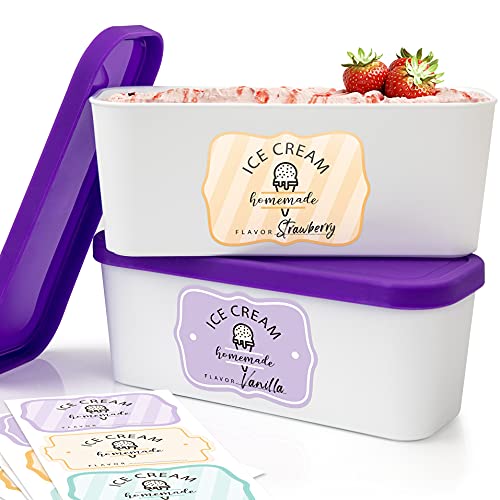
Set of 2 Reusable Ice Cream Tub Containers 1.6 Quart Ea. - Perfect for Homemade Sorbet, Frozen Yogurt Or Gelato - Stackable Storage Containers, Stickers And Lids Stores Easily In Freezer
Perfect For Homemade Ice Cream & More: The ice cream tub set of 2 is a great way...
As an affiliate, we earn on qualifying purchases.
Conclusion
So, next time you enjoy gelato or ice cream, remember they’re like two siblings with unique personalities—gelato’s a smooth, sophisticated cousin from Italy, while ice cream’s a lively, creamy friend from the USA. Embrace the differences, savor each bite, and let your taste buds travel between cultures. Whether you prefer the rich tradition of Italy or the fun, bold flavors of America, both offer a delightful escape. After all, they’re both treats worth celebrating!

ZICOTO Set of 2 Reusable Ice Cream Tub Containers 2 Quart Each - Perfect for Homemade Sorbet, Frozen Yogurt Or Gelato - Stackable Storage Containers, Stickers And Lids Stores Easily In Freezer
Perfect For Homemade Ice Cream & More: The ice cream tub set of 2 is a great way...
As an affiliate, we earn on qualifying purchases.

BALCI - Ice Cream Container - 2 Quart - Perfect Reusable Freezer Storage for Homemade Ice Cream Tubs for Sorbet, Frozen Yogurt and Gelato! - Flexible Silicone Lids, Long Scoop, Stackable - Blue
Tough, Stylish & Reusable Ice Cream Containers: This Ice Cream Container is the perfect addition for your freezer,...
As an affiliate, we earn on qualifying purchases.