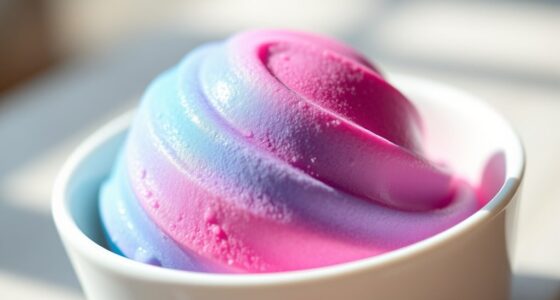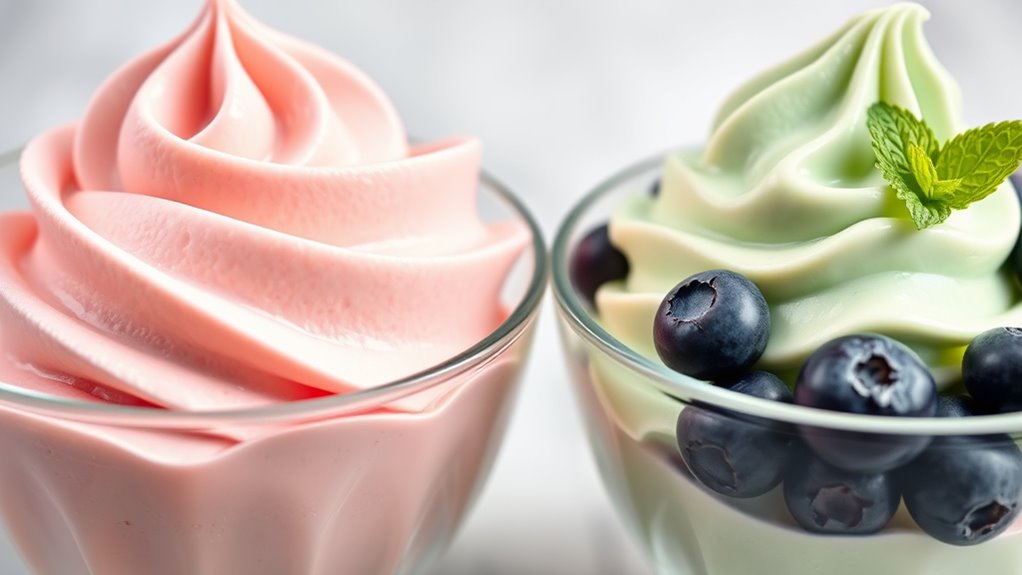

Gelato and frozen yogurt differ mainly in flavor, texture, and ingredients. Gelato has rich, bold flavors with a dense, smooth texture because it’s churned slowly and contains less air. Frozen yogurt is lighter, tangier, and more airy, often made with probiotic cultures and dairy-free options. Both treats cater to different preferences and dietary needs. To discover more about their unique qualities and advantages, continue exploring their origins and production methods.
Key Takeaways
- Gelato has a denser, creamier texture with rich, artisanal flavors, while frozen yogurt is lighter, tangier, and more aerated.
- Gelato uses less air during churning, resulting in a more intense flavor experience compared to the more lively frozen yogurt.
- Gelato emphasizes high-quality, often seasonal ingredients and can include dairy-free options; frozen yogurt is probiotic-rich and customizable.
- Gelato typically contains less fat, allowing its flavors to stand out more, whereas frozen yogurt offers a tart, fruity profile with health benefits.
- Production methods differ: gelato is churned slowly for density, while frozen yogurt is churned vigorously for a lighter, airy texture.
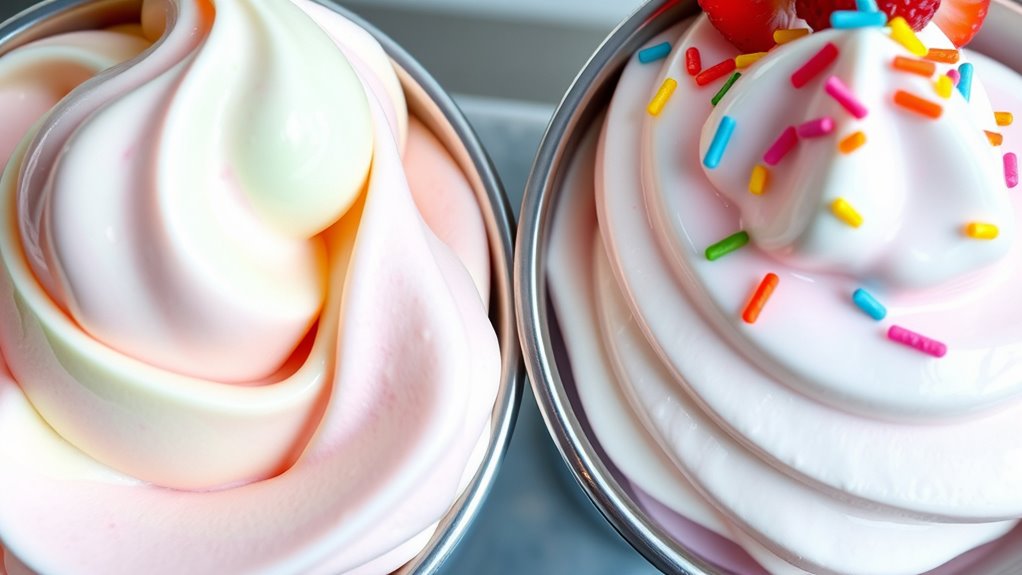
Have you ever wondered what sets gelato and frozen yogurt apart from traditional ice cream? The differences go beyond just taste and texture. When you explore these frozen treats, you’ll notice that gelato is celebrated for its rich, bold flavors and smooth, dense consistency. This is largely due to its artisanal approach—crafting each batch with care, using high-quality ingredients, and often featuring unique, handcrafted flavors. Many gelato makers incorporate artisanal flavors, which means you get inventive combinations and seasonal ingredients that elevate the experience beyond standard ice cream. Plus, gelato frequently uses dairy alternatives, like coconut milk or almond milk, catering to those with dietary restrictions or preferences. This flexibility allows for a more diverse range of flavors, making gelato a versatile choice for many. Additionally, the artisanal process emphasizes craftsmanship and quality, ensuring each serving offers an elevated sensory experience.
In contrast, frozen yogurt tends to be lighter and tangier, with a slightly icy texture that appeals to those seeking a healthier alternative. It’s often made with live probiotic cultures, which adds to its appeal as a nutritious snack. While traditional frozen yogurt is generally dairy-based, many brands now offer dairy alternatives, such as soy or coconut milk, to accommodate various dietary needs. This shift towards dairy alternatives means you can enjoy frozen yogurt regardless of lactose intolerance or dairy allergies. It also opens the door to a range of flavor options—think fruity, tart, or even dessert-inspired varieties—that can be customized with toppings or mix-ins.
The production process for gelato and frozen yogurt also differs, influencing their textures and flavors. Gelato is churned at a slower speed than ice cream, resulting in less air being incorporated and creating a denser, more intense flavor profile. Its lower fat content allows the true flavors—especially artisanal and seasonal ones—to shine through. Frozen yogurt, on the other hand, is often churned more vigorously, making it lighter and more lively. The tanginess of frozen yogurt balances well with fruit and other toppings, offering a different sensory experience.
Both treats reflect evolving consumer preferences for artisanal, customizable, and health-conscious options. Gelato’s artisanal flavors and use of dairy alternatives make it a sophisticated choice for flavor adventurers, while frozen yogurt’s lighter, probiotic-rich profile appeals to those looking for a nutritious, versatile snack. Whether you prefer the dense, flavor-packed indulgence of gelato or the tangy, probiotic benefits of frozen yogurt, understanding their unique qualities helps you choose the perfect frozen treat for any mood or occasion.
Frequently Asked Questions
Are Gelato and Frozen Yogurt Suitable for People With Lactose Intolerance?
If you’re lactose intolerant, gelato and frozen yogurt might not be suitable unless they offer lactose alternatives or dairy-free options. Many brands now produce dairy-free versions using plant-based milks like almond or coconut, making them easier to enjoy without discomfort. Always check labels for lactose content or opt for specifically labeled dairy-free or vegan products to guarantee you’re choosing safe, delicious treats that suit your dietary needs.
How Do Storage Requirements Differ Between Gelato and Frozen Yogurt?
You should store gelato and frozen yogurt at different temperatures; gelato needs a colder storage temperature, around -10°F, to preserve its creamy texture, while frozen yogurt prefers slightly warmer, around 0°F. Use appropriate container types—airtight, insulated containers for gelato to prevent ice crystals, and durable, leak-proof containers for frozen yogurt. Proper storage ensures both stay fresh and maintain their ideal consistency for serving.
Can I Make Gelato or Frozen Yogurt at Home Easily?
Think of making gelato or frozen yogurt at home as your personal “Appalachian Trail”—adventurous but rewarding. You can definitely whip up homemade recipes with simple equipment. Use ingredient substitutions like almond milk or honey to customize flavors. Just remember, gelato needs churning for smoothness, while frozen yogurt benefits from probiotic-rich yogurt. With patience and a bit of trial, you’ll craft delicious treats that rival shop-bought versions!
What Are the Health Benefits of Choosing Gelato Over Frozen Yogurt?
Choosing gelato over frozen yogurt can offer some health benefits, especially if you’re mindful of sugar content and calorie comparison. Gelato typically has less sugar and fewer calories than frozen yogurt, helping you enjoy a sweet treat without overdoing it. Plus, gelato often contains more natural ingredients and less artificial additives, making it a slightly healthier option when you’re craving something indulgent but still want to watch your intake.
Are There Vegan Options Available for Gelato and Frozen Yogurt?
Yes, you can find vegan options for gelato and frozen yogurt. Ironically, what started as dairy delights now often use vegan ingredients and plant-based alternatives to cater to everyone’s dietary choices. Many shops offer vegan gelato made with coconut, almond, or soy milk, and vegan frozen yogurt made from similar plant-based ingredients. So, even if you’re vegan, you don’t have to miss out on these cold treats!
Conclusion
Now that you know the differences between gelato and frozen yogurt, you can pick your perfect treat like a seasoned connoisseur. Think of gelato as a rich, creamy symphony that melts on your tongue, while frozen yogurt offers a tangy, invigorating breeze. Both are delightful in their own right, but remember, choosing between them is like choosing between a luxurious velvet and a crisp, cool breeze—each one offers a unique experience you’ll savor long after the last bite.