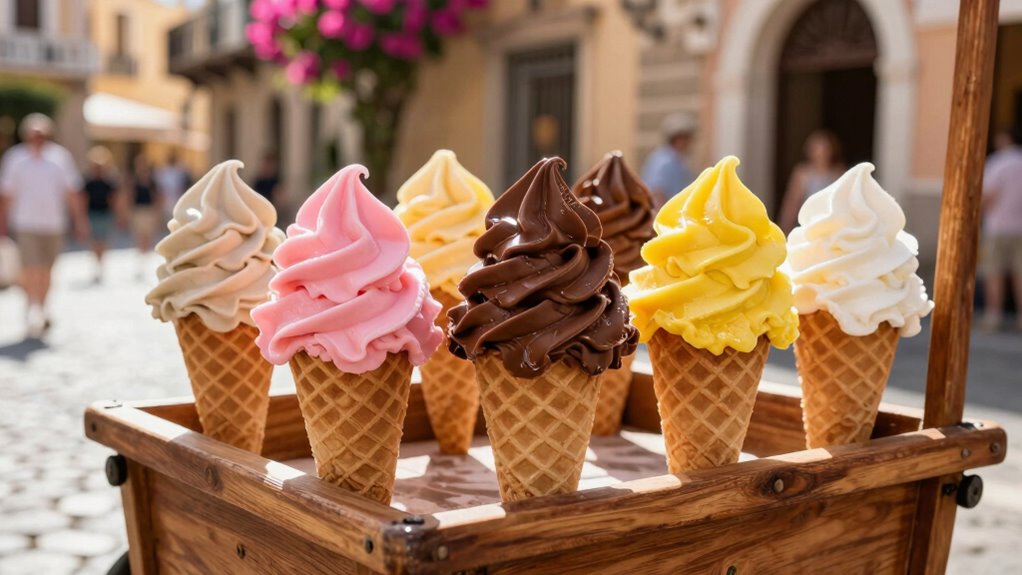

You see how gelato became a symbol of Italian summer because it embodies Italy’s rich history, regional flavors, and craftsmanship. As you enjoy a scoop, you experience centuries of tradition, local ingredients, and vibrant customs that turn each serving into a cultural celebration. Gelato’s cooling freshness and colorful variety make it a perfect summer treat, connecting people to Italy’s lively atmosphere and regional pride. Keep exploring, and you’ll uncover even more about this delicious Italian tradition.

Get baking supplies delivered free — and shop member deals
- Fast, free delivery on millions of items
- Access to Prime Big Deal Days deals on October 6–7
- Prime Video, Amazon Music and more included
Key Takeaways
- Gelato’s roots in Italy’s rich history and craftsmanship made it a cherished cultural tradition.
- Regional flavors reflect Italy’s diverse landscapes, enhancing its association with local summer identities.
- Artisan focus on fresh, seasonal ingredients elevates gelato as a premium summer treat.
- Gelato shops serve as social hubs, embodying the vibrant, communal Italian summer experience.
- Its historical evolution symbolizes Italy’s cultural pride and the essence of summer enjoyment.

When the Italian summer heat intensifies, few treats offer as much refreshment and joy as gelato. This cool, creamy dessert isn’t just a snack; it’s a symbol woven into Italy’s cultural fabric. You might already associate gelato with lazy afternoons in piazzas or vibrant street markets, but its roots run deep into Italy’s rich history. The gelato tradition dates back centuries, evolving from ancient Roman and Arab influences that introduced frozen desserts to the region. Over time, artisans began refining the craft, emphasizing quality ingredients and unique regional flavors that highlight Italy’s diverse landscape and culinary heritage.
As you wander through Italy’s towns and cities, you’ll notice that each region boasts its own take on gelato. From the citrus-infused varieties in Sicily to the nutty, honey-sweetened flavors of Tuscany, regional flavors define the gelato experience. These local tastes aren’t just about satisfying a sweet tooth—they tell stories of the land, climate, and local produce. For example, in Liguria, you might find gelato flavored with fresh basil or lemon, reflecting the coastal herbs and fruits abundant there. In the north, you might savor creamy hazelnut or cherry, inspired by nearby orchards and forests. This regional diversity makes gelato more than a frozen dessert; it’s a reflection of Italy’s cultural identity.
You also notice how the gelato tradition emphasizes craftsmanship. Artisans take pride in their recipes, blending fresh, seasonal ingredients with age-old techniques. The focus is on quality, ensuring each scoop delivers a smooth, intense flavor that’s true to its regional origins. This dedication to authenticity elevates gelato beyond simple sweetness—it’s an experience rooted in tradition and local pride. The importance of craftsmanship in maintaining the quality and authenticity of gelato is a key factor that sustains its reputation. It’s no surprise that, during summer months, gelato shops become social gathering spots, where families and friends share stories over cups or cones, celebrating Italian summer together. Additionally, the regional diversity of flavors showcases Italy’s rich culinary heritage, emphasizing how local ingredients influence traditional recipes.
Furthermore, the history of gelato highlights how its evolution reflects Italy’s broader cultural influences, making each scoop a taste of history. Ultimately, you see that gelato’s status as a summer icon in Italy isn’t accidental. It’s a product of centuries of tradition, regional diversity, and a deep understanding of quality and craft. This combination makes it the perfect antidote to the heat and a delicious symbol of Italy’s vibrant, sun-soaked summers. Whether enjoyed as a quick refreshment or savored slowly in a scenic piazza, gelato embodies the essence of Italian summer—refreshing, flavorful, and steeped in history.
As an affiliate, we earn on qualifying purchases.
Frequently Asked Questions
What Are the Origins of Gelato in Italy?
You discover that gelato in Italy originated in the Renaissance period, blending ancient Roman and Arab influences. Over time, artisans refined their techniques, emphasizing fresh ingredients and slower churning for richer texture. Today, gelato festivals celebrate this tradition, showcasing artisan skills. You can taste the history in every scoop, appreciating how Italy’s passion for high-quality ingredients and craftsmanship transformed gelato into a beloved summer symbol.
How Is Authentic Italian Gelato Made?
You might think authentic Italian gelato is just frozen milk and sugar, but true craftsmanship involves fresh ingredients and a slow churning process that preserves intense flavors. While gelato flavor innovations excite your palate, artisans also focus on gelato packaging sustainability, balancing tradition with eco-conscious practices. To make genuine gelato, you need quality, patience, and a passion for perfecting each batch—rare qualities for something so delightfully simple.
Why Is Gelato Different From Ice Cream?
Gelato is different from ice cream because it has a creamier texture and a more intense flavor. You’ll notice that gelato uses less butterfat, which makes it smoother and more flavorful without being overly rich. When you enjoy gelato, you get a denser, more concentrated taste experience. Its lower churn rate also means it’s served softer, so you can savor its rich, authentic flavor and creamy texture in every bite.
Which Italian Regions Are Famous for Gelato?
You’ll find that regions like Sicily, Tuscany, and Emilia-Romagna are famous for gelato, each offering unique regional flavors rooted in local ingredients. These areas uphold strong artisan traditions, crafting gelato with fresh, natural components passed down through generations. Sicily’s citrus and pistachio, Tuscany’s chestnut and wine flavors, and Emilia-Romagna’s rich dairy all showcase the diverse, authentic flavors that make Italian gelato celebrated worldwide.
How Has Gelato Influenced Global Dessert Trends?
Gelato has profoundly influenced global dessert trends through its focus on gelato art and flavor innovation. You see chefs worldwide experimenting with unique ingredients and artistic presentation, inspired by Italian masters. This approach elevates desserts beyond basic sweetness, making them visually appealing and memorable. As a result, gelato’s emphasis on craftsmanship and inventive flavors shapes modern dessert menus, encouraging chefs everywhere to push creative boundaries and delight customers with new, exciting tastes.
Conclusion
So, next time you savor a scoop of gelato on a sunny Italian afternoon, remember it’s more than just a treat — it’s a symbol of Italy’s vibrant summer spirit. Imagine Lucia, a local vendor in Florence, serving her homemade gelato with a warm smile, embodying the joy and tradition that make gelato special. It’s this cultural connection that turns a simple dessert into a cherished summer memory, inviting you to experience Italy’s sweet, sunny heart.
Halloween Picks
halloween
As an affiliate, we earn on qualifying purchases.