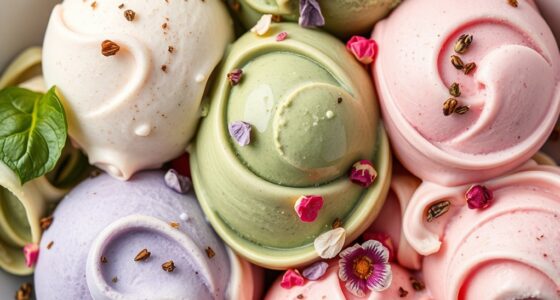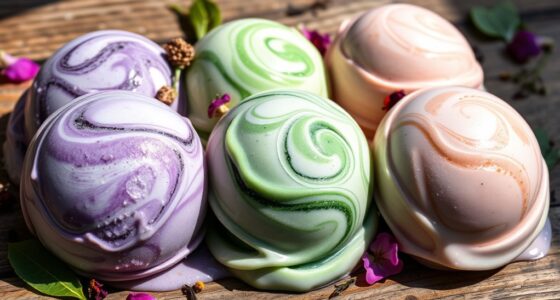
To master gelato texture, you need to control overrun and butterfat carefully. Overrun refers to how much air you incorporate; less air creates a denser, creamier final product, while more makes it lighter. Butterfat levels also matter—4-8% offers the perfect richness and smoothness. Adjusting these factors guarantees your gelato stays luscious and velvety. Keep exploring these techniques to perfect your craft and achieve consistent, silky results every time.
Key Takeaways
- Overrun measures air incorporation; controlling it ensures a smooth, dense gelato texture without becoming overly airy or icy.
- Ideal butterfat content (4-8%) balances richness and creaminess, preventing greasiness or crumbly consistency.
- Proper churning speed and duration influence overrun, impacting gelato’s density and mouthfeel.
- Stabilizers help maintain smoothness and prevent ice crystal growth during storage, preserving texture.
- Consistent freezing temperatures and minimal air exposure during storage are essential for optimal gelato texture.
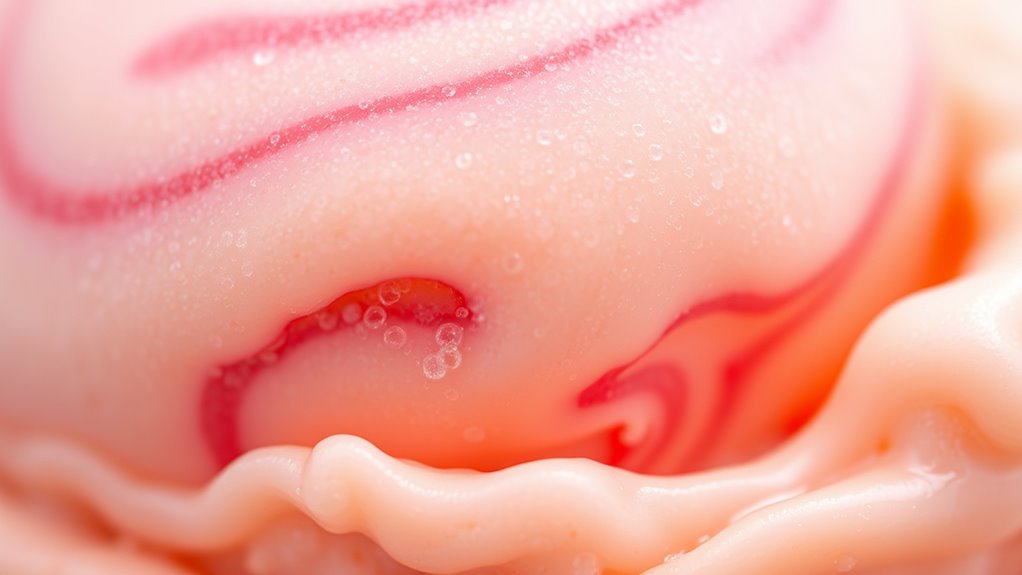
Creating the perfect gelato texture requires understanding how ingredients and techniques influence its smoothness and richness. One of the most critical factors is managing ingredient ratios, particularly the balance between milk, cream, sugar, and stabilizers. Too much cream and butterfat can make gelato overly dense and greasy, while too little can result in a crumbly or icy consistency. Striking the right balance ensures your gelato feels luxuriously creamy without becoming heavy. When adjusting ingredient ratios, consider the desired butterfat content; typically, gelato contains around 4-8%, which provides richness without sacrificing the light, airy mouthfeel. Incorporating stabilizers like guar gum or carob bean gum can also enhance smoothness by preventing ice crystallization, especially if you’re experimenting with lower-fat recipes or trying to extend shelf life. Temperature control during churning and storage is essential for achieving the ideal texture, as fluctuating temperatures can cause unwanted ice crystal growth. Equally important is your storage technique, which plays a essential role in maintaining gelato’s ideal texture. Proper storage involves keeping your gelato at a consistent, cold temperature—ideally around -12°C to -14°C—to prevent ice crystals from growing and creating a gritty texture. When storing gelato, always cover it tightly to minimize air exposure, which can cause freezer burn and compromise smoothness. Using airtight containers or covering the surface with plastic wrap before sealing helps maintain a barrier against moisture and odors, preserving the gelato’s delicate texture. Avoid frequent temperature fluctuations by keeping your freezer at a steady setting; each time you open it, the temperature rises slightly, risking ice crystal formation. If you plan to store gelato for an extended period, consider pre-chilling your storage containers and portioning the gelato into smaller servings. This reduces the amount of time it’s exposed to temperature changes during serving and helps retain its creamy consistency. Additionally, how you handle gelato during serving impacts its texture. Letting it sit at room temperature for a few minutes before scooping makes it easier to serve smoothly without breaking or creating air pockets. When you scoop, use a warmed spoon or scoop to achieve a clean, rounded serve that highlights its velvety appearance. Combining precise ingredient ratios with proper storage techniques ensures your gelato maintains its luscious, smooth texture from the first scoop to the last. Mastering these elements takes practice, but once you get the hang of balancing ingredients and controlling storage conditions, you’ll consistently produce gelato that delights with every spoonful.

The Amorino Guide to Gelato: Learn to Make Traditional Italian Desserts―75 Recipes for Gelato and Sorbets
As an affiliate, we earn on qualifying purchases.
Frequently Asked Questions
How Does Ambient Temperature Affect Gelato Overrun?
Ambient temperature impacts gelato overrun by influencing air circulation and temperature stability. When it’s warm, increased air circulation can cause uneven freezing, reducing overrun, while poor container insulation allows heat transfer, melting the gelato’s structure. To maintain consistent overrun, guarantee proper insulation of containers and minimize air exposure. Keeping the environment cool helps control temperature fluctuations, resulting in a smoother, aerated gelato with ideal texture.
Can Adjusting Butterfat Levels Change Gelato’s Creaminess?
Yes, adjusting butterfat levels can substantially influence gelato’s creaminess. Higher butterfat content enhances the butterfat impact, making the texture richer and smoother. By increasing butterfat, you can boost the creaminess, creating a more indulgent mouthfeel. Conversely, lowering it results in a lighter texture. Experimenting with butterfat levels allows you to fine-tune your gelato’s creaminess, achieving the perfect balance tailored to your desired flavor and texture profile.
What Equipment Best Controls Overrun During Churning?
Carefully control churning with commercial freezers and precise churning speed. These tools help you manage overrun, ensuring a smooth, consistent texture. Choose equipment with adjustable settings to fine-tune the churning process, preventing over-aeration or under-aeration. By monitoring and modulating churning speed, you keep overrun in check, creating rich, creamy gelato every time. Consistent control maximizes texture, making your gelato irresistibly perfect.
How Long Does Gelato Retain Optimal Texture?
You should consume gelato within 1 to 2 days for ideal texture and freshness preservation. Proper storage duration is key; keep it tightly sealed in an airtight container at a consistent -20°C to prevent freezer burn and ice crystal formation. The longer it sits, the more its delicate texture deteriorates, so enjoy it promptly to experience the best flavor, creaminess, and smoothness that gelato has to offer.
Are There Health Benefits to Varying Overrun Levels?
Varying overrun levels in gelato can impact its gelato nutrition and health implications. Higher overrun often means less fat and sugar per serving, making it a lighter treat, while lower overrun offers a richer, creamier texture with more butterfat. Adjusting overrun allows you to enjoy gelato with different nutritional profiles, helping you manage calorie intake and dietary needs while still savoring the flavor.
![The Perfect Scoop, Revised and Updated: 200 Recipes for Ice Creams, Sorbets, Gelatos, Granitas, and Sweet Accompaniments[A Cookbook]](https://m.media-amazon.com/images/I/41ypbZfII5L._SL500_.jpg)
The Perfect Scoop, Revised and Updated: 200 Recipes for Ice Creams, Sorbets, Gelatos, Granitas, and Sweet Accompaniments[A Cookbook]
As an affiliate, we earn on qualifying purchases.
Conclusion
Now that you understand how overrun and butterfat influence gelato’s texture, you’re better equipped to craft the perfect batch. Did you know that the ideal gelato contains around 4-8% butterfat, offering a richer, creamier experience? With this knowledge, you can experiment confidently, balancing air and fat to create that irresistible, velvety finish. Keep refining your technique, and soon, you’ll master gelato that delights every palate.

Cuisinart Ice Cream Cookbook for Beginners: Create Perfect Frozen Treats with Cuisinart Ice Cream Recipes | Enjoy Classic Ice Creams, Fruity Sorbets, Rich Gelatos, Creamy Frozen Yogurts & More
As an affiliate, we earn on qualifying purchases.
The Complete Cuisinart Homemade Frozen Yogurt, Sorbet, Gelato, Ice Cream Maker Book: 100 Decadent and Fun Recipes for your 2-Quart ICE-30BC
As an affiliate, we earn on qualifying purchases.