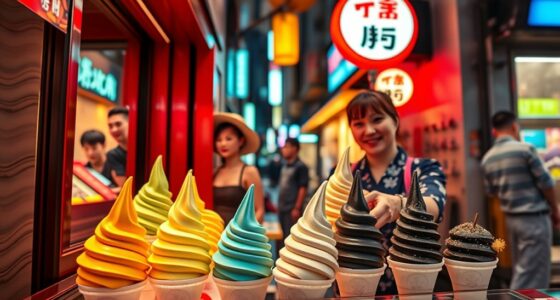
Discover how Japan’s desserts blend tradition with innovation through flavors like matcha, sakura, and other eastern ingredients. These treats honor centuries-old customs like tea ceremonies and cherry blossom festivals, emphasizing harmony, mindfulness, and seasonal beauty. You’ll find that modern creations respect cultural values while exploring new culinary boundaries. To understand how these flavors deepen your appreciation of Japanese culture and its eco-friendly practices, explore further details below.
Key Takeaways
- Traditional Japanese ingredients like matcha and sakura are integrated into modern desserts, blending cultural heritage with innovation.
- Tea ceremonies inspire flavor profiles that emphasize harmony, mindfulness, and natural ingredients in contemporary confections.
- Seasonal flavors such as cherry blossom are celebrated through limited-edition treats, reflecting Japan’s appreciation for nature’s transient beauty.
- Modern Japanese desserts honor centuries-old customs while exploring new culinary techniques and flavor combinations.
- Sustainability is emphasized through the use of eco-friendly, natural ingredients aligned with Japan’s respect for tradition and the environment.

Japan is redefining dessert trends by infusing traditional Eastern flavors into modern treats like matcha gelato and beyond. You’ll find that the country’s culinary scene seamlessly combines age-old customs with contemporary innovation, creating a unique experience for your taste buds. Take, for example, the influence of tea ceremonies—an essential part of Japanese culture that emphasizes harmony, respect,, purity, and tranquility. These ceremonies aren’t just about preparing and drinking tea; they’re about appreciating the moment and the flavors that come with it. This reverence for tea has inspired countless desserts, with matcha gelato standing out as a prime example. Its vibrant green hue and earthy flavor evoke the serenity and elegance of traditional tea practices, allowing you to enjoy a modern treat that pays homage to centuries of cultural tradition.
As you explore Japan’s dessert landscape, you’ll notice how cherry blossom festivals play a significant role in shaping seasonal flavors. During sakura season, the air is filled with the delicate aroma of cherry blossoms, and desserts celebrate this fleeting beauty with subtle, floral notes. Cherry blossom-flavored sweets like mochi, candies, and even baked goods become more than just treats—they’re a way to connect with nature’s transient elegance. When you indulge in these sakura-inspired desserts, you’re not just tasting a flavor; you’re experiencing a moment of cultural celebration that embodies the fleeting beauty of spring. These festivals are a time when locals and visitors alike gather to enjoy these seasonal flavors, making each bite a shared celebration of Japan’s natural and cultural heritage.
What makes Japan’s approach to dessert truly enthralling is how it respects tradition while pushing culinary boundaries. You’re encouraged to try matcha gelato not just as a cold dessert but as part of a broader cultural narrative rooted in centuries-old practices. The delicate balance of bitterness and sweetness in matcha mirrors the philosophy behind tea ceremonies—an appreciation for simple, refined flavors that evoke calm and mindfulness. Similarly, cherry blossom-themed confections help you connect to the natural rhythms of the seasons, turning fleeting moments into lasting memories. In this way, Japan’s modern desserts aren’t just about satisfying your sweet tooth—they’re about immersing you in a cultural experience that celebrates history, nature, and artistry through every bite. Additionally, the use of natural ingredients and sustainable practices in creating these treats reflects Japan’s commitment to eco-friendly culinary innovation.
Frequently Asked Questions
What Are the Health Benefits of Matcha Beyond Flavor?
You’ll benefit from matcha’s antioxidant properties, which help protect your cells from damage and support overall health. Additionally, consuming matcha can boost mental clarity and focus thanks to its unique combination of caffeine and L-theanine. Unlike coffee, it provides a steady energy lift without jitters. Incorporating matcha into your routine can enhance your well-being, offering both a flavorful experience and notable health perks.
How Is Matcha Traditionally Prepared in Japan?
You might think traditional matcha preparation is just about mixing powder with water, but it’s a precise art rooted in the tea ceremony. You start by sifting the matcha to avoid clumps, then whisk it with a bamboo chasen using a swift, zigzag motion. This technique creates a frothy, vibrant green tea, embodying mindfulness and respect. The process emphasizes harmony, patience, and a deep connection to Japanese culture.
Are There Regional Variations of Matcha Desserts in Japan?
Yes, you’ll find regional flavors and dessert variations of matcha across Japan. In Kyoto, for example, matcha-flavored sweets emphasize rich, traditional tastes, while in Tokyo, modern twists like matcha parfaits and ice creams are popular. You can explore unique regional ingredients and techniques that influence these desserts, making each area’s matcha treats distinct and exciting. So, your matcha journey offers diverse flavors reflecting Japan’s local culinary culture.
What Other Herbs or Spices Are Commonly Paired With Matcha?
You might think matcha only pairs with traditional flavors, but ginger pairing and yuzu infusion reveal its versatility. These herbs and spices elevate the earthy bitterness of matcha, creating a balanced, invigorating taste. Ginger adds warmth and a spicy kick, while yuzu offers citrusy brightness. Exploring these combinations shows how herbs and spices deepen matcha’s flavor profile, inviting you to experiment beyond the usual and discover new, exciting culinary experiences.
How Does Matcha Influence Japanese Tea Culture Globally?
You’re likely to notice that matcha has transformed Japanese tea culture globally by popularizing the traditional matcha ceremonial and tea ceremony experiences worldwide. When you participate, you immerse yourself in a mindful, ritualistic process that highlights harmony and respect. This global influence introduces more people to authentic Japanese tea customs, fostering appreciation and understanding of matcha’s cultural significance, beyond just its flavor.
Conclusion
As you savor Japan’s unique blend of matcha gelato and other eastern flavors, you realize there’s more to discover. These tastes aren’t just desserts—they’re a gateway to a world full of surprises waiting to be uncovered. Will your next bite reveal a new tradition or an unexpected twist? Keep exploring, because Japan’s culinary secrets are just beginning to unfold, and you’re invited to be part of the journey. Are you ready to taste what’s next?