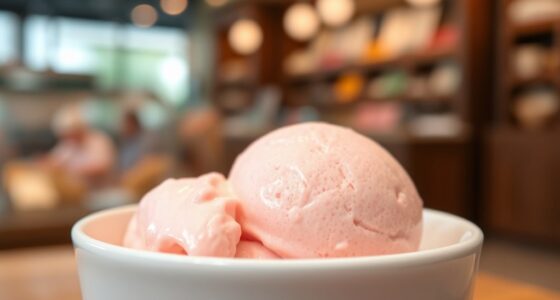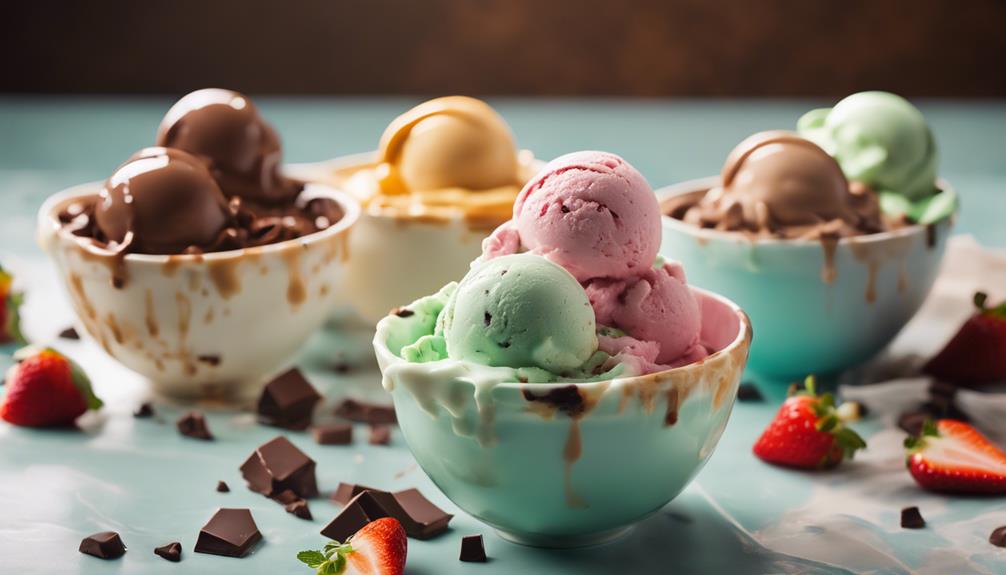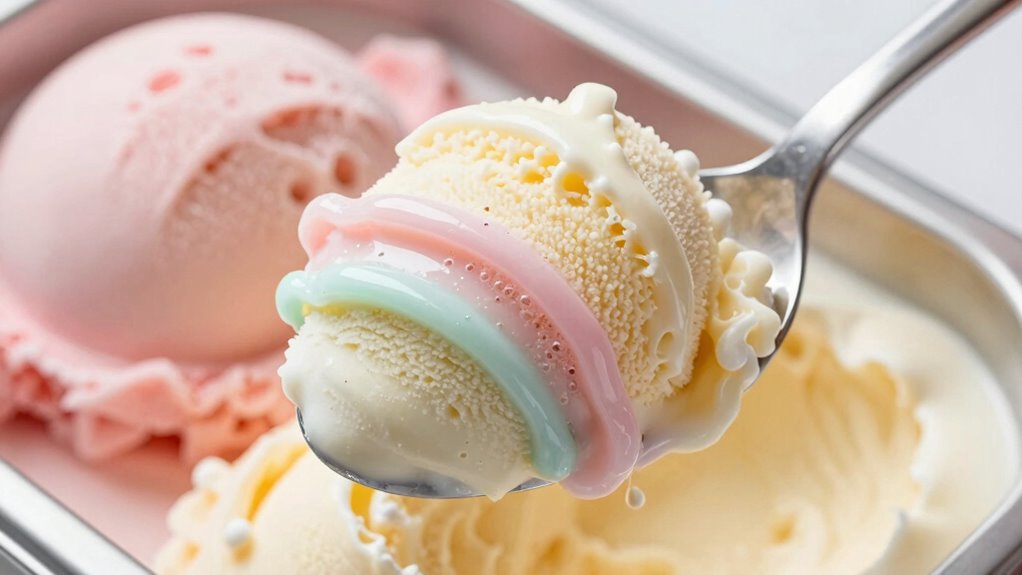

You’ll notice that gelato feels cleaner on your palate than rich ice cream because it has less fat, which allows flavors to come through more vividly without coating your tongue. Its denser texture and warmer serving temperature make the flavors more immediate and invigorating. Plus, the lower air content helps clear your palate more quickly. If you want to understand how these factors create a lighter, revitalizing experience, keep exploring the details behind gelato’s unique qualities.

Get baking supplies delivered free — and shop member deals
- Fast, free delivery on millions of items
- Access to Prime Big Deal Days deals on October 6–7
- Prime Video, Amazon Music and more included
Key Takeaways
- Gelato’s lower fat content allows flavors to be more vivid and easily cleared from the palate.
- Its denser, less aerated texture facilitates quicker palate cleansing after each bite.
- Serving gelato slightly warmer enhances flavor release and reduces lingering heaviness.
- The smoother, less creamy consistency minimizes palate numbness, promoting a fresher taste experience.
- Gelato’s balanced flavor profile and refreshing qualities create a sensation of cleanliness and revitalization.
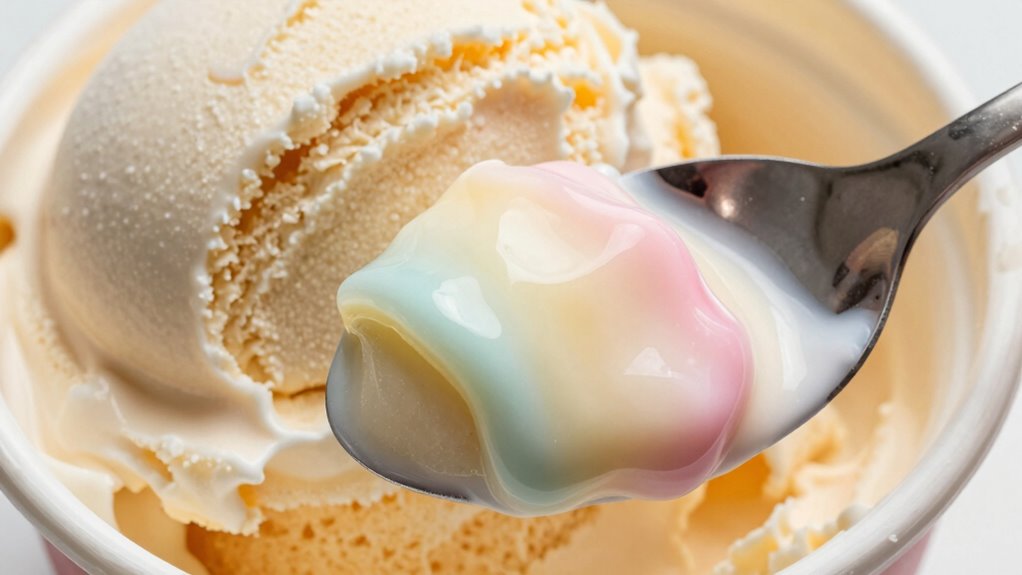
Have you ever wondered what sets gelato apart from ice cream? One of the main reasons lies in the way each treats your palate, especially when it comes to flavor and texture. Gelato is crafted to deliver a more intense flavor experience, largely because of its lower fat content and the way it’s churned. When you taste gelato, you notice that the flavors hit your taste buds more directly and vividly. That’s because the fat in ice cream tends to coat your tongue, dulling the perception of flavor. Gelato’s lower fat level allows the true taste of the ingredients—be it fresh fruit, nuts, or chocolate—to shine through more clearly. This heightened flavor intensity means you’re likely to experience a richer, more immediate burst of taste with each spoonful.
Gelato’s lower fat content enhances flavor intensity, making each spoonful more vivid and immediate.
Texture differences also play a pivotal role in why gelato feels cleaner on your palate. Ice cream often has a creamier, thicker consistency due to its higher fat and air content, which can feel heavier and more lingering after each bite. Gelato, on the other hand, is churned at a slower speed, resulting in a denser but less aerated texture. Its smoother, silkier feel melts more quickly and evenly in your mouth, leaving behind a sense of freshness rather than heaviness. Because of this, you don’t feel weighed down or overly coated after eating gelato. Instead, it clears from your palate more efficiently, giving you a sensation of cleanliness and revitalization. Additionally, the calibration of flavors in gelato can be more precisely controlled, enhancing its refreshing qualities. This precise control over flavor calibration ensures each scoop maintains a balanced and vibrant profile. The careful balance of ingredients in gelato also contributes to its overall refreshing character, making it a more invigorating treat. Moreover, the lower air content (overrun) in gelato contributes to its denser texture, which enhances the perception of purity and clarity of flavor.
Furthermore, the serving temperature of gelato is carefully managed to enhance its crisp, refreshing feeling. It’s typically served slightly warmer than ice cream, which means it melts faster and exposes your taste buds to the flavors more immediately. This warmth enhances the perception of flavor, making each spoonful feel lighter and more vibrant. Ice cream’s colder temperature can numb your palate slightly, dulling the flavor and making it feel more substantial or even greasy. Gelato’s serving style and texture differences work together to create an experience where the flavors are more prominent and the overall sensation more invigorating. The temperature at which gelato is served is carefully controlled to optimize flavor release and texture.
In essence, the combination of flavor intensity, texture differences, and serving temperature makes gelato feel cleaner and more invigorating on your palate. It’s designed to highlight the ingredients’ natural qualities without overwhelming your senses or feeling overly heavy. That’s why many people prefer gelato when they want a dessert that feels lighter, brighter, and more revitalizing—perfect for enjoying a burst of flavor without the lingering heaviness that often accompanies rich ice cream.
gelato scoop with temperature control
As an affiliate, we earn on qualifying purchases.
As an affiliate, we earn on qualifying purchases.
Frequently Asked Questions
How Does Serving Temperature Affect Gelato’s Clean Palate Feel?
Serving gelato at a slightly colder temperature enhances its clean palate feel by maintaining a firmer texture, which emphasizes flavor intensity and creates a satisfying texture contrast. When served too warm, the gelato melts quickly, dulling flavors and reducing the crisp, invigorating sensation. Keeping it colder preserves its smooth, firm consistency, making the flavors more vibrant and the overall experience more invigorating and clean on your palate.
Do Ingredients Impact the Perceived Freshness of Gelato Versus Ice Cream?
Did you know that 85% of flavor perception comes from ingredients’ freshness? Your perception of gelato’s freshness heavily depends on ingredient purity, which enhances flavor intensity and makes it taste more vibrant. High-quality, fresh ingredients minimize artificial taste, giving you a cleaner, more genuine experience on your palate. This freshness often makes gelato seem more invigorating and natural compared to ice cream, which may contain preservatives or artificial additives.
Can Mouthfeel Differences Influence Flavor Perception Between Gelato and Ice Cream?
Yes, mouthfeel differences can influence how you perceive flavor between gelato and ice cream. The smoother, denser texture of gelato enhances flavor complexity by allowing richer, more nuanced tastes to shine without overwhelming your palate. In contrast, the creamier, more contrasting textures of ice cream may create a sensation of richness that masks subtle flavors. This texture contrast in gelato makes its flavors feel cleaner and more refined.
Does the Fat Content in Gelato Contribute to Its Lighter Sensation?
You might find gelato feels lighter on your palate because of its lower fat content, which reduces the sensation of richness. Fat reduction in gelato enhances its texture contrast, making it feel less heavy and more invigorating. This thinner mouthfeel allows flavors to come through more clearly, giving you a cleaner, crisper taste experience compared to traditional, richer ice cream. The subtle difference in fat truly influences how you perceive each treat.
How Does the Air Content (Overrun) Differ Between Gelato and Ice Cream?
You’ll notice that gelato has a lower overrun compared to ice cream, meaning it incorporates less air during churning. This lower air incorporation results in a denser, creamier texture that feels richer, yet less heavy on your palate. Ice cream’s higher overrun introduces more air, making it lighter and fluffier. So, the overrun comparison explains why gelato often feels more intense and less icy, providing a cleaner, smoother sensation.
Conclusion
So, next time you savor a scoop, remember that gelato acts like a gentle whisper on your palate, softly dancing with your senses. Its lower fat content and denser texture let flavors glide like silk, leaving your mouth feeling refreshed rather than weighed down. Think of gelato as a delicate breeze—inviting, clean, and lingering just long enough to make every bite a tender, unforgettable moment. Immerse yourself, and let your taste buds bask in its airy, pristine charm.
Fall Picks
fall essentials
As an affiliate, we earn on qualifying purchases.