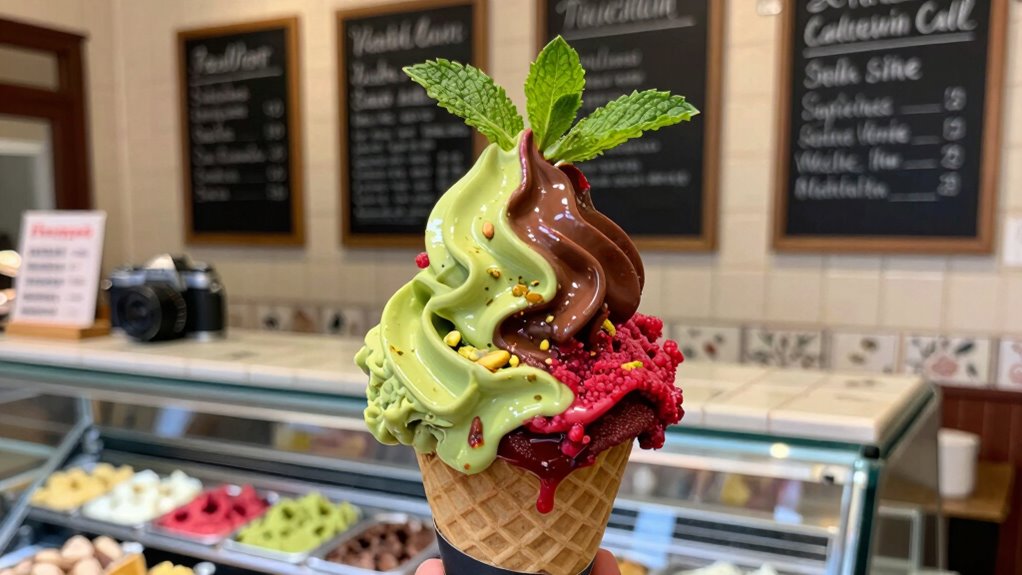

Gelato is an easy way to learn about Italian food culture because it showcases regional flavors, ingredients, and traditions. As you taste varieties inspired by citrus, nuts, or olive oil, you see how geography and local customs shape each flavor. Traditional techniques and history are preserved in every scoop, connecting you to Italy’s rich culinary heritage. Keep exploring, and you’ll discover how gelato reflects Italy’s vibrant landscapes and cultural identity.

Get baking supplies delivered free with Prime
- Fast, free delivery on millions of items
- Prime Video, Amazon Music and more included
- Member-only deals all year
Key Takeaways
- Gelato’s regional variations reflect Italy’s diverse local ingredients and culinary traditions, providing insight into regional identities.
- Its historical development showcases Italy’s rich culinary history and cultural evolution.
- The flavors reveal geographical influences, illustrating how environment shapes Italian cuisine.
- Authentic gelato-making methods preserve cultural heritage and traditional techniques.
- Tasting different gelato flavors offers a sensory journey into Italy’s historical and cultural landscape.

Have you ever wondered why gelato holds such a special place in Italian food culture? It’s more than just a sweet treat; it’s a window into Italy’s rich culinary history and diverse regional identities. The roots of gelato trace back to ancient times, with its origins intertwined with the Mediterranean civilizations that inhabited Italy. The historical origins of gelato reveal a long tradition of balancing simple ingredients—milk, sugar, and natural flavorings—crafted into a dessert that’s both invigorating and culturally significant. During the Renaissance, Italian artisans refined their techniques, creating a smoother, more flavorful version of frozen desserts. Over centuries, each region developed its own take, influenced by local ingredients and tastes, leading to a vibrant tapestry of regional variations. For example, in Sicily, you might encounter flavors inspired by citrus and nuts, reflecting the island’s abundant produce. In Tuscany, gelato often features rich, earthy flavors like chestnut or olive oil, showcasing local agricultural specialties. These regional variations aren’t just about ingredients; they tell stories about local traditions, climate, and history. When you explore gelato, you’re not just tasting a dessert—you’re experiencing a slice of Italy’s cultural landscape.
Understanding the historical origins and regional variations of gelato makes it an accessible entry point into Italian food culture. As you try different flavors, you begin to appreciate how geography and history shape local ingredients and culinary techniques. You’ll notice that in northern Italy, gelato tends to be creamier and richer, reflecting the influence of dairy production in that region, while southern versions may be lighter and fruitier, emphasizing fresh, seasonal ingredients. This regional diversity helps you see how Italy’s diverse landscape influences its cuisine, making each gelato flavor a lesson in local history and culture. Plus, the tradition of gelato-making has been passed down through generations, preserving authentic methods that remain essential to Italian identity today. By sampling gelato, you’re engaging with a living tradition, one that embodies Italy’s artistic approach to food—simple, yet full of history and regional pride.
In essence, gelato acts as an inviting gateway because it’s rooted in Italy’s past and vibrant regional identities. It invites you to taste history and explore the cultural nuances behind each flavor, making your journey into Italian food culture both delicious and enlightening.
As an affiliate, we earn on qualifying purchases.
Frequently Asked Questions
How Did Gelato Originate in Italy?
You might find it fascinating that gelato’s history dates back to ancient times, with roots in the Italian culinary traditions of the Renaissance period. Italians perfected the craft of freezing sweetened fruit and dairy mixtures, creating a rich, smooth treat. This long-standing tradition reflects Italy’s love for flavorful, artisanal foods. As you taste gelato, you’re also experiencing a piece of Italy’s culinary heritage, making it an easy entry point into Italian food culture.
Are There Regional Differences in Gelato Flavors Across Italy?
Yes, there are regional differences in gelato flavors across Italy. You’ll notice that each area offers unique gelato flavor variety based on local ingredients and regional taste preferences. For example, Sicily features citrus and pistachio flavors, while Tuscany emphasizes chestnut and wine-infused options. Exploring these regional variations gives you a delicious way to experience Italy’s diverse food culture and better understand local tastes through gelato.
What Traditional Ingredients Are Used in Authentic Gelato?
You’ll find authentic gelato uses traditional ingredients like fresh milk, sugar, and natural flavorings. Imagine a small artisanal gelato shop in Florence, where they craft flavors like pistachio using only roasted nuts and high-quality milk, showcasing artisanal gelato techniques. These ingredients create genuine gelato flavor variations that reflect Italy’s culinary roots. By experiencing these, you gain insight into Italian food culture, appreciating how simple, high-quality ingredients make a difference.
How Is Gelato Made Traditionally Versus Commercially?
Traditional gelato is made fresh daily with simple ingredients, carefully churned to create a dense, creamy texture. Commercial gelato often involves added stabilizers and preservatives, stored in large freezers to maintain quantity. When serving, traditional gelato is presented in attractive, small portions that showcase its vibrant flavors, while commercial versions may prioritize mass storage. Your experience, tasting traditional gelato, gives you a real sense of authentic Italian food culture.
Can Gelato Be Paired With Other Italian Desserts?
Yes, you can pair gelato with other Italian desserts using simple pairing techniques. Try combining gelato with biscotti for a crunchy contrast, or serve it alongside panna cotta for a creamy, layered dessert. You might also top a slice of tiramisu with a scoop of gelato for a delightful twist. These dessert combinations highlight Italian flavors and make your tasting experience more exciting and authentic.
Conclusion
So, savoring the sweet, simple delights of gelato sparks your senses and sets the stage for exploring Italy’s rich, revered food culture. With each scoop, you step closer to uncovering Italy’s culinary secrets—its stories, traditions, and tantalizing tastes. Embrace this edible entryway, and let every lick lead you further into Italy’s inspiring, irresistible, and unforgettable gastronomic world. Delicious discoveries await—dive in and delight your senses!
Halloween Picks
halloween
As an affiliate, we earn on qualifying purchases.