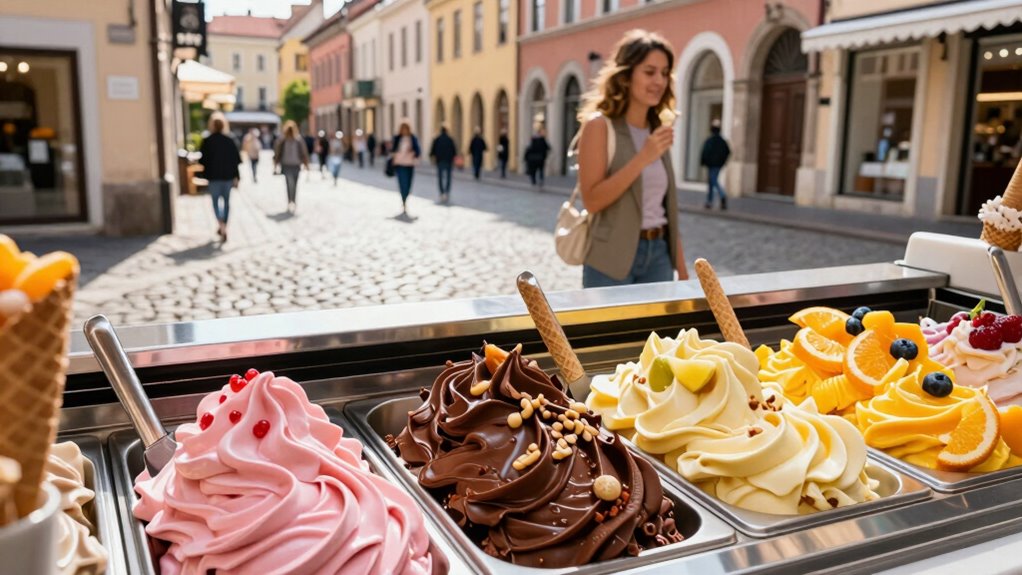

You can see how gelato reflects local tastes across Europe through regional ingredients, traditions, and seasonal flavors. In Italy, you’ll find fresh, local fruits like lemons and pistachios, while France and Switzerland add refined flavors like lavender and champagne. Each area uses ingredients that connect to their land and history, creating unique textures and tastes. If you keep exploring, you’ll discover even more about how these customs shape each region’s special gelato.

Get baking supplies delivered free with Prime
- Fast, free delivery on millions of items
- Prime Video, Amazon Music and more included
- Member-only deals all year
Key Takeaways
- Gelato flavors incorporate regional ingredients like pistachios from Sicily or lavender from Provence, reflecting local taste preferences.
- Seasonal sourcing of ingredients ensures flavors match regional climate and cultural eating habits throughout the year.
- Traditional recipes and techniques preserve authentic regional tastes, emphasizing local culinary heritage.
- Regional variations, such as spicy Eastern European or floral Southern Italian flavors, showcase distinct local palates.
- Emphasis on local farms and ingredients aligns gelato with regional identity and support for local communities.
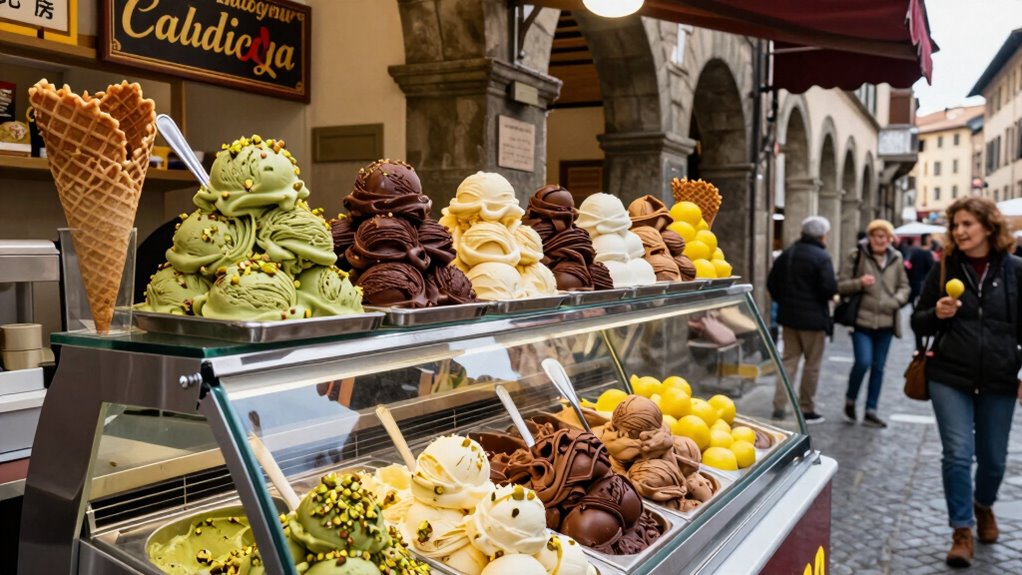
When you think of European desserts, gelato often stands out as a quintessential treat that captures the continent’s rich culinary heritage. Its flavors tell stories of local tastes, history, and regional ingredient influences. Across Europe, gelato isn’t just a frozen dessert; it’s a reflection of each area’s unique cultural flavor profiles. In Italy, you’ll find gelato flavors that emphasize simplicity and freshness—like pistachio from Sicily, made with local nuts, or lemon from Amalfi, highlighting the region’s abundant citrus. These flavors showcase Italy’s pride in natural ingredients and regional produce, creating a sensory connection to the land. Moving north, in countries like Switzerland and France, gelato often incorporates more refined, sophisticated flavors, such as lavender or champagne, echoing local traditions of luxury and refinement. The use of regional ingredients influences not just the flavor but also the presentation and texture, emphasizing the local palate’s preferences.
The regional ingredient influences vary widely across Europe, from berries and apples in central Europe to tropical fruits like mango and pineapple in Mediterranean coastal areas, each contributing to the local flavor profile. Additionally, many gelato artisans focus on seasonal ingredients, which allows them to showcase the freshest flavors available throughout the year. This seasonal approach is often supported by a regional ingredient sourcing philosophy, emphasizing sustainability and local traditions. Moreover, the emphasis on authentic regional recipes helps preserve culinary heritage and adds to the diversity of flavors across the continent. Incorporating local culinary traditions into gelato making further enriches the cultural experience and highlights regional uniqueness. This approach also encourages innovation within traditional boundaries, ensuring that each region’s gelato remains distinctive. Furthermore, adopting local preservation methods can help maintain the integrity of traditional flavors and techniques.
This regional approach also means that gelato shops often source ingredients locally, supporting regional farms and preserving traditional methods. It’s not uncommon to taste a gelato that changes seasonally, aligning with what’s freshly available in that part of Europe. By embracing local flavors and ingredients, gelato makers honor their cultural heritage and cater to the taste preferences of their communities. Whether it’s the bold, aromatic spices of Eastern Europe or the subtle, floral notes of Southern Italy, each variation of gelato becomes a tasty ambassador of its region’s identity. It’s this deep connection to local ingredients and cultural flavor profiles that make gelato across Europe more than just dessert—it’s a delicious reflection of each place’s history and taste.
As an affiliate, we earn on qualifying purchases.
Frequently Asked Questions
How Do Seasonal Ingredients Influence Gelato Flavors Across Europe?
Seasonal ingredients greatly influence gelato flavors across Europe by inspiring unique fruit infusions and spice blends that reflect local harvests. You’ll notice summer gelatos bursting with fresh berries or stone fruits, while winter flavors feature warm spices like cinnamon or clove. These seasonal touches allow gelato makers to create authentic, region-specific experiences, showcasing local produce and traditions through vibrant, timely flavors that resonate with each area’s tastes and customs.
Are There Regional Variations in Gelato Texture Preferences?
You’ll find that regional variations in gelato texture preferences are immense, with some places craving ultra-smooth, melt-in-your-mouth creaminess, while others prefer a denser, more toothsome bite. Texture consistency changes dramatically across Europe, influenced by local tastes and traditions. From the silky perfection of Italian gelato to the slightly firmer textures in northern countries, these preferences reflect deep cultural nuances, making every region’s gelato experience uniquely enthralling.
How Does Local Culture Impact Gelato Presentation Styles?
You’ll notice that local culture shapes gelato presentation styles through cultural aesthetics and presentation traditions. In Italy, for example, vibrant colors and artistic swirls highlight craftsmanship, while in France, elegant, minimalist displays emphasize sophistication. These styles reflect regional identities and values, influencing how gelato is served and enjoyed. By embracing these cultural aesthetics, gelato artisans create a connection with local traditions, making each presentation unique and culturally meaningful.
What Role Does History Play in Regional Gelato Recipes?
History plays a significant role in shaping regional gelato recipes through historical influences and regional culinary traditions. You’ll notice that local flavors and ingredients often stem from historical trade routes, invasions, and cultural exchanges. These influences blend into recipes, creating unique tastes rooted in regional history. By understanding these historical factors, you can appreciate how regional gelato recipes preserve cultural identities and adapt over time, reflecting the rich culinary heritage of each area.
How Do Dietary Restrictions Shape Gelato Flavor Innovation?
You see dietary restrictions as a canvas for innovation, shaping vibrant flavors. By embracing dairy alternatives and vegan options, you transform traditional gelato into inclusive artistry. Just as a painter adds bold strokes, you experiment with coconut milk, almond cream, and plant-based sweeteners, creating rich, satisfying textures. This way, dietary needs become a symbol of creativity, allowing everyone to enjoy gelato’s delightful flavors without compromise.
Conclusion
As you wander through Europe’s vibrant streets, gelato becomes more than just a sweet treat; it’s a colorful mirror reflecting local tastes like a lively mosaic. Each flavor whispers stories of regional ingredients and traditions, blending to create a symphony of unique palates. So, next time you indulge, remember—you’re tasting a piece of the local soul, a frozen canvas painted with the rich hues of history, culture, and passion.
Evergreen bestsellers Picks
bestsellers
As an affiliate, we earn on qualifying purchases.