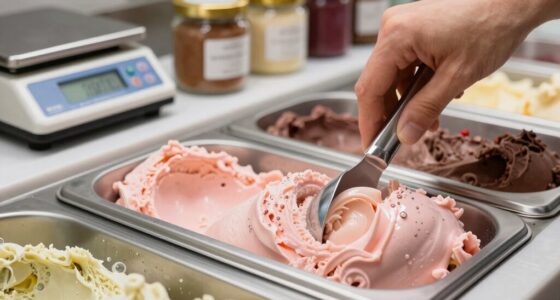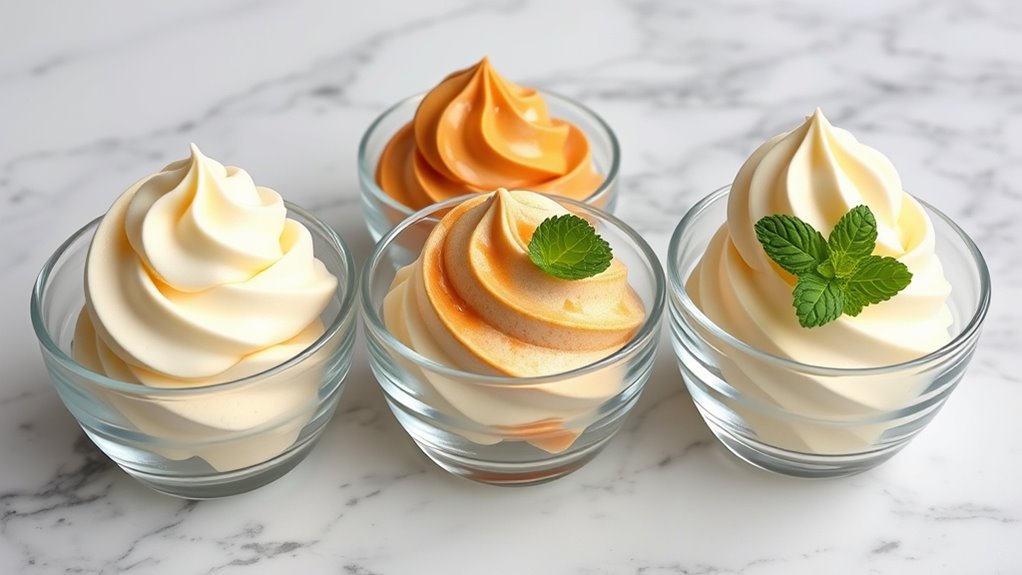

Experiment with gelato fat levels by adjusting between 5% and 15% to find the ideal balance. Lower fat makes your gelato lighter and more invigorating but can lead to icier textures. Higher fat creates a richer, creamier, and more indulgent feel, though it might make the gelato denser and harder to scoop. Too much or too little can impact mouthfeel and stability. Keep experimenting to discover the perfect gelato texture—there’s more to uncover on how fat truly influences your creation.

Get baking supplies delivered free with Prime
- Fast, free delivery on millions of items
- Prime Video, Amazon Music and more included
- Member-only deals all year
Key Takeaways
- Adjust fat levels between 5% and 15% to balance creaminess, scoopability, and texture.
- Higher fat (>10%) enhances richness and slows melting but may make gelato denser.
- Lower fat (~5%) creates a lighter, more refreshing texture but risks icy, less smooth results.
- Incorporate stabilizers to maintain mouthfeel and prevent large ice crystal formation at varying fat levels.
- Experiment with fat adjustments to tailor gelato’s flavor, texture, and melting properties to desired preferences.
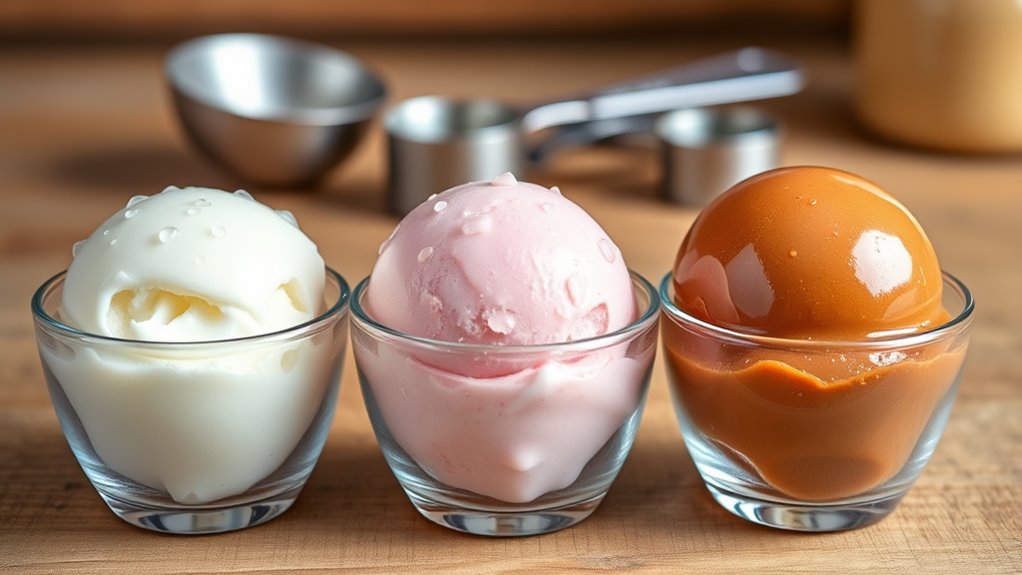
Have you ever wondered how fat content influences gelato’s texture and flavor? The amount of fat you include in your recipe directly impacts the gelato’s overall feel and taste. When you lower the fat content to around 5%, the gelato tends to have a lighter, more invigorating texture. However, reducing fat can pose challenges for maintaining that signature creaminess. That’s where stabilizers come into play—they help preserve mouthfeel and prevent ice crystals from forming too large, which can ruin the smooth, velvety consistency you’re after.
Without sufficient fat, the gelato might feel less luxurious and more icy, but stabilizers effectively counteract these issues by supporting the structure. On the other hand, increasing fat levels above 10% boosts richness and smoothness. Higher fat provides a more indulgent flavor profile and enhances creaminess, making each spoonful feel more satisfying.
Lower fat makes gelato less luxurious and more icy, but stabilizers help maintain creaminess and structure.
But be cautious—too much fat can make the gelato heavier, leading to a dense mouthfeel and making it more difficult to scoop. The balance here is vital; you want enough fat to achieve a luscious texture without sacrificing scoopability or a pleasant mouthfeel. Fat levels also influence how the gelato melts in your mouth. With higher fat content, the melting rate slows down, giving you that slow, luxurious release of flavor that consumers love.
Conversely, lower fat gelato melts faster, which can be desirable for a lighter experience but may compromise the long-lasting creaminess. Scientific studies reveal that fat plays a significant role in stabilizing air bubbles during freezing, which affects the gelato’s volume and smoothness. Proper ice crystal control is essential; larger crystals lead to a gritty texture, whereas smaller crystals result in a silky mouthfeel.
Adjusting fat content between 5% and 15% allows you to find that sweet spot—balancing health considerations with the desirable qualities of creaminess and scoopability. Experimenting with different fat levels lets you tailor your gelato to specific tastes and dietary needs.
Keep in mind that the right fat content can enhance your gelato’s overall sensory appeal by improving mouthfeel, stabilizing air bubbles, and controlling ice crystals. Scientific insights support that carefully managing fat levels alongside stabilizers can give you a perfect balance of flavor, texture, and health-conscious ingredients.
Whether you aim for a lighter gelato or a rich, decadent one, understanding how fat content influences these factors helps you craft a better product and delight your customers with every scoop.
gelato stabilizer for smooth texture
As an affiliate, we earn on qualifying purchases.
As an affiliate, we earn on qualifying purchases.
Frequently Asked Questions
What Is the Fat Content of Gelato?
You might wonder about gelato’s fat content. Typically, it contains around 4-8% butterfat, which gives it a lighter, silkier texture compared to ice cream.
Commercial gelato often has about 5% fat, balancing flavor and creaminess. Adjusting the fat level can change how rich or airy your gelato feels, influencing its stability and melting rate.
What Is the Legal Limit of Butterfat in Ice Cream?
Think of the legal limits on butterfat in ice cream like boundaries in a dance—guidelines that keep everything in harmony. In the U.S., the FDA requires at least 10%, with premium varieties reaching up to 20%.
The EU mandates a minimum of 5%, often exceeding 10%. Some regions allow up to 30% for specialty products. These laws shape what you can legally label as ice cream.
Why Is Gelato Unhealthy?
You might wonder why gelato is considered unhealthy. It’s because it often contains high amounts of sugar and fat, which can lead to weight gain and metabolic issues if you indulge too often.
Its dense texture means more calories per serving, making overeating easy. Plus, many commercial versions include stabilizers and full-fat dairy, increasing saturated fat intake and raising your risk for heart problems over time.
Is There Animal Fat in Gelato?
You’re asking if there’s animal fat in gelato. Generally, gelato contains animal fats from dairy sources like milk and cream, which provide butterfat that gives it its creamy texture.
Some recipes may include small amounts of animal fats like egg yolks or butter, but it doesn’t usually contain added animal fats like lard or tallow.
If you’re concerned about animal fats, check the ingredients or choose plant-based options.
Conclusion
By now, you see how tweaking fat levels can truly make or break your gelato’s texture and flavor. Don’t be afraid to play around and find what works best for you—after all, variety is the spice of life. When you strike the right balance, you’ll discover that the perfect gelato isn’t just a distant dream but within your grasp. Keep experimenting, and enjoy the sweet rewards of your newfound knowledge.
Fall Picks
fall essentials
As an affiliate, we earn on qualifying purchases.