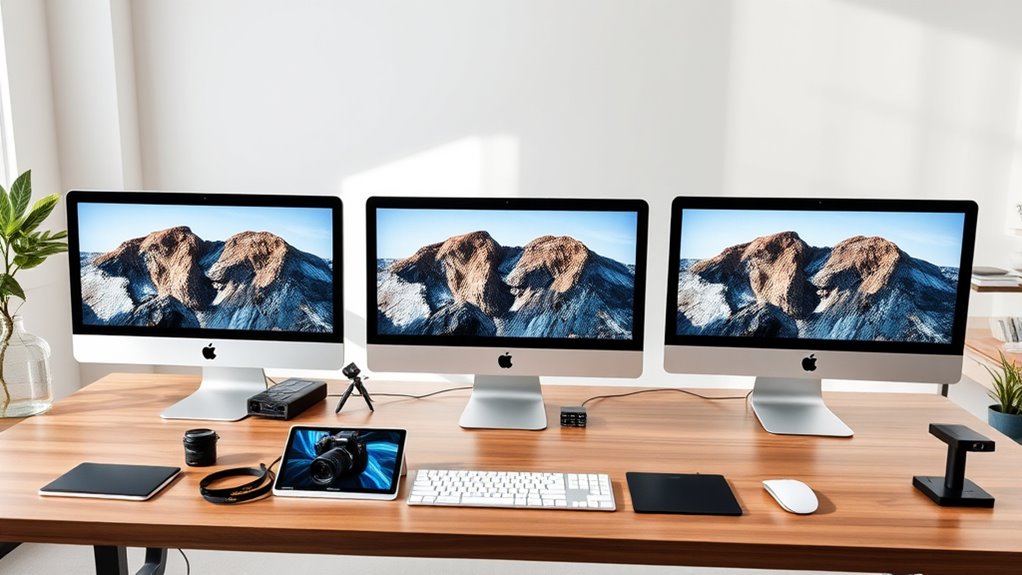

Finding the right iMac for photographers comes down to three things: display quality, enough RAM to handle large RAW files, and storage that won’t fill up after one wedding shoot. The Apple 2024 iMac with M4 chip, 24GB of memory, and 512GB SSD is my top overall pick because its unified memory ceiling keeps Lightroom and Photoshop smooth under heavy multitasking. The M4 iMac with 16GB/256GB is the smarter buy for hobbyists who store archives on external drives, while the 27-inch 2020 iMac with 5K Retina display remains the only option here with a screen large enough for serious pixel-level retouching. The main tradeoff you’ll face is screen size versus modern chip speed, and base storage versus long-term sanity. Keep reading for the full breakdown of where each model wins and where it falls short.

Get baking supplies delivered free with Prime
- Fast, free delivery on millions of items
- Prime Video, Amazon Music and more included
- Member-only deals all year
Complete the kit


Key Takeaways
- The 24GB M4 iMac earned the top spot because RAM is the single biggest performance lever for photo editing — 8GB models struggled to justify themselves once multiple RAW files and layers stacked up.
- The 27-inch 5K iMac is the only pick with a display built for critical color work at native resolution, but its Intel processor and age make it a tradeoff purchase, not a future-proof one.
- Renewed M1 and M3 iMacs offer the best price-to-performance ratio for photographers on a budget, though both are capped at 8GB of RAM in this lineup, which limits heavy multitasking.
- Every 256GB SSD option in this roundup demands an external storage strategy — photographers shooting RAW will fill base storage within weeks, so budget for a fast external drive.
- The renewed M4 ‘Air’ configuration blurs the line between new and used value: it carries the newest chip but base specs, making it best for photographers who prioritize speed over headroom.
| Apple 2024 iMac All-in-One Desktop Computer with M4 Chip, 24-inch Retina Display, 24GB Memory, 512GB SSD, Silver | 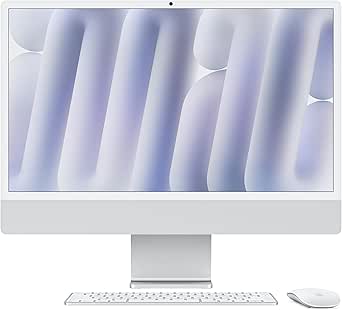 | Best Overall | Processor: Apple M4, 10-core CPU, 10-core GPU | Display: 24-inch Retina 4.5K, up to 1 billion colors | Memory: 24GB unified | VIEW ON AMAZON | See Our Full Breakdown |
| Apple 2024 iMac All-in-One Desktop Computer with M4 Chip, 24-inch Retina Display, 16GB Memory, 256GB SSD – Silver |  | Best Value for New Silicon | Processor: Apple M4, 8-core CPU, 8-core GPU | Display: 24-inch Retina 4.5K, up to 1 billion colors | Memory: 16GB unified | VIEW ON AMAZON | See Our Full Breakdown |
| Apple 2023 iMac with M3 Chip (24-inch, 8GB RAM, 512GB SSD) Silver (Renewed) |  | Best Budget Balance of Storage and Speed | Processor: Apple M3, 8-core CPU | Display: 23.5-inch 4.5K Retina | Memory: 8GB | VIEW ON AMAZON | See Our Full Breakdown |
| Apple iMac 24-inch with M1 Chip (2021, Renewed) |  | Best Entry Point for Beginners | Processor: Apple M1, 8-core CPU, 7-core GPU | Display: 24-inch 4.5K Retina | Memory: 8GB | VIEW ON AMAZON | See Our Full Breakdown |
| Apple iMac 27-inch with Retina 5K Display (2020 Model) |  | Best Big-Screen Editing Experience | Display: 27-inch Retina 5K, 5120 x 2880 | Processor: 3.3GHz 6-core 10th-gen Intel Core i5 | Graphics: AMD Radeon Pro 5300 | VIEW ON AMAZON | See Our Full Breakdown |
| Apple 2024 iMac Air with M4 Chip, 24-inch, 16GB RAM, 256GB SSD, Silver (Renewed) |  | Best Budget Entry into M4 Editing | Processor: Apple M4, 8-core, 3.2 GHz | Display: 24-inch Retina, 4480×2520, 1 billion colors | RAM: 16 GB SDRAM | VIEW ON AMAZON | See Our Full Breakdown |
| imac for photographer | Processor | Display | Storage | Memory |
|---|---|---|---|---|
| Apple 2024 iMac All-in-One Des | Apple M4, 10-core CPU, 10-core GPU | 24-inch Retina 4.5K, up to 1 billion colors | 512GB SSD | 24GB unified |
| Apple 2024 iMac All-in-One Des | Apple M4, 8-core CPU, 8-core GPU | 24-inch Retina 4.5K, up to 1 billion colors | 256GB SSD | 16GB unified |
| Apple 2023 iMac with M3 Chip | Apple M3, 8-core CPU | 23.5-inch 4.5K Retina | 512GB SSD | 8GB |
| Apple iMac 24-inch with M1 Chi | Apple M1, 8-core CPU, 7-core GPU | 24-inch 4.5K Retina | 256GB SSD | 8GB |
| Apple iMac 27-inch with Retina | 3.3GHz 6-core 10th-gen Intel Core i5 | 27-inch Retina 5K, 5120 x 2880 | 512GB SSD | 8GB DDR4 |
| Apple 2024 iMac Air with M4 Ch | Apple M4, 8-core, 3.2 GHz | 24-inch Retina, 4480×2520, 1 billion colors | 256 GB SSD | — |
More Details on Our Top Picks
Apple 2024 iMac All-in-One Desktop Computer with M4 Chip, 24-inch Retina Display, 24GB Memory, 512GB SSD, Silver
For photographers who edit large RAW libraries, this configuration gets the fundamentals right where the cheaper M4 base model cuts corners. The 10-core M4 chip paired with 24GB of unified memory means Lightroom Classic and Photoshop can hold more full-resolution previews in memory, which shows up as fewer beach balls when switching between catalogs and browser references. The 512GB SSD also buys real breathing room compared to the 256GB on the entry M4 — enough for a working set of images before external drives enter the equation. The tradeoff is straightforward: this is the most expensive path into a 24-inch iMac, and photographers tethering multiple 4K displays will still hit the macOS limit of two external screens. Compared with the renewed M3 model, the newer silicon buys headroom for future OS and app demands.
Pros:- 10-core M4 with 24GB unified memory handles heavy Lightroom and Photoshop workloads comfortably
- 512GB SSD gives a usable working library before external storage is needed
- 4.5K Retina display renders one billion colors for reliable editing judgments
- Four Thunderbolt 4 ports support fast external SSDs and card readers simultaneously
Cons:- Premium price puts it out of reach for casual shooters
- Display tops out at 24 inches — too small for photographers who want a 27-inch or larger canvas
Best for: Working photographers who edit large RAW files daily and want a machine that stays fast for years
Not ideal for: Budget-conscious hobbyists or anyone happy to store everything externally — the step-down M4 covers that for less
- Processor:Apple M4, 10-core CPU, 10-core GPU
- Display:24-inch Retina 4.5K, up to 1 billion colors
- Memory:24GB unified
- Storage:512GB SSD
- Ports:Up to four Thunderbolt 4
- Wireless:Wi-Fi 6E, Bluetooth 5.3
- Weight:9.77 pounds
Our verdict“If photo editing pays your bills, this is the iMac configuration that justifies its cost through memory and storage headroom alone.”
Apple 2024 iMac All-in-One Desktop Computer with M4 Chip, 24-inch Retina Display, 16GB Memory, 256GB SSD – Silver
This base M4 iMac is the smartest entry point into current-generation Apple silicon for photographers who don’t push their machines to the limit. The 8-core M4 still outperforms the M3 chip in the renewed 2023 model, so you get newer performance without the renewed-market gamble. That said, the compromises are real and worth naming: 16GB of memory is workable for Lightroom catalogs but tight when running Photoshop, a browser, and Capture One together, and the 256GB SSD fills up fast once camera RAW files start accumulating — an external drive is close to mandatory here. Compared with the 24GB/512GB M4 above, this pick trades comfort for savings, which is a reasonable deal for enthusiasts rather than professionals.
Pros:- 8-core M4 delivers faster performance than the older M3 and M1 chips at a lower cost than the 24GB model
- Same gorgeous 4.5K Retina display as the premium configuration
- 12MP Center Stage camera and studio-quality mics are excellent for client video calls
- Wi-Fi 6E and Thunderbolt 4 keep file transfers fast
Cons:- 256GB SSD means external storage becomes necessary almost immediately for photo libraries
- 16GB memory limits headroom for multitasking editors
Best for: Enthusiast photographers who want new M4 performance and ecosystem perks without paying for the maxed configuration
Not ideal for: Pros with big catalogs and heavy multitasking habits — 16GB and 256GB will feel cramped quickly
- Processor:Apple M4, 8-core CPU, 8-core GPU
- Display:24-inch Retina 4.5K, up to 1 billion colors
- Memory:16GB unified
- Storage:256GB SSD
- Ports:Up to four Thunderbolt 4
- Camera:12MP Center Stage
- Audio:Six speakers with Spatial Audio
- Weight:9.72 pounds
Our verdict“The right pick if you want today’s M4 speed and can live with an external drive sitting next to a beautiful all-in-one.”
Apple 2023 iMac with M3 Chip (24-inch, 8GB RAM, 512GB SSD) Silver (Renewed)
Among the renewed options in this lineup, this M3 model strikes the most sensible balance for photographers. The 512GB SSD doubles the storage of the renewed M1 iMac, which matters more for image libraries than the modest performance gap between those chips. The M3 also handles photo exports noticeably quicker than the M1, narrowing the gap to the base M4 for a fraction of the cost. The catch is the 8GB of RAM — the tightest memory budget here — which forces macOS to lean on swap memory when you stack Lightroom, Photoshop, and a browser. Renewed buyers should also accept the possibility of non-original accessories and generic packaging, so factor in the possible cost of a proper keyboard and mouse.
Pros:- 512GB SSD holds a real working photo library, unlike the 256GB renewed alternatives
- M3 chip delivers modern performance close to the base M4 for less money
- Same 4.5K Retina panel as newer models — display quality is not sacrificed
- All-in-one design keeps the desk clean
Cons:- 8GB of RAM is the minimum for serious editing and will throttle multitasking
- Renewed condition means generic packaging and possibly non-original accessories
Best for: Photographers on a budget who prioritize storage capacity and a modern chip over memory headroom
Not ideal for: Heavy multitaskers or anyone uncomfortable with renewed hardware and shortened warranty coverage
- Processor:Apple M3, 8-core CPU
- Display:23.5-inch 4.5K Retina
- Memory:8GB
- Storage:512GB SSD
- Color:Silver
- Condition:Renewed
Our verdict“The smartest renewed pick if storage matters more to you than RAM — just plan on closing apps you are not using.”
Apple iMac 24-inch with M1 Chip (2021, Renewed)
Photographers just starting out rarely need cutting-edge silicon, and this renewed M1 iMac proves the point. The M1 remains perfectly capable for Lightroom edits, culling sessions, and portfolio work — tasks where the chip’s age barely registers compared with the renewed M3 model. What you give up is the 512GB storage of that M3, since this machine shares the same 256GB constraint as the base M4, and the 7-core GPU lags on AI-driven editing features like Lightroom’s Denoise, which can run noticeably slower here. The 1080p FaceTime camera and six-speaker system still hold up well for client calls. Just be aware it ships with a generic keyboard and mouse, so budget a little extra for input devices you will actually enjoy using.
Pros:- M1 chip still handles Lightroom and Photoshop smoothly for hobbyist workloads
- 4.5K Retina display with wide color gamut matches the panels on far newer models
- 11.5mm thin design fits the smallest editing corners
- Six-speaker system and 1080p camera are surprisingly good for the price tier
Cons:- 256GB storage fills quickly and 8GB of RAM limits multitasking
- Renewed status brings limited warranty and generic accessories
Best for: Beginner photographers building their first serious editing setup on a tight budget
Not ideal for: Anyone using AI noise reduction or heavy batch processing regularly — the older GPU and 8GB RAM will slow you down
- Processor:Apple M1, 8-core CPU, 7-core GPU
- Display:24-inch 4.5K Retina
- Memory:8GB
- Storage:256GB SSD
- Ports:Two Thunderbolt / USB 4, up to two USB 3
- Wireless:Wi-Fi 6, Bluetooth 5.0
- Condition:Renewed
Our verdict“A low-risk way into a color-accurate 4.5K display and Apple silicon for photographers still learning their workflow.”
Apple iMac 27-inch with Retina 5K Display (2020 Model)
Every other machine in this lineup shares the same 24-inch panel, so if screen real estate drives your editing comfort, this 27-inch 5K iMac is the outlier worth considering. The 5120 x 2880 display gives detailed pixel-level zoom for retouching and room for palettes alongside a full-size image — something no 24-inch model here can match. The tradeoffs are substantial, though: the Intel Core i5 and Radeon Pro 5300 run hotter, louder, and slower than the M4 in the premium pick, especially in AI-based editing tools that Apple Silicon accelerates. At 19.7 pounds and eight inches deep, it also demands far more desk space than the slim M-series machines. Photographers who edit tethered or print large will love the canvas; those prioritizing speed should look elsewhere in this roundup.
Pros:- 27-inch 5K display offers far more editing real estate than any 24-inch model in this lineup
- One billion colors with excellent vibrancy for print-oriented color work
- 512GB SSD provides decent library space out of the box
- Thunderbolt 3, USB-C, and Ethernet cover versatile studio connectivity
Cons:- Intel Core i5 is noticeably slower than M3 and M4 chips in modern photo applications
- Bulky, heavy design with fans that spin up under sustained loads
Best for: Retouchers and print-focused photographers who value a large, color-rich 5K canvas over raw processing speed
Not ideal for: Editors who rely on AI noise reduction or want a quiet, cool-running machine — Apple Silicon models here win on both
- Display:27-inch Retina 5K, 5120 x 2880
- Processor:3.3GHz 6-core 10th-gen Intel Core i5
- Graphics:AMD Radeon Pro 5300
- Memory:8GB DDR4
- Storage:512GB SSD
- Connectivity:Thunderbolt 3, USB-C, Ethernet, Bluetooth
- Weight:19.7 pounds
Our verdict“Buy it for the screen, not the silicon — the only pick here if a 27-inch 5K canvas is non-negotiable.”
Apple 2024 iMac Air with M4 Chip, 24-inch, 16GB RAM, 256GB SSD, Silver (Renewed)
For photographers who want current-generation M4 performance without paying new-unit prices, this renewed iMac Air is the most accessible door into Apple’s latest chip. The 8-core M4 handles Lightroom catalogs and Photoshop layers with headroom to spare, and the 24-inch Retina display supporting a billion colors gives editing work a level of tonal smoothness that matters when you’re grading subtle shadow detail.
Compared with the 2021 M1 iMac (Renewed), the jump in raw speed is real — export batches and AI-driven tools like denoise run noticeably faster — and the 16GB of RAM here outclasses the 8GB configuration on the 2023 M3 model, which matters for multitasking between apps. The tradeoff is obvious: 256GB of storage fills fast once raw files accumulate, so an external drive is basically mandatory. Renewed status also means shorter warranty protection than buying new.
Pros:- Current M4 chip delivers fast exports and smooth performance in Lightroom and Photoshop
- 24-inch Retina display with 1-billion-color support renders fine tonal gradations accurately
- 16GB of RAM supports multitasking between editing apps better than 8GB M3 alternatives
- Renewed pricing undercuts the new Apple 2024 iMac M4 while keeping the same core hardware
Cons:- 256GB SSD is genuinely tight for photo work and forces reliance on external storage
- Renewed condition means less warranty coverage and uncertain long-term reliability versus new
- At 22.1 pounds, it’s one of the least portable all-in-one options if you ever relocate your workspace
Best for: Budget-conscious hobbyist photographers who want M4-class editing speed and are comfortable storing photo libraries on external drives
Not ideal for: Professionals shooting high volumes of RAW files — the 256GB SSD will fill within weeks, and renewed hardware carries more longevity risk than a new unit
- Processor:Apple M4, 8-core, 3.2 GHz
- Display:24-inch Retina, 4480×2520, 1 billion colors
- RAM:16 GB SDRAM
- Storage:256 GB SSD
- Operating System:macOS
- Weight:22.1 pounds
- Condition:Renewed
Our verdict“A smart pickup for hobbyists who prioritize M4 speed and display quality over storage capacity and are willing to manage their photo library externally.”

How We Picked
I ranked these six iMacs through a photographer’s workflow rather than a general buyer’s checklist. The criteria that mattered most were color accuracy and display resolution (a calibrated 5K panel changes how you edit), unified memory capacity (RAW file handling and layer stacking punish low RAM), chip generation (M-series chips run cooler and quieter during long export sessions than Intel), and storage strategy (whether base SSD capacity forces external-drive dependency). I also weighed renewed-versus-new risk, since three of these six options are refurbished and that changes warranty expectations and long-term value.
The ranking logic is straightforward: models that keep editing fluid under real workloads — multiple apps open, large catalogs, batch exports — placed higher than models with attractive pricing but hard ceilings. Where two models tie on chip, the one with more memory or storage won. Where a model offers something unique, like the 27-inch 5K screen, I weighed that single advantage against everything else it gives up.
| imac for photographer | Ports |
|---|---|
| Apple 2024 iMac All-in-One Des | Up to four Thunderbolt 4 |
| Apple 2024 iMac All-in-One Des | Up to four Thunderbolt 4 |
| Apple 2023 iMac with M3 Chip | — |
| Apple iMac 24-inch with M1 Chi | Two Thunderbolt / USB 4, up to two USB 3 |
| Apple iMac 27-inch with Retina | — |
| Apple 2024 iMac Air with M4 Ch | — |
Factors to Consider When Choosing Imac For Photographers
Before settling on a specific model, it helps to understand what actually moves the needle in a photo-editing machine — and where Apple’s configurations quietly trap buyers.Why RAM Matters More Than the Chip for Photo Editing
Apple’s marketing emphasizes chip generations, but for photographers, RAM is usually the real bottleneck. Lightroom Classic with a large catalog, Photoshop with multiple layers, and a browser full of reference images can consume 12–16GB on their own. An 8GB machine will technically run all of this, but you’ll feel the lag when switching between apps or exporting while editing. Since iMac memory is soldered and non-upgradeable, whatever you buy is permanent — this is the single most common and most expensive mistake photographers make with all-in-one machines. My advice: if your budget forces a choice between a newer chip with 8GB or an older chip with 16GB+, take the memory. The M1 chip from 2021 still handles RAW editing comfortably; 8GB of RAM in 2026 is already tight.
Screen Size and Resolution: 24-Inch Versus 5K
The 24-inch iMac’s 4.5K display is genuinely good — sharp, bright, and factory-calibrated well enough for most client work. But the 27-inch 5K panel in the 2020 model is a different category of tool: it displays a full 4K image at 100% zoom with interface still visible, and gives you room for palettes, a reference image, and your canvas simultaneously. Portrait and landscape photographers who spend hours in retouching will feel the difference daily. The tradeoff is that you’re buying an Intel machine in an M-series world, which means shorter software-support runway and noticeably more fan noise during exports. Wedding and event shooters who mostly cull and batch-edit may find the 24-inch perfectly adequate and prefer the silent operation.
The Storage Trap: Why 256GB Disappears Fast
Four of the six models in this roundup ship with 256GB, and I want to be blunt: that is not a photo library. A single wedding shoot in RAW can run 60–100GB, and macOS plus applications eat 40–60GB before you import a single image. The workable strategy is treating the internal SSD as a system and working-drive only, with an external Thunderbolt or USB-C SSD for your catalog and archives. This actually works well — external SSDs are fast enough for active editing — but you need to budget for one, ideally 1TB or larger. If you’d rather not manage external drives at all, the 512GB models in this lineup buy you breathing room, and pairing one with cloud backup covers the rest.
Renewed Versus New: Reading the Risk Correctly
Three of these six options are renewed units, and the calculus is different for photographers than for casual users. The upside is real: a renewed M3 or M4 iMac can deliver 90% of the new-machine experience at a meaningful discount, and Apple’s chip architecture ages gracefully. The risks to weigh are battery-adjacent concerns that don’t apply here (iMacs have none), but rather cosmetic wear, variable seller warranty terms, and no control over usage history. For a machine that will sit on a desk and not travel, those risks are modest. Check the seller’s return window and warranty length before buying, and confirm the display has no dead pixels or backlight bleed — on an all-in-one, the screen IS the computer, and a flawed panel can’t be swapped.
Ports, Peripherals, and the External Display Question
Photographers connect more gear than average users: card readers, calibration probes, backup drives, sometimes a second monitor. Count ports before you commit, because a hub hanging off an iMac defeats its clean-desk appeal. Also note that the 24-inch M-series iMacs support one external display — if your workflow assumes dual monitors flanking the iMac, that’s a dealbreaker, and the Intel 27-inch model or a Mac mini plus separate monitor becomes the better architecture. Finally, think about calibration: all these displays support hardware calibration with a colorimeter like a X-Rite or Calibrite, and I’d call one a near-mandatory purchase for anyone delivering paid work, regardless of which iMac you choose.
Frequently Asked Questions
Is 8GB of RAM really enough for Lightroom and Photoshop on an iMac?
For light editing — culling, basic exposure adjustments, and exporting JPEGs from a modest catalog — 8GB works, and the M-series chips manage memory efficiently. The problem appears with heavy workloads: panoramas, focus stacking, large multi-layer composites, or running Lightroom and Photoshop side by side. You’ll hit memory pressure, and macOS will start swapping to the SSD, which slows everything down and adds wear. Because iMac RAM cannot be upgraded later, an 8GB purchase is a permanent ceiling. If photography is a hobby with smaller files, it’s defensible; if it’s paid work or you shoot high-megapixel bodies, aim for 16GB minimum.
Should a photographer buy the older 27-inch 5K iMac or a newer 24-inch M4 model?
This is the central tradeoff in this roundup. The 27-inch 5K display is arguably still the best photo-editing screen Apple has put in an iMac — more workspace, more resolution, and room for a 4K image plus interface at once. But the 2020 model runs Intel chips, which means more heat, more fan noise during exports, shorter remaining years of macOS updates, and slower sustained performance than any M-series machine. If your editing is retouching-heavy and display-driven, the 27-inch still earns its place. If your workflow is import-heavy with batch exports, the silent, faster M4 will serve you better long-term, and you can always add a quality external monitor later.
Are renewed iMacs a smart buy for photography work, or too risky?
For a desktop machine that lives on a desk, renewed iMacs are one of the lower-risk refurbished purchases you can make — no battery to degrade, no hinge or keyboard to wear out. The M-series chips also age slowly, so a renewed M1 or M3 still edits RAW files capably in 2026. The two things to verify are the display condition (dead pixels and backlight bleed are permanent on an all-in-one) and the seller’s warranty and return terms, which vary widely. If those check out, a renewed unit can fund a jump in RAM or storage tier that you’d otherwise skip. Just avoid renewed units with vague or missing condition descriptions.
How should I handle photo storage if I buy a 256GB iMac?
Treat the internal SSD as a system drive only and build your library on an external SSD. A Thunderbolt or USB-C external drive with 1TB or more gives you fast enough speeds for active editing directly from the drive, and you can rotate older archives to cheaper hard drives or cloud storage. Keep your Lightroom catalog and current-year raw files on the fast external, and leave 50–80GB of internal space free so macOS performs well. Add a backup layer — either a second drive or a cloud service — because a single copy of client work is never acceptable. This approach works well in practice; the mistake is assuming 256GB will stretch, importing a few shoots, and then managing a full drive for the next two years.
Does the M4 chip actually make a difference for photo editing compared to M1 or M3?
In day-to-day editing, the difference is smaller than the marketing suggests. Brush responsiveness and preview rendering in Lightroom feel similar across M1, M3, and M4 — those tasks respond more to RAM than chip speed. Where the M4 pulls ahead is sustained export performance, AI-driven features like Denoise and masking, and video work if you also shoot motion. If you process thousands of images per week, those batch-export savings add up to real hours. If you edit a few dozen images at a time, a renewed M1 or M3 with better RAM or storage for the same money is usually the smarter allocation of your budget.
Conclusion
Matching the right iMac to your photography practice comes down to honest answers about volume, budget, and how long you keep machines. The M4 iMac with 24GB and 512GB is my best overall pick — it’s the only configuration here with the memory headroom and storage to grow into a serious paid workflow without compromises. For best value, the renewed M3 iMac delivers modern Apple Silicon performance at the friendlier price, provided you accept the 8GB ceiling and verify the display condition on arrival. The renewed M1 iMac is my pick for beginners and hobbyists: it handles learning-stage editing comfortably, and its lower cost leaves room in the budget for a colorimeter and external storage, which will improve your photos more than extra specs would.
For specific needs: the 27-inch 5K iMac is the choice for retouching-heavy specialists who need maximum screen real estate and can accept an Intel machine’s tradeoffs, while the renewed M4 Air configuration suits photographers who want the newest chip and silent operation at the lowest entry point, pairing it with an external drive from day one. Whatever you choose, resist the temptation to save on RAM — it’s the one spec you can never fix later, and it’s what separates an iMac that feels fast in year one from one that still feels fast in year five.