For seniors seeking help hearing conversations, I rank the Williams Sound PockeTalker Ultra DUO as the best overall because its handheld microphone gives listeners more control over which sounds to amplify. The SuperEar SE5000 is a straightforward personal-amplifier alternative, while the Audien Atom X suits buyers who want a compact in-ear design with touchscreen controls. The main tradeoff is between directional listening and wearable convenience: handheld devices can be easier to adjust, while earbuds are less conspicuous but may take more effort to fit and manage. Battery life, comfort, and background-noise handling also vary across this lineup. Read on for the full comparison and guidance on choosing an amplifier for your listening habits.

Get baking supplies delivered free with Prime
- Fast, free delivery on millions of items
- Prime Video, Amazon Music and more included
- Member-only deals all year
Complete the kit

Key Takeaways
- Handheld microphones lead the lineup for focused listening: The PockeTalker Ultra DUO and other pocket-style amplifiers let users position the microphone near a speaker, a practical advantage over devices worn in the ears.
- Simple controls separate personal amplifiers from in-ear options: The SuperEar SE5000 and Reizen Loud Ear 110dB Gain use a familiar amplifier-and-headphone approach, while models such as the Audien Atom X add a touchscreen and a more discreet fit.
- Rechargeable claims vary in what they solve: Several earbud-style products advertise charging cases or extended battery life, but buyers still need to weigh charging routines against replaceable or simpler power arrangements.
- Noise reduction is not the same as speech direction: Digital noise-cancelling models may appeal in busy settings, while a directional microphone can give a listener more direct control over the sound source.
- These products serve different listening situations: A personal sound amplifier can be useful for television or one-on-one conversation, but it is not a substitute for a hearing evaluation or a professionally fitted hearing aid when hearing loss needs medical attention.
| Williams Sound PockeTalker Ultra DUO Sound Amplifier with Headphone & Earbud |  | Best Overall for Versatile Use and Long Battery Life | Power Source: Battery Powered | Batteries: 2 AAA batteries required | Weight: 0.27 g | VIEW ON AMAZON | See Our Full Breakdown |
| Hearing Aids for Seniors, Rechargeable Noise Cancellation OTC Hearing Amplifier with 5-Level Volume Control | 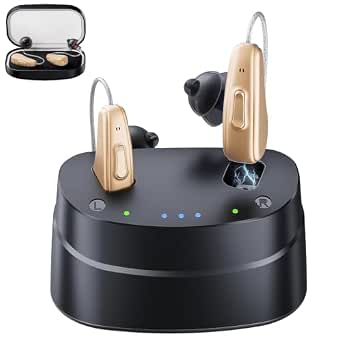 | Best for Moderate Hearing Loss with Customizable Settings | Control Type: Button | Headphone Style: In-Ear | Noise Control: Active Noise Cancellation | VIEW ON AMAZON | See Our Full Breakdown |
| Bluetooth Hearing Aids for Seniors, Rechargeable Earbuds |  | Best for Tech-Savvy Seniors Wanting Wireless Functionality | Built-in DSP chip: Yes | Volume adjustments: 5 levels | Maximum volume increase: 42dB | VIEW ON AMAZON | See Our Full Breakdown |
| SuperEar SE5000 Hearing Amplifier for Seniors, Sound Amplifier, Headphones |  | Best for Portable, Non-Technical Use | Amplification: up to 50+ dB | Battery Life: up to 30 hours | Includes: amplifier, stereo headphones, earbuds, AAA battery, belt clip, screw | VIEW ON AMAZON | See Our Full Breakdown |
| Aurimi Bone Conduction Personal Sound Amplifier for Seniors |  | Best for Simplicity and Situational Awareness | Technology: Bone conduction | Weight: 0.88 oz | Battery life: 10 hours | VIEW ON AMAZON | See Our Full Breakdown |
| Audien Atom One OTC Hearing Aids |  | Best for Simple Everyday Adjustment | Fit: In-ear | Controls: Dial control | Battery: Rechargeable lithium-ion; 2 batteries required | VIEW ON AMAZON | See Our Full Breakdown |
| MSA PRO Sound Amplifier |  | Best for Long Wear Between Charges | Amplification: 30 times | Battery life: Up to 20 hours | Charging: Fast-charging station | VIEW ON AMAZON | See Our Full Breakdown |
| Audien Atom X OTC Hearing Aid for Seniors & Adults with Touchscreen Control |  | Best for Mode Selection Without an App | Fit: In-ear, side-specific comfort fit | Controls: Touchscreen charging case | Listening modes: 4 | VIEW ON AMAZON | See Our Full Breakdown |
| Rechargeable Hearing Amplifier with Headphone and Directional Microphone for Seniors |  | Best for Directional Listening and Simple Controls | Power source: Battery powered; specifications list AA batteries | Battery life: Up to 120 hours stated in product details | Controls: Manual one-knob control | VIEW ON AMAZON | See Our Full Breakdown |
| Reizen Loud Ear 110dB Gain Personal Amplifier |  | Best for Picking Up Distant Sounds | Sensitivity: 110 dB ±3 dB per mW | Frequency range: 20 Hz–20 kHz | Battery life: Approximately 48 hours | VIEW ON AMAZON | See Our Full Breakdown |
| SuperEar SE7500 Hearing Amplifiers for Seniors, Personal Sound Amplifier |  | Best for Long Battery Life | Maximum sound gain: 50+ dB | Battery life: Up to 80 hours | Power source: 2 AAA batteries | VIEW ON AMAZON | See Our Full Breakdown |
| OTC Hearing Aids for Seniors, 2026 Rechargeable Digital Hearing Amplifier with Noise Cancelling and Easy Volume Control | 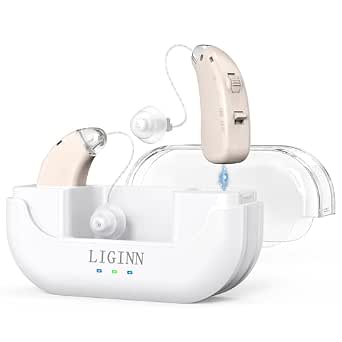 | Best for Simple Daily Wear | Fit type: Behind-the-ear | Power source: Lithium-ion rechargeable battery | Battery voltage: 3.7 volts | VIEW ON AMAZON | See Our Full Breakdown |
| Williams Sound Pocketalker Ultra Hearing Amplifier |  | Best for Speech and Tone Adjustment | Fit type: Body-worn | Power source: Alkaline batteries | Controls: Button control with adjustable volume and tone | VIEW ON AMAZON | See Our Full Breakdown |
| Hearing Aids for Seniors & Adults, 5-Level Volume, 100-Hour Battery Life |  | Best for Extended Time Between Charges | Noise reduction: 16-channel chip with noise-canceling technology | Battery life: Up to 25 hours per charge; up to 100 hours with charging case | Battery type: Rechargeable | VIEW ON AMAZON | See Our Full Breakdown |
| Hearing Aids for Seniors Rechargeable Noise Cancelling with 48+ Hour Battery and Charging Case – Blue/Red |  | Best for First-Time Users Who Want Discreet In-Ear Wear | Fit type: In-ear | Controls: Single button with automatic on/off | Noise control: Adaptive noise cancellation | VIEW ON AMAZON | See Our Full Breakdown |
| hearing amplifiers for senior | Battery Life |
|---|---|
| Williams Sound PockeTalker Ult | — |
| Hearing Aids for Seniors | Up to 25 hours per charge, 100 hours with charging case |
| Bluetooth Hearing Aids for Sen | — |
| SuperEar SE5000 Hearing Amplif | up to 30 hours |
| Aurimi Bone Conduction Persona | 10 hours |
| Audien Atom One OTC Hearing Ai | Requires charging every 24 hours |
| MSA PRO Sound Amplifier | Up to 20 hours |
| Audien Atom X OTC Hearing Aid | Up to 16 hours |
| Rechargeable Hearing Amplifier | Up to 120 hours stated in product details |
| Reizen Loud Ear 110dB Gain Per | Approximately 48 hours |
| SuperEar SE7500 Hearing Amplif | Up to 80 hours |
| OTC Hearing Aids for Seniors | — |
| Williams Sound Pocketalker Ult | — |
| Hearing Aids for Seniors & Adu | Up to 25 hours per charge; up to 100 hours with charging case |
| Hearing Aids for Seniors Recha | Up to 60 hours |
More Details on Our Top Picks
Williams Sound PockeTalker Ultra DUO Sound Amplifier with Headphone & Earbud
The Williams Sound PockeTalker Ultra stands out for its effective amplification paired with noise reduction, making it suitable for conversations, TV, and in-car listening. Its long-lasting battery life of up to 100 hours offers reliability for daily use, surpassing many competitors like the SuperEar SE5000, which has a shorter 30-hour battery. While the PockeTalker’s bulk and neck-worn design might seem bulky for some, its external controls and removable microphone provide flexibility that more compact models lack. However, it requires batteries (not included), which could be inconvenient, and some users may find it less portable due to its size. This option is ideal for seniors who need a powerful, versatile amplifier that can handle various environments but are okay with a slightly larger device.
Pros:- Effective amplification with noise reduction
- Long battery life up to 100 hours
- Includes both headphones and earbuds
Cons:- Requires batteries (not included)
- Bulky for portable use
Best for: Seniors seeking a durable, multi-purpose amplifier with long battery life and noise reduction
Not ideal for: Those preferring a lightweight, discreet device for occasional use or minimal portability
- Power Source:Battery Powered
- Batteries:2 AAA batteries required
- Weight:0.27 g
- Color:Silver and Black
- Style:Neck-Worn
- Additional features:External volume & tone controls, removable microphone, belt clip
- Warranty:5 years
Our verdict“This pick suits seniors who prioritize power, durability, and all-day reliability over compactness.”
Hearing Aids for Seniors, Rechargeable Noise Cancellation OTC Hearing Amplifier with 5-Level Volume Control
This rechargeable OTC hearing amplifier offers adjustable volume and noise reduction, making it a solid choice for seniors with moderate hearing loss who want control without complex features. Its 5-level volume control allows personalized tuning, similar to the more basic SuperEar SE5000, but with the added benefit of rechargeable convenience and noise cancellation. Compared to the Bluetooth earbuds, it lacks wireless connectivity, which might limit versatility for some users. The fit is comfortable thanks to multiple ear tips, yet manual operation for volume could be cumbersome for users with dexterity issues. It doesn’t support app updates or software customization, which could be a drawback for tech-savvy seniors. This device is tailored for seniors seeking straightforward, adjustable amplification with long-lasting battery life.
Pros:- Adjustable volume with 5 levels
- Long battery life with portable charging
- Effective noise reduction
Cons:- Manual operation may be less intuitive
- Limited to moderate hearing loss range
Best for: Seniors with moderate hearing loss who want simple, adjustable, rechargeable amplification
Not ideal for: Users with severe hearing loss or those wanting smartphone app integration and advanced features
- Control Type:Button
- Headphone Style:In-Ear
- Noise Control:Active Noise Cancellation
- Volume Gain:43dB±5dB
- Battery Life:Up to 25 hours per charge, 100 hours with charging case
- Charging Time:3 hours
- Included Components:Hearing amplifiers, ear tips, charging case, carrying case
- Color:Beige
Our verdict“This amplifier is best for those wanting reliable, adjustable hearing support without high-tech features.”
Bluetooth Hearing Aids for Seniors, Rechargeable Earbuds
The Bluetooth Rechargeable Earbuds combine hearing amplification with wireless convenience, making them ideal for seniors comfortable with technology. Their ability to make calls, listen to music, and hear voices with noise reduction sets them apart from basic models like the SuperEar SE5000, which only amplifies ambient sounds. The long-lasting battery and power bank functionality add to their appeal, though their manual controls and design might not suit all ear sizes or those seeking simplicity. Additionally, limited info on app support or software updates suggests they are best for users who prioritize straightforward device operation over advanced customization. This product is best suited for tech-savvy seniors who want a combined hearing aid and wireless earbuds experience.
Pros:- Combines hearing aid and Bluetooth earbuds
- Long battery life with power bank functionality
- Effective noise reduction and adjustable volume
Cons:- Requires manual operation that may be less intuitive
- Design may not fit all ear sizes comfortably
Best for: Seniors comfortable with technology seeking versatile, wireless audio and amplification
Not ideal for: Older seniors preferring simple, non-wireless devices or those with severe hearing loss
- Built-in DSP chip:Yes
- Volume adjustments:5 levels
- Maximum volume increase:42dB
- Noise reduction modes:3 levels
- Battery capacity:2000mAh
- Charge cycles:17 times
- Usage time:more than 7 days
- Ear tips sizes:3
Our verdict“This device suits tech-oriented seniors wanting seamless wireless connectivity and hearing support in one package.”
SuperEar SE5000 Hearing Amplifier for Seniors, Sound Amplifier, Headphones
The SuperEar SE5000 is designed for seniors who need a straightforward, portable sound amplifier for daily activities. Its simple design emphasizes ease of use, with adjustable volume control and stereo headphones that improve ambient sound clarity. Unlike the more advanced Bluetooth models, it does not connect wirelessly, which limits its versatility but simplifies operation. Its long battery life of up to 30 hours supports extended outdoor or indoor use, though it requires proximity to the sound source, such as the TV. This makes it less suitable for those seeking a full hearing aid replacement or wireless functionality. This amplifier is perfect for seniors who want a lightweight, easy-to-operate device for ambient sound enhancement.
Pros:- Portable and lightweight with belt clip
- Adjustable volume control
- Long battery life
Cons:- No wireless connectivity
- Limited to ambient sound amplification
Best for: Seniors looking for a simple, portable device to amplify ambient sounds without complex features
Not ideal for: Those needing a wireless or hearing aid replacement solution or severe hearing loss support
- Amplification:up to 50+ dB
- Battery Life:up to 30 hours
- Includes:amplifier, stereo headphones, earbuds, AAA battery, belt clip, screw
Our verdict“This device is best for seniors who prefer simplicity and portability for everyday ambient sound enhancement.”
Aurimi Bone Conduction Personal Sound Amplifier for Seniors
The Aurimi Bone Conduction Amplifier offers a unique open-ear design that preserves situational awareness while providing enough amplification for everyday sounds. Its technology transmits sound through cheekbones, making it easier for seniors to stay aware of their environment, unlike traditional in-ear or behind-the-ear devices. With up to 10 hours of battery life and no need for Bluetooth pairing or setup, it appeals to those who want hassle-free use. However, its limited amplification range and dependence on ambient noise make it less suitable for severe hearing loss or noisy environments. Compared with traditional hearing aids, it provides basic sound augmentation without the complexity of fitting or calibration. This is best for seniors who want a simple, awareness-preserving device for moderate hearing needs.
Pros:- Open-ear design maintains situational awareness
- Lightweight and comfortable for all-day wear
- No setup or pairing required
Cons:- Limited to moderate hearing needs
- Performance depends on ambient noise levels
Best for: Seniors desiring an easy-to-use, open-ear amplifier for daily situational awareness
Not ideal for: Individuals with severe hearing loss or expecting significant sound amplification
- Technology:Bone conduction
- Weight:0.88 oz
- Battery life:10 hours
- Operation:No setup, no Bluetooth
Our verdict“This device is suited for seniors who want simple, open-ear amplification without technical complexity.”
Audien Atom One OTC Hearing Aids
The Audien Atom One suits seniors who want an in-ear OTC hearing aid with straightforward controls rather than a touchscreen or app. Its analog dials let the wearer adjust volume and frequency directly, which may feel more approachable than the touchscreen case on the Audien Atom X. A rechargeable battery and discreet fit also make it a more self-contained choice than the Reizen Loud Ear, which uses a separate amplifier and replaceable AAA batteries. The tradeoff is limited flexibility: the Atom One has no noise control and is intended for mild to moderate hearing loss, not severe loss or complex listening needs. Its battery lasts about 24 hours, so charging becomes part of the daily routine. Expert-guided setup and a one-year warranty add support, but they do not replace a hearing evaluation when symptoms are significant.
Pros:- Analog volume and frequency dials allow direct adjustments without an app.
- Rechargeable battery avoids routine disposable battery replacement.
- Discreet in-ear design weighs 5 g.
- Includes expert-guided setup and a one-year warranty.
Cons:- Designed for mild to moderate hearing loss rather than severe cases.
- No noise-control features are listed.
- Requires charging about every 24 hours.
Best for: Seniors with mild to moderate hearing loss who prefer direct dial controls, an in-ear fit, and rechargeable operation without app-based setup.
Not ideal for: People with severe hearing loss, those who need noise reduction in busy settings, or anyone unwilling to charge the device daily.
- Fit:In-ear
- Controls:Dial control
- Battery:Rechargeable lithium-ion; 2 batteries required
- Battery life:Requires charging every 24 hours
- Weight:5 g
- Color:Beige
- Compatible devices:Smartphone, tablet, television
- Intended hearing range:Mild to moderate hearing loss
Our verdict“Choose the Atom One if simple dial adjustments and a discreet rechargeable fit matter more than noise control or advanced listening modes.”
MSA PRO Sound Amplifier
The MSA PRO is a small in-ear sound amplifier for buyers who value discreet wear and fewer charging interruptions. Its stated up to 20 hours of continuous use gives it an advantage over the Audien Atom X’s listed 16-hour runtime, though the Atom X offers four listening modes and a touchscreen charging case. Six silicone tips provide several fit options, a useful allowance for seniors who find one-size ear pieces uncomfortable. The MSA PRO keeps things simpler with adjustable volume, but its listed 30-times amplification does not tell buyers how selectively it handles speech or background noise. It is not presented as a fit for severe hearing loss, and the charging station is necessary to recharge it. I’d favor it for basic personal amplification, not for listeners seeking detailed sound customization.
Pros:- Up to 20 hours of continuous use is listed.
- Nearly invisible, lightweight in-ear design keeps the device discreet.
- Six silicone tips offer options for adjusting fit.
- Rechargeable system avoids disposable hearing-device batteries.
Cons:- A charging station is required for recharging.
- The design may not fit every ear comfortably, even with multiple tips.
- No noise-control feature is specified, and severe hearing loss may exceed its intended use.
Best for: Seniors seeking a discreet in-ear amplifier with a long stated runtime and multiple tip sizes to try for fit.
Not ideal for: Listeners who need listening modes, documented noise management, or an amplifier suitable for severe hearing loss.
- Amplification:30 times
- Battery life:Up to 20 hours
- Charging:Fast-charging station
- Fit:Nearly invisible in-ear design
- Controls:Adjustable volume
- Included fit accessories:6 silicone tips
- Other included accessory:Cleaning brush
- Color:Nude
Our verdict“Pick the MSA PRO for discreet, straightforward amplification and a longer listed runtime, but choose the Atom X if listening modes matter more.”
Audien Atom X OTC Hearing Aid for Seniors & Adults with Touchscreen Control
The Audien Atom X is the most control-focused in-ear pick in this group: its touchscreen charging case provides access to four listening modes without requiring an app or small device buttons. That makes it a stronger fit for seniors who want options for different surroundings than the dial-based Audien Atom One, which keeps adjustment simpler but lists no listening modes. The Atom X also includes expert-guided setup and a side-specific comfort fit, while its rechargeable battery offers up to 16 hours of use. The tradeoff is that its touchscreen case adds another interface to learn, and the listed runtime is shorter than the MSA PRO’s up-to-20-hour claim. The product data gives limited detail on software updates, so I would not choose it for an expectation of ongoing feature additions.
Pros:- Touchscreen charging case provides control without an app or small device buttons.
- Four listening modes offer more adjustment options than the Atom One.
- Up to 16 hours of use is listed, with a portable charging case.
- Expert-guided setup and side-specific comfort fit are included.
Cons:- Requires regular charging, with a listed runtime of up to 16 hours.
- Touchscreen controls may not suit seniors who prefer physical dials.
- Software-update support details are limited.
Best for: Seniors who want several listening modes and case-based touchscreen controls without managing an app.
Not ideal for: Buyers who prefer physical dials, need more than 16 hours between charges, or want clearly documented software-update support.
- Fit:In-ear, side-specific comfort fit
- Controls:Touchscreen charging case
- Listening modes:4
- Battery life:Up to 16 hours
- Battery:Rechargeable lithium-ion; 2 batteries required
- Color:Beige
- Materials:Silicone
- FSA/HSA eligibility:Yes
Our verdict“Choose the Atom X if you want mode choices and touchscreen case controls; favor the Atom One for simpler dial-based adjustment.”
Rechargeable Hearing Amplifier with Headphone and Directional Microphone for Seniors
The iRoger hearing amplifier takes a different approach from the in-ear Audien Atom One and MSA PRO: it pairs a headphone with a directional microphone and a one-knob interface. That layout may be easier to handle for seniors who find tiny in-ear devices or their controls difficult. The directional microphone and auto gain control are intended to help with clearer speech pickup, while the product data lists up to 120 hours of use. Its compact 6-by-2.5-inch body also suits portable listening. There is a notable mismatch in the supplied information, though: the description calls it rechargeable, while the specifications identify AA batteries. I would confirm the power arrangement before buying. Compared with the battery-powered Reizen Loud Ear, the iRoger emphasizes directional pickup and simple operation, but its noise-control details remain limited.
Pros:- One-knob manual control keeps operation straightforward.
- Directional microphone is designed to focus pickup toward speech.
- Up to 120 hours of use is stated in the product details.
- Compact 6-by-2.5-inch dimensions support portable use.
Cons:- Product details conflict: the description says rechargeable, while the specifications list AA batteries.
- Noise-control capabilities are limited or not clearly detailed.
- A separate amplifier and headphone are less discreet than the Audien Atom One.
Best for: Seniors who prefer a handheld-style amplifier with a headphone, one-knob operation, and directional microphone pickup.
Not ideal for: Buyers committed to a confirmed rechargeable system or those who want a discreet in-ear device rather than a separate amplifier and headphone.
- Power source:Battery powered; specifications list AA batteries
- Battery life:Up to 120 hours stated in product details
- Controls:Manual one-knob control
- Microphone:Directional, described as noise-canceling
- Sound processing:Auto gain control
- Dimensions:6 in L × 2.5 in W
- Material:Plastic
- Style:All black
Our verdict“Consider the iRoger for simple directional listening with a headphone, but verify its battery type before choosing it over rechargeable in-ear models.”
Reizen Loud Ear 110dB Gain Personal Amplifier
The Reizen Loud Ear is the lineup’s distance-listening option: its built-in microphone is described as picking up sounds from as far as 100 feet, and its sensitivity is listed at 110 dB ±3 dB per mW. That makes it more suited to hearing a speaker or sound source at a distance than the discreet Audien Atom One, which is designed for in-ear daily wear rather than extended pickup. A belt clip and roughly 48-hour battery life add practicality for portable use. The tradeoff is a separate, battery-powered amplifier with a single earphone, rather than a rechargeable in-ear aid. It uses two AAA batteries and offers no noise-control features, so amplified background sounds may remain a problem. I’d choose it for occasional distance listening, not for a low-profile everyday hearing solution.
Pros:- Built-in microphone is described as picking up sounds from up to 100 feet.
- 110 dB ±3 dB per mW sensitivity is specified.
- Belt clip and compact body support portable use.
- Approximately 48 hours of battery life is listed.
Cons:- Uses two replaceable AAA batteries rather than a rechargeable battery.
- Includes a single earphone, which may not be comfortable for every wearer.
- No noise-control features are listed, so background sounds may also be amplified.
Best for: Seniors who want a portable personal amplifier for listening to a speaker or sound source from a distance.
Not ideal for: People seeking discreet daily in-ear wear, rechargeable operation, or noise control in busy environments.
- Sensitivity:110 dB ±3 dB per mW
- Frequency range:20 Hz–20 kHz
- Battery life:Approximately 48 hours
- Power source:2 AAA batteries
- Dimensions:2.5 in H × 1.75 in L × 0.75 in W
- Weight:2.4 oz
- Included:Single earphone and 2 AAA batteries
- Microphone pickup range:Up to 100 feet, as described
Our verdict“Choose the Reizen Loud Ear for portable listening at a distance, but pick an in-ear rechargeable option for discreet everyday wear.”
SuperEar SE7500 Hearing Amplifiers for Seniors, Personal Sound Amplifier
The SuperEar SE7500 is a practical choice for someone who wants a portable amplifier without adding a daily charging routine. Its advertised up to 80 hours of battery life and included AAA batteries suit occasional listening at home or while out, while adjustable volume lets the wearer set amplification for conversation, television, or ambient sounds. Compared with the rechargeable Williams Sound Pocketalker Ultra, this model is less focused on tone adjustment and instead offers a simple personal-amplifier setup with earbuds and headphones included. The tradeoff is its disposable-battery power and a more visible device-and-cable arrangement, which may feel less discreet than in-ear rechargeable options. It may also fall short for severe hearing loss; I would treat it as a listening aid, not a substitute for a hearing evaluation.
Pros:- Advertised battery life of up to 80 hours reduces how often batteries need changing.
- Adjustable volume supports different listening situations.
- Includes earbuds, headphones, batteries, and a carry case with belt clip.
- Compatible with disposable ear pad covers and an extension cable.
Cons:- Uses disposable AAA batteries rather than a rechargeable battery.
- The amplifier and listening accessories are more noticeable than compact in-ear models.
- May not provide enough help for severe hearing loss.
Best for: Seniors who want a straightforward personal amplifier for conversations or television and prefer long battery life over rechargeable convenience.
Not ideal for: People seeking a discreet in-ear device, rechargeable power, or support for severe hearing loss.
- Maximum sound gain:50+ dB
- Battery life:Up to 80 hours
- Power source:2 AAA batteries
- Included listening options:Earbuds and headphones
- Included accessories:Carry case with belt clip and owner’s manual
- Compatibility:Disposable ear pad covers and extension cable
Our verdict“Choose the SuperEar SE7500 if you want a portable, accessory-rich amplifier with long battery life and do not mind disposable batteries.”
OTC Hearing Aids for Seniors, 2026 Rechargeable Digital Hearing Amplifier with Noise Cancelling and Easy Volume Control
This behind-the-ear rechargeable model favors simple operation over fine-tuning: button controls adjust volume, with no app or Bluetooth setup to learn. Its stated 24 hours per charge and portable charging case fit routine daily wear, while the lightweight design may appeal to someone new to amplification. Compared with the more configurable Williams Sound Pocketalker Ultra, it offers a more conventional hearing-aid-style fit but lacks separate tone controls. The tradeoff is limited customization: buyers who need more control over sound shaping may prefer the Pocketalker, while those considering the SuperEar SE7500 should note that this model swaps disposable batteries for rechargeable power. Fit also matters; poorly seated earplugs can cause feedback, so new users may need time to find a comfortable seal.
Pros:- Button-based volume control avoids the need for an app or Bluetooth.
- Rechargeable battery is specified for up to 24 hours of use per charge.
- Portable charging case supports recharging away from a wall outlet.
- Lightweight behind-the-ear design is intended for extended wear.
Cons:- Basic controls offer less sound customization than the Pocketalker Ultra’s volume and tone adjustments.
- An imperfect earplug fit can cause feedback or sound leakage.
- New users may need time to adjust to wearing and operating the device.
Best for: First-time users with mild to moderate hearing needs who want a lightweight behind-the-ear device, straightforward buttons, and rechargeable daily use.
Not ideal for: People who want app-based adjustments, detailed sound customization, or a device that works without careful ear-tip fitting.
- Fit type:Behind-the-ear
- Power source:Lithium-ion rechargeable battery
- Battery voltage:3.7 volts
- Use per charge:Up to 24 hours
- Controls:Button control and volume adjustment
- Special features:Noise cancelling and lightweight design
- Material:Acrylonitrile butadiene styrene (ABS)
- Audio sensitivity:120 dB
Our verdict“Pick this model for uncomplicated rechargeable daily wear, but skip it if you need detailed tuning or struggle to get a secure ear-tip fit.”
Williams Sound Pocketalker Ultra Hearing Amplifier
The Williams Sound Pocketalker Ultra stands apart from simpler one-button options because it offers both volume and tone controls. That extra adjustment can help a listener tailor speech and ambient sound rather than relying on volume alone. Its body-worn format comes with headphones, an earbud, and a year’s supply of batteries, making it a flexible kit for home listening. Compared with the SuperEar SE7500, it gives the buyer more control over tone, while the SuperEar lists a longer battery-life figure and a belt-clip case. The Pocketalker is still a battery-powered personal sound amplifier, not a medical device, and it may not suit severe hearing loss. Its separate body-worn unit and accessories are also less streamlined than the rechargeable in-ear models in this group.
Pros:- Separate volume and tone controls provide more adjustment than basic one-button models.
- Includes headphones and an earbud for different listening preferences.
- Includes a year’s supply of batteries.
- Portable body-worn format is designed for personal listening.
Cons:- Requires batteries and is not rechargeable.
- The body-worn unit and attached listening accessories are less discreet than in-ear designs.
- May not meet the needs of people with severe hearing loss.
Best for: Seniors with mild to moderate hearing needs who want to adjust both volume and tone and are comfortable carrying a body-worn amplifier.
Not ideal for: People seeking a discreet, rechargeable in-ear device or amplification tailored for severe hearing loss.
- Fit type:Body-worn
- Power source:Alkaline batteries
- Controls:Button control with adjustable volume and tone
- Included accessories:Headphones, earbud, and a year’s supply of batteries
- Compatible devices:PockeTalker HED021 Deluxe Headphones, PockeTalker EAR013 Single Earbud, and neckloops
- Dimensions:3.38 × 2.23 inches
- Item weight:16 ounces
- Materials:Microfiber and plastic
Our verdict“Choose the Pocketalker Ultra if adjustable tone is a priority and a body-worn amplifier is acceptable; choose a rechargeable in-ear option for a less conspicuous setup.”
Hearing Aids for Seniors & Adults, 5-Level Volume, 100-Hour Battery Life
This rechargeable pair is aimed at buyers who value long total runtime and a familiar, limited set of settings. The stated 25 hours per charge, with up to 100 hours using the case, can reduce charging interruptions; its five volume levels with memory also mean the selected setting is retained. Compared with the OTC Hearing Aids for Seniors, 2026 Rechargeable Digital Hearing Amplifier, this model emphasizes battery capacity and a remembered volume level rather than a simple one-click daily routine. Its listed maximum amplification of 40 dB ±5 dB is lower than the SuperEar SE7500’s stated 50+ dB gain, so buyers should not choose it on runtime alone if they need stronger amplification. The charging case adds upkeep, and the product may not suit severe hearing loss.
Pros:- Charging case supports up to 100 hours of total battery life.
- Rechargeable batteries are specified for up to 25 hours per charge.
- Five volume levels provide more choice than a single-button basic setup.
- Memory function retains the selected volume level.
Cons:- The listed maximum amplification is 40 dB ±5 dB, below the SuperEar SE7500’s stated 50+ dB gain.
- Requires charging and care of the case.
- May not provide enough support for severe hearing loss.
Best for: Seniors who prefer rechargeable in-ear hearing aids, want several volume settings, and value fewer charging stops during the week.
Not ideal for: People who need higher stated amplification, dislike maintaining a charging case, or have severe hearing loss.
- Noise reduction:16-channel chip with noise-canceling technology
- Battery life:Up to 25 hours per charge; up to 100 hours with charging case
- Battery type:Rechargeable
- Volume settings:5 levels with memory function
- Maximum sound amplification:40 dB ±5 dB
- Design:Ergonomic fit with skin-friendly silicone ear tips
Our verdict“Choose this model for long case-supported runtime and remembered volume settings, not for the strongest stated amplification.”
Hearing Aids for Seniors Rechargeable Noise Cancelling with 48+ Hour Battery and Charging Case – Blue/Red
The main appeal here is a small in-ear design paired with a single button and automatic on/off, which keeps routine operation simpler than the Pocketalker Ultra’s separate body-worn controls. The charging case is specified to provide over 110 hours of backup, while the devices are listed for up to 60 hours of battery life. Adaptive noise cancellation is intended for varied settings, including conversation, television, and travel. Compared with the OTC Hearing Aids for Seniors, 2026 Rechargeable Digital Hearing Amplifier, this model favors a discreet in-ear fit over a behind-the-ear design, but it gives advanced users fewer controls. The compact fit may also be uncomfortable for people who prefer over-ear styles, and the provided data does not give a maximum amplification figure, making it harder to compare strength directly with the SuperEar SE7500.
Pros:- Single-button control and automatic on/off simplify everyday operation.
- Compact in-ear design is intended to sit discreetly in the ear canal.
- Adaptive noise cancellation is specified for use across different listening settings.
- Charging case offers over 110 hours of backup power.
Cons:- Limited controls may frustrate users who want detailed sound adjustments.
- In-ear fit may not suit people who prefer an over-ear style.
- Maximum sound amplification is not specified in the provided product data.
Best for: First-time users who want a discreet in-ear device with one-button operation for daily conversations, television, and travel.
Not ideal for: People who prefer behind-the-ear or body-worn styles, want detailed controls, or need a clearly specified amplification level before choosing.
- Fit type:In-ear
- Controls:Single button with automatic on/off
- Noise control:Adaptive noise cancellation
- Battery life:Up to 60 hours
- Charging case backup:Over 110 hours
- Material:Plastic
- Dimensions:1 × 1 inch
- Item weight:1 ounce
- Color:Blue and red
Our verdict“Pick this model if discreet in-ear wear and simple controls matter more than detailed adjustment or a published amplification figure.”

How We Picked
I compared the 15 listed products through the lens of an older adult who needs an understandable, manageable listening aid. My criteria included control simplicity, likely ease of handling, listening format, microphone directionality, battery and charging arrangements, and how well each design fits a specific use such as conversation, television, or discreet daily wear. I also treated claims such as noise cancellation, long battery life, and high amplification as features to verify against the product’s actual controls and intended use—not as proof of better speech understanding.
The ranking favors products with a clear practical advantage and a distinct use case. The PockeTalker Ultra DUO leads because a handheld microphone and included listening options offer flexibility without requiring an in-ear fit. The SuperEar and Reizen models rank as simpler alternatives; rechargeable earbud-style products earn consideration for portability and discretion, but fit, small controls, and charging dependence can be harder for some seniors. I place products with limited detail or overlapping claims lower rather than assuming that a larger amplification figure or longer battery claim means a better match.
Factors to Consider When Choosing Hearing Amplifiers For Seniors
Before choosing among hearing amplifiers for seniors, I would start with the listening problem rather than the feature list. The right design depends on where hearing is difficult, how comfortable the listener is with small devices, and whether they need help for occasional situations or routine daily wear.
Match the Device to the Listening Situation
Think about the setting where missed speech causes the most trouble: television at home, a quiet conversation, or a group meal. A handheld personal amplifier can be useful when one nearby speaker is the focus, since the microphone can be moved closer to that person. Ear-level devices are easier to wear while moving around, but they may pick up a broader mix of nearby sound. A common mistake is choosing for the loudest possible amplification instead of the setting where speech needs to be clearer. If the listener needs help in many settings, a hearing professional can help determine whether an amplifier is the right kind of device.
Choose Controls the Listener Can Manage
Small buttons, touch surfaces, and tiny switches can be difficult for someone with reduced dexterity or vision, even when the device itself is easy to wear. A larger handheld unit may be simpler to adjust, while a compact earbud may trade visible size for more fiddly handling. Check whether volume changes are clearly marked and whether the listener can make adjustments without assistance. More settings are not automatically helpful if the person cannot remember or feel how to use them. If possible, prioritize straightforward controls and a return or support policy that allows time to learn the device.
Treat Fit and Comfort as Daily-Use Requirements
An amplifier that feels uncomfortable is unlikely to be worn consistently, so consider ear shape, glasses, sensitivity to pressure, and comfort over several hours. Behind-the-ear or earbud designs can feel very different from headphones, and a fit that works for one person may not suit another. Check what tips or listening accessories are included and whether replacements are available. Do not assume that a discreet style is automatically the most comfortable choice. A secure, comfortable fit matters more than appearance if the device is intended for everyday use.
Compare Battery Routines, Not Just Battery Claims
Rechargeable models may reduce the need to replace small batteries, but they depend on remembering to charge the device or its case. Longer stated battery life can be useful for travel or days away from a charging outlet, though real use may vary with volume and features. A simpler amplifier may suit someone who prefers fewer charging steps, while an earbud system with a case may be easier to store and top up. Ask who will handle charging and whether the device gives a clear low-battery signal. The best power setup is the one that fits the listener’s routine.
Separate Noise Reduction from Better Speech Understanding
Noise-cancelling language can sound reassuring, but it does not guarantee that speech will stand out in every busy room. A directional microphone may help by letting the user place the microphone closer to a conversation partner, while digital processing depends on the device’s design and listening conditions. Background noise, reverberation, and several people speaking at once can challenge any personal amplifier. Avoid choosing based on a single amplification number or a broad noise-reduction claim. Look for a device that matches the actual environment and offers controls the listener can use to adjust sound comfortably.
Know When an Amplifier Is Not the Right Answer
Personal sound amplifiers make nearby sounds louder, but they are not the same as hearing aids designed and adjusted for an individual hearing profile. A new or sudden change in hearing, hearing loss in one ear, ear pain, dizziness, or persistent ringing calls for medical advice rather than a mail-order device. Even gradual difficulty can have causes that deserve an evaluation. Paying more for extra controls or a charging case will not address an untreated ear condition. I would treat an amplifier as a possible listening aid for suitable situations, not a replacement for professional care.
Frequently Asked Questions
Are hearing amplifiers the same as hearing aids?
No. A personal hearing amplifier makes sounds louder, while hearing aids are intended to address hearing loss and may be fitted or adjusted to an individual’s needs. An amplifier can suit a specific activity, such as listening to a nearby speaker, but it may also raise unwanted background sound. If hearing difficulty is ongoing or worsening, a hearing evaluation can help identify the cause and the appropriate option. I would not use an amplifier as a substitute for care when symptoms are new or concerning.
Should I choose a handheld amplifier or an in-ear model?
Choose based on how the listener will use it and what they can comfortably handle. A handheld unit can be positioned near a speaker and may have controls that are easier to see, making it a strong fit for television or one-on-one conversation. In-ear models are more portable and less conspicuous, but their fit, charging, and small controls can take more effort. Someone who wears glasses or dislikes ear pressure may prefer a headphone-style setup. If possible, check the fit and operation before committing to daily use.
Will a hearing amplifier help in a noisy restaurant?
It may help in some situations, but no amplifier can reliably make every voice clear when several people and background sounds compete. A directional microphone can be useful if it can be placed near the person the listener wants to hear. Noise-reduction features may help manage some ambient sound, but their results depend on the device and the room. For group meals, seating with the listener’s back to a wall and choosing a quieter table may help alongside the device. If noisy settings remain difficult, ask a hearing professional about suitable options.
How can I tell whether the controls will be manageable for an older adult?
Check the size and labeling of the controls, how volume changes are made, and whether the device gives clear feedback when a setting changes. A touchscreen or tiny button may be harder to use for someone with limited dexterity, reduced vision, or memory concerns. Handheld designs often make the controls easier to reach, though they require carrying and positioning the unit. Consider who will charge the device, change accessories, and help troubleshoot it. A simple setup that the listener can operate independently may be more useful than a feature-rich model.
When should I see a clinician instead of buying an amplifier?
Seek medical advice for sudden hearing changes, pain, dizziness, hearing loss mainly in one ear, or persistent ringing. A clinician can check for causes that an amplifier will not address and advise whether a hearing assessment is needed. Gradual trouble following conversation also deserves an evaluation if it affects daily life or continues despite practical adjustments. This is especially relevant before relying on amplification in settings where clear speech matters for safety. An over-the-counter amplifier can be considered for suitable listening situations, but it cannot diagnose hearing loss.
Conclusion
My best overall pick is the Williams Sound PockeTalker Ultra DUO for listeners who want a handheld microphone and flexible listening accessories. For best value in a simple format, I would start with the SuperEar SE5000 or Reizen Loud Ear, choosing between their available controls and listening setup rather than amplification claims alone. The best for beginners is a straightforward personal amplifier with controls the user can see and operate; the SuperEar’s familiar headphone-style approach makes it a sensible starting point. For a more discreet, feature-led option, the Audien Atom X is my premium-style choice, provided its small fit and touchscreen suit the user. For focused conversation or television, choose a model with a microphone that can be placed near the sound source; for regular hearing difficulty, arrange a professional evaluation before relying on an amplifier.
Halloween Picks
halloween
As an affiliate, we earn on qualifying purchases.