

Searching for hearing aids, not amplifiers? My best overall pick is the ELEHEAR Beyond Pro, which stands apart in this lineup as a more feature-focused OTC option, while the Vivtone Supermini models suit shoppers prioritizing a discreet fit and the Audien Atom X adds a touchscreen charging case for simpler control. The main tradeoffs are fit and visibility, how much control you get over sound, and whether you prefer an in-ear or behind-the-ear design. Product names and listed features alone cannot confirm clinical performance, so buyers should check the device’s fitting process, support, and return terms before choosing. I compare all 15 options below to help you decide which features are useful for your needs and which compromises you can accept.

Get baking supplies delivered free with Prime
- Fast, free delivery on millions of items
- Prime Video, Amazon Music and more included
- Member-only deals all year
Complete the kit


Key Takeaways
- ELEHEAR Beyond Pro is the lineup’s feature-focused choice: it takes the best-overall position for buyers who want a more capable OTC option, while shoppers should confirm its fitting and adjustment process suits them.
- Vivtone Supermini appears twice under similar names: compare the exact listing and included accessories rather than assuming the two entries are different devices.
- Avicill’s BTE models also repeat: their 16-channel noise-reduction descriptions point to a behind-the-ear format, but the listings should be checked for differences in fit, controls, and package contents.
- Form factor creates a practical tradeoff: CIC and in-ear designs prioritize discretion, while BTE styles can be easier to handle for some users; neither shape alone proves better hearing support.
- Charging and controls separate several picks: the Audien Atom X’s touchscreen case offers a distinct interaction style, while basic volume-control models may suit buyers who prefer fewer settings.
| Vivtone Supermini Hearing Aids, Rechargeable Digital Devices with 16-Channel Sound Processing, Over-The-Counter, Auto-On/Off, Pair |  | Best Compact Fit | Digital channels: 16 | Design: CIC; described as 30% smaller than most CIC devices | Fit sizes: X-small, small, medium, large | VIEW ON AMAZON | See Our Full Breakdown |
| Rechargeable OTC Hearing Aids with Noise Cancellation |  | Best for Simple Everyday Use | Type: OTC hearing aids | Fit: Nearly invisible in-ear design | Controls: Adjustable volume with push-button controls | VIEW ON AMAZON | See Our Full Breakdown |
| Flaygo Rechargeable Hearing Aids with Noise Reduction, Beige | 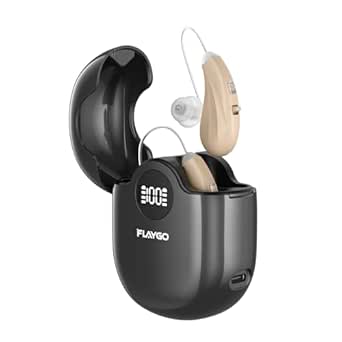 | Best for Extended Use | Fit type: Behind-the-ear | Digital channels: 16 | Volume levels: 4 | VIEW ON AMAZON | See Our Full Breakdown |
| Karthus Hearing Aids for Seniors with Noise Reduction, Rechargeable In-Ear |  | Best for One-Button Simplicity | Fit type: In-ear | Recommended hearing-loss range: Mild to moderate | Digital chip: 16-channel | VIEW ON AMAZON | See Our Full Breakdown |
| Audien Atom X OTC Rechargeable Hearing Aids with Touchscreen Case |  | Best for Guided Setup and Mode Selection | Fit: In-ear | Control: Touchscreen charging case | Listening modes: 4 | VIEW ON AMAZON | See Our Full Breakdown |
| Audien Atom One OTC Hearing Aids |  | Best for Simple Manual Setup | Fit: In-ear | Controls: Analog volume and frequency dials | Battery: Rechargeable lithium-ion | VIEW ON AMAZON | See Our Full Breakdown |
| ELEHEAR Beyond Pro Rechargeable OTC Hearing Aids |  | Best for App-Based Adjustments and Streaming | Fit: Behind-the-ear RIC | Intended hearing loss: Mild to moderate | Amplification: 50 dB | VIEW ON AMAZON | See Our Full Breakdown |
| Rechargeable OTC Hearing Aids with Noise Cancellation | 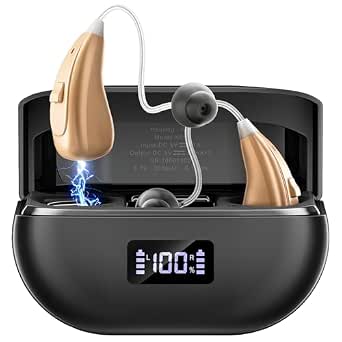 | Best for Long Runtime and Simple Noise Controls | Fit: In-ear | Sound processing: 16-channel | Noise control: Adaptive noise cancellation | VIEW ON AMAZON | See Our Full Breakdown |
| Avicill Rechargeable BTE Hearing Aids with 16-Channel Noise Reduction |  | Best for Behind-the-Ear Wear | Fit type: Behind-the-ear (BTE) | Channels: 16 | Noise control: Noise reduction | VIEW ON AMAZON | See Our Full Breakdown |
| LRUSEIFE Rechargeable In-Ear Hearing Aids for Seniors, 11-Channel Noise Cancellation | 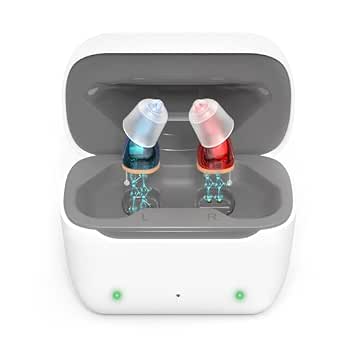 | Best for Basic Button-Controlled In-Ear Use | Model: A33-1226662866 | Fit: In-ear | Recommended hearing loss: Mild to medium | VIEW ON AMAZON | See Our Full Breakdown |
| Rechargeable Hearing Aids with Audio Tracker, Noise Reduction DSP Chip, Discreet CIC Design – OTC for Seniors |  | Best for Directional Listening | Fit: In-ear, CIC design | Noise reduction: Enabled; dual independent processors and Audio Tracker technology | Continuous battery life: Up to 20 hours after a two-hour charge | VIEW ON AMAZON | See Our Full Breakdown |
| Vivtone Supermini Rechargeable Digital Hearing Aids |  | Best for First-Time OTC Buyers | Sound processing: 16-channel digital | Listening modes: Two | Charging time: Two hours | VIEW ON AMAZON | See Our Full Breakdown |
| True Hearing Aids for Seniors with Noise Cancelling, Invisible Rechargeable Design and Magnetic Charging Box |  | Best for Simple Push-Button Use | Type: OTC hearing aid | Fit: Virtually invisible in-ear design | Noise cancelling: Yes | VIEW ON AMAZON | See Our Full Breakdown |
| Rechargeable Hearing Aids with 5-Level Volume Control |  | Best for Fine Volume Adjustment | Technology: Receiver-in-canal (RIC) | Sound processing: 16-channel chip with intelligent noise-cancelling technology | Amplification: Up to 40 dB ± 5 dB | VIEW ON AMAZON | See Our Full Breakdown |
| Avicill Rechargeable BTE Hearing Aids with 16-Channel Noise Cancellation | 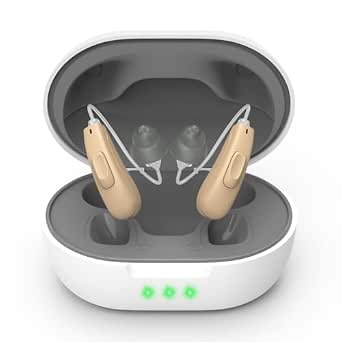 | Best for Behind-the-Ear Fit | Brand: Avicill | Fit: Behind-the-ear | Channels: 16 | VIEW ON AMAZON | See Our Full Breakdown |
| hearing aids not amplifier | Fit | Controls |
|---|---|---|
| Vivtone Supermini Hearing Aids | — | — |
| Rechargeable OTC Hearing Aids | Nearly invisible in-ear design | Adjustable volume with push-button controls |
| Flaygo Rechargeable Hearing Ai | — | Button |
| Karthus Hearing Aids for Senio | — | One-button operation |
| Audien Atom X OTC Rechargeable | In-ear | — |
| Audien Atom One OTC Hearing Ai | In-ear | Analog volume and frequency dials |
| ELEHEAR Beyond Pro Rechargeabl | Behind-the-ear RIC | — |
| Rechargeable OTC Hearing Aids | In-ear | One-button control |
| Avicill Rechargeable BTE Heari | — | — |
| LRUSEIFE Rechargeable In-Ear H | In-ear | Button control |
| Rechargeable Hearing Aids with | In-ear, CIC design | — |
| Vivtone Supermini Rechargeable | — | — |
| True Hearing Aids for Seniors | Virtually invisible in-ear design | Push-button volume adjustment |
| Rechargeable Hearing Aids with | — | — |
| Avicill Rechargeable BTE Heari | Behind-the-ear | Button control with volume adjustment |
More Details on Our Top Picks
Vivtone Supermini Hearing Aids, Rechargeable Digital Devices with 16-Channel Sound Processing, Over-The-Counter, Auto-On/Off, Pair
The Vivtone Supermini is the clearest pick here for buyers who want a small in-ear aid with more specified sound processing than the basic OTC options. Its 16-channel digital chip and two listening modes are intended to help adapt sound across quieter and noisier settings; the product details do not quantify that noise reduction, so I would not treat the channel count alone as proof of a clinical result. Compared with the Flaygo, which uses a behind-the-ear fit and emphasizes longer total runtime, Vivtone prioritizes a discreet CIC shape and a straightforward two-hour recharge. Multiple dome sizes and automatic on/off add everyday convenience, while its memory function can retain a preferred volume and mode after use. The tradeoff is a stated 16+ hours per charge, and the very small body may not suit larger ear canals. No supported hearing-loss range is specified.
Pros:- 16-channel digital processing with two listening modes
- Compact CIC design with four listed fit sizes
- Auto-on/off and volume-and-mode memory
- Two-hour charging time and 16+ hours of stated use
Cons:- Small CIC body may be difficult to fit in larger ear canals
- Requires recharging after roughly 16 hours of continuous use
- Product information does not specify the hearing-loss range it supports
Best for: Adults seeking discreet, rechargeable in-ear OTC support who want multiple fit sizes and simple listening modes.
Not ideal for: People with larger ear canals, those needing more than a day of use between charges, or buyers who need a clearly stated supported hearing-loss range.
- Digital channels:16
- Design:CIC; described as 30% smaller than most CIC devices
- Fit sizes:X-small, small, medium, large
- Listening modes:2
- Battery life:16+ hours
- Charging time:2 hours
- Case standby time:Approximately 1 week
- Automatic operation:Auto-on/off
Our verdict“Choose Vivtone if a discreet CIC fit and defined digital features matter more than the longer case-supported runtime of the Flaygo.”
Rechargeable OTC Hearing Aids with Noise Cancellation
This rechargeable OTC pair suits buyers who want basic controls and a portable power routine, without a long list of modes or setup steps. Adjustable volume and push-button controls keep everyday changes simple, while three dome sizes give users a few ways to improve fit. Its charging case can recharge the aids up to four times, supporting a stated up to 48 hours of hearing time across use and case charges. That makes it a more straightforward option than the Audien Atom X, whose touchscreen case offers four selectable modes but asks users to manage more settings. The limitation is how little performance detail is supplied: there are no channel counts, quantified noise-cancellation results, or runtime-per-charge figures. I would choose it for simplicity and portable charging, not for evidence-backed sound customization.
Pros:- Push-button volume adjustment
- Portable magnetic case can recharge the aids up to four times
- Three dome sizes offer some fit flexibility
- Nearly invisible in-ear design
Cons:- No technical details quantify the stated noise cancellation
- Battery life per charge is not specified
- Fit and comfort may vary between users
Best for: Adults wanting simple push-button volume adjustment, a discreet in-ear style, and backup charging while away from an outlet.
Not ideal for: Buyers who need detailed sound-processing specifications, clearly described noise-cancellation performance, or a stated runtime for each individual charge.
- Type:OTC hearing aids
- Fit:Nearly invisible in-ear design
- Controls:Adjustable volume with push-button controls
- Charging:Rechargeable magnetic charging case
- Stated hearing time:Up to 48 hours
- Case capacity:Recharges the hearing aids up to 4 times
- Included dome sizes:3
Our verdict“Pick this model for uncomplicated controls and case-based charging, but choose the Audien Atom X if you want clearly described listening modes.”
Flaygo Rechargeable Hearing Aids with Noise Reduction, Beige
The Flaygo stands apart from the in-ear picks by using a behind-the-ear fit and pairing it with up to 80 hours of listening time when the charging case is included. That case-supported figure makes it a better match for people who dislike frequent charging than the Vivtone Supermini, which lists 16+ hours of continuous use but has a smaller CIC profile. Flaygo also specifies a 16-channel chip, noise reduction, and whistling suppression; four volume levels and one-button control keep adjustments relatively simple. The two-hour charge is useful, though the case itself needs recharging after four charging cycles. Its design is lightweight at 3.5 g, but buyers seeking a nearly invisible in-ear device may prefer the Vivtone. The listing does not define the hearing-loss range or explain how its noise reduction performs in particular settings.
Pros:- Up to 80 hours of listening time with the charging case
- 16-channel digital chip with noise reduction and whistling suppression
- Lightweight 3.5 g construction
- One-button control with four volume levels and a two-hour charge
Cons:- Charging case needs recharging after four charging cycles
- Behind-the-ear shape is more visible than the Vivtone Supermini’s CIC design
- No supported hearing-loss range or detailed noise-reduction performance is specified
Best for: Adults who prefer a behind-the-ear aid, want simple volume changes, and value long case-supported use between case recharges.
Not ideal for: Buyers who prioritize an in-ear or nearly invisible fit, need more than four volume steps, or want detailed guidance on supported hearing-loss levels.
- Fit type:Behind-the-ear
- Digital channels:16
- Volume levels:4
- Charging time:2 hours
- Total listening time:Up to 80 hours with charging case
- Item weight:3.5 g
- Battery:3.7 V lithium-ion
- Controls:Button
- Color:Beige
Our verdict“Choose Flaygo over the Vivtone Supermini if case-supported runtime and a behind-the-ear fit matter more than a discreet CIC profile.”
Karthus Hearing Aids for Seniors with Noise Reduction, Rechargeable In-Ear
Karthus is aimed at adults with mild to moderate hearing loss who want an in-ear aid without app-based controls or Bluetooth setup. A one-button design keeps daily operation direct, and the listing describes a 16-channel chip for background-noise reduction. Its headline advantage is up to 96 hours with the charging case, a longer stated case-supported span than the Flaygo’s 80 hours. That comparison comes with a caveat: Karthus does not provide a charging time or clarify the usage pattern behind its 96-hour figure. The set includes small, medium, and large domes, which adds fit options, but volume adjustment is limited to six levels. There is also no direct streaming, so people who want phone or TV audio sent to their aids should look elsewhere. I see this as a simplicity-first choice, not a connected listening system.
Pros:- Designed for adults with mild to moderate hearing loss
- One-button operation without an app or Bluetooth
- 16-channel chip described as reducing background noise
- Up to 96 hours of use stated with the charging case
Cons:- No Bluetooth for direct phone or TV streaming
- Six volume levels may not provide enough adjustment for every setting
- Charging time and the conditions behind the 96-hour figure are not specified
Best for: Older adults with mild to moderate hearing loss who prefer an in-ear fit, physical one-button operation, and no app or Bluetooth setup.
Not ideal for: People who want Bluetooth streaming, more granular volume adjustment, or clearly stated charging-time and runtime conditions.
- Fit type:In-ear
- Recommended hearing-loss range:Mild to moderate
- Digital chip:16-channel
- Controls:One-button operation
- Volume adjustment:6 levels
- Stated use with charging case:Up to 96 hours
- Battery chemistry:Lithium polymer
- Included components:2 hearing aids, charging case, user manual, S/M/L ear domes, cleaning brush
Our verdict“Choose Karthus if simple in-ear controls and case-supported runtime take priority over streaming and fine-grained adjustments.”
Audien Atom X OTC Rechargeable Hearing Aids with Touchscreen Case
The Audien Atom X is the most control-focused option in this group: its touchscreen charging case handles volume and mode changes, and four preset modes cover conversations, noisy settings, TV, and quieter moments. That can suit buyers who want more context-specific choices than the two modes on the Vivtone Supermini, though the Audien modes are pre-programmed rather than described as customizable. An expert-guided setup session and included wax guards and cleaning tools add practical support beyond the device itself. Battery life is stated as up to 16 hours per charge and up to 48 hours with the case, so it trails the Flaygo’s 80-hour case-supported figure. Buyers should also be comfortable operating a touchscreen case; people wanting direct on-device controls or a simpler setup may prefer the basic push-button option from Rechargeable OTC Hearing Aids with Noise Cancellation.
Pros:- Touchscreen case controls volume and listening modes
- Four preset modes for different listening environments
- Expert-guided setup session is included
- Includes extra domes, replacement wax guards, and cleaning tools
Cons:- Up to 16 hours per charge means daily recharging may be needed
- Listening modes are pre-programmed
- Touchscreen case may be less suitable for buyers who prefer physical buttons
Best for: OTC buyers who want a guided setup, touchscreen case controls, and preset modes for several everyday listening situations.
Not ideal for: People who prefer physical controls, want to customize listening programs, or need longer use between case-supported charges.
- Fit:In-ear
- Control:Touchscreen charging case
- Listening modes:4
- Battery life per charge:Up to 16 hours
- Battery life with case:Up to 48 hours
- Power source:Rechargeable lithium-ion batteries
- Color:Beige
- Included accessories:Charging case, USB cable, wall adapter, extra ear domes, replacement wax guards, cleaning brush
Our verdict“Choose the Audien Atom X for guided setup and touchscreen access to four presets, but opt for the Flaygo if longer case-supported runtime matters more.”
Audien Atom One OTC Hearing Aids
The Audien Atom One is a better fit for buyers who want direct, physical controls than for anyone seeking automatic noise management. Its volume and frequency dials let you adjust sound without a phone app, while the three dome sizes give you options for a more secure in-ear fit. Compared with the ELEHEAR Beyond Pro, it skips Bluetooth, app tuning, and noise cancellation, but offers a less tech-dependent way to make basic adjustments. Battery life of up to 24 hours is a useful advantage for a full day between charges, though recharging takes about three hours. I’d favor this model for straightforward daily use, with the tradeoff that changes to sound require manual dial adjustments and noisy settings may remain challenging.
Pros:- Manual volume and frequency dials work without a smartphone app
- Rechargeable battery provides up to 24 hours of use
- Three silicone dome sizes help accommodate different ear fits
- Includes setup support and a one-year warranty
Cons:- No noise-control feature is specified
- Sound settings need to be adjusted manually
- About three hours are required for charging
Best for: Adults with mild to moderate hearing loss who want rechargeable in-ear aids and prefer physical controls over app-based setup.
Not ideal for: Listeners who need noise reduction in busy environments or want Bluetooth streaming and phone-based sound adjustments.
- Fit:In-ear
- Controls:Analog volume and frequency dials
- Battery:Rechargeable lithium-ion
- Battery life:Up to 24 hours
- Charging time:About 3 hours
- Charging connector:USB-C
- Included ear domes:Small, medium, and large
- Warranty:1 year
Our verdict“Choose the Atom One if you want simple, app-free in-ear controls and can do without noise cancellation or Bluetooth.”
ELEHEAR Beyond Pro Rechargeable OTC Hearing Aids
The ELEHEAR Beyond Pro stands apart for buyers who want a more connected listening setup: Bluetooth 5.3, app-based adjustments, and music mode give it more flexibility than the manually adjusted Audien Atom One. Its RIC design places the receiver in the ear, and the listed 50 dB amplification and VocClear 2.0 speech processing are aimed at mild to moderate hearing loss. Noise cancellation is specified for voice calls, so I wouldn’t treat it as broad noise control for every listening situation. Battery life reaches up to 20 hours per charge, with a case offering four additional charges; a 15-minute fast charge is listed for up to six hours of use. The tradeoff is reliance on a compatible smart device for app controls, plus a feature set that may be more than a no-frills buyer needs.
Pros:- Bluetooth 5.3 supports connections to compatible devices
- App-based sound adjustments provide more control than manual-only models
- Fast charging is listed as providing up to six hours of use from 15 minutes
- Charging case adds four charges beyond the up-to-20-hour per-charge runtime
Cons:- App controls require a compatible smartphone or tablet
- Noise cancellation is specified for voice calls rather than all listening environments
- Up to 20 hours per charge is less than the stated runtime of the Audien Atom One
Best for: Adults with mild to moderate hearing loss who want phone-based sound adjustments, Bluetooth connectivity, and music playback.
Not ideal for: Buyers who prefer physical controls, do not have a compatible smartphone or tablet, or need noise cancellation beyond voice calls.
- Fit:Behind-the-ear RIC
- Intended hearing loss:Mild to moderate
- Amplification:50 dB
- Bluetooth:5.3
- Control:App control
- Battery life:Up to 20 hours per charge; case provides 4 additional charges
- Fast charging:15 minutes provides up to 6 hours of use
- Noise control:Noise cancellation for voice calls
Our verdict“Pick the Beyond Pro if Bluetooth and app tuning matter more to you than simple, phone-free operation.”
Rechargeable OTC Hearing Aids with Noise Cancellation
This in-ear option makes a stronger case for noise processing and extended time between charges than the Audien Atom One, which relies on manual frequency and volume dials and lists no noise control. Its 16-channel processing and adaptive noise cancellation are intended to improve speech listening while reducing background noise; the one-button controls and five volume levels keep adjustments relatively simple. The listed runtime is also a standout: up to 25 hours per charge and over 100 hours with the case, with charging completed within two hours. At 3 grams per aid, it is designed to stay light in the ear. I’d choose it over the ELEHEAR Beyond Pro for a simpler, non-app-led feature set, but skip it if you need more than basic volume selection or have hearing loss outside the stated mild-to-moderate range.
Pros:- 16-channel processing and adaptive noise cancellation are specified
- One-button operation and five volume levels keep adjustments straightforward
- Up to 25 hours per charge and over 100 hours with the case are listed
- Each hearing aid weighs 3 grams
Cons:- Only five volume levels are specified, with no app-based fine tuning listed
- Intended for mild to moderate hearing loss only
- The blackish-silver color may be more visible than skin-toned alternatives
Best for: Adults with mild to moderate hearing loss who want lightweight in-ear aids, basic controls, and a charging case for extended use.
Not ideal for: Buyers who want Bluetooth or app-based customization, or people who need support beyond mild to moderate hearing loss.
- Fit:In-ear
- Sound processing:16-channel
- Noise control:Adaptive noise cancellation
- Controls:One-button control
- Volume settings:5 levels
- Battery life:25+ hours per charge; 100+ hours with charging case
- Charging time:Within 2 hours
- Weight per hearing aid:3 g
- Warranty:1 year
Our verdict“Choose this model if long listed runtime and simple noise-processing controls outweigh the need for Bluetooth or fine app tuning.”
Avicill Rechargeable BTE Hearing Aids with 16-Channel Noise Reduction
Avicill is the distinct choice here for buyers who prefer a behind-the-ear fit rather than the in-ear designs of the Audien Atom One and LRUSEIFE A33. Its 16-channel chip and noise reduction are intended to support listening across varied environments, while button volume control avoids dependence on an app. The rechargeable design and magnetic charging case also remove the need for routine disposable-battery changes. Compared with the ELEHEAR Beyond Pro, Avicill’s listed feature set is more basic: it does not specify Bluetooth, app adjustment, or a battery runtime. That missing runtime makes it harder to plan a full day or judge how often charging will be needed. I’d shortlist it for buyers who value BTE placement and simple controls, but not for anyone who needs clear battery-life figures before choosing.
Pros:- Behind-the-ear design offers an alternative to in-ear models such as the Audien Atom One
- 16-channel chip and noise reduction are specified
- Button control supports physical volume adjustments
- Rechargeable design includes a portable magnetic charging case
Cons:- Battery life per charge is not specified
- Fit and comfort may vary between users
- Bluetooth and app-based adjustment are not listed
Best for: Adults who prefer behind-the-ear aids with physical button controls and want rechargeable operation without relying on a phone app.
Not ideal for: Buyers who need a stated daily battery runtime, detailed connectivity features, or assurance that a particular fit will feel comfortable.
- Fit type:Behind-the-ear (BTE)
- Channels:16
- Noise control:Noise reduction
- Control type:Button
- Power:Rechargeable
- Battery cell composition:NiMH
- Battery description:Lithium-ion
- Charging case:Portable magnetic case
Our verdict“Consider Avicill if you want a rechargeable BTE design with button controls, but skip it if an advertised runtime is a must.”
LRUSEIFE Rechargeable In-Ear Hearing Aids for Seniors, 11-Channel Noise Cancellation
LRUSEIFE is aimed at seniors who want a compact in-ear aid with straightforward button controls, rather than the app-connected experience of the ELEHEAR Beyond Pro. Its 11-channel noise cancellation is a step below the 16-channel processing listed for the other rechargeable in-ear noise-cancelling option in this lineup, but the channel count alone does not establish how either will sound for an individual listener. The charging case and rechargeable design reduce dependence on disposable batteries; however, no runtime or charging time is provided, so it is difficult to plan daily use. Compared with the Audien Atom One, LRUSEIFE lists active noise cancellation but provides fewer details about setup support and included fit options. I’d consider it for simple, discreet wear, while treating the missing battery figures as a real uncertainty.
Pros:- In-ear design is intended for discreet wear
- Rechargeable design includes a charging case
- 11-channel active noise cancellation is specified
- Button controls avoid the need for app-based adjustment
Cons:- Battery runtime and charging time are not provided
- The 11-channel specification is lower than the 16-channel processing listed for another in-ear option
- Bluetooth and app controls are not specified
Best for: Seniors with mild to medium hearing loss who prefer discreet in-ear aids and simple button operation.
Not ideal for: Buyers who need a clearly stated battery runtime or charging time, or who want app controls and documented connectivity.
- Model:A33-1226662866
- Fit:In-ear
- Recommended hearing loss:Mild to medium
- Noise control:Active noise cancellation
- Channels:11
- Controls:Button control
- Battery:Rechargeable NiMH
- Charging case:Included
Our verdict“Choose LRUSEIFE for a simple rechargeable in-ear format if you can accept uncertainty about runtime and charging.”
Rechargeable Hearing Aids with Audio Tracker, Noise Reduction DSP Chip, Discreet CIC Design – OTC for Seniors
I’d shortlist this model for buyers who want speech to stand out from surrounding sound without a visible behind-the-ear device. Its Audio Tracker technology and dual processors are described as separating speech from ambient noise, a more targeted pitch than the straightforward 16-channel processing in the Vivtone Supermini. The CIC fit and three dome sizes favor a discreet, close-fitting option, while the claimed 20 hours per charge plus 80 hours from the case can reduce charging interruptions.
The tradeoff is that the description gives no specific amplification range or fitting support, so I wouldn’t treat its noise-processing claims as proof it will suit every hearing profile. Like the Vivtone, it depends on finding a comfortable dome fit; unlike a more adjustable design, its listed controls don’t explain how much the wearer can tailor sound. It may also be unsuitable for severe hearing loss, and software-update details are unclear.
Pros:- Audio Tracker and dual processors are designed to distinguish speech from ambient sound.
- CIC design offers a discreet alternative to Avicill’s behind-the-ear fit.
- Claims up to 20 hours of use after a two-hour charge.
- Charging case is described as providing an additional 80 hours of backup.
Cons:- May not provide enough support for severe hearing loss without professional fitting.
- Only red and blue color options are listed.
- Software-update support is unclear, and adjustable sound controls are not detailed.
Best for: Adults with mild to moderate hearing needs who want an in-canal style and frequently follow conversations in busy settings, TV viewing, or outdoors.
Not ideal for: People with severe hearing loss, buyers who need a stated amplification range or professional fitting, and anyone who wants clearly documented software support.
- Fit:In-ear, CIC design
- Noise reduction:Enabled; dual independent processors and Audio Tracker technology
- Continuous battery life:Up to 20 hours after a two-hour charge
- Charging-case backup:Up to 80 hours
- Battery:Two lithium-polymer batteries
- Dome sizes:Three sizes
- Listed uses:Noisy settings, TV, outdoor activities, and conversations
- Color:Red and blue
Our verdict“Choose this if discreet in-ear wear and speech-focused processing matter more than a clearly specified fitting range or extensive sound adjustments.”
Vivtone Supermini Rechargeable Digital Hearing Aids
I’d point first-time OTC buyers toward the Vivtone when ease of daily operation matters more than a long feature list. Its two listening modes, automatic on/off, and saved volume and mode settings aim to cut down on repeated adjustments. The 16-channel processing gives it a defined digital approach, while four earbud sizes make it easier to seek a secure fit than products with fewer included options. Compared with the CIC Audio Tracker model in this group, the Vivtone describes its controls more clearly but doesn’t make the same speech-tracking claim.
A two-hour charge is said to provide more than 16 hours of use, which is practical for a typical day, though it falls short of the longer stated runtimes on the 25-hour RIC model. Battery and sound-quality claims come from the product description, and no detailed amplification range is provided. Buyers should expect to try the included tips to find a comfortable seal; a poor fit can undermine both comfort and listening results.
Pros:- Two modes give users a basic way to adapt listening to different environments.
- Auto on/off and settings memory reduce repeated daily setup.
- Four earbud sizes offer useful fit options.
- A two-hour charge is stated to provide more than 16 hours of use.
Cons:- Stated battery and sound-performance claims are not accompanied by detailed measurements.
- A comfortable fit depends on selecting the right earbud size.
- No amplification range or specific speech-separation feature is provided.
Best for: First-time OTC hearing-device buyers who want simple mode switching, remembered settings, and multiple earbud sizes for fit adjustments.
Not ideal for: People who need a documented amplification range, the longest stated daily runtime, or directional speech-processing features.
- Sound processing:16-channel digital
- Listening modes:Two
- Charging time:Two hours
- Battery life:More than 16 hours
- Earbud sizes:Extra-small, small, medium, and large
- Automatic operation:Auto on/off
- Settings memory:Remembers volume and mode settings
Our verdict“Pick the Vivtone for uncomplicated everyday controls and fit options, but look elsewhere if you need a stated amplification range or longer listed runtime.”
True Hearing Aids for Seniors with Noise Cancelling, Invisible Rechargeable Design and Magnetic Charging Box
This model’s clearest advantage is its simple push-button volume control, paired with a magnetic charging case that avoids a more involved daily setup. That makes it a different proposition from the Vivtone Supermini, which adds automatic on/off and remembered listening modes, but doesn’t describe the same magnetic charging arrangement. Three dome sizes and a nearly invisible in-ear design suit people who prioritize discretion and want a few ways to improve the fit.
The product claims up to 48 hours of battery life, but the description also says the case offers up to four charges, so I’d read that figure as dependent on the charging case rather than assume uninterrupted use between charges. Noise cancelling is listed, but no channel count, amplification range, or detailed speech-processing behavior is supplied. That makes it harder to compare its sound tailoring directly with the 16-channel Vivtone. It may not offer enough amplification for severe hearing loss.
Pros:- Push-button volume adjustment keeps basic operation straightforward.
- Magnetic charging case is designed for easy placement and charging.
- Three dome sizes provide options for a secure in-ear fit.
- Noise cancelling is included in the listed feature set.
Cons:- May not provide enough amplification for severe hearing loss.
- The 48-hour battery claim is not clearly separated from case-supported charging.
- No channel count or amplification range is supplied for comparison.
Best for: Seniors seeking discreet in-ear devices with straightforward physical volume controls and a magnetic charging case.
Not ideal for: People with severe hearing loss or buyers who need documented amplification levels, detailed sound-processing specifications, or uninterrupted runtime figures.
- Type:OTC hearing aid
- Fit:Virtually invisible in-ear design
- Noise cancelling:Yes
- Battery life:Up to 48 hours, described as up to four charges
- Charging method:Magnetic charging case
- Dome sizes:Three sizes
- Controls:Push-button volume adjustment
- Power:Rechargeable
Our verdict“Choose this for simple button operation and discreet wear, not for highly specified sound adjustment or a clearly documented amplification range.”
Rechargeable Hearing Aids with 5-Level Volume Control
I rank this RIC model highly for buyers who want a stated amplification figure and more control over volume than the simple push-button model provides. Its five volume levels and setting memory offer a practical middle ground: more adjustment than the True Hearing Aids’ basic volume-button description, without a complicated set of modes. The product also lists up to 40 dB ± 5 dB amplification, giving shoppers a concrete specification that several in-ear options in this group omit.
Its stated 25-hour use and up to 100 hours with the charging case are among the strongest battery figures here. The tradeoff is a less discreet receiver-in-canal style than a CIC option, and the description doesn’t state charging time. The 16-channel noise-reduction claim also doesn’t spell out how speech is handled in specific environments. I’d choose it for adjustable daily use, while treating the stated amplification as a specification to discuss with a hearing-care professional.
Pros:- Five volume levels allow more adjustment than a basic single-control description.
- Setting memory restores the last selected volume.
- Up to 25 hours per charge and up to 100 hours with the case are stated.
- Silicone tips in three sizes offer fit options.
Cons:- Receiver-in-canal styling is less hidden than a CIC design.
- Charging time is not specified.
- Noise reduction is described, but specific speech-processing behavior is not.
Best for: Buyers who want several volume steps, remembered settings, a stated amplification figure, and longer listed battery support.
Not ideal for: People set on a fully in-canal appearance, buyers who need a documented charging time, or those seeking detailed evidence of speech separation.
- Technology:Receiver-in-canal (RIC)
- Sound processing:16-channel chip with intelligent noise-cancelling technology
- Amplification:Up to 40 dB ± 5 dB
- Volume control:Five levels with last-setting memory
- Battery life:Up to 25 hours per charge
- Charging-case capacity:Up to 100 hours; three to four full charges
- Case display:LED battery display
- Ear tips:Silicone, small, medium, and large
Our verdict“Choose this RIC model if volume flexibility and stated battery capacity matter more than an invisible in-ear fit or a specified charging time.”
Avicill Rechargeable BTE Hearing Aids with 16-Channel Noise Cancellation
Avicill is the distinct choice here for people who prefer a behind-the-ear design over the in-canal styles used by the CIC Audio Tracker and True Hearing Aids. Its lightweight build, button controls, and volume adjustment suggest a straightforward device for light to medium hearing loss, while the 16-channel noise-reduction chip gives its processing a clearer description than models that mention noise cancelling without a channel count. A portable charging case also avoids disposable-battery changes.
That simpler fit comes with an important information gap: there is no battery runtime listed, so I can’t compare its daily endurance with the 25-hour RIC model or the Vivtone’s stated 16-plus hours. The description also gives no amplification figure, and comfort will vary with the behind-the-ear fit. I’d favor Avicill for buyers who want an accessible physical control and a BTE form, but not for anyone choosing primarily by runtime or a specific level of amplification.
Pros:- Behind-the-ear format offers an alternative to the lineup’s in-ear designs.
- 16-channel noise-reduction processing is specified.
- Button control and volume adjustment support direct operation.
- Rechargeable design includes a portable charging case.
Cons:- Battery runtime is not specified, making daily charging needs difficult to judge.
- No amplification figure is provided.
- Behind-the-ear fit and comfort may vary from person to person.
Best for: Adults with light to medium hearing loss who prefer behind-the-ear wear, button controls, and rechargeable operation.
Not ideal for: Buyers who need a stated battery runtime or amplification level, or who specifically want a discreet in-ear device.
- Brand:Avicill
- Fit:Behind-the-ear
- Channels:16
- Noise processing:Noise cancellation and reduction
- Power:Rechargeable battery
- Controls:Button control with volume adjustment
- Materials:Plastic and silicone
- Recommended hearing loss:Light to medium
Our verdict“Choose Avicill if you want a rechargeable BTE design for light to medium hearing loss, but skip it if runtime or amplification specifications are your deciding factors.”

How We Picked
I ranked these products by how clearly their listed features address the needs of someone seeking an OTC hearing aid rather than a simple sound amplifier. I weighed disclosed sound-processing and noise-reduction features, device style, ease of handling, charging approach, and the practical value of controls such as multiple volume levels or an accessible case. A feature count alone did not earn a higher position: a buyer needs understandable fitting and adjustment, a wearable design, and enough product information to judge whether the device fits their hearing needs.
The order reflects feature transparency and decision usefulness, not a claim of clinical superiority. The ELEHEAR Beyond Pro leads as the more feature-focused pick; Vivtone and Audien options follow for distinct form-factor and control priorities. BTE devices, simpler volume-control models, and listings with repeated or generic product names rank lower when the information provided gives buyers less basis for comparison. I would verify the exact model, fitting support, hearing-loss suitability, and return policy before purchase, and seek professional guidance for sudden, one-sided, painful, or worsening hearing changes.
| hearing aids not amplifier | Fit |
|---|---|
| Vivtone Supermini Hearing Aids | — |
| Rechargeable OTC Hearing Aids | Nearly invisible in-ear design |
| Flaygo Rechargeable Hearing Ai | — |
| Karthus Hearing Aids for Senio | — |
| Audien Atom X OTC Rechargeable | In-ear |
| Audien Atom One OTC Hearing Ai | In-ear |
| ELEHEAR Beyond Pro Rechargeabl | Behind-the-ear RIC |
| Rechargeable OTC Hearing Aids | In-ear |
| Avicill Rechargeable BTE Heari | — |
| LRUSEIFE Rechargeable In-Ear H | In-ear |
| Rechargeable Hearing Aids with | In-ear, CIC design |
| Vivtone Supermini Rechargeable | — |
| True Hearing Aids for Seniors | Virtually invisible in-ear design |
| Rechargeable Hearing Aids with | — |
| Avicill Rechargeable BTE Heari | Behind-the-ear |
Factors to Consider When Choosing Hearing Aids Not Amplifiers
Choosing hearing aids, not amplifiers means looking past labels and feature counts. The useful question is whether the device offers a fitting and adjustment path that matches your hearing needs, daily settings, and ability to manage small controls. These broader checks can prevent a discreet design or a long feature list from overshadowing practical fit and support.
Check What “Hearing Aid” Means for the Specific Model
Product listings can use hearing-aid language while giving little detail about fitting, programming, or the hearing profiles supported. Look for clear information about who the device is intended for, how it is adjusted, and whether the seller provides guidance if the initial sound feels uncomfortable. Do not treat channel count or a noise-reduction label as proof that a device will address your particular hearing loss. OTC devices are generally intended for adults with perceived mild to moderate hearing loss, not every cause or degree of difficulty. A hearing evaluation can help distinguish age-related hearing changes from wax blockage, infection, or another issue that needs care. Choose based on the disclosed fitting process, not the strongest-sounding technical claim.
Match the Fit to Your Hands and Routine
In-ear and CIC styles can be less visible, but their small shells may be harder to insert, remove, and clean. BTE designs are more visible, yet some buyers find the larger parts easier to handle and keep track of. A discreet shape is not automatically a better fit: pressure, feedback, discomfort, or a loose seal can make a device impractical. Think through when you would wear it, whether glasses or masks affect the fit, and how steady your hands are for daily placement. Ask whether the package includes more than one ear tip size and whether replacements are available. A comfortable device worn consistently may be more useful than a smaller one that is difficult to manage.
Separate Noise Reduction From Speech Clarity
Noise reduction may soften steady background sounds, but it does not guarantee that speech will become clear in a crowded room. Buyers often expect a device to isolate voices automatically, then find that restaurants and group conversations remain difficult. Look for descriptions of adjustment options and listening programs, and check whether controls are easy to use when the environment changes. If a product lists multiple processing channels, treat that as one specification rather than a complete measure of performance. A realistic test at home should include conversation, television, and ordinary background noise, with enough time to adjust gradually. If sound remains harsh or speech is still unclear, contact the seller or a hearing professional rather than simply raising volume.
Choose Controls You Can Operate Reliably
More settings only help when you can identify and change them without frustration. A touchscreen case, as on the Audien Atom X, offers a different control approach from a basic physical volume adjustment, but buyers should confirm what the screen actually controls. Simple controls may be preferable for someone who wants fewer steps, while adjustable options can help people who move between quiet and noisy settings. Check whether changes happen on the device, in a case, or through an app, and whether the instructions explain each control. Small buttons and touch surfaces can be challenging with limited dexterity or vision. Prioritize controls you can use confidently over a long feature list you are unlikely to access.
Plan for Charging, Cleaning, and Replacement Parts
Rechargeable models reduce the need to buy and change disposable batteries, but they still require a dependable charging routine. Check how the device charges, whether the case stores power, and how the indicator communicates a full or low charge. In-ear devices need regular cleaning because earwax and moisture can affect sound or fit; BTE models also need care around their openings and tubing or tips. Confirm that cleaning tools, ear tips, filters, and other wear parts are available before committing. A low-maintenance claim does not remove the need to follow the maker’s care instructions. If you travel often, compare charging portability and the availability of a backup plan for a depleted device.
Compare Support, Returns, and Duplicate Listings
Several entries here have generic names, and the lineup includes repeated Vivtone Supermini and Avicill BTE descriptions. That makes the exact model number, included accessories, and seller support more useful than the listing title alone. Before buying, check the trial or return window, who handles fitting questions, and whether a warranty covers the parts most likely to wear. Ask whether support can help with fit and sound adjustments or only with charging and setup. A generous return period matters because comfort and sound preferences can take time to judge at home. When two listings appear similar, compare their specifications and package contents directly instead of treating them as separate designs.
Frequently Asked Questions
How can I tell whether an OTC device is a hearing aid rather than a basic amplifier?
Check the manufacturer’s description for an intended hearing-loss range, a fitting or adjustment method, and information about how sound is tailored or controlled. A device described only as making nearby sounds louder may not offer the fitting support associated with an OTC hearing aid. Terms such as “digital,” “noise reduction,” or a high channel count do not by themselves establish suitability or clinical performance. Read the instructions and confirm the model is intended for your age group and hearing needs. If the listing does not explain its intended use, ask the seller or choose a model with clearer documentation.
Should I choose an in-ear model or a behind-the-ear model?
Choose based on handling, comfort, and daily use rather than appearance alone. In-ear and CIC models may be less visible, but their small parts can be harder to insert and clean. BTE styles are more noticeable, though some people find them easier to grasp and adjust. Ear shape, glasses, dexterity, and the size of the included tips can all affect comfort. If possible, prioritize a return period that gives you time to judge fit during ordinary activities.
Does a higher channel count mean a device will make speech clearer?
No single specification can predict how clearly you will hear speech. Channel count describes part of the device’s processing, but it does not tell you how well the device is fitted to your hearing or how it handles the environments you find difficult. Noise reduction may help with some background sounds without separating voices in a busy room. Ask how adjustments are made and whether support is available if voices sound sharp, muffled, or unnatural. Judge the complete fitting and support process alongside the listed technical features.
What should I do if a hearing aid feels uncomfortable or sounds too loud at first?
Stop using it if it causes pain, marked discomfort, or a sudden change in symptoms, and seek professional advice when needed. For ordinary adjustment discomfort, check that the ear tip is the correct size and follow the maker’s instructions for gradual use and volume changes. Do not keep turning the volume up to solve unclear speech, since louder sound may not improve clarity. Contact the seller or fitting support to ask about fit and settings within the return or trial period. A hearing professional can help assess whether the device is suitable for your hearing profile.
When should I get a hearing evaluation instead of choosing an OTC model?
Seek medical or hearing-care advice for sudden hearing loss, hearing that differs sharply between ears, ear pain, drainage, dizziness, or a rapid change in your hearing. A professional evaluation is also useful when you are unsure whether the problem comes from wax, an ear condition, or a hearing loss that needs a different solution. OTC hearing aids are not a fit for every degree or cause of hearing difficulty. An evaluation can clarify what type of support is appropriate and establish a baseline for future changes. Do not delay care for concerning symptoms while trying devices at home.
Conclusion
For the best overall, I would start with the ELEHEAR Beyond Pro because it is the lineup’s most feature-focused recommendation, while checking its fitting process and support before purchase. The best value depends on the exact listing and included accessories; the Vivtone Supermini and Avicill BTE entries have repeated descriptions, so verify model details rather than assuming a duplicate is a better deal. For a premium-style control experience, the Audien Atom X is the distinctive choice for buyers drawn to its touchscreen case, while the Vivtone Supermini is a reasonable beginner pick for someone prioritizing a compact form. For specific needs, consider Avicill’s BTE design if a behind-the-ear style seems easier to handle, or a basic volume-control model if fewer settings suit you better. My final choice would depend on fit, clear fitting instructions, support, and a workable return policy—not a product title or feature count alone.


