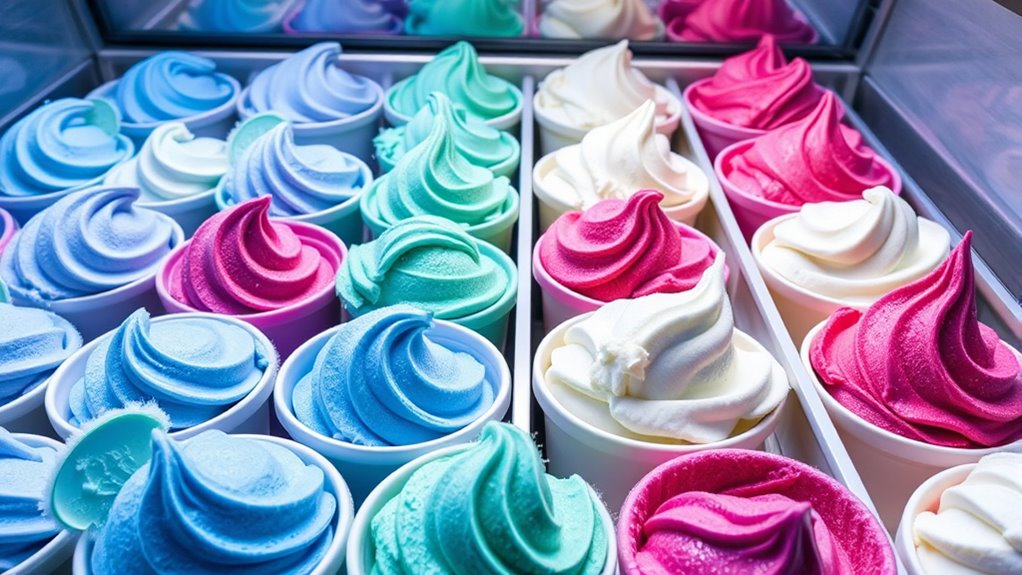

To store gelato properly and avoid freezer burn, keep the freezer at around -20°C (-4°F) and avoid opening it often. Use airtight containers and wrap the gelato tightly to prevent moisture and air exposure. Limit storage time to 1-2 months and reseal containers after each use. Maintaining a stable temperature and minimizing temperature fluctuations helps preserve texture. For more tips, continue exploring best practices for frozen storage.
Key Takeaways
- Keep the freezer at -20°C (-4°F) and maintain a consistent temperature to prevent ice crystal growth.
- Use airtight, double-wrapped, or vacuum-sealed containers to minimize air exposure and moisture ingress.
- Avoid frequent opening of the freezer and reseal gelato containers immediately after use.
- Store gelato within 1-2 months for optimal quality, limiting freezer burn and texture degradation.
- Minimize temperature fluctuations and exposure to warm air to preserve gelato’s texture and prevent condensation.

Have you ever wondered why your gelato develops ice crystals or loses its creamy texture after storage? It’s frustrating to open the freezer and find your carefully made treat transformed into icy chunks rather than smooth, velvety dessert. The key to maintaining gelato’s perfect consistency lies in proper gelato storage and effective freezer burn prevention. When you store gelato correctly, you considerably reduce the risk of unwanted ice crystals forming and preserve its rich flavor and smooth mouthfeel.
To start, always guarantee your freezer is set to the ideal temperature, around -20°C (-4°F). A colder freezer minimizes the formation of ice crystals during storage, helping your gelato stay fresh longer. When you’re storing gelato, avoid opening the container frequently or leaving it open for too long. Each time you open it, warm air enters and causes condensation, which freezes into ice crystals, compromising texture. Instead, scoop out only what you need and reseal the container immediately.
Keep your freezer at -20°C and reseal immediately to prevent ice crystals and preserve gelato quality.
Proper packaging is vital for gelato storage and freezer burn prevention. Use airtight containers specifically designed for freezing, or wrap the gelato tightly with plastic wrap before placing it inside a sealed container. This creates a barrier against air exposure, which is the primary cause of freezer burn. The less air contact, the less dehydration and ice crystal formation you’ll see over time. If you’re concerned about odor transfer or contamination, consider double wrapping or using vacuum-sealed bags.
Another tip involves minimizing the gelato’s exposure to fluctuating temperatures. Avoid leaving the freezer door open for extended periods, especially during busy times or when restocking. Sudden temperature changes can cause moisture to condense on the gelato’s surface, leading to ice crystal growth. Once ice crystals form, they ruin the smooth, creamy texture you’re aiming for. Hence, keeping the freezer stable and avoiding unnecessary temperature swings is vital.
Additionally, using a HEPA filtration system in your home can help improve indoor air quality, which indirectly benefits overall food storage environments by reducing airborne pollutants that could settle on food surfaces. Lastly, try to consume your gelato within a reasonable timeframe—usually within one to two months. The longer it stays frozen, the higher the chance of freezer burn and texture degradation, even with the best storage practices. So, plan ahead and portion your gelato into smaller containers if you have large quantities. This way, you only thaw what you need, reducing repeated exposure to air and temperature fluctuations.
Frequently Asked Questions
How Long Can Gelato Be Stored Without Quality Loss?
You can typically store gelato for about 2 to 3 months without significant quality degradation if you keep it properly sealed and at a consistent, cold temperature. After this period, the shelf life decreases, and you might notice texture changes or freezer burn, which affect flavor and creaminess. To maintain the best quality, always store gelato in an airtight container and avoid temperature fluctuations.
Can Gelato Be Refrozen After Thawing?
Sure, you can refreeze gelato after thawing, but don’t expect it to stay perfect. Refreezing safety isn’t guaranteed, and your gelato’s texture preservation will suffer—ice crystals form, making it grainy and less creamy. If you decide to refreeze, do so quickly and keep it at a consistent temperature. Otherwise, you risk compromising flavor and quality, turning that indulgent treat into a less enjoyable, icy mess.
What Packaging Best Preserves Gelato’s Texture?
To preserve gelato’s texture, you should store it in airtight containers or use vacuum sealing. Airtight containers prevent air from causing freezer burn and keep moisture in, maintaining its creamy consistency. Vacuum sealing removes excess air, offering an even better barrier against freezer burn and texture deterioration. Always guarantee your gelato is tightly packed, and avoid frequent opening to keep its smooth, luscious texture intact.
Does the Type of Freezer Affect Gelato Storage?
Your choice of freezer can make or break gelato storage—it’s like the difference between a gentle breeze and a hurricane. Different freezer types, such as chest freezers or upright models, greatly impact storage efficiency. Chest freezers typically maintain a more consistent temperature and humidity level, reducing freezer burn. Upright freezers may be more convenient but can cause temperature fluctuations, risking gelato quality. Choose wisely to preserve that perfect texture!
How Can I Prevent Condensation Inside the Storage Container?
To prevent condensation inside your storage container, focus on humidity control and airtight seals. Make sure your container is thoroughly sealed to keep moisture out, and store it in a low-humidity environment if possible. Before closing, wipe away any excess moisture or frost. Properly sealing your gelato minimizes air exposure, reduces condensation, and keeps your gelato fresh and free from ice crystals, ensuring better quality when you serve it.
Conclusion
To keep your gelato perfect, you need to store it properly, protect it from freezer burn, and savor it at its best. By sealing it tightly, maintaining consistent temperatures, and avoiding repeated thawing, you preserve its texture and flavor. Remember, proper storage is your shield against ice crystals, your safeguard for freshness, and your key to enjoyment. Store wisely, handle carefully, and indulge fully—your gelato’s quality depends on it.