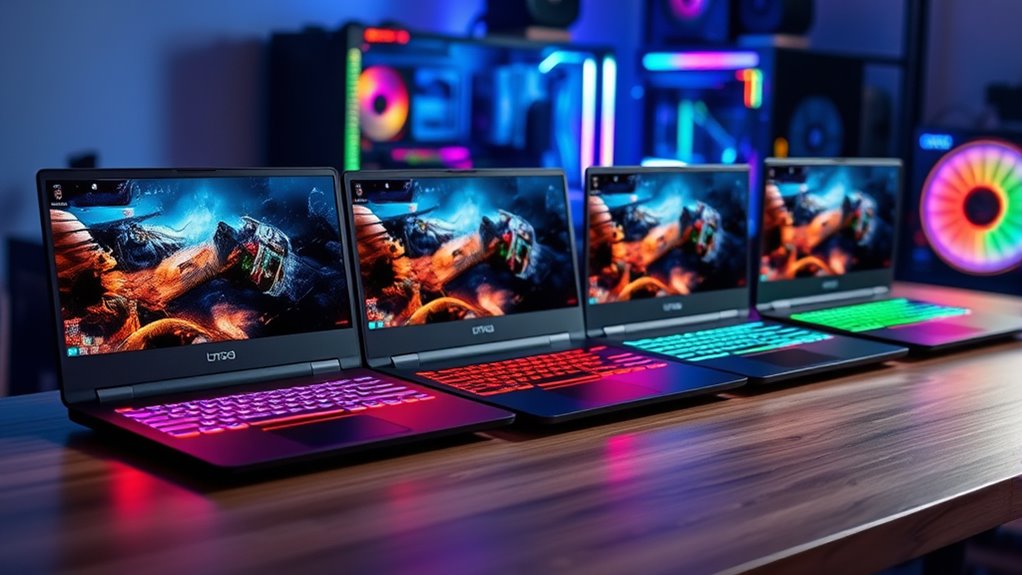

If you’re hunting for a gaming laptop under $1000, the biggest tradeoff you’ll face is between GPU power and everything else — chassis size, display quality, and storage. The ASUS ROG Strix G16 stands out as my best overall pick, pairing an RTX 5060 with a 165Hz display and Wi-Fi 7 inside a proven cooling design. The MSI Cyborg 17 is the strong runner-up if you want a bigger 17.3-inch screen with the same class of graphics, while budget shoppers should look at the NIMO Ryzen 5 builds, which sacrifice dedicated GPUs entirely in exchange for lower cost. Below $1000, you can get real mid-range gaming performance — but you have to know which corners are safe to cut. Read on for the full breakdown of all ten machines.

Get baking supplies delivered free with Prime
- Fast, free delivery on millions of items
- Prime Video, Amazon Music and more included
- Member-only deals all year
Complete the kit


Key Takeaways
- The RTX 5060 laptops (ROG Strix G16, MSI Cyborg 17, GIGABYTE A16) form a clear performance tier above everything else in this roundup — if modern AAA gaming at high settings is the goal, nothing else here competes.
- The NIMO ‘light gaming’ laptops use integrated Radeon graphics, meaning they handle esports titles fine but will struggle with demanding AAA games — they’re productivity-first machines with gaming as a bonus.
- Several listings offer configurable RAM and storage (Delca‘s customized TUF A16 and Nitro V), which is a smart way to future-proof under a $1000 cap — spend on memory now, upgrade storage later.
- Display refresh rate is the hidden differentiator at this price: 165Hz panels on the ROG Strix and Nitro V feel noticeably better than standard 60Hz options for competitive play.
- 17.3-inch machines like the Cyborg 17 trade portability for screen real estate and thermals — great for a desk-bound setup, awkward for a backpack.


| gaming lapunder 1000 | Processor | Graphics | Display | Weight |
|---|---|---|---|---|
| Delca Customized ASUS TUF Gami | AMD Ryzen 7 170 (8 cores, up to 4.75GHz) | NVIDIA GeForce RTX 4050 6GB GDDR6 | 16" WUXGA IPS 144Hz anti-glare | 4.85 pounds |
| Delca Customized Acer Nitro V | Intel Core i5-13420H (8 cores, 12 threads, up to 4.6GHz) | NVIDIA GeForce RTX 5050 8GB GDDR7 | 15.6" FHD IPS 165Hz | 4.66 pounds |
| NIMO 17.3" Light Gaming Laptop | AMD Ryzen 9 8945HS | AMD Radeon 780M integrated | 17.3-inch FHD | 5.6 pounds |
| Gaming Laptop with AMD Ryzen 7 | AMD Ryzen 7 H255 | Radeon 780M integrated | 16-inch IPS, 1920×1200 | — |
| NIMO 15.6" IPS FHD Light Gamin | AMD Ryzen 5 6600H (up to 4.5GHz) | AMD Radeon 660M integrated | 15.6-inch FHD IPS (1920×1080) | 3.75 pounds |
| MSI Cyborg 17 17.3" FHD 144Hz | Intel Core i7-240H | NVIDIA GeForce RTX 5060 | 17.3" FHD 144Hz | 5.5 lbs |
| GIGABYTE Gaming A16 | AMD Ryzen 7 2600 | NVIDIA GeForce RTX 5060 | 16-inch, 165Hz, 16:10 aspect ratio | — |
| NIMO 17.3" Light Gaming Laptop | AMD Ryzen 9 8945HS | AMD Radeon 780M (integrated) | 17.3-inch FHD | 4.6 lbs |
| ASUS ROG Strix G16 | Intel Core i7-14650HX | NVIDIA GeForce RTX 5060 | 16-inch FHD+ 165Hz | — |
| NIMO 15.6" IPS FHD Light Gamin | AMD Ryzen 5 6600H (up to 4.5GHz) | AMD Radeon 660M (integrated) | 15.6" FHD (1920×1080) | 3.75 lbs |
More Details on Our Top Picks
Delca Customized ASUS TUF Gaming A16 Laptop, 16″ WUXGA IPS 144Hz, AMD Ryzen 7, RTX 4050
This ASUS TUF A16 configuration earns the top spot because it’s the most balanced package under $1000 here. The pairing of a Ryzen 7 octa-core CPU with a genuine RTX 4050 dedicated GPU means real ray tracing and DLSS support, something only the Acer Nitro V below can match. Its 16-inch WUXGA panel runs at 144Hz with a taller 16:10 aspect ratio, which gives you extra vertical space compared to the Nitro V’s standard 15.6-inch screen. The customizable RAM and SSD tiers let you spend your budget where it matters — a smarter approach than the fixed 256GB drive on the NIMO 15.6. The tradeoff: resealed packaging and a nearly 5-pound weight make it less of a grab-and-go machine, and the 56Wh battery won’t last a full day away from the charger.
Pros:- Dedicated RTX 4050 with DLSS and ray tracing support
- 16-inch WUXGA 144Hz IPS display with taller 16:10 aspect ratio
- Customizable memory (up to 64GB) and storage (up to 2TB)
- Modern port selection including USB-C with DisplayPort and HDMI 2.1
Cons:- Resealed packaging raises questions about unit newness
- At 4.85 pounds, it’s heavier than slimmer iGPU-only rivals
- Battery life is poorly documented and likely modest under load
Best for: Gamers who want a dedicated RTX GPU and a high-refresh 16:10 display without breaching $1000
Not ideal for: Frequent travelers and buyers who insist on factory-sealed packaging — the weight and resealed box are real friction points
- Processor:AMD Ryzen 7 170 (8 cores, up to 4.75GHz)
- Graphics:NVIDIA GeForce RTX 4050 6GB GDDR6
- Display:16″ WUXGA IPS 144Hz anti-glare
- Memory Options:16GB / 32GB / 64GB DDR5
- Storage Options:512GB / 1TB / 2TB SSD
- Battery:56WHrs
- Weight:4.85 pounds
- Operating System:Windows 11 Home
Our verdict“The most complete gaming package in this batch — pick it if you want dedicated NVIDIA graphics and a big fast display at a mid-range price.”
Delca Customized Acer Nitro V 15 Gaming Laptop, 15.6″ FHD IPS 165Hz, Intel i5-13420H, RTX 5050
If raw graphics muscle is your priority, this Nitro V configuration out-muscles the ASUS TUF A16 on the GPU side: the RTX 5050 with 8GB of GDDR7 is a newer, faster architecture than the TUF’s 4050, and the extra VRAM headroom matters in modern titles at higher textures. The 165Hz panel also edges out the TUF’s 144Hz. Where it falls behind is everything else — DDR4 RAM instead of DDR5, a standard 16:9 1080p screen instead of the ASUS’s sharper WUXGA panel, and an i5-13420H that trails the Ryzen 7 in multi-core throughput. Like the TUF, it ships in resealed packaging, so buyers who want a pristine unboxing experience should think twice. For pure frames-per-dollar, though, this is the strongest dedicated-GPU showing in the lineup.
Pros:- Newest-generation RTX 5050 with 8GB GDDR7 VRAM
- 165Hz refresh rate — the fastest panel among the dedicated-GPU picks
- Thunderbolt 4 and RJ45 LAN for fast wired and versatile connectivity
- Flexible RAM and SSD configuration tiers
Cons:- DDR4 memory instead of the DDR5 found in competing models
- 1080p 16:9 display is a step down from the ASUS TUF’s WUXGA panel
- Resealed packaging may concern buyers expecting factory-new condition
Best for: Frame-chasing gamers who prioritize the newest dedicated GPU over CPU power or display resolution
Not ideal for: Multitaskers and content creators — the i5 CPU and DDR4 memory lag behind the Ryzen-based alternatives here
- Processor:Intel Core i5-13420H (8 cores, 12 threads, up to 4.6GHz)
- Graphics:NVIDIA GeForce RTX 5050 8GB GDDR7
- Display:15.6″ FHD IPS 165Hz
- RAM Options:16GB / 32GB / 64GB DDR4
- Storage Options:512GB / 1TB / 2TB SSD
- Ports:Thunderbolt 4, 3x USB-A 3.2, HDMI, RJ45 LAN
- Weight:4.66 pounds
- Operating System:Windows 11 Home
Our verdict“Buy this for the best graphics hardware per dollar in the roundup; skip it if CPU-heavy workloads or screen quality rank higher for you.”
NIMO 17.3″ Light Gaming Laptop with AMD Ryzen 9 8945HS, 16GB DDR5, 1TB SSD
This NIMO 17.3-inch takes a different path than the ASUS TUF or Acer Nitro V: instead of a dedicated GPU, it leans on a Ryzen 9 8945HS — the strongest CPU in this batch — paired with Radeon 780M integrated graphics. That means older or lighter esports titles run fine, but it can’t touch the RTX cards for demanding AAA games. What you get instead is a huge 17.3-inch FHD display, a roomy 1TB SSD, and thoughtful extras like a fingerprint sensor, privacy camera shutter, and USB4 connectivity. Compared to the smaller NIMO 15.6, this is the desktop-replacement play: more screen, more storage, more CPU. The cost is portability — at 5.6 pounds with roughly 6 hours of battery, it lives on a desk more than in a backpack.
Pros:- Ryzen 9 8945HS is the fastest processor in this lineup
- Expansive 17.3-inch FHD display for immersive gaming and split-screen work
- User-upgradable RAM and SSD for long-term flexibility
- WiFi 6E, USB4, fingerprint sensor, and privacy camera included
Cons:- Heaviest machine here at 5.6 pounds — clearly a desk-first laptop
- Around 6 hours of battery life limits unplugged use
- No dedicated GPU caps performance in demanding modern games
Best for: Students and hybrid workers who want a big-screen machine for esports titles, creative apps, and heavy multitasking
Not ideal for: AAA gamers chasing high settings — integrated Radeon 780M graphics can’t compete with the RTX 4050 or 5050 picks
- Processor:AMD Ryzen 9 8945HS
- Graphics:AMD Radeon 780M integrated
- Display:17.3-inch FHD
- RAM:16GB DDR5 (upgradable)
- Storage:1TB SSD (upgradable)
- Battery Life:Approximately 6 hours
- Connectivity:WiFi 6E, Bluetooth 5.2, USB4, Type-C PD
- Weight:5.6 pounds
Our verdict“The right choice if you value screen real estate and CPU power over graphics horsepower; serious AAA gamers should look to the RTX-equipped picks instead.”
Gaming Laptop with AMD Ryzen 7 H255, 24GB DDR5, 512GB NVMe SSD, 16″ IPS
This unbranded 16-inch machine carves out a niche none of the others fill: 24GB of DDR5 RAM out of the box, more than any fixed configuration here, paired with a Ryzen 7 H255 and Radeon 780M graphics. That memory headroom makes it the pick for people who game lightly but keep thirty browser tabs, Discord, and a video edit open simultaneously — a workload where the 16GB NIMO models would start to sweat. The 1920×1200 IPS display and all-metal chassis give it a more premium feel than the plastic-bodied budget options, and storage expands to 4TB. The obvious sacrifice is graphics: with no dedicated GPU, it sits closer to the NIMO 17.3 than the RTX-powered ASUS TUF in gaming capability. Brand-name recognition is also thin, which matters for warranty confidence.
Pros:- 24GB DDR5 RAM standard — the most memory in any fixed config here
- Premium lightweight all-metal chassis
- 16-inch 1920×1200 IPS display with extra vertical space
- Storage expandable up to 4TB plus TF card slot
Cons:- No dedicated graphics card limits AAA gaming performance
- Unknown brand makes long-term support and warranty uncertain
- 512GB base storage fills quickly for game libraries
Best for: Productivity-first users and light gamers who need serious RAM for multitasking and prefer a metal build
Not ideal for: Graphics-focused gamers — integrated Radeon 780M performance falls well short of the dedicated RTX options
- Processor:AMD Ryzen 7 H255
- Graphics:Radeon 780M integrated
- Memory:24GB DDR5
- Storage:512GB NVMe SSD (expandable to 4TB)
- Display:16-inch IPS, 1920×1200
- Battery:54.72Wh
- Ports:2x Type-C, HDMI 2.0, USB 3.2, TF card slot
- Operating System:Windows 11 Pro
Our verdict“A multitasking workhorse with a gamer-ish aesthetic — choose it for RAM and build quality, not for frame rates.”
NIMO 15.6″ IPS FHD Light Gaming Laptop with AMD Ryzen 5 6600H and Radeon 660M
As the entry point of this roundup, the NIMO 15.6 focuses on the fundamentals: a capable Ryzen 5 6600H, 16GB of DDR5, and a bright FHD IPS panel in a 3.75-pound body — the lightest machine in the batch by a wide margin. Compared to its bigger NIMO 17.3 sibling, you give up screen size, CPU tiers, and most of the storage: the 256GB SSD is the real bottleneck here, filling after a handful of modern game installs. Radeon 660M integrated graphics handle esports titles like Valorant or Rocket League comfortably but are a class below the 780M in the Ryzen 7 and Ryzen 9 machines, let alone the RTX laptops. What you get in exchange is genuine all-day portability with roughly 9 hours of battery, plus niceties like a backlit keyboard and Type-C charging that budget models often skip.
Pros:- Lightest laptop in the roundup at 3.75 pounds
- Approximately 9 hours of battery life for all-day use
- Backlit keyboard, fingerprint sensor, and Type-C charging included
- 16GB DDR5 RAM is generous at the entry level
Cons:- 256GB SSD fills quickly with modern games
- Radeon 660M is the weakest graphics option in this lineup
- Older Wi-Fi 5-class wireless connectivity
Best for: Students and first-time gamers on a tight budget who play esports titles and need a portable everyday laptop
Not ideal for: Anyone with a large game library or AAA ambitions — the 256GB SSD and entry-level graphics won’t keep up
- Processor:AMD Ryzen 5 6600H (up to 4.5GHz)
- Graphics:AMD Radeon 660M integrated
- Display:15.6-inch FHD IPS (1920×1080)
- RAM:16GB DDR5
- Storage:256GB SSD
- Battery Life:Approximately 9 hours
- Weight:3.75 pounds
- Extras:Backlit keyboard, fingerprint sensor, Type-C charging
Our verdict“A sensible starter laptop for light gaming and schoolwork — just plan on an external drive and modest graphical expectations.”
MSI Cyborg 17 17.3″ FHD 144Hz Gaming Laptop with Intel Core i7, NVIDIA GeForce RTX 5060, 16GB DDR5, 1TB SSD, Wi-Fi 6E, Windows 11 Home
The MSI Cyborg 17 earns its place by pairing a genuine midrange GPU with a screen most competitors in this price bracket have abandoned. The 17.3-inch 144Hz panel gives competitive players more visual real estate for tracking enemies, while the RTX 5060 handles modern titles at high settings without the compromises you’d make on integrated-graphics machines like the NIMO 17.3″. Compared with the ASUS ROG Strix G16, the Cyborg trades Wi-Fi 7 and RGB flourish for a larger canvas at a similar performance level — a reasonable swap if immersion matters more to you than port density. The tradeoff is real: 5.5 pounds is on the heavier side for daily commuting, and MSI’s Cooler Boost systems get audible under sustained load. Still, for a desktop-replacement mindset at this price, this pick makes the most sense.
Pros:- RTX 5060 dedicated graphics deliver smooth frame rates in modern AAA titles
- Large 17.3-inch 144Hz display for immersive and competitive gaming
- 1TB NVMe SSD provides ample space for a full game library
- Ethernet port and Wi-Fi 6E cover both wired and wireless setups
Cons:- 17.3-inch chassis is bulky and heavy for frequent travel
- Cooling fans can get loud during extended gaming sessions
Best for: Players who want a desktop-replacement gaming experience with a big 144Hz screen and dedicated RTX graphics under $1,000
Not ideal for: Students or commuters who carry their laptop daily — 5.5 lbs and a 17.3-inch footprint make it awkward in most backpacks
- Display:17.3″ FHD 144Hz
- Processor:Intel Core i7-240H
- Graphics:NVIDIA GeForce RTX 5060
- RAM:16GB DDR5
- Storage:1TB NVMe SSD
- Weight:5.5 lbs
- Connectivity:Wi-Fi 6E, USB-C, USB-A, HDMI, RJ45
- Operating System:Windows 11 Home
Our verdict“If you game mostly in one place and want the biggest, smoothest screen your budget allows, the Cyborg 17 is the strongest big-screen option here.”
GIGABYTE Gaming A16 – AMD Ryzen 7 2600, GeForce RTX 5060 16″ Laptop
This model stands out for balancing power, screen quality, and flexibility better than anything else in this lineup. The 165Hz 16:10 display offers a taller aspect ratio than the MSI Cyborg 17’s standard 16:9 panel — a genuine advantage for productivity alongside gaming — and the 180-degree hinge opens layout options the ROG Strix G16 simply doesn’t offer. The GiMATE AI assistant automates performance tuning, which matters if you’d rather not fiddle with fan curves and power profiles yourself. Where it gives ground: GIGABYTE doesn’t publish RAM or storage configurations clearly, so you’ll need to verify the exact build before buying, whereas the Strix G16 spells out 16GB DDR5 and a 1TB Gen 4 SSD. Compared with the slimmer options here, the 19.45mm chassis is respectably thin for an RTX 5060 machine.
Pros:- 165Hz 16:10 display offers both competitive smoothness and extra vertical workspace
- RTX 5060 keeps it competitive with pricier machines in this roundup
- GiMATE AI assistant simplifies performance optimization
- 180-degree hinge and slim 19.45mm chassis add everyday versatility
Cons:- RAM and storage specifications are not clearly documented
- Dolby Atmos tuning can’t fully overcome laptop speaker limitations
Best for: Buyers who split time between gaming and content work and want a tall 16:10 screen plus automatic performance tuning
Not ideal for: Spec-obsessed shoppers who need confirmed RAM and storage details up front — the vague configuration info is a real risk
- Processor:AMD Ryzen 7 2600
- Graphics:NVIDIA GeForce RTX 5060
- Display:16-inch, 165Hz, 16:10 aspect ratio
- Hinge:180-degree
- Chassis Thickness:19.45mm
- Audio:Dolby Atmos
- Operating System:Windows 11 Home
Our verdict“The most well-rounded pick here — grab it if you want one laptop that games hard and works well, but confirm the exact RAM and storage config first.”
NIMO 17.3″ Light Gaming Laptop with AMD Ryzen 9 8945HS
What separates this NIMO 17.3″ from the RTX 5060 crowd is its philosophy: strong CPU, integrated graphics, and a chassis built to grow. The Ryzen 9 8945HS is arguably the fastest processor in this roundup — including the Strix G16’s i7-14650HX for everyday tasks — while the Radeon 780M iGPU runs esports titles and older AAA games respectably at medium settings. The real story is user-upgradable RAM and storage, which the sealed designs from ASUS and GIGABYTE don’t match; buying this and expanding later can stretch your budget further than buying maxed-out specs on day one. The USB4 with 100W PD charging and 75Wh battery round out a genuinely modern port selection. Be clear-eyed about the tradeoff: it will never match a dedicated RTX 5060 for ray tracing or ultra-settings gaming, no matter what you upgrade.
Pros:- Ryzen 9 8945HS is a flagship-class processor for gaming, streaming, and creative work
- Upgradable RAM and SSD extend the laptop’s useful life
- USB4 with 100W USB-C charging and Wi-Fi 6E are forward-looking
- Fingerprint sensor and privacy camera add welcome security
Cons:- Integrated graphics cap serious AAA gaming performance
- 4.6 lbs is heavy for a machine without a dedicated GPU
Best for: Tinkerers and value hunters who want a fast CPU today and plan to upgrade RAM and storage themselves over time
Not ideal for: Gamers who demand ultra-settings AAA performance — the integrated Radeon 780M can’t compete with any RTX 5060 laptop in this guide
- Processor:AMD Ryzen 9 8945HS
- Graphics:AMD Radeon 780M (integrated)
- RAM:16GB DDR5 (upgradable)
- Storage:1TB SSD (upgradable)
- Display:17.3-inch FHD
- Weight:4.6 lbs
- Battery:75Wh
- Connectivity:Wi-Fi 6E, Bluetooth 5.2, USB4, Type-C PD 100W
Our verdict“A smart buy for upgraders and CPU-first users who accept esports-level graphics in exchange for long-term expandability.”
ASUS ROG Strix G16 (2025) Gaming Laptop, 16” FHD+ 165Hz, NVIDIA GeForce RTX 5060, Intel Core i7 14650HX, 16GB DDR5, 1TB SSD, Wi-Fi 7, Windows 11 Home
The ROG Strix G16 is the most polished package in this batch, and it shows in the details others skip. Wi-Fi 7 is absent from every other laptop here — the Cyborg 17 tops out at Wi-Fi 6E — meaning lower latency on next-gen routers. The 1TB PCIe Gen 4 SSD loads games faster than standard NVMe drives, and ASUS’s advanced cooling architecture sustains boost clocks longer than thinner chassis like the GIGABYTE A16 can manage. The 16-inch FHD+ panel’s 165Hz refresh matches the A16 while adding slightly sharper resolution. This model is better suited to buyers who want a refined, tuner-friendly machine from a brand with mature software support (Armoury Crate, RGB control) rather than a value play. The flip side: premium branding carries a premium price, and the power-hungry HX-class chip will drain the battery quickly away from an outlet.
Pros:- Wi-Fi 7 connectivity is unique in this roundup and reduces online gaming latency
- PCIe Gen 4 SSD delivers noticeably faster game load times
- Mature cooling design sustains performance during long sessions
- 16-inch FHD+ 165Hz panel balances sharpness with high refresh
Cons:- HX-class processor is power-hungry, hurting unplugged battery life
- Premium brand pricing leaves less budget for peripherals or upgrades
Best for: Enthusiasts who want the most future-proofed connectivity, cooling, and software ecosystem in this price tier
Not ideal for: Budget-maximizers — you’re paying a brand premium when the Cyborg 17 delivers similar GPU performance for less
- Display:16-inch FHD+ 165Hz
- Processor:Intel Core i7-14650HX
- Graphics:NVIDIA GeForce RTX 5060
- Memory:16GB DDR5-5600MHz
- Storage:1TB PCIe Gen 4 SSD
- Connectivity:Wi-Fi 7
- Operating System:Windows 11 Home
Our verdict“The most complete and future-proofed machine here — worth it if the price fits, but value shoppers get similar frame rates elsewhere.”
NIMO 15.6″ IPS FHD Light Gaming Laptop, AMD Ryzen 5 6600H, 16GB DDR5 RAM, 256GB SSD, Backlit Keyboard, Fingerprint Sensor
At 3.75 pounds, this NIMO is the lightest machine in the roundup by a wide margin — the Cyborg 17 weighs nearly half again as much — and that alone justifies its slot for students and commuters. The Ryzen 5 6600H with 16GB of DDR5 handles classes, browsing, and light creative work comfortably, and the Radeon 660M iGPU runs Minecraft, Valorant, and indie titles fine. Compared with its bigger sibling, the NIMO 17.3″, this model gives up screen size and CPU muscle but wins on portability and likely on price. The deal-breaker to weigh: 256GB of storage fills up after two or three modern AAA installs, so budget for an external drive or an internal upgrade. This option stands out as the entry point of the lineup rather than its performer — and it’s honest about that.
Pros:- 3.75 lb weight makes it genuinely portable for school or travel
- 16GB DDR5 RAM is generous multitasking headroom at this level
- Fingerprint sensor and backlit keyboard are uncommon at entry pricing
- Dual USB-C with PD, DP, and data plus HDMI covers most dock setups
Cons:- 256GB SSD is too small for a modern game library
- Integrated Radeon 660M graphics limit it to light or older games
Best for: Students and casual gamers who need a light, affordable everyday laptop that can also run esports and indie titles
Not ideal for: Anyone who plays modern AAA games — the integrated 660M graphics and 256GB SSD will both bottleneck that experience quickly
- Display:15.6″ FHD (1920×1080)
- Processor:AMD Ryzen 5 6600H (up to 4.5GHz)
- Graphics:AMD Radeon 660M (integrated)
- RAM:16GB DDR5
- Storage:256GB SSD
- Battery:53.58Wh
- Weight:3.75 lbs
- Ports:HDMI 2.0, USB 3.2, dual USB-C (PD + DP + Data)
Our verdict“The right first gaming laptop for budget-limited students — just plan around the tiny SSD and modest graphics from day one.”

How We Picked
I ranked these laptops by graphics performance first, because the GPU determines what games you can actually play and at what settings. Machines with dedicated NVIDIA RTX graphics placed above integrated-GPU builds regardless of CPU strength, since a Ryzen 9 paired with Radeon integrated graphics still can’t match an RTX 4050 in real gameplay. Within the dedicated-GPU tier, I weighed display quality, cooling design, build reputation, and configuration flexibility.
The second major criterion was value configuration: how much RAM, storage, and screen quality you get relative to the tier above and below. Finally, I factored in fit-for-purpose — a lightweight 15.6-inch machine with integrated graphics isn’t a failed gaming laptop, it’s a different product for casual and esports players. That’s why the NIMO builds rank lower for hardcore gaming but earn their place for students and budget-conscious buyers who play lighter titles.
| gaming lapunder 1000 | Operating System |
|---|---|
| Delca Customized ASUS TUF Gami | Windows 11 Home |
| Delca Customized Acer Nitro V | Windows 11 Home |
| NIMO 17.3" Light Gaming Laptop | — |
| Gaming Laptop with AMD Ryzen 7 | Windows 11 Pro |
| NIMO 15.6" IPS FHD Light Gamin | — |
| MSI Cyborg 17 17.3" FHD 144Hz | Windows 11 Home |
| GIGABYTE Gaming A16 | Windows 11 Home |
| NIMO 17.3" Light Gaming Laptop | — |
| ASUS ROG Strix G16 | Windows 11 Home |
| NIMO 15.6" IPS FHD Light Gamin | — |
Factors to Consider When Choosing Gaming Lapunder 1000
Below $1000, every gaming laptop is a bundle of compromises. Understanding which compromises matter for your situation is the difference between a machine you love and one you regret.Dedicated GPU vs. Integrated Graphics
The single most consequential decision at this budget is whether the laptop has a dedicated graphics card. An RTX 4050, 5050, or 5060 opens the door to modern AAA titles at medium-to-high settings, while integrated Radeon or Intel graphics limit you to esports games like Valorant, League of Legends, and older titles. A common mistake is assuming a strong CPU compensates for weak graphics — it doesn’t, because games are GPU-bound far more often than CPU-bound. If you play anything graphically demanding, prioritizing the GPU over processor specs is nearly always the right call. Only skip the dedicated GPU if portability, battery life, or price truly matter more than game library.
VRAM Capacity Matters More Than Model Numbers
Buyers often compare GPU names without checking video memory, and that’s a trap at this price. The RTX 4050’s 6GB of VRAM is already a constraint for modern games with high-resolution textures, while the RTX 5050 and 5060 with 8GB hold up better over time. Texture memory is one of the first things games demand as they age, so an 8GB card will stay usable longer even if raw performance seems similar today. When two machines are close in capability, the one with more VRAM is usually the smarter long-term purchase. This is also why a newer mid-range GPU often beats an older higher-tier card with less memory.
RAM and Storage Configurability
At this budget, 16GB of RAM is the practical floor for gaming alongside a browser and Discord, and 8GB builds should be avoided even at attractive prices. Several machines in this roundup ship from customizers like Delca with configurable memory — choosing 32GB upfront is often cheaper than upgrading later, and DDR5 slots aren’t always accessible on thin chassis. Storage follows similar logic: a 512GB NVMe drive fills up after four or five modern games, so check whether the laptop has a spare M.2 slot before assuming you can expand. Prioritizing RAM over storage is generally wise, since external drives solve storage but nothing external fixes insufficient memory.
Screen Size, Refresh Rate, and Portability
Display choices split this category into distinct experiences. A 17.3-inch machine like the Cyborg 17 gives you immersive screen space and more room for cooling, but it’s a laptop in name only — expect a bulky, heavy chassis that rarely leaves the desk. A 15.6 or 16-inch build is genuinely portable while still large enough for immersive play. Refresh rate is the spec people overlook: a 144Hz or 165Hz panel makes competitive games feel dramatically more responsive than 60Hz, even when frame rates don’t fully reach those numbers. If you play fast-paced shooters, refresh rate should weigh more heavily than resolution.
Cooling and Chassis Reputation
Thermal design separates a good spec sheet from a good laptop. Established gaming lines like ASUS ROG and TUF have years of iterative cooling improvements, while lesser-known brands often reuse generic chassis with less effective heat pipes. A laptop that thermal-throttles loses 15-20% of its performance under sustained load, which means your GPU tier effectively drops during long sessions. Before buying from an unfamiliar brand, look at the physical design: visible exhaust vents, substantial hinge areas, and thicker chassis usually indicate serious thermal engineering. This is one reason the ROG Strix G16 earns its premium positioning despite similar paper specs to cheaper rivals.
Beware of Older CPUs at Discount Prices
Some sub-$1000 listings move older stock by pairing last-generation processors with current GPUs, or vice versa. The GIGABYTE A16’s Ryzen 7 2600 is a desktop-derived chip that’s several generations old — functional, but less efficient than mobile Ryzen 8000-series processors like the 8945HS. Older CPUs mean worse battery life, more heat, and weaker performance in CPU-heavy games and multitasking. This isn’t automatically disqualifying if the price and GPU are right, but you should know what you’re trading. A good rule: prioritize the GPU generation, then the CPU generation, in that order.
Frequently Asked Questions
Can a gaming laptop under $1000 actually run modern AAA games well?
Yes, but with clear expectations. Machines with an RTX 5050 or 5060 — like the ROG Strix G16 or MSI Cyborg 17 — handle current AAA titles at 1080p with medium-to-high settings and comfortable frame rates. The RTX 4050 with 6GB of VRAM also manages, though you’ll drop textures down in the heaviest games. What you shouldn’t expect is high-refresh 1440p gaming or maxed ray tracing; that remains territory for laptops well above this budget. Integrated-graphics builds like the NIMO models are the exception — those are esports-and-older-games machines, period.
Is 16GB of RAM enough, or should I pay more for 32GB?
For most gamers in 2026, 16GB remains workable, but it’s the first bottleneck you’ll hit if you stream, multitask heavily, or play memory-hungry open-world games. If the laptop allows cheap configuration upgrades — as the Delca customized builds do — 32GB is one of the better long-term investments you can make under a $1000 cap. Also check whether the RAM is upgradeable later; some thin chassis solder memory to the board. If you must choose between 32GB of RAM and a larger SSD, take the RAM, because external storage is cheap and internal memory often isn’t expandable.
Are customized laptops from sellers like Delca safe to buy?
Customized listings typically take a factory laptop, upgrade the RAM and storage, and resell it — the core hardware (the ASUS or Acer chassis, GPU, and warranty on original components) is genuine. The main things to verify are which components were upgraded, whether the base warranty still applies, and that the base model itself is one you’d want. This route can be a smart way to get more memory within your budget, since customizers often price upgrades below manufacturer rates. The risk is thinner seller support if something goes wrong, so factor in the reputation of the specific seller before committing.
Should I choose a 17.3-inch laptop or a more portable 15.6/16-inch one?
That depends entirely on whether your laptop leaves the house. A 17.3-inch machine like the Cyborg 17 functions as a semi-portable desktop: bigger screen, better sustained cooling, and easier internal upgrades, but heavy enough that travel becomes a chore. A 15.6 or 16-inch build fits a backpack, works in class or a café, and still delivers the same GPU tier in many cases — the ROG Strix G16 packs RTX 5060 performance into a 16-inch frame. Students and commuters should almost always choose the smaller format. If the machine lives on a desk and only moves between rooms, the 17-incher’s advantages start making sense.
Is it worth waiting for sales instead of buying at this price point?
Sales can matter, but less than people assume in this bracket. The biggest discounts tend to hit older GPU generations and odd configurations, while current RTX 50-series machines hold pricing because demand stays high. What’s often smarter than waiting is choosing a configurable model and adjusting RAM or storage to fit your budget exactly — that flexibility delivers value no sale timing can match. Also remember that gaming laptops refresh annually, so last year’s RTX 4050 machines get discounted when 50-series stock arrives; that’s a legitimate path to savings if VRAM constraints don’t bother you. Waiting months to save a modest amount usually costs you more in missed use than it gains.
Conclusion
Mapping these ten machines to buyer types: the ASUS ROG Strix G16 is my best overall pick, combining RTX 5060 performance, a 165Hz display, and proven ROG cooling in a portable 16-inch frame — the most balanced package here. The MSI Cyborg 17 is the best desk-bound choice for players who want maximum screen space with the same GPU tier. For best value, the GIGABYTE A16 delivers RTX 5060 graphics at the lowest cost, provided you accept its older CPU. The Delca-customized Acer Nitro V is the smart pick for buyers who want upgrade flexibility, with configurable RAM and storage to fit the budget precisely. For beginners and casual gamers, the NIMO 15.6-inch Ryzen 5 build is the right entry point — cheap, capable for esports, and light enough for everyday use. And if you want an all-rounder that games and handles heavy multitasking, the NIMO 17.3-inch Ryzen 9 covers both roles without dedicated-GPU cost. Whichever you choose, prioritize the GPU, refuse 8GB of RAM, and buy the configuration you’ll still be happy with in three years.