
Ergonomic mice for carpal tunnel can encourage a more neutral hand position, but no mouse treats or prevents carpal tunnel syndrome. My best overall pick is the Logitech MX Vertical for its established vertical design and premium controls; the Logitech Lift is a more compact alternative, while the Anker Wired Vertical Mouse keeps the setup simple. The main tradeoffs are hand fit, wired versus wireless use, and whether extra connectivity or buttons are worth the added complexity. A vertical grip can feel unfamiliar at first, and comfort depends on your hand, desk, and work habits. Read on for the full comparison and advice on choosing among all 15 options.

Get baking supplies delivered free with Prime
- Fast, free delivery on millions of items
- Prime Video, Amazon Music and more included
- Member-only deals all year
Complete the kit


Key Takeaways
- The Logitech MX Vertical leads for feature depth: it is the premium pick for buyers who want a well-known vertical design and more control features, though it costs more and may feel large for smaller hands.
- The Logitech Lift fills a different fit niche: its compact shape suits smaller hands better than the MX Vertical, making hand size a meaningful reason to choose between the two.
- Wired simplicity remains useful: the Anker Wired Vertical Mouse avoids battery charging and wireless pairing, but a cable limits desk flexibility.
- Connectivity separates many of the budget options: several TECKNET models and the ProtoArc EM11 NL, Uineer, and POJTK add wireless modes or device switching, which helps multi-device setups but can complicate selection.
- Repeated model names need careful comparison: multiple TECKNET entries have similar names and overlapping features, so buyers should check the exact connectivity and control set rather than relying on the brand name alone.
| seenda MOU-302 Wireless Bluetooth Ergonomic Vertical Mouse with Volume Control |  | Best for Multi-Device Workstations | Connectivity: Bluetooth and 2.4 GHz USB receiver | Device connections: Up to 3 | DPI: 1000, 1600, or 2400 | VIEW ON AMAZON | See Our Full Breakdown |
| Anker Wired Vertical Ergonomic Mouse |  | Best for a Simple Wired Setup | Connectivity: USB wired | Tracking: Optical | DPI: 1000 or 1600 | VIEW ON AMAZON | See Our Full Breakdown |
| TECKNET 2.4G Wireless Ergonomic Vertical Mouse, 4800 DPI |  | Best for Sensitivity Adjustments | Connectivity: 2.4 GHz wireless via USB-A receiver | DPI settings: 800, 1600, 2400, 3200, 4800 | Buttons: 6, including forward and back side buttons | VIEW ON AMAZON | See Our Full Breakdown |
| TECKNET Ergonomic Wireless Vertical Mouse, 4800 DPI, Bluetooth and 2.4 GHz, 3-Device Connectivity | 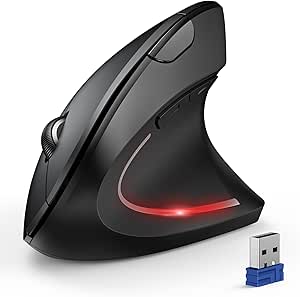 | Best for Switching Between Computers | Connectivity: Bluetooth 5.0/3.0 and 2.4 GHz USB-A receiver | Device connections: Up to 3 | DPI levels: 800, 1200, 1600, 2400, 3200, 4800 | VIEW ON AMAZON | See Our Full Breakdown |
| ProtoArc EM11 NL Rechargeable Wireless Ergonomic Vertical Mouse |  | Best for Smaller Hands | Model: EM11 NL | Connectivity: Dual Bluetooth and 2.4 GHz USB-A receiver | Maximum connected devices: 3 | VIEW ON AMAZON | See Our Full Breakdown |
| JYKEYMOUT Rechargeable Wireless Vertical Mouse with Bluetooth and 2.4 GHz |  | Best for Switching Between Two Devices | Connectivity: Bluetooth 5.2/3.0 and 2.4 GHz USB receiver | Device connections: Up to 2 devices | Design: Right-handed vertical | VIEW ON AMAZON | See Our Full Breakdown |
| Anker 2.4 GHz Wireless Vertical Ergonomic Mouse |  | Best for a Simple Wireless Setup | Connectivity: 2.4 GHz wireless via USB receiver | Tracking: Optical | DPI: 800, 1200, or 1600 | VIEW ON AMAZON | See Our Full Breakdown |
| TECKNET Wireless Vertical Ergonomic Mouse |  | Best for Quiet, Adjustable Tracking | Connectivity: 2.4 GHz wireless via USB-A receiver | Wireless range: Up to 49 ft | DPI settings: 800, 1600, 2400, 3200, and 4800 | VIEW ON AMAZON | See Our Full Breakdown |
| Uineer Ergonomic Wireless Vertical Mouse with Tri-Mode Connectivity |  | Best for Three-Device Workflows | Connectivity: Bluetooth 5.0, Bluetooth 4.0, and 2.4 GHz USB receiver | Device switching: Up to 3 devices | Weight: 105 g | VIEW ON AMAZON | See Our Full Breakdown |
| TECKNET Ergonomic Wireless Vertical Mouse, 4800 DPI |  | Best for Small to Medium Hands | Ergonomic angle: 52° | Connection: 2.4 GHz wireless via USB receiver | DPI settings: 800, 1600, 2400, 3200, and 4800 | VIEW ON AMAZON | See Our Full Breakdown |
| POJTK Rechargeable Wireless Vertical Ergonomic Mouse |  | Best for Flexible Connectivity | Design: Right-handed vertical, 58-degree angle | Connectivity: Bluetooth 5.3 and 2.4 GHz wireless | Receivers: USB-A and USB-C | VIEW ON AMAZON | See Our Full Breakdown |
| Logitech MX Vertical Wireless Ergonomic Mouse, Graphite |  | Best for a Defined Grip | Model: Logitech MX Vertical | Type: Wireless ergonomic mouse | Vertical angle: 57° | VIEW ON AMAZON | See Our Full Breakdown |
| Logitech Lift Vertical Ergonomic Wireless Mouse, Graphite |  | Best for Smaller Hands | Hand orientation: Right-handed | Recommended hand size: Small to medium | Vertical angle: 57° | VIEW ON AMAZON | See Our Full Breakdown |
| Lekvey Rechargeable Wireless Vertical Ergonomic Mouse |  | Best for Simple Setup | Connectivity: 2.4 GHz wireless via nano USB receiver | DPI settings: 800, 1200, and 1600 | Battery: Rechargeable; over 150 hours of continuous use per charge | VIEW ON AMAZON | See Our Full Breakdown |
| TECKNET Ergonomic Wireless Vertical Mouse with Bluetooth and USB-A Receiver |  | Best for Multi-Device Switching | Connectivity: Bluetooth 5.0/3.0 and 2.4 GHz via USB-A receiver | Device switching: Up to 3 devices | Design: Right-handed vertical, 52° angle; for small to medium hands | VIEW ON AMAZON | See Our Full Breakdown |
| ergonomic mice for carpal tunnel | Connectivity | Buttons | Battery | Compatibility |
|---|---|---|---|---|
| seenda MOU-302 Wireless Blueto | Bluetooth and 2.4 GHz USB receiver | 7 | Built-in 500 mAh; USB-C rechargeable | Windows, macOS, iOS/iPadOS, Android, Chrome OS |
| Anker Wired Vertical Ergonomic | USB wired | 5 | — | — |
| TECKNET 2.4G Wireless Ergonomi | 2.4 GHz wireless via USB-A receiver | 6, including forward and back side buttons | 2 AAA batteries; not included | Windows 11/10/8/7/XP/Vista and Linux |
| TECKNET Ergonomic Wireless Ver | Bluetooth 5.0/3.0 and 2.4 GHz USB-A receiver | 6 | 2 AAA batteries; not included | Windows, Mac, Chrome, Linux |
| ProtoArc EM11 NL Rechargeable | Dual Bluetooth and 2.4 GHz USB-A receiver | — | 500 mAh rechargeable Li-Ion | Windows 8 or higher, Mac OS X 10.12 or higher, Android 4.3 or higher |
| JYKEYMOUT Rechargeable Wireles | Bluetooth 5.2/3.0 and 2.4 GHz USB receiver | 6 silent buttons | — | Windows, Mac, Chrome, Linux, and Android |
| Anker 2.4 GHz Wireless Vertica | 2.4 GHz wireless via USB receiver | 5, including next and previous controls | — | — |
| TECKNET Wireless Vertical Ergo | 2.4 GHz wireless via USB-A receiver | Includes forward and back side buttons | — | — |
| Uineer Ergonomic Wireless Vert | Bluetooth 5.0, Bluetooth 4.0, and 2.4 GHz USB receiver | Silent left and right buttons; forward and back navigation buttons | 500 mAh rechargeable | Windows, macOS, Chrome OS, and Linux |
| TECKNET Ergonomic Wireless Ver | — | — | — | Windows 11/10/8/7/XP and Mac OS X 10.4 |
| POJTK Rechargeable Wireless Ve | Bluetooth 5.3 and 2.4 GHz wireless | 6 silent buttons; forward/back shortcuts unsupported on macOS | Rechargeable; stated use of 1–3 months per charge | — |
| Logitech MX Vertical Wireless | — | — | — | — |
| Logitech Lift Vertical Ergonom | Bluetooth Low Energy or Logi Bolt USB receiver | 4 customizable buttons | 1 × AA; up to 24 months | — |
| Lekvey Rechargeable Wireless V | 2.4 GHz wireless via nano USB receiver | — | Rechargeable; over 150 hours of continuous use per charge | Windows 2000/XP/Vista/7/8/10, Linux, and Mac OS |
| TECKNET Ergonomic Wireless Ver | Bluetooth 5.0/3.0 and 2.4 GHz via USB-A receiver | 6 | 600 mAh rechargeable; up to 2 months | Windows, macOS, Android, Chrome OS, Linux, and iOS |
More Details on Our Top Picks
seenda MOU-302 Wireless Bluetooth Ergonomic Vertical Mouse with Volume Control
The seenda MOU-302 suits right-handed users who want a vertical grip and a way to switch among three devices without pairing a separate mouse to each one. Its Bluetooth and 2.4 GHz connections cover a mix of computers and mobile devices, while the volume knob adds a control the other picks here do not offer. Compared with the wired Anker Vertical Mouse, it gives you more placement freedom and broader listed compatibility, but needs charging and costs you the reliability of a cable-free battery routine. The three DPI settings are a simpler range than the TECKNET 4800 DPI models provide, which may suit ordinary office navigation better than fine-grained sensitivity tuning. Its handshake shape may reduce wrist rotation for some users, but no mouse can guarantee relief from carpal tunnel symptoms. It is right-hand only, and the advertised two-month battery life depends on use.
Pros:- Vertical grip is designed to support a more neutral wrist and forearm position.
- Can connect to up to three devices over Bluetooth or a 2.4 GHz receiver.
- USB-C rechargeable battery avoids routine AAA replacement.
- Volume control knob and quiet clicks add useful desk controls.
Cons:- Right-handed shape excludes left-handed users.
- Three DPI settings offer less sensitivity choice than the TECKNET 4800 DPI options.
- Wireless use depends on keeping the battery charged.
Best for: Right-handed users who move between up to three computers or mobile devices and want rechargeable wireless connectivity.
Not ideal for: Left-handed users, or anyone who wants a wired mouse, extensive DPI steps, or silent scrolling and every button.
- Connectivity:Bluetooth and 2.4 GHz USB receiver
- Device connections:Up to 3
- DPI:1000, 1600, or 2400
- Buttons:7
- Battery:Built-in 500 mAh; USB-C rechargeable
- Advertised battery life:Up to 2 months
- Hand orientation:Right-handed
- Compatibility:Windows, macOS, iOS/iPadOS, Android, Chrome OS
Our verdict“Choose the seenda if you are right-handed, switch among several devices, and want a rechargeable vertical mouse with extra audio control.”
Anker Wired Vertical Ergonomic Mouse
The Anker Wired Vertical Ergonomic Mouse is the straightforward pick for someone who wants a vertical grip without pairing devices or managing batteries. Its USB cable and two DPI settings keep setup simple, and forward and back buttons make browser navigation easier during long desk sessions. Compared with the wireless seenda MOU-302, the Anker gives up multi-device switching and flexible placement, but it never needs charging. Its listed compatibility is narrower than seenda’s, with Linux and Windows 10 specified, so Mac buyers should check support before choosing it. The product data calls it ambidextrous, an unusual claim for a vertical mouse, so hand fit deserves particular attention. The shape is intended to reduce wrist rotation; it is not a medical treatment, and the cable may be inconvenient if your desk has limited port access.
Pros:- Wired USB connection needs no battery charging or replacement.
- Vertical shape is designed to support a handshake wrist position.
- Two DPI settings provide basic tracking adjustment.
- Forward and back buttons simplify page navigation.
Cons:- The 4.9-foot cable limits placement flexibility.
- Listed operating system compatibility is limited to Linux and Windows 10.
- Only two DPI settings are specified.
Best for: Budget-conscious Windows 10 or Linux users who keep one computer at a fixed desk and prefer a cable over battery upkeep.
Not ideal for: People who switch among devices, need broad listed compatibility, or have a desk layout where a cable restricts mouse movement.
- Connectivity:USB wired
- Tracking:Optical
- DPI:1000 or 1600
- Buttons:5
- Cable length:4.9 ft (1.5 m)
- Dimensions:120 × 62.8 × 74.8 mm
- Weight:5.3 oz
- Hand orientation:Ambidextrous (as listed)
Our verdict“Pick the Anker if you want a no-battery vertical mouse for a fixed Windows 10 or Linux workstation.”
TECKNET 2.4G Wireless Ergonomic Vertical Mouse, 4800 DPI
Among these five, this TECKNET 2.4G vertical mouse offers the widest DPI range: five settings from 800 to 4800. That gives users more control over cursor speed than the Anker Wired Vertical Mouse, which has two settings, and can help tailor pointer movement to different screens or work styles. It connects through a USB-A receiver and includes forward and back buttons, but unlike the multi-device TECKNET Bluetooth and 2.4 GHz model, it has no listed Bluetooth connection or device switching. The long stated wireless range matters less for ordinary desk use than the required receiver port: USB-C-only computers may need an adapter. It runs on two AAA batteries that are not included. Its recommended hand measurements make fit worth checking, and its side buttons are not compatible with Mac systems.
Pros:- Five DPI settings span 800 to 4800 for adjustable pointer speed.
- Vertical shape is intended to support a more natural forearm position.
- Quiet clicks suit shared workspaces.
- Forward and back buttons aid navigation on compatible systems.
Cons:- Two AAA batteries are required and are not included.
- Requires a USB-A port or an adapter for USB-C-only computers.
- Side buttons are not compatible with Mac systems.
Best for: Right-handed Windows or Linux users who want several pointer-speed settings and have a USB-A port available.
Not ideal for: Mac users who rely on side buttons, left-handed users, or people who need Bluetooth or multi-device switching.
- Connectivity:2.4 GHz wireless via USB-A receiver
- DPI settings:800, 1600, 2400, 3200, 4800
- Buttons:6, including forward and back side buttons
- Hand orientation:Right-handed
- Battery:2 AAA batteries; not included
- Average battery life:6 months
- Compatibility:Windows 11/10/8/7/XP/Vista and Linux
- Recommended palm length:6.7–8.3 in (17–21 cm)
Our verdict“Choose this TECKNET if you want finer cursor-speed control than the Anker provides and can use its USB-A receiver.”
TECKNET Ergonomic Wireless Vertical Mouse, 4800 DPI, Bluetooth and 2.4 GHz, 3-Device Connectivity
This TECKNET Bluetooth and 2.4 GHz model is the stronger fit for someone who uses several computers: it can connect to up to three devices, while the single-receiver TECKNET 2.4G model cannot. Six DPI steps let you adjust cursor speed more finely than the seenda MOU-302 offers, though both provide multi-device connections and a right-handed vertical grip. The flexibility comes with a small maintenance cost: it uses two AAA batteries, which are not included, while seenda has a rechargeable battery. Its 33-foot wireless range is ample for desk setups, but does not change the right-hand-only fit. The side buttons are not compatible with macOS, so Mac users who depend on forward and back navigation lose part of the control set. The vertical shape may feel unfamiliar at first.
Pros:- Connects to up to three devices through Bluetooth or a 2.4 GHz receiver.
- Six DPI levels provide more cursor-speed choices than the seenda MOU-302.
- Vertical design is intended to reduce wrist rotation.
- Quiet left and right clicks suit shared spaces.
Cons:- Requires two AAA batteries, which are not included.
- Right-handed design does not suit left-handed users.
- Side buttons are not compatible with macOS.
Best for: Right-handed users who regularly switch among Windows, Mac, Chrome, or Linux devices and want both Bluetooth and receiver connectivity.
Not ideal for: Left-handed users, Mac users who need side-button navigation, or anyone who prefers a rechargeable mouse.
- Connectivity:Bluetooth 5.0/3.0 and 2.4 GHz USB-A receiver
- Device connections:Up to 3
- DPI levels:800, 1200, 1600, 2400, 3200, 4800
- Buttons:6
- Hand orientation:Right-handed
- Battery:2 AAA batteries; not included
- Wireless range:33 feet
- Compatibility:Windows, Mac, Chrome, Linux
Our verdict“Pick this TECKNET over the single-receiver model if you are right-handed and need to switch among several computers.”
ProtoArc EM11 NL Rechargeable Wireless Ergonomic Vertical Mouse
The ProtoArc EM11 NL earns its place for users whose hands measure under 7.5 inches long. That fit guidance makes it a more targeted choice than the general right-handed TECKNET Bluetooth model, which lists no recommended hand size. ProtoArc pairs its compact fit with three-device connectivity and a rechargeable battery, so it competes with the seenda MOU-302 on multi-device convenience without adding a volume knob. Its 1000, 1600, and 2400 DPI settings are adequate for routine work but give less range than TECKNET’s 4800 DPI models. Expect an adjustment period of one to two weeks as your hand adapts to the vertical grip. Also note that the cable is for charging only, the receiver is USB-A, and its scroll wheel and side buttons are not silent.
Pros:- Hand-length guidance makes it easier for smaller-handed users to assess fit.
- Supports up to three devices over Bluetooth and a 2.4 GHz USB-A receiver.
- Rechargeable 500 mAh battery uses USB-C.
- Three DPI settings and quiet main clicks cover everyday office use.
Cons:- May take one to two weeks to get used to the vertical shape.
- Back and forward buttons do not work with Mac OS.
- Scroll wheel and back/forward buttons are not silent.
Best for: Right-handed users with hands under 7.5 inches who want a rechargeable vertical mouse for up to three devices.
Not ideal for: Users with larger hands, Mac users who rely on side buttons, or anyone who expects silent scrolling and navigation buttons.
- Model:EM11 NL
- Connectivity:Dual Bluetooth and 2.4 GHz USB-A receiver
- Maximum connected devices:3
- Battery:500 mAh rechargeable Li-Ion
- Charging port:USB-C; cable is for charging only
- DPI levels:1000, 1600, 2400
- Recommended hand length:Under 7.5 in (19.05 cm)
- Compatibility:Windows 8 or higher, Mac OS X 10.12 or higher, Android 4.3 or higher
Our verdict“Choose the ProtoArc if your hand is under 7.5 inches and you want rechargeable multi-device use in a compact fit.”
JYKEYMOUT Rechargeable Wireless Vertical Mouse with Bluetooth and 2.4 GHz
The JYKEYMOUT suits a right-handed buyer who wants a vertical grip and regularly moves between two computers. Its Bluetooth and 2.4 GHz connections let you switch between devices with a button, while the rechargeable USB-C battery avoids the AAA replacements required by the Anker and TECKNET wireless vertical mice. The three DPI settings cover ordinary office work, and the quiet buttons are a practical fit for shared spaces. Its carpal tunnel appeal is the vertical shape, which encourages a less rotated hand position; it cannot guarantee pain relief, and some users need time to adapt. The tradeoffs are the wake-up press after power saving and Mac limits: the back and forward buttons do not work on macOS. Choose it over the Uineer if two-device switching is enough; the Uineer can connect to three.
Pros:- Vertical shape encourages a more neutral hand position
- Switches between Bluetooth and 2.4 GHz connections for two devices
- Rechargeable through USB-C
- Quiet buttons and three adjustable DPI settings
Cons:- Back and forward buttons are not compatible with macOS
- Must press a key to wake from power-saving mode
- Right-handed shape may not suit left-handed users
Best for: Right-handed office users who alternate between two computers and want a rechargeable vertical mouse with quiet clicks
Not ideal for: Mac users who rely on side navigation buttons, or buyers who need three-device switching
- Connectivity:Bluetooth 5.2/3.0 and 2.4 GHz USB receiver
- Device connections:Up to 2 devices
- Design:Right-handed vertical
- DPI:1000, 1200, or 1600
- Buttons:6 silent buttons
- Charging:Rechargeable USB-C
- Estimated battery life:About 1–3 months per charge, depending on use
- Compatibility:Windows, Mac, Chrome, Linux, and Android
Our verdict“Choose the JYKEYMOUT if you want a rechargeable vertical mouse for two devices and can accept its macOS button limits.”
Anker 2.4 GHz Wireless Vertical Ergonomic Mouse
The Anker 2.4 GHz Vertical Mouse is a straightforward option for right-handed users who want to try a vertical shape without managing Bluetooth pairing or rechargeable-battery routines. Its USB receiver provides a single wireless connection, and DPI choices of 800, 1200, and 1600 let users adjust pointer speed to their desk and screen. The next and previous buttons make browsing convenient, though the clicks are audible. Compared with the rechargeable JYKEYMOUT, this Anker uses replaceable AAA batteries and has fewer connection options; that simplicity may suit a dedicated desktop but is less flexible for switching between devices. The stated power-saving mode starts after eight minutes idle. Allow time to adapt to the vertical grip, and skip this model if quiet operation or included batteries matter to you.
Pros:- Vertical design encourages a less rotated wrist and forearm position
- Three DPI settings support different pointer-speed preferences
- Next and previous buttons aid webpage browsing
- Power-saving mode activates after eight minutes of inactivity
Cons:- Requires two AAA batteries, which are not included
- Clicks are audible
- Uses only one 2.4 GHz receiver connection
Best for: Right-handed desktop users who want a basic receiver-based vertical mouse and do not need Bluetooth or quiet clicks
Not ideal for: People who share quiet workspaces, want a rechargeable mouse, or regularly switch between computers
- Connectivity:2.4 GHz wireless via USB receiver
- Tracking:Optical
- DPI:800, 1200, or 1600
- Buttons:5, including next and previous controls
- Hand orientation:Right-handed
- Dimensions:120 × 62.8 × 74.8 mm
- Power:2 AAA batteries, not included
- Wireless range:5 m
Our verdict“Pick the Anker for a simple, single-computer vertical setup if audible clicks and replaceable batteries are acceptable.”
TECKNET Wireless Vertical Ergonomic Mouse
For buyers who want more pointer-speed choices than the Anker provides, the TECKNET Wireless Vertical Ergonomic Mouse offers five settings from 800 to 4800 DPI. That range can help users tune cursor movement to their screen and work style, while its quiet clicks are better suited to shared offices than the Anker’s audible buttons. Its vertical form is intended to put the hand in a more natural position, though changing grip can take one to two weeks. This model connects through a USB-A receiver and runs on two AAA batteries; unlike the rechargeable JYKEYMOUT, it cannot switch between Bluetooth and receiver connections. Mac users should also note that its side buttons are unsupported. The purple-to-green finish may appeal to some, but the practical choice comes down to receiver compatibility, hand comfort, and whether you need side controls.
Pros:- Five DPI settings from 800 to 4800
- Quiet clicks suit shared workspaces
- Vertical shape is designed to encourage a more natural wrist and arm position
- Auto-sleep feature and stated battery life of up to six months
Cons:- Requires two AAA batteries
- Side buttons are not supported on Mac
- Vertical grip may take one to two weeks to get used to
Best for: Right-handed users who want quiet clicks and several pointer-speed options through a USB-A receiver
Not ideal for: Mac users who depend on back and forward buttons, or people who need Bluetooth or a rechargeable battery
- Connectivity:2.4 GHz wireless via USB-A receiver
- Wireless range:Up to 49 ft
- DPI settings:800, 1600, 2400, 3200, and 4800
- Power:2 AAA batteries
- Stated battery life:Up to 6 months
- Auto-sleep:After 8 minutes
- Buttons:Includes forward and back side buttons
- Mac limitation:Side buttons are not supported
Our verdict“Choose this TECKNET if quiet operation and a broad DPI range matter more than Bluetooth or Mac side-button support.”
Uineer Ergonomic Wireless Vertical Mouse with Tri-Mode Connectivity
The Uineer Tri-Mode Vertical Mouse is the most flexible connection pick in this group: Bluetooth 5.0, Bluetooth 4.0, and a 2.4 GHz receiver support switching among up to three devices. That makes it a better fit than the two-device JYKEYMOUT for people who move between a work computer, personal laptop, and another compatible device. Its rechargeable 500 mAh battery, USB-C charging, silent buttons, and four DPI settings round out a useful office setup. The 105 g weight may feel substantial to users who prefer a light mouse, and RGB lighting adds little to the carpal tunnel use case. As with other vertical mice, its shape is a change in grip rather than a treatment, and the maker notes an adaptation period of one to two weeks. Battery duration also depends on use.
Pros:- Connects to and switches among up to three devices
- Bluetooth and 2.4 GHz receiver connection modes
- Rechargeable through USB-C
- Silent buttons and four adjustable DPI settings
Cons:- At 105 g, it may feel heavy to users who prefer a lighter mouse
- Battery life depends on usage and no duration is specified here
- Vertical design may take one to two weeks to adapt to
Best for: Right-handed multi-device users who want a rechargeable vertical mouse with three connection choices
Not ideal for: Buyers who prefer a lightweight mouse, dislike RGB lighting, or need a product with a stated battery duration
- Connectivity:Bluetooth 5.0, Bluetooth 4.0, and 2.4 GHz USB receiver
- Device switching:Up to 3 devices
- Weight:105 g
- DPI:800, 1200, 1600, or 2400
- Battery:500 mAh rechargeable
- Charging:USB-C; approximately 2 hours
- Buttons:Silent left and right buttons; forward and back navigation buttons
- Compatibility:Windows, macOS, Chrome OS, and Linux
Our verdict“Choose the Uineer if three-device switching is your priority and you are comfortable with a heavier vertical mouse.”
TECKNET Ergonomic Wireless Vertical Mouse, 4800 DPI
This 52° TECKNET vertical mouse has a stated fit for small to medium hands, giving it a clearer audience than the TECKNET model with the purple-to-green finish, whose supplied details do not specify a hand-size range. The angled grip is designed to encourage a handshake-like position, while five DPI settings and quiet main clicks let users tailor pointer movement and reduce noise at a shared desk. It connects through a 2.4 GHz receiver, so it is simpler than the Bluetooth-equipped JYKEYMOUT but cannot pair directly with multiple devices. Its forward and back buttons do not work on Mac OS, and those buttons are not silent. For carpal tunnel concerns, the vertical shape may suit someone trying to reduce wrist rotation, but fit and comfort are personal; the dimensions and hand-size guidance are worth checking before choosing.
Pros:- 52° vertical angle encourages a handshake-like hand position
- Stated fit for small to medium hands
- Five DPI settings, including 4800 DPI
- Quiet main clicks and wireless range up to 32 ft
Cons:- Forward and back buttons are not supported on Mac OS
- Forward and back buttons are not silent
- Uses a 2.4 GHz USB receiver without Bluetooth connectivity
Best for: Small to medium-handed users seeking a vertical grip, quiet main clicks, and receiver-based wireless connection
Not ideal for: Mac users who rely on forward and back buttons, or people who need Bluetooth and multi-device switching
- Ergonomic angle:52°
- Connection:2.4 GHz wireless via USB receiver
- DPI settings:800, 1600, 2400, 3200, and 4800
- Wireless range:Up to 32 ft
- Size:4.13 × 2.55 in
- Hand size:Small to medium
- Compatibility:Windows 11/10/8/7/XP and Mac OS X 10.4
- Mac limitation:Forward and back buttons are not supported
Our verdict“Pick this TECKNET if you have small to medium hands and want a vertical mouse with quiet main clicks and adjustable tracking.”
POJTK Rechargeable Wireless Vertical Ergonomic Mouse
The POJTK suits someone who wants a vertical grip without being tied to one kind of connection: it pairs over Bluetooth 5.3 or 2.4 GHz, with both USB-A and USB-C receivers included. Its 58-degree angle is close to the Logitech Lift’s 57 degrees, while the POJTK adds six silent buttons and a wider range of DPI settings. That flexibility can help when moving between computers or adjusting pointer speed for different tasks. The tradeoff is less tailored hand sizing information than the Lift provides, and its forward and back buttons do not work on macOS. Battery life is stated as one to three months depending on use, so it is less predictable than the Lift’s one-AA claim of up to 24 months.
Pros:- Bluetooth and 2.4 GHz connectivity, with USB-A and USB-C receivers
- Five DPI settings from 800 to 4800
- Six silent buttons
- Rechargeable battery with stated use of one to three months per charge
Cons:- Forward and back buttons do not work on macOS
- Battery life varies with usage
- Right-handed design limits use for left-handed buyers
Best for: Right-handed users who switch between newer USB-C laptops and USB-A computers and want quiet clicks.
Not ideal for: Mac users who rely on side navigation buttons, or buyers who want a clearly specified fit for smaller hands.
- Design:Right-handed vertical, 58-degree angle
- Connectivity:Bluetooth 5.3 and 2.4 GHz wireless
- Receivers:USB-A and USB-C
- DPI:800, 1600, 2400, 3200, or 4800
- Buttons:6 silent buttons; forward/back shortcuts unsupported on macOS
- Battery:Rechargeable; stated use of 1–3 months per charge
- Weight:3.84 oz
- Dimensions:4.81 × 2.31 in
Our verdict“Choose the POJTK if you want quiet vertical control and flexible connections across USB-A, USB-C, and Bluetooth devices.”
Logitech MX Vertical Wireless Ergonomic Mouse, Graphite
The Logitech MX Vertical is the choice here for buyers who want a shaped grip with clear contact points: its 57-degree angle, textured surface, and thumb rest guide the hand into a handshake-like hold. Logitech describes the design as intended to reduce wrist pressure and muscular activity, which may appeal to someone seeking a different posture during desk work; it is not a treatment for carpal tunnel. Compared with the Lift, the MX Vertical has a 4000 DPI sensor and cursor-speed switch, but the supplied details do not specify the Lift’s small-to-medium hand fit, quiet clicks, or long battery claim. The vertical shape can also take time to learn, and the listed data gives no connectivity or battery specifics for buyers who prioritize those details.
Pros:- 57-degree vertical angle intended to support a handshake position
- Textured surface and thumb rest provide defined hand contact
- 4000 DPI sensor with an instant cursor-speed switch
Cons:- Vertical shape may take time to get used to
- Provided product details do not specify battery life or wireless connectivity
- No hand-size guidance is included in the supplied specifications
Best for: Right-handed desk workers who want a sculpted vertical grip, thumb rest, and quick cursor-speed adjustment.
Not ideal for: Buyers who need confirmed battery and connection details before choosing, or who prefer a familiar flat mouse shape.
- Model:Logitech MX Vertical
- Type:Wireless ergonomic mouse
- Vertical angle:57°
- Sensor resolution:4000 DPI
- Tracking feature:Instant cursor-speed switch
- Grip:Textured rubber surface and thumb rest
- Color:Graphite
- Packaging:FSC-certified paper
Our verdict“Pick the MX Vertical if a defined thumb-supported grip and cursor-speed switch matter more to you than documented battery or connection details.”
Logitech Lift Vertical Ergonomic Wireless Mouse, Graphite
The Logitech Lift is the clearest fit in this group for small to medium hands, a useful distinction when a larger vertical mouse feels hard to reach across. Its 57-degree angle, thumb rest, and textured grip support a more upright hold, while quiet clicks and the SmartWheel make it suited to shared workspaces. Compared with the larger-grip Lekvey, the Lift is more explicit about hand sizing and offers Bluetooth or Logi Bolt connectivity; the Lekvey instead uses a simple USB receiver and is recommended for medium or large hands. The Lift’s one-AA battery is rated for up to 24 months, but some features require Logi Options+ software, and right-handed buyers are its intended audience. A vertical shape may also take adjustment.
Pros:- Designed for small to medium hands
- 57-degree vertical angle, textured grip, and thumb rest
- Quiet clicks and SmartWheel scrolling
- Bluetooth or Logi Bolt connectivity with up to 24 months from one AA battery
Cons:- Right-handed design only
- Some features require Logi Options+ software
- Vertical shape may take time to get used to
Best for: Right-handed users with small or medium hands who want quiet operation and Bluetooth or Logi Bolt pairing.
Not ideal for: Left-handed users, people with large hands seeking a roomy grip, or buyers who do not want optional software-dependent features.
- Hand orientation:Right-handed
- Recommended hand size:Small to medium
- Vertical angle:57°
- Tracking resolution:4000 DPI, adjustable
- Connectivity:Bluetooth Low Energy or Logi Bolt USB receiver
- Buttons:4 customizable buttons
- Battery:1 × AA; up to 24 months
- Dimensions:108 × 70 × 71 mm
Our verdict“Choose the Lift if you have small to medium hands and want a quiet vertical mouse with flexible wireless pairing.”
Lekvey Rechargeable Wireless Vertical Ergonomic Mouse
The Lekvey keeps the setup straightforward: plug in its included 2.4 GHz USB receiver and choose from three DPI settings. Its vertical shape is intended to support a neutral wrist and arm position, and the stated 150-plus hours of continuous use per charge gives buyers a concrete battery figure. Compared with the Logitech Lift, Lekvey is aimed at medium or large hands and skips Bluetooth, customizable features, and the Lift’s long stated AA battery life. That simpler approach may suit a single-computer desk, but the lower ceiling of 1600 DPI offers less pointer-speed range than the POJTK or Lift. The listed adjustment period of three to five days is another practical factor: the new grip may not feel natural right away.
Pros:- USB receiver enables plug-and-play 2.4 GHz connection
- Rechargeable battery rated for over 150 hours of continuous use
- Three DPI settings and browser navigation buttons
- Recommended for medium or large hands
Cons:- May take three to five days to adjust to the vertical grip
- No Bluetooth connectivity is specified
- DPI range tops out at 1600
Best for: Medium- or large-handed users who want a rechargeable vertical mouse with plug-and-play USB setup for one computer.
Not ideal for: Small-handed buyers, people who need Bluetooth or multi-device switching, or users who want higher DPI settings.
- Connectivity:2.4 GHz wireless via nano USB receiver
- DPI settings:800, 1200, and 1600
- Battery:Rechargeable; over 150 hours of continuous use per charge
- Recommended hand size:Medium or large
- Dimensions:5.0 × 3.0 × 2.5 in
- Included accessories:USB receiver, 150 cm Type-C charging cable, and user manual
- Compatibility:Windows 2000/XP/Vista/7/8/10, Linux, and Mac OS
- Warranty:36-month manufacturer’s warranty
Our verdict“Choose the Lekvey if you want a simple rechargeable USB mouse sized for medium or large hands and can accept a short adjustment period.”
TECKNET Ergonomic Wireless Vertical Mouse with Bluetooth and USB-A Receiver
The TECKNET vertical mouse makes the most sense for someone who regularly moves between up to three devices: it supports Bluetooth 5.0/3.0 and 2.4 GHz through a USB-A receiver. Its 52-degree angle is less steep than the 57-degree Logitech Lift and 58-degree POJTK, which gives this model a distinct, less upright option within the lineup. It also has quiet clicks, six buttons, and adjustable DPI up to 4800. The fit is specified for right-handed small to medium hands, unlike the medium-to-large Lekvey. Its rechargeable battery is stated to last up to two months, though that is shorter and less generous than the Lift’s up-to-24-month AA claim. Mac users should also note that forward and back buttons are unavailable.
Pros:- Switches among up to three devices using Bluetooth or a USB-A receiver
- 52-degree vertical design offers a less steep angle than the Lift
- Six buttons, adjustable DPI up to 4800, and quiet clicks
- USB-C rechargeable battery with stated use of up to two months
Cons:- Forward and back buttons are unavailable on Mac
- Right-handed design for small to medium hands limits fit options
- Battery-life claim is shorter than the Lift’s stated maximum
Best for: Right-handed small- or medium-handed users who switch among several Bluetooth and USB-A devices.
Not ideal for: Left-handed buyers, users with large hands, or Mac users who rely on forward and back buttons.
- Connectivity:Bluetooth 5.0/3.0 and 2.4 GHz via USB-A receiver
- Device switching:Up to 3 devices
- Design:Right-handed vertical, 52° angle; for small to medium hands
- Buttons:6
- DPI:6 levels, 800–4800
- Battery:600 mAh rechargeable; up to 2 months
- Charging:USB-C; approximately 1.5 hours
- Compatibility:Windows, macOS, Android, Chrome OS, Linux, and iOS
Our verdict“Pick this TECKNET if multi-device switching and a less steep vertical angle fit your setup and hand size.”

How We Picked
I ranked these mice by how directly their design can support a more relaxed, neutral grip, then weighed practical fit factors: size, button placement, and how difficult each option may be to adapt to. I also compared connection types, device switching, charging or battery needs, and whether extra controls add useful flexibility or unnecessary complexity. Those details shape day-to-day use more than a high DPI figure by itself.
The Logitech MX Vertical ranks first for buyers seeking a premium, feature-rich vertical mouse; the Lift offers a clearer fit choice for smaller hands. Simpler wired and wireless models rank well for straightforward setups, while multi-device and rechargeable options suit buyers with specific desk needs. Similar TECKNET listings are treated as separate choices because their stated connectivity and feature sets differ. Product descriptions alone cannot establish medical benefit, and individual comfort varies, so fit and return terms matter.
Factors to Consider When Choosing Ergonomic Mice For Carpal Tunnel
Choosing a mouse for carpal tunnel concerns takes more than picking the steepest angle or the longest feature list. I would start with the way your hand rests, then check whether the mouse fits your work routine and whether you can adapt without increasing discomfort.
Start With Hand Fit, Not the Most Dramatic Angle
A vertical mouse can reduce the amount of forearm rotation some people use, but its size and shape decide whether that position feels relaxed. If your fingers reach or stretch for the main buttons, the grip may create a new source of tension. Compare the mouse dimensions with your hand, and look for a shape that lets your palm rest without forcing your wrist sideways. Small-handed buyers may find the Logitech Lift more approachable than the larger MX Vertical. A larger hand may prefer a fuller body, but size alone does not predict comfort. When fit is uncertain, favor a seller with a clear return window.
Plan for an Adjustment Period
Moving from a conventional mouse to a vertical grip changes how your hand aims and clicks. Early cursor errors can tempt buyers to grip harder, which defeats the purpose of trying a more relaxed posture. Give yourself short sessions and low-pressure tasks while you learn the movement. Avoid switching during a deadline-heavy week if precise pointing is central to your work. If discomfort increases or symptoms persist, stop relying on a mouse change as the solution and seek advice from a qualified clinician. The aim is a comfortable work setup, not pushing through pain.
Choose Connectivity Around Your Desk
A wired model like the Anker removes battery and pairing decisions, making it a sensible fit for a fixed workstation. Wireless mice reduce cable drag and suit laptops, but check whether the connection uses Bluetooth, a USB receiver, or both. Multi-device support can be useful when you move between a work computer and a personal device. It also adds switching steps and can be wasted complexity if you use only one computer. Before choosing a tri-mode model, confirm your computer has the ports or Bluetooth support it needs. Include receiver storage and charging access in your desk plan.
Treat DPI as a Setup Tool
A large DPI range describes cursor sensitivity options, not ergonomic quality or medical benefit. Higher sensitivity can reduce how far you move the mouse across a desk, but it may also make precise work harder until you adjust the setting. Start at a moderate speed and change it gradually to match your screen size and pointer habits. A comfortable setup should let you move the cursor without clenching or lifting your shoulder. Button placement and smooth tracking matter more than a headline DPI number for many everyday tasks. Look for controls you can reach without shifting your grip.
Balance Charging and Battery Maintenance
Rechargeable models reduce disposable battery changes, but they still need charging at a time that does not interrupt work. A replaceable-battery mouse can be easier to keep running if you already keep spares at your desk. Consider how often you use the mouse and whether a low-battery warning is visible or easy to miss. Silent clicks may help in shared spaces, yet button feel can be more important if you spend hours selecting and dragging. Extra buttons also require finger movement, so they are useful only when their placement feels natural. Favor the maintenance routine you are likely to follow.
Know When to Pay for Refinement
A premium model makes more sense when you will use its controls, build, or device switching every day. If you only want to try a vertical grip, a simpler model can let you learn whether the shape suits you before investing in extra features. Do not pay more solely for a medical-sounding label or a claim that a mouse cures carpal tunnel. Check warranty terms, software compatibility, and whether settings require an app. For shared or restricted computers, onboard controls and basic plug-and-play use may be more practical than software-dependent customization. The best spend is the one that solves a real fit or workflow problem.
Frequently Asked Questions
Can an ergonomic vertical mouse cure carpal tunnel syndrome?
No mouse can be presented as a cure for carpal tunnel syndrome. A vertical design may feel more comfortable for some users by changing hand and forearm position, but results vary and the condition can have causes beyond mouse posture. If you have numbness, tingling, weakness, or persistent pain, consult a qualified clinician rather than treating a mouse as medical care. You may also need changes to breaks, keyboard placement, or workload. Choose a mouse based on comfort and fit, and stop using it if symptoms worsen.
Should I choose the Logitech MX Vertical or Logitech Lift?
Choose between them first by hand size and preferred feel. The Lift is the more compact option and may suit smaller hands, while the MX Vertical is the premium alternative for buyers who want a fuller mouse with a richer control set. The MX Vertical may be a poor fit if your fingers have to stretch to reach its buttons. The Lift may feel too small if you prefer a broader palm support. If possible, compare dimensions and buy from a seller with a clear return policy.
Is a wired mouse a better choice if I have wrist discomfort?
A cable does not make a mouse inherently more comfortable, but a wired model removes battery charging and wireless pairing. That simplicity can help at a fixed workstation, where the cable stays out of your hand’s path. If the cable pulls or catches, it can add drag that you may compensate for by gripping more firmly. Wireless models provide more placement freedom, though they need charging or battery changes. Choose based on whether cable management or power maintenance is the bigger annoyance in your setup.
Do I need Bluetooth and multi-device switching?
You need those features only if they solve a real part of your routine. Bluetooth can avoid using a USB receiver, while multi-device switching helps when one mouse serves more than one computer. For a single desktop, a simpler 2.4 GHz receiver or wired connection may be easier to manage. Check compatibility with your computer and whether switching controls are easy to reach without changing your grip. Extra modes can add setup choices without improving comfort.
How long should I give a vertical mouse before deciding if it suits me?
There is no fixed adjustment period that works for everyone. Start with short sessions and ordinary tasks, then extend use if your hand stays comfortable and control improves. Avoid forcing a full-day switch when you are still learning the movement. If you grip harder, feel new pain, or notice worsening symptoms, stop and reassess the fit. A return window can make it easier to judge comfort without committing to a shape that does not work for your hand.
Conclusion
For the strongest all-around feature set, I would start with the Logitech MX Vertical, provided its larger shape fits your hand. The TECKNET wireless models are the value-oriented choices for buyers comparing basic wireless use with Bluetooth or multi-device needs; check the exact listing because the names overlap. If you are new to vertical mice, the Anker Wired Vertical Mouse offers a straightforward way to try the grip without managing wireless power. For smaller hands, the Logitech Lift is the clearest fit-focused pick. Choose the ProtoArc EM11 NL, Uineer, or POJTK when rechargeable power or multiple connection options match a specific desk setup. In every case, let comfort, hand fit, and symptom response guide the final choice.