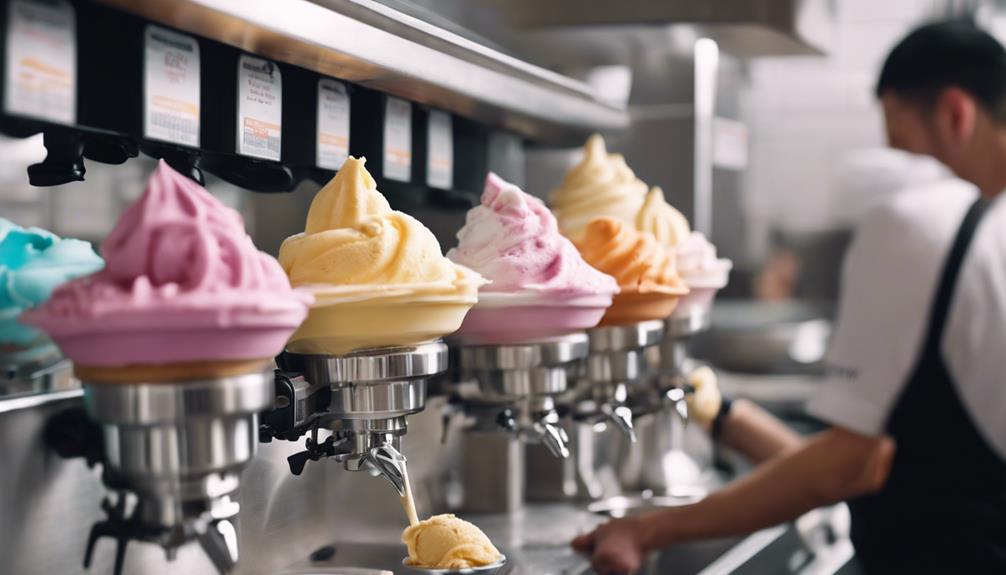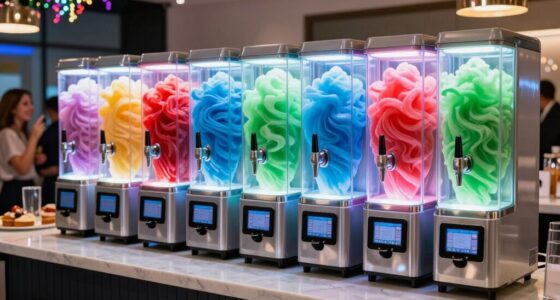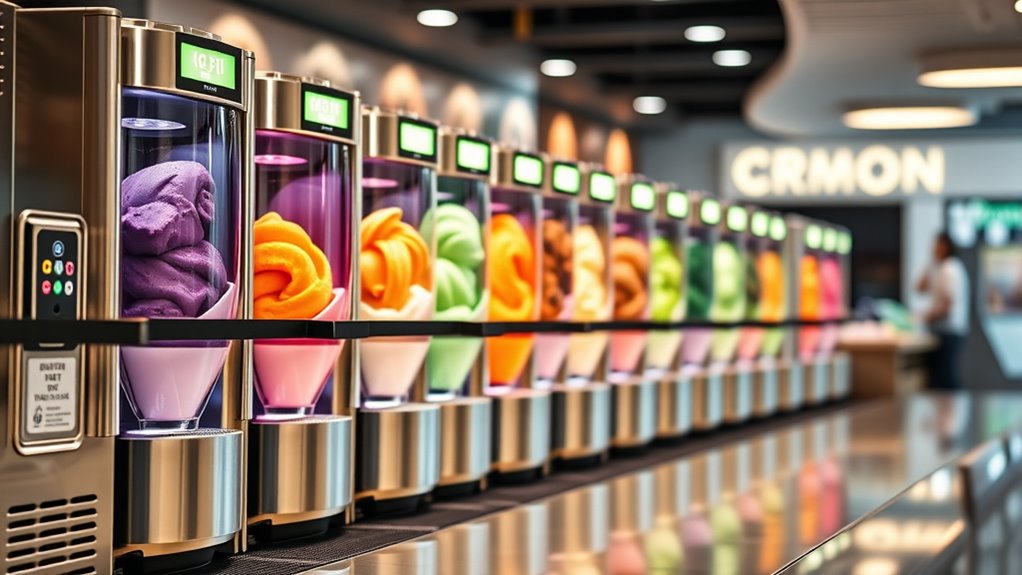
A commercial frozen yogurt machine has to balance daily output capacity, hopper size, footprint, and cleaning workload — and those priorities pull against each other at every price point. The GSEICE 3-Flavor Floor-Standing Dual System earns the best overall spot for buyers running a dedicated froyo or ice cream counter, thanks to its high throughput and dual independent systems that keep service running if one side goes down. If counter space is tight, the Kolice 5-Flavor Countertop (3+2 Mix) delivers unusual flavor variety in a compact body, while the VEVOR 10.6 QT/H Single-Flavor Touch Screen is the simplest entry point for small cafés adding froyo as a secondary item. The main tradeoff in this category is versatility versus simplicity: more flavors and heads mean more hoppers to refill, more parts to sanitize, and a bigger electrical demand. Keep reading for the full breakdown of all 13 machines and which one matches your volume, space, and power situation.

Get baking supplies delivered free with Prime
- Fast, free delivery on millions of items
- Prime Video, Amazon Music and more included
- Member-only deals all year
Complete the kit


Key Takeaways
- Hopper capacity matters more than headline output: machines rated 20–28 L/h with dual 6L hoppers can sustain busy service, while 4L-hopper models run dry quickly during rush hours.
- Auto clean and night pre-cooling (featured on the 3-Head model and the Kolice 7-Flavour) cut daily labor dramatically — the biggest hidden cost difference between these picks.
- Countertop versus floor-standing is really a power-and-volume decision: every floor-standing and 7-flavor unit here demands 220V/3800W-class circuits that many small shops cannot supply.
- VEVOR dominates the budget-to-mid tier with three distinct entries, but they differ sharply — the 10.6 QT/H single-flavor is a starter machine, while the 22–30 L/h dual-hopper model handles real shop traffic.
- Flavor-mixing capability (twist and 3+2 or 4+3 combinations) is the strongest premium differentiator, letting small hopper counts produce menu variety without extra machines.


| commercial frozen yogurt machine | Hopper capacity | Power | Material |
|---|---|---|---|
| VEVOR Commercial Soft Serve Ic | 2 × 6 L | 2200 W | Stainless steel |
| Commercial Soft Serve Ice Crea | 2 × 6 L | 2450 W | — |
| Commercial Soft Serve Ice Crea | 4 L | — | 304 stainless steel |
| Kolice Commercial Countertop S | 3 × 7 L | 2300 W | — |
| PEIXU YKF-8228H Commercial Sof | 2 × 1.6 gallons (6 L each) | 2200 W | 304 stainless steel |
| 3 Head Commercial Soft Serve I | 2 × 1.85 gal (7 L) | 2450 W | 304 stainless steel |
| VEVOR Commercial Soft Serve Ic | 2 × 6 L | — | Stainless steel; SUS304 hoppers and cylinders |
| GSEICE Commercial Soft Serve I | 2 × 6 L | — | — |
| Arsupen Commercial 2+1 Flavor | — | 2200 W | — |
| Kolice Commercial Heavy Duty 7 | — | 3800 W | — |
| Commercial Countertop Soft Ser | 8L Total (4L x 2) | 1800W | 304 Stainless Steel |
| VEVOR Commercial Soft Serve Ic | Two 4L / 1.1 Gal hoppers | — | SUS201 body, SUS304 cylinder |
| VEVOR Commercial Soft Serve Ic | 4L (4.2 Qt) | 1000W | SUS201 body, SUS304 cylinder |
More Details on Our Top Picks
VEVOR Commercial Soft Serve Ice Cream Machine, 20–28 L/h, 3 Flavors
For a shop that wants two distinct frozen yogurt flavors and a twist option, this VEVOR’s 2+1 dispensing setup makes the menu easy to vary without adding a second machine. Its stated 20–28 L/h output targets steady commercial service, while agitation and pre-cooling help manage the mix between servings. Compared with the countertop Commercial Soft Serve Ice Cream Machine, 4 L Hopper, it offers two hoppers and three dispensing choices, but takes a freestanding footprint. One-touch cleaning and adjustable hardness reduce routine operating steps, though they do not remove the need for regular sanitation. The first batch takes 13–17 minutes, so operators should allow startup time before opening or a rush. It suits established cafés better than small counters where floor space is scarce.
Pros:- Two 6 L hoppers support two flavors and a combined serving
- Stated output of 20–28 L/h suits steady commercial service
- Hopper agitation and pre-cooling support mix consistency
- One-touch self-cleaning and hardness adjustment simplify operation
Cons:- Freestanding design needs dedicated floor space
- First batch takes 13–17 minutes to freeze
Best for: Cafés and frozen yogurt shops that want two base flavors plus a twist option and have room for a freestanding unit
Not ideal for: Small kiosks or operators who need a compact countertop machine or immediate first servings
- Production capacity:20–28 L/h
- Flavors:2 single flavors plus 1 combined flavor
- Hopper capacity:2 × 6 L
- Power:2200 W
- First batch freeze time:13–17 minutes
- Subsequent batch time:3–5 minutes
- Material:Stainless steel
Our verdict“Choose this VEVOR if flavor choice and stated throughput matter more than a compact footprint.”
Commercial Soft Serve Ice Cream Machine, 20–28 Qt/H, 2450W, Dual 6L Hoppers
This EKway ABQL-8218 is built around a high-output, dual-hopper service setup: it offers two individual flavors and a mixed option, with a stated yield of 20–28 quarts per hour. Its LCD panel includes pre-cooling and one-touch cleaning, while casters can help reposition the machine during setup. That mobility has limits, since the unit weighs 234 pounds and measures nearly 56 inches across. Compared with the lighter PEIXU YKF-8228H, this model provides cylinder capacity details and food-grade 304 stainless steel, but its dimensions call for a planned, mostly permanent station. The listed 12-month maintenance warranty may matter to operators budgeting for service support. Buyers should confirm the available counter or floor area and the machine’s power requirements before choosing it.
Pros:- Two 6 L hoppers provide two single flavors and one mixed option
- LCD controls include pre-cooling and one-touch cleaning
- Casters allow repositioning during setup
- Food-grade 304 stainless steel construction
Cons:- At 234 pounds, it is difficult to move despite its casters
- Its 55.9-inch listed length requires substantial installation space
Best for: Food-service operators with a dedicated service line who need dual flavors, mixed servings, and stated commercial throughput
Not ideal for: Mobile vendors or small cafés that need to move equipment often or have limited floor space
- Yield:20–28 quarts per hour
- Power:2450 W
- Hopper capacity:2 × 6 L
- Cylinder capacity:2 L
- Flavors:2 single flavors plus 1 mixed flavor
- Dimensions:55.9 × 24.8 × 22.6 inches
- Weight:234 pounds
- Warranty:12-month maintenance
Our verdict“Pick the EKway for a planned, high-volume service station with room for a large, heavy machine.”
Commercial Soft Serve Ice Cream Machine, 4 L Hopper
For a smaller operation that wants commercial-style controls in a countertop format, this model pairs a 4 L hopper with stated production of 10–20 L per hour. Its LCD touchscreen lets operators adjust serving size, hardness, and temperature, giving more control over portions and texture than the straightforward presets described for the VEVOR 20–28 L/h machine. Pre-cooling and automatic cleaning modes add useful operating support, though neither substitutes for routine cleaning. The smaller hopper and 1.6 L freezer tank make this a different fit from dual-hopper machines: buyers get a smaller counter unit, but no listed multi-flavor setup. A 12-minute first freeze also means it needs startup lead time. It makes more sense for a focused menu or lower-volume site than for a shop serving several flavors at once.
Pros:- Countertop format avoids a freestanding installation
- Touchscreen adjusts serving size, hardness, and temperature
- Pre-cooling and automatic cleaning modes are included
- Stated output reaches 10–20 L per hour
Cons:- Single 4 L hopper does not provide the multi-flavor choice of dual-hopper models
- First batch takes about 12 minutes to freeze
Best for: A café or food-service counter that wants touchscreen control and a single-hopper commercial soft serve setup
Not ideal for: Busy shops that need multiple flavors available simultaneously or the higher stated output of dual-hopper options
- Hopper capacity:4 L
- Freezer tank capacity:1.6 L
- Production capacity:10–20 L per hour
- First batch freeze time:12 minutes
- Subsequent batch time:6 minutes or less
- Operating ambient temperature:41–95°F (5–35°C)
- Material:304 stainless steel
Our verdict“Choose this model for a countertop soft serve station where touchscreen controls matter more than offering several flavors.”
Kolice Commercial Countertop Soft Serve Ice Cream Machine (5 Flavors, 3+2 Mix)
The Kolice stands apart in this group by offering three pure flavors and two mixed combinations, which gives a shop more menu variety from one machine than the two-hopper VEVOR or PEIXU. Three 7 L hoppers also provide substantially more mix storage than the 4 L countertop model, while refrigerated upper tanks are described as keeping mix fresh overnight. Its stated 11 gallons per hour production capacity and auto-washing features point toward sustained service, and ETL certification is a relevant equipment specification for commercial buyers. The tradeoff is a substantial countertop installation: at 235 pounds and roughly 24 inches wide by 31.5 inches high, it needs a sturdy, clear work area. The extra flavor range makes sense only if the menu and staffing can support it.
Pros:- Three hoppers provide three pure flavors and two mixed combinations
- Three 7 L hoppers offer generous mix capacity
- Refrigerated upper tanks are designed for overnight mix storage
- ETL certified, with auto-washing and touch controls
Cons:- 235-pound weight requires a sturdy counter and planned installation
- Its size and multi-flavor capacity may be excessive for a limited menu
Best for: Frozen yogurt counters with enough space and demand to use three base flavors and two mixed combinations
Not ideal for: Small operators with a narrow menu, limited counter strength, or a need to move the machine frequently
- Production capacity:11 gallons per hour
- Hopper capacity:3 × 7 L
- Cylinder capacity:3 × 1.5 L
- Flavor combinations:3 pure flavors and 2 mixed combinations
- Power:2300 W
- Dimensions:24.41 × 23.62 × 31.5 inches
- Weight:235 pounds
- Certification:ETL
Our verdict“Choose the Kolice when five flavor choices will serve a real menu need and the counter can support its size.”
PEIXU YKF-8228H Commercial Soft Serve Ice Cream Machine
The PEIXU combines dual 1.6-gallon hoppers with two single flavors and a mixed serving, so it covers the core menu of the EKway ABQL-8218 in a notably lighter listed package. At 57.8 pounds, its universal casters make it more plausible to reposition between service areas than the EKway, which weighs 234 pounds. It also lists a 2200 W compressor, pre-cooling, and automatic cleaning, making it a feature-rich choice for a busy shop. The stated output of 5.3–7.4 gallons per hour is substantial, but should not be directly equated with the VEVOR’s liters-per-hour figure without consistent measurement conditions. Its 32-by-28-inch footprint still demands room, and the listed weight and dimensions warrant confirming installation plans before delivery.
Pros:- Two 1.6-gallon hoppers serve two flavors and a mixed option
- Casters support repositioning within a venue
- LCD panel includes pre-cooling and automatic self-cleaning
- 304 stainless steel construction
Cons:- 32 × 28 × 32-inch dimensions require substantial counter or floor space
- Listed 57.8-pound weight still calls for care during initial setup
Best for: Food trucks, event caterers, and shops that need dual flavors and may reposition the machine within a service area
Not ideal for: Tiny counters or operators expecting a truly portable unit that can be lifted and moved routinely
- Power:2200 W
- Production capacity:5.3–7.4 gallons per hour
- Hopper capacity:2 × 1.6 gallons (6 L each)
- Flavors:2 single flavors and 1 mixed flavor
- Material:304 stainless steel
- Refrigerant:R410a
- Weight:57.8 pounds
- Dimensions:32 × 28 × 32 inches
Our verdict“The PEIXU suits operators who want a dual-flavor commercial setup that is easier to reposition than the heavier EKway.”
3 Head Commercial Soft Serve Ice Cream Machine with Auto Clean & Night Pre-Cooling
The night pre-cooling feature gives this three-head machine a useful distinction for businesses that keep mix chilled between shifts, while its stated output of 22–30 L/h targets steady service. Compared with the Arsupen Commercial 2+1 Flavor Countertop Soft Serve Ice Cream Machine, it offers the same three dispensing options and a similar stated production range, but adds overnight cooling and casters for moving the unit. The two 7 L hoppers support a larger mix reserve than Arsupen’s listed 6 L hoppers. That capacity and the one-button cleaning function can help during busy days, though cleaning still needs to fit the operator’s food-safety routine. Its 2450 W draw and large footprint call for adequate electrical capacity and counter space.
Pros:- Three dispensing heads serve two flavors and a combined option.
- Night pre-cooling helps keep mix chilled between shifts.
- One-button auto-clean function simplifies the cleaning routine.
- Four casters, including two with brakes, aid repositioning.
Cons:- 2450 W power draw may require planning for electrical capacity.
- Large footprint can crowd a compact service counter.
Best for: Restaurants and bars with overnight operating routines that need three flavor options and wheeled mobility.
Not ideal for: Small cafés with limited counter space or operators seeking a lower-power countertop unit.
- Power:2450 W
- Production rate:5.8–7.9 gal/h (22–30 L/h)
- Hopper capacity:2 × 1.85 gal (7 L)
- Material:304 stainless steel
- Flavor heads:3
- Controls and features:Touch LCD, auto-clean, night pre-cooling, puffing function
- Mobility:4 casters, 2 with brakes
- Color:White
Our verdict“Choose this machine if overnight mix cooling and mobile three-flavor service matter more than counter space and power use.”
VEVOR Commercial Soft Serve Ice Cream Maker, 22–30 L/h, Dual 6 L Hoppers
The shortage alerts make this VEVOR a practical choice for teams that need a prompt when mix is running low, and the listed 22–30 L/h output puts it in the same throughput band as the three-head machine with night pre-cooling. Its dual 6 L hoppers and two 2 L cylinders support two single flavors plus a twist, while the pre-cooling, thawing, and self-cleaning controls bring several routine tasks onto the LCD panel. Compared with the GSEICE Commercial Soft Serve Ice Cream Machine, it is a countertop option rather than a floor-standing machine, but its listed dimensions still make it a substantial piece of equipment. The specification sheet also gives a serving estimate; actual output can vary with operating conditions, so buyers should treat it as a planning figure.
Pros:- Shortage alerts help staff track ingredient refills.
- Produces two single flavors and a mixed flavor.
- Pre-cooling, one-click thawing, and self-cleaning are included.
- SUS304 hoppers and cylinders are specified for food-contact parts.
Cons:- Listed dimensions require substantial countertop space.
- The 22–30 L/h figure is a stated capacity, not a guarantee of service output.
Best for: Food-service teams that want mix-level prompts and touchscreen controls for a two-flavor-plus-twist menu.
Not ideal for: Small counters or buyers who need independent systems to scale operation by demand.
- Yield:22–30 L/h
- Hopper capacity:2 × 6 L
- Freezing cylinder capacity:2 × 2 L
- Flavor options:2 single flavors and 1 mixed flavor
- Serving estimate:150–200 servings/h at 100 g per serving
- Dimensions:29.3 × 21.3 × 34 in
- Material:Stainless steel; SUS304 hoppers and cylinders
- Controls and features:LCD panel, pre-cooling, one-click thawing, self-cleaning, shortage alerts
Our verdict“Pick this VEVOR if shortage alerts and automated routine controls suit your workflow and you have room for its large countertop body.”
GSEICE Commercial Soft Serve Ice Cream Machine – 3 Flavor, Dual System, Floor Standing
The independent dual systems are the main reason to choose this GSEICE: separate compressors and displays let an operator run one side at quieter times and both during a rush. Its stated 32–42 L/h output is higher than the 22–30 L/h listed for the VEVOR Commercial Soft Serve Ice Cream Maker, 22–30 L/h, Dual 6 L Hoppers, making this a stronger fit for venues expecting heavier demand. It serves two single flavors and a twist from two 6 L hoppers, and its air-cooled 115 V design does not require a water line. The tradeoff is its floor-standing footprint and hands-on sanitation: wash-assist can support the process, but food-contact parts still need daily manual cleaning and sanitizing.
Pros:- Independent systems allow one-sided operation when demand is lower.
- Stated 32–42 L/h output suits higher-volume service.
- Air-cooled design requires no water line.
- Pre-cooling and night mode support daily operating routines.
Cons:- Floor-standing installation takes more space than a countertop model.
- Food-contact parts still require daily manual cleaning and sanitizing.
- Warranty excludes damage from improper installation, misuse, and normal wear parts.
Best for: Busy cafés, hotels, and restaurants that want to operate one freezing system at low demand and both during peaks.
Not ideal for: Small venues that lack floor space or buyers expecting wash-assist to replace manual sanitation.
- Voltage:115 V
- Cooling system:Air-cooled
- Output rate:32–42 L/h
- Hopper capacity:2 × 6 L
- Freezing cylinder capacity:2 × 1.6 L
- Flavor options:3: 2 single flavors and 1 twist
- Installation:Floor-standing
- Water line:Not required
Our verdict“Choose the GSEICE for higher stated output and flexible independent operation if your site can accommodate a floor-standing machine and daily manual cleaning.”
Arsupen Commercial 2+1 Flavor Countertop Soft Serve Ice Cream Machine
For a café or snack bar seeking a countertop 2+1 flavor setup, the Arsupen pairs two single flavors with a twist through three dispensing levers. Its stated 5.8–7.9 gal/h capacity matches the range listed for the three-head machine with night pre-cooling, but Arsupen specifies a 7-inch touchscreen and 6 L hoppers. Compared with that model, it has no listed night pre-cooling or caster mobility, so its case rests more on straightforward touchscreen control and its countertop format. The automatic self-cleaning function may reduce routine effort, while mix and ambient temperatures can affect output. Its 2200 W draw is lower than the other machine’s 2450 W, though that difference alone does not establish total operating cost.
Pros:- Two single flavors and a twist provide menu flexibility.
- Seven-inch touchscreen offers a clear control interface.
- Automatic self-cleaning can reduce routine maintenance effort.
- Stainless steel hoppers and copper-wound motor are specified.
Cons:- Mix and ambient temperatures can affect output.
- No night pre-cooling feature is listed.
- 2200 W power draw still requires electrical planning.
Best for: Cafés, snack bars, and food trucks that need three flavor choices with touchscreen controls.
Not ideal for: Operators who need overnight pre-cooling, larger listed hoppers, or independently running systems.
- Power:2200 W
- Voltage:115 V
- Capacity:5.8–7.9 gal/h
- Hopper size:2 × 1.6 gal (6 L)
- Flavor options:2 single flavors and 1 twist
- Control interface:7-inch touchscreen
- Materials and motor:Stainless steel hoppers; copper-wound motor
- Cleaning:Automatic self-cleaning function
Our verdict“Pick Arsupen if touchscreen operation and a three-choice menu suit your counter service, and overnight cooling is not a requirement.”
Kolice Commercial Heavy Duty 7‑Flavour Soft Serve Ice Cream Machine with Upper Tank Refrigeration, 4+3 Mixed Frozen Yogurt, Auto Counting, 110V 3800W
With seven standard flavors plus three mixed options, this Kolice is the lineup’s clearest fit for a venue building a broad frozen yogurt menu. Its four 7 L hoppers give it much more mix storage than the two-hopper GSEICE Commercial Soft Serve Ice Cream Machine, and refrigerated upper tanks are intended to keep mixture chilled overnight. The tradeoff is scale: at 210 kg and over 52 inches tall, it needs a dedicated floor position, while its 3800 W draw is substantially higher than the smaller three-flavor machines. Auto counting and automatic washing add useful operational support, but they do not erase the space, power, and maintenance planning this equipment demands. The included mold tools also suit operators who want more serving shapes, rather than a simple standard cone-only setup.
Pros:- Seven standard flavors and three mixed options support a broad menu.
- Four 7 L hoppers provide substantial mix capacity.
- Refrigerated upper tanks support overnight mix storage.
- Auto counting, automatic washing, and mold tools add operational flexibility.
Cons:- At 210 kg, it is difficult to reposition and needs a dedicated floor location.
- Its large dimensions take substantial floor space.
- 3800 W power draw requires significant electrical planning.
Best for: High-volume frozen yogurt shops and large venues that need several base flavors, mixed options, and varied serving shapes.
Not ideal for: Small cafés, mobile vendors, or operators without dedicated floor space and capacity for a 3800 W machine.
- Power:3800 W
- Voltage:110 V, 60 Hz
- Production capacity:17 gal/h
- Hopper size:4 × 7 L
- Cylinder size:4 × 1.5 L
- Flavor options:7 standard flavors plus 3 mixed options
- Dimensions:32.28 × 26.97 × 52.76 in
- Net weight:210 kg (460 lb)
- Controls and included tools:4.3-inch touchscreen, auto counting, automatic washing, 7 standard and 4 specialty molds
Our verdict“Choose this Kolice for a large frozen yogurt menu and high stated output if your venue can support its size, weight, and power needs.”
Commercial Countertop Soft Serve Ice Cream Machine, 3 Flavors, 5.3-7.4 Gal/H, 1800W
For shops that want menu variety without a floor-standing unit, this machine carves out a clear middle ground. The three dispensing handles — two singles plus a twist — put it ahead of the VEVOR 10.6 QT/H single-flavor model for customer choice, while its 20-28 L/h output rivals larger units like the VEVOR 22-30 L/h dual-hopper machine. The pre-cooling system is the standout here: mix stays cold in the hoppers overnight, which cuts waste and morning startup time — something the Arsupen 2+1 countertop model doesn’t match at this footprint. Compared with the Kolice 7-flavour unit, it sacrifices flavor count but costs far less counter space and power.
The tradeoff is real, though: 1800W of draw can strain older circuits, and two 4L hoppers mean more frequent refills during peak service than the dual 6L hoppers on higher-output rivals.
Pros:- Three dispensing options including a mixed twist flavor
- Pre-cooling keeps mix fresh and shortens morning startup
- 304 stainless steel throughout for durability and sanitation
- Fast subsequent batches in under 6 minutes
Cons:- 1800W power draw may require a dedicated circuit and raises energy costs
- Relatively small 4L x 2 hoppers demand frequent reloading at peak times
Best for: Cafes and snack shops that want a twist option and two standalone flavors in a countertop footprint
Not ideal for: High-volume stores needing long unattended runs — the 8L total hopper capacity requires frequent refills during rushes
- Capacity:5.3-7.4 Gal/H (20-28 L/H)
- Hopper Capacity:8L Total (4L x 2)
- Flavors:3 (2 Single + 1 Mixed)
- Power:1800W
- Material:304 Stainless Steel
- Freeze Time:25 min initial, <6 min subsequent
- Operating Temperature:41-95°F (5-35°C)
Our verdict“This is the pick for operators who see flavor variety as a selling point but can’t justify a multi-flavor floor unit.”
VEVOR Commercial Soft Serve Ice Cream Machine 21 QT/H
This VEVOR machine earns its spot by balancing throughput against price and usability. Its 15-minute initial freeze beats the 3-flavor 1800W unit’s 25-minute startup, so the first cone of the day arrives faster — a small difference that matters during morning rushes. The LCD panel with auto-clean simplifies the nightly wash cycle, one of the most tedious parts of soft serve ownership, and the elevated body design means less stooping during long shifts. Compared with the PEIXU YKF-8228H and other dual-hopper rivals, it matches the two-flavor-plus-twist format at a lower typical price point.
The compromises are worth understanding: SUS201 stainless on the body is less corrosion-resistant than the full 304 construction on the 1800W 3-flavor machine, and the 5-32°C operating window means hot kitchens without air conditioning can throttle output in summer.
Pros:- Fast 15-minute initial freeze gets service started quickly
- LCD control panel with timer and auto-clean reduces daily labor
- Continuous serving capability handles steady customer flow
- SUS304 freezing cylinder where it matters most
Cons:- SUS201 body steel is less corrosion-resistant than full 304 builds
- Output can suffer in ambient temperatures above 32°C
Best for: First-time shop owners who want dual-flavor output and modern controls at the lowest practical cost
Not ideal for: Operators in hot climates or un-air-conditioned kitchens — output drops when ambient temps exceed 32°C
- Yield:20L / 5.3 Gal per hour
- Hopper Capacity:Two 4L / 1.1 Gal hoppers
- Initial Freeze Time:15 minutes
- Subsequent Batch Time:6 minutes or less
- Material:SUS201 body, SUS304 cylinder
- Operating Temperature:5 to 32°C (41 to 89.6°F)
- Control Panel:LCD with timer and auto-clean
Our verdict“The smart budget play for a dual-flavor countertop machine, provided your kitchen stays cool.”
VEVOR Commercial Soft Serve Ice Cream Machine, 10.6 QT/H, 1000W, Single Flavor, Touch Screen, Stainless Steel
Not every frozen yogurt operation needs to dispense twist cones all day. This single-flavor VEVOR machine makes the most sense for small stalls, food trucks, and topping-bar concepts where one base flavor plus toppings is the business model. At 1000W, it draws roughly half the power of the 1800W 3-flavor unit, which matters when a truck’s electrical system or a shared circuit is the limiting factor. The touch screen with auto-clean and pre-cooling gives it the same convenience features as VEVOR’s larger 21 QT/H model, just scaled down. Compared with the basic 4L-hopper entry-level machines in this roundup, it offers faster recovery — under 6 minutes between batches — so a lunch rush doesn’t grind to a halt.
The obvious limitation: one flavor only. If your menu depends on variety, the 3-flavor 1800W machine is the better investment from day one.
Pros:- Low 1000W power draw suits trucks and shared circuits
- Touch screen with auto-clean and pre-cooling simplifies daily operation
- Sub-6-minute recovery keeps pace with rushes
- Compact countertop footprint fits tight stalls
Cons:- Single flavor limits menu variety versus dual and multi-flavor machines
- 10.6 QT/H output is modest for high-traffic locations
Best for: Food trucks, kiosks, and topping-focused shops running one base flavor on limited power
Not ideal for: Cafes wanting flavor variety — the single cylinder caps menu flexibility no matter how good the toppings are
- Brand:VEVOR
- Model:BQL-9200ST
- Power:1000W
- Capacity:10.6 QT/H (10L/H)
- Hopper Capacity:4L (4.2 Qt)
- Cylinder Capacity:1.6L
- Material:SUS201 body, SUS304 cylinder
- Freeze Time:15 min initial, <6 min subsequent
- Installation:Countertop, single flavor
Our verdict“The right entry point if one great flavor is your concept — undersized for anyone with a multi-flavor menu.”

How We Picked
I ranked these machines on four buyer-facing criteria. Daily output capacity came first, because a machine that cannot keep up with rush-hour demand becomes the bottleneck of the whole business — I favored models with realistic sustained output over inflated peak ratings. Hopper size and refill logistics came second, since larger hoppers mean fewer interruptions during service and less mix waste at closing. Third, I weighed cleaning and maintenance burden: models with auto-clean cycles, night pre-cooling, and accessible parts ranked above machines that require full manual teardown after every use. Finally, I considered power requirements and footprint, because the best machine on paper is useless if your shop’s electrical panel or counter layout cannot support it.
The ranking logic follows a simple arc: high-throughput, feature-complete machines with redundancy (like the GSEICE dual system) sit at the top; versatile mid-tier machines with strong value fill the middle; and compact single-flavor units rank lower for full shops but earn clear placement as beginner or secondary-item picks. Where two machines look similar on paper — the three VEVOR entries, for example — I differentiated them by hopper configuration, controls, and realistic buyer fit rather than stacking them together.
Factors to Consider When Choosing Commercial Frozen Yogurt Machine
Beyond the individual machines above, there are category-wide decisions that will shape whether any purchase succeeds. These are the factors I would settle before comparing a single spec sheet.Match Output to Your Real Peak, Not Your Average
Manufacturers rate output in liters or quarts per hour, but those figures usually assume ideal mix temperature and continuous operation. A machine rated 20–28 L/h will realistically serve a steady stream of customers, yet a lunch-rush spike can still outrun it if the hopper runs low or the mix warms up. The common mistake is buying for average daily sales instead of the busiest 90 minutes of the day — that is when long lines cost you customers permanently. A useful rule of thumb: take your target cones or cups per peak hour, and buy roughly 30 percent more capacity than that. Also remember that recovery time between batches varies by compressor strength, which the spec sheet rarely reveals; machines with stronger compressors and night pre-cooling bounce back faster after heavy draws.
Countertop or Floor-Standing: Decide Before You Shop
This decision drives everything else — power, budget, and placement. Countertop units in this roundup typically run on standard 110V circuits and fit shops adding froyo to an existing menu, but their smaller hoppers and single compressors limit sustained volume. Floor-standing machines like the GSEICE and the Kolice 7-Flavour demand dedicated high-amperage circuits, often requiring an electrician before installation day — a cost buyers routinely forget to budget. Measure your doorway and floor path too, because some floor units will not fit through a standard 36-inch door without disassembly. If you expect to move the machine seasonally or relocate the shop, a countertop model avoids that logistical headache entirely. The mistake I see most often is buying a floor unit for a space that only has counter service, forcing an awkward and slow workflow.
Electrical Supply Is a Hard Constraint
Several machines in this category — especially the 3800W seven-flavor units and dual-system floor models — require 220V power that smaller retail spaces simply do not have installed. Upgrading a panel can cost more than the machine itself, so check your electrical capacity before falling in love with a high-output model. A 1000W single-flavor unit like the compact VEVOR can plug into a standard outlet, which is exactly why it suits startups testing demand. Also confirm whether the machine needs a dedicated circuit or can share one; soft serve compressors draw heavy startup current that trips shared breakers. If your venue is a mobile cart, farmers market stall, or rented kiosk, low-wattage models may be your only realistic option. Buying on capacity alone and discovering the power problem at delivery is the most expensive error in this category.
Cleaning Labor Is Your Biggest Ongoing Cost
Health codes generally require full breakdown and sanitation of soft serve components daily, which can take 45 minutes to over an hour per machine on models without automation. Over a year, that labor adds up to far more than the price gap between a basic and a feature-rich unit. Auto-clean cycles, as found on the 3-Head model and Kolice 7-Flavour, do not replace full teardown but cut the nightly routine substantially. Night pre-cooling also matters for a different reason: it lets you store mix in the hopper overnight safely instead of dumping product daily, reducing mix waste — often a shop’s largest consumable expense. When comparing two similar machines, I would pay meaningfully more for the one with better cleaning ergonomics. Ask any vendor specifically which parts must be removed daily and whether spare seals and o-rings are easy to source.
Flavor Count Versus Operational Simplicity
More hoppers and heads look great on a menu board, but every additional flavor means another hopper to fill, refrigerate, and sanitize nightly. A 3+2 mix machine gives you five menu items from a compact body, but only if your staff keeps all hoppers stocked and fresh — an empty hopper mid-service is worse than not offering the flavor at all. Twist and combination dispensing is the smart middle ground: two base flavors plus a twist gives customers perceived variety with only two hoppers to manage. New operators consistently over-buy flavor count in year one and regret the maintenance load. My honest advice: start with two or three flavors, track what actually sells for a quarter, and expand only if the data supports it.
Air Pumps, Overrun, and Product Quality
A detail buried in most listings is whether the machine uses an air pump or gravity feed. Air-pump machines inflate the mix with controlled air (called overrun), producing a lighter, creamier product and better margins — you sell more air and less mix. Gravity-fed machines, common on budget countertop units, produce a denser product and slightly higher per-serving mix cost but are simpler to maintain with fewer failure points. For a premium froyo shop where texture drives repeat business, an air-pump model pays for itself in product consistency. For a self-serve or secondary-menu application, gravity feed keeps things running with less that can break. This single distinction often explains price differences of hundreds of dollars between machines that otherwise look identical on spec sheets.
Frequently Asked Questions
Can I make frozen yogurt in a machine labeled as a soft serve ice cream machine?
Yes — nearly every machine in this roundup handles frozen yogurt, because froyo and soft serve run through the same freezing and dispensing process. The difference is entirely in the mix you pour: frozen yogurt mix is a cultured, lower-fat base, while soft serve uses a cream-heavy blend. Some machines, like the Kolice 7-Flavour, explicitly market mixed frozen yogurt capability, but any machine with a functioning cylinder refrigeration system will freeze a yogurt base correctly. What you should verify is the machine’s ability to hold the mix at safe refrigerated temperature in the hopper, since yogurt bases are more temperature-sensitive than cream mixes. If a listing specifies viscosity or mix-type requirements, follow those guidelines for best texture.
How much frozen yogurt does a 20–28 L/h machine actually produce per serving?
At that rating, you are looking at roughly 80–110 standard 4-ounce servings per hour under continuous operation, which comfortably covers a small shop’s steady traffic. In practice, real-world output runs lower than the sticker number because hopper refills, mix temperature, and ambient heat all slow production. The bigger constraint is usually hopper capacity, not hourly output: a dual 6L hopper setup holds about 100 servings of mixed product before refilling, while a 4L single hopper may need topping up every 30–40 minutes during a rush. If your peak hour regularly exceeds 80 servings, buy toward the top of the output range or choose a dual-system machine that can keep running on one side during a malfunction.
Is a single-flavor machine a false economy for a frozen yogurt shop?
It depends entirely on your concept. For a café or restaurant adding froyo alongside other offerings, a single-flavor unit like the 1000W VEVOR keeps costs and cleaning low, and one well-made vanilla or tart flavor plus toppings can satisfy most customers. For a dedicated frozen yogurt business, single flavor is a genuine handicap — customers expect at least a chocolate-vanilla-twist trio, and a machine like the Arsupen 2+1 or a three-flavor model covers that baseline. The economy question is also about electrical fit: many small venues can only run a low-wattage single-flavor machine anyway. My suggestion for uncertain buyers is to start with a two-or-three flavor machine rather than the extremes, since it preserves menu flexibility without the maintenance load of five or seven hoppers.
Do I really need auto clean and night pre-cooling features?
You can legally operate without them, but the daily labor and product waste math usually favor having both once you serve more than a few dozen customers per day. Auto clean cycles flush the cylinders with water or sanitizer, cutting the nightly teardown from an hour to roughly 20–30 minutes of labor — multiply that by 365 days and the feature effectively pays for itself within the first year. Night pre-cooling is even more financially significant, because it keeps mix safely refrigerated in the hopper overnight instead of forcing you to dump product at close. On machines without it, daily mix disposal can waste several liters of product, which adds up faster than most owners expect. If your budget forces a choice, I would take night pre-cooling over auto clean, since waste reduction usually outweighs labor savings in dollar terms.
What electrical setup do I need before one of these machines arrives?
Check three things before ordering: voltage, amperage, and circuit dedication. Smaller countertop units around 1000–1800W generally run on a standard 110V outlet, though even those perform best on a dedicated circuit because compressor startup draws a surge of current. The mid-range 2450W dual-hopper machines and the 3800W seven-flavor units typically require 220V power, which means a licensed electrician installing a dedicated circuit — often the largest hidden cost in a soft serve purchase. Failure to plan this means the machine arrives and sits unusable for weeks. Also confirm your breaker panel has spare capacity; older commercial buildings sometimes cannot add a 220V circuit without a panel upgrade, which can cost more than the machine itself.
Conclusion
After comparing all 13 machines, the right choice comes down to what kind of operation you are running. For the best overall pick, the GSEICE 3-Flavor Floor-Standing Dual System offers the throughput and redundancy a dedicated frozen yogurt shop needs to survive rush hours and equipment hiccups. The best value goes to the VEVOR 22–30 L/h Dual 6L Hopper model, which delivers near-flagship capacity at a mid-tier commitment. For premium buyers, the Kolice 7-Flavour with upper tank refrigeration and auto counting is the most complete machine in the lineup, built for high-volume shops that treat froyo as the core business. Beginners and small cafés should start with the VEVOR 10.6 QT/H Single-Flavor Touch Screen — low power draw, simple controls, and minimal cleaning make it the safest way to test demand. And for specific needs: choose the Kolice 5-Flavor Countertop when you need maximum menu variety in minimal counter space, or the 3-Head model with auto clean and night pre-cooling when labor savings and overnight mix storage matter more than flavor count. Whichever direction you take, size the machine to your busiest hour and your electrical panel — not just your budget — and the purchase will pay for itself.
Halloween Picks
halloween
As an affiliate, we earn on qualifying purchases.