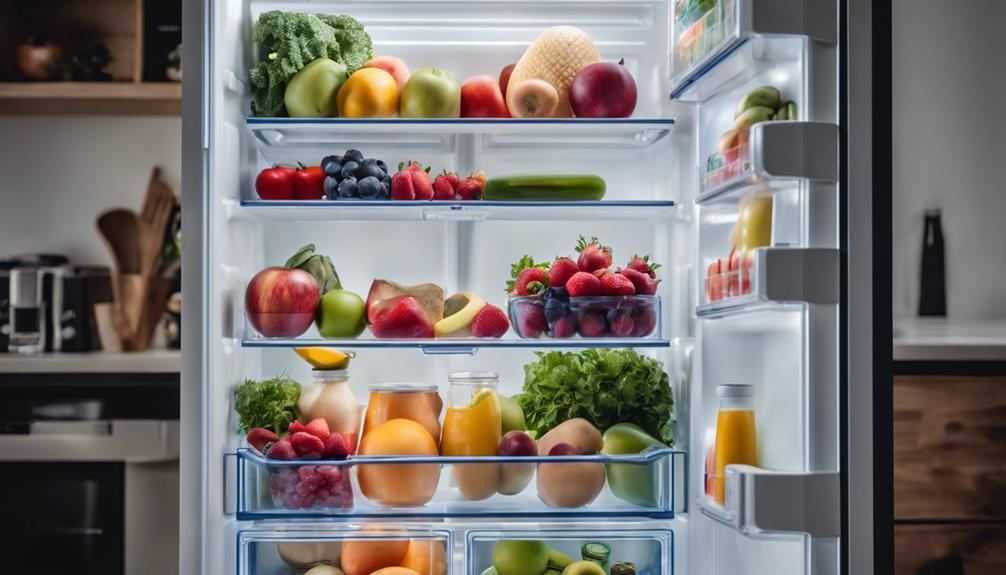
If you’re searching for an a rated fridge freezer, the first thing to know is that these listings include compact and apartment-size refrigerators, but the product names alone don’t confirm an official energy rating. My best overall pick is the Upstreman 7.1 Cu. Ft. Bottom-Freezer Refrigerator, which offers a larger, more practical layout than the mini models. The Frigidaire 7.5 Cu. Ft. Apartment-Size Refrigerator-Freezer and West Bend 7.5 Cu. Ft. Apartment Refrigerator stand out for buyers who need apartment-scale storage. The main tradeoff is between a small footprint and enough usable fresh-food and freezer space for everyday meals. Read on for the full breakdown and guidance on checking energy labels, measurements, and layout before choosing.

Get baking supplies delivered free with Prime
- Fast, free delivery on millions of items
- Prime Video, Amazon Music and more included
- Member-only deals all year
Complete the kit


Key Takeaways
- The largest models offer a different kind of utility: the Upstreman 7.1 Cu. Ft. and the Frigidaire and West Bend 7.5 Cu. Ft. options are better suited to regular household storage than the 3.2 Cu. Ft. mini fridges.
- Two-door mini fridges are the middle ground: the 4.5 Cu. Ft. Manastin, Tehanld, and Icyglee models provide a separate freezer compartment without taking up as much room as an apartment-size unit.
- Compact capacity varies more than the word “mini” suggests: the lineup spans 3.2 to 7.5 Cu. Ft., so checking usable capacity and interior arrangement matters more than relying on a category label.
- Layout can matter as much as capacity: a bottom-freezer design, a top-freezer layout, and a two-door mini format place everyday items differently and suit different routines.
- The listings do not establish an official A energy rating: buyers focused on efficiency should verify the current energy label and annual consumption for the exact model before ordering.
| Feelfunn 3.2 Cu. Ft. Mini Fridge with Freezer, Black |  | Best for Quiet, Flexible Placement | Total capacity: 3.2 cu. ft. | Refrigerator capacity: 2.24 cu. ft. | Freezer capacity: 0.96 cu. ft. | VIEW ON AMAZON | See Our Full Breakdown |
| Manastin 4.5 Cu. Ft. Two-Door Mini Fridge with Freezer |  | Best for Adjustable Storage | Capacity: 4.5 cu. ft. | Configuration: Two-door; top freezer | Temperature settings: 7 | VIEW ON AMAZON | See Our Full Breakdown |
| Tehanld 4.5 cu. ft. Two-Door Mini Fridge with Freezer |  | Best for Lower-Maintenance Mini Storage | Capacity: 4.5 cu. ft. | Configuration: Two doors; freezer on top | Temperature settings: 7 | VIEW ON AMAZON | See Our Full Breakdown |
| EUHOMY 3.2 cu. ft. Two-Door Mini Refrigerator with Freezer |  | Best Compact Fit for Tight Layouts | Total capacity: 3.2 cu. ft. | Refrigerator capacity: 2.24 cu. ft. | Freezer capacity: 0.96 cu. ft. | VIEW ON AMAZON | See Our Full Breakdown |
| Upstreman 7.1 Cu. Ft. Bottom-Freezer Refrigerator |  | Best for Apartment-Size Grocery Storage | Total capacity: 7.1 cu. ft. | Refrigerator capacity: 5.45 cu. ft. | Freezer capacity: 1.65 cu. ft. | VIEW ON AMAZON | See Our Full Breakdown |
| Frigidaire 7.5 Cu. Ft. Apartment-Size Refrigerator-Freezer, Platinum Stainless Steel |  | Best for Apartment-Size Storage | Capacity: 7.5 cu. ft. (206 L) | Configuration: Two doors; top freezer | Dimensions: 23 in. D × 21.5 in. W × 55.5 in. H | VIEW ON AMAZON | See Our Full Breakdown |
| West Bend 7.5 Cu. Ft. Apartment Refrigerator with Top Freezer, Reversible Doors, and Adjustable Shelves, Black |  | Best Energy-Certified Apartment Fridge | Total capacity: 7.5 cu. ft. | Refrigerator capacity: 6 cu. ft. | Freezer capacity: 1.5 cu. ft. | VIEW ON AMAZON | See Our Full Breakdown |
| Upstreman 3.2 Cu. Ft. Mini Fridge with Freezer, Black |  | Best Quiet, Small-Footprint Pick | Total capacity: 3.2 cu. ft. | Refrigerator capacity: 2.9 cu. ft. | Freezer capacity: 0.3 cu. ft. | VIEW ON AMAZON | See Our Full Breakdown |
| Manastin 3.6 Cu. Ft. Compact Refrigerator with Freezer |  | Best Compact Pick for Frozen Storage | Capacity: 3.6 cu. ft. | Freezer capacity: 1 cu. ft. | Dimensions: 17.7 × 19.3 × 32.8 in. | VIEW ON AMAZON | See Our Full Breakdown |
| Icyglee 4.5 Cu. Ft. Two-Door Mini Fridge with Freezer, Adjustable Thermostat, and Removable Glass Shelves |  | Best Two-Zone Mini Fridge | Total capacity: 4.5 cu. ft. | Fresh-food capacity: 3.7 cu. ft. | Freezer capacity: 0.8 cu. ft. | VIEW ON AMAZON | See Our Full Breakdown |
| a rated fridge freezer | Freezer capacity | Noise level | Defrost system | Total capacity |
|---|---|---|---|---|
| Feelfunn 3.2 Cu. Ft. Mini Frid | 0.96 cu. ft. | ≤38 dB | — | 3.2 cu. ft. |
| Manastin 4.5 Cu. Ft. Two-Door | — | Under 38 dB | Manual | — |
| Tehanld 4.5 cu. ft. Two-Door M | — | Under 38 dB | Automatic | — |
| EUHOMY 3.2 cu. ft. Two-Door Mi | 0.96 cu. ft. | 40 dB | — | 3.2 cu. ft. |
| Upstreman 7.1 Cu. Ft. Bottom-F | 1.65 cu. ft. | 39 dB | — | 7.1 cu. ft. |
| Frigidaire 7.5 Cu. Ft. Apartme | — | — | Manual cycle defrost | — |
| West Bend 7.5 Cu. Ft. Apartmen | 1.5 cu. ft. | — | Semi-automatic | 7.5 cu. ft. |
| Upstreman 3.2 Cu. Ft. Mini Fri | 0.3 cu. ft. | 38 dB | Manual defrost | 3.2 cu. ft. |
| Manastin 3.6 Cu. Ft. Compact R | 1 cu. ft. | — | Manual defrost | — |
| Icyglee 4.5 Cu. Ft. Two-Door M | 0.8 cu. ft. | 38 dB | Manual | 4.5 cu. ft. |
More Details on Our Top Picks
Feelfunn 3.2 Cu. Ft. Mini Fridge with Freezer, Black
The Feelfunn is a space-conscious pick for a dorm room, office, or bedroom where a separate freezer matters but floor space is tight. Its reversible door gives it more placement flexibility than the Manastin 4.5 Cu. Ft. Two-Door Mini Fridge, whose door opens to the right, while its reported ≤38 dB operation suits quieter rooms. The tradeoff is capacity: at 3.2 cu. ft., it has less room for groceries than the Manastin or Tehanld 4.5 cu. ft. models. Three temperature settings are simpler than their seven, and manual defrosting adds upkeep. I’d choose it when flexible installation and a small footprint matter more than storing a week’s worth of food.
Pros:- Separate refrigerator and freezer compartments in a compact 3.2 cu. ft. unit
- Reversible door offers flexible placement
- Quiet compressor operation rated at ≤38 dB
- Adjustable shelves, crisper drawer, and interior LED lighting
Cons:- Manual defrosting requires periodic maintenance
- Three temperature settings offer less adjustment than the seven on the Manastin and Tehanld
- Smaller capacity limits grocery and freezer storage
Best for: Dorm residents or office workers who need a quiet, compact fridge-freezer with a door that can be reversed to fit their layout.
Not ideal for: People sharing a kitchen or storing substantial frozen food; its 3.2 cu. ft. capacity is smaller than the 4.5 cu. ft. Manastin and Tehanld.
- Total capacity:3.2 cu. ft.
- Refrigerator capacity:2.24 cu. ft.
- Freezer capacity:0.96 cu. ft.
- Temperature settings:3
- Temperature ranges:Refrigerator: 32°F–50°F; freezer: 21.2°F to -0.4°F
- Energy use:0.98 kWh per day
- Noise level:≤38 dB
- Defrost and door:Manual defrost; reversible door
Our verdict“Pick the Feelfunn if quiet operation and flexible door placement matter more than the extra storage offered by 4.5 cu. ft. alternatives.”
Manastin 4.5 Cu. Ft. Two-Door Mini Fridge with Freezer
The Manastin’s strongest case is straightforward: it gives small-space buyers 4.5 cu. ft. of divided storage and seven temperature settings without stepping up to the larger Upstreman 7.1 Cu. Ft. Bottom-Freezer Refrigerator. Three adjustable glass shelves and a crisper drawer help organize fresh food, while the separate top freezer keeps frozen items apart from everyday groceries. Its under-38 dB noise rating also suits bedrooms and shared offices. Compared with the Tehanld 4.5 cu. ft., though, the Manastin has manual rather than automatic defrost, so ownership includes periodic freezer maintenance. The door is right-oriented, unlike the reversible doors on the Feelfunn and EUHOMY, which can make a cramped layout harder to accommodate.
Pros:- 4.5 cu. ft. capacity offers more room than the Feelfunn and EUHOMY 3.2 cu. ft. models
- Seven temperature settings allow more adjustment than three-setting compact options
- Three adjustable glass shelves and a crisper drawer support organized fresh-food storage
- Compressor noise rated under 38 dB
Cons:- Manual defrosting requires periodic upkeep
- Right-oriented door offers less placement flexibility than reversible-door models
- Smaller overall capacity than the Upstreman 7.1 cu. ft. refrigerator
Best for: Apartment or dorm residents who want more shelf and produce storage than a 3.2 cu. ft. mini fridge provides, along with fine temperature adjustment.
Not ideal for: Buyers who want to avoid manual defrosting or need a reversible door for a tight kitchen layout.
- Capacity:4.5 cu. ft.
- Configuration:Two-door; top freezer
- Temperature settings:7
- Shelves:3 adjustable glass shelves
- Noise level:Under 38 dB
- Defrost system:Manual
- Door orientation:Right
- Warranty:3 years
Our verdict“Choose the Manastin for adjustable, well-organized storage in a mini-fridge footprint, provided manual defrosting and a right-opening door suit your space.”
Tehanld 4.5 cu. ft. Two-Door Mini Fridge with Freezer
The Tehanld earns its place among the compact options by pairing the Manastin’s 4.5 cu. ft. capacity and seven temperature settings with automatic defrost. That difference matters for buyers who want divided fresh and frozen storage without adding regular manual defrosting to the routine. Adjustable glass shelves, door bins, and a crisper drawer also give it useful organization for a dorm or small apartment. It remains a mini fridge, however: the Upstreman 7.1 Cu. Ft. Bottom-Freezer Refrigerator provides considerably more room for groceries, while the Tehanld’s top freezer keeps frozen items higher and limits its size. Like the Manastin, it has a right-oriented door, so it is less adaptable to awkward layouts than the reversible-door Feelfunn or EUHOMY.
Pros:- Automatic defrost avoids the manual upkeep required by the Manastin and smaller Feelfunn
- 4.5 cu. ft. capacity with separate top freezer
- Seven temperature settings provide flexible adjustment
- Adjustable glass shelves, door bins, and crisper drawer help organize food
Cons:- Capacity remains limited for larger households compared with the Upstreman 7.1 cu. ft. model
- Right-oriented door is less flexible than reversible-door alternatives
- Top-freezer layout places frozen items above the refrigerator compartment
Best for: Small-apartment or dorm residents who want a 4.5 cu. ft. separate-freezer fridge with automatic defrost and organized shelves.
Not ideal for: Households that buy groceries in bulk or need a door that can be reversed to suit a narrow kitchen.
- Capacity:4.5 cu. ft.
- Configuration:Two doors; freezer on top
- Temperature settings:7
- Noise level:Under 38 dB
- Shelves:3 adjustable glass shelves
- Defrost system:Automatic
- Door orientation:Right
- Warranty:3 years
Our verdict“The Tehanld suits buyers who want the Manastin’s compact capacity and adjustable controls but prefer automatic defrost.”
EUHOMY 3.2 cu. ft. Two-Door Mini Refrigerator with Freezer
The EUHOMY is a practical choice when the available space is the deciding factor: its listed dimensions are 18.9 × 18.1 × 33.5 inches, and its door is reversible. That makes placement easier than with the right-opening Manastin or Tehanld, both of which offer a larger 4.5 cu. ft. interior. The EUHOMY keeps the useful basics—a separate 0.96 cu. ft. freezer, two glass shelves, and three temperature settings—in a 3.2 cu. ft. body. Its 40 dB noise rating is slightly higher than the Feelfunn’s stated ≤38 dB, and manual defrosting remains part of ownership. I’d favor it for a constrained dorm or office spot, not for buyers trying to maximize food storage.
Pros:- Compact listed dimensions suit small rooms and tight appliance spaces
- Reversible door offers more positioning options than the Manastin and Tehanld
- Separate 0.96 cu. ft. freezer compartment
- Glass shelves and three temperature settings cover basic storage needs
Cons:- 3.2 cu. ft. capacity is smaller than the 4.5 cu. ft. Manastin and Tehanld
- Manual defrost requires periodic maintenance
- 40 dB rating is higher than the Feelfunn’s stated ≤38 dB
Best for: Students or office workers with a measured, narrow space who need a compact separate freezer and reversible door.
Not ideal for: Households needing a larger grocery supply, seven temperature settings, or automatic defrost.
- Total capacity:3.2 cu. ft.
- Refrigerator capacity:2.24 cu. ft.
- Freezer capacity:0.96 cu. ft.
- Dimensions:18.9 × 18.1 × 33.5 inches
- Temperature settings:3
- Noise level:40 dB
- Energy consumption:0.98 kWh per day; 356 kWh per year
- Defrost and door:Manual defrost; reversible door
Our verdict“Choose the EUHOMY when its compact dimensions and reversible door matter more than the extra capacity of a 4.5 cu. ft. model.”
Upstreman 7.1 Cu. Ft. Bottom-Freezer Refrigerator
The Upstreman is the clear step up for buyers who need more than a mini fridge: 7.1 cu. ft. total capacity gives its refrigerator compartment 5.45 cu. ft., comfortably ahead of the Manastin and Tehanld at 4.5 cu. ft. Its bottom freezer keeps frequently reached fresh food at a more accessible height, a different setup from those top-freezer mini fridges. At 21.46 inches wide, it still targets compact homes rather than a full-size kitchen. The compromises are a manual-defrost freezer and a relatively modest 1.65 cu. ft. freezer compartment; buyers who prioritize frozen-food storage may find the layout limiting. Reversible doors add installation flexibility, though the 39 dB rating is just above the mini models listed under 38 dB.
Pros:- 7.1 cu. ft. total capacity exceeds the 3.2 and 4.5 cu. ft. mini-fridge options
- Bottom freezer keeps the larger refrigerator compartment above
- Reversible door and removable shelves help adapt the interior and placement
- Quiet operation rated at 39 dB
Cons:- Manual defrost requires periodic freezer maintenance
- 1.65 cu. ft. freezer may be limiting for households that freeze food in bulk
- Larger than the Feelfunn and EUHOMY, so it needs more floor and vertical space
Best for: Apartment residents or couples who need a primary fridge with more fresh-food space than a mini model and prefer refrigerator items at eye level.
Not ideal for: Buyers who need a large freezer, automatic defrost, or the smallest possible appliance footprint.
- Total capacity:7.1 cu. ft.
- Refrigerator capacity:5.45 cu. ft.
- Freezer capacity:1.65 cu. ft.
- Dimensions:21.46 W × 55.91 H × 21.46 D inches
- Temperature ranges:Refrigerator: 32°F to 53.6°F; freezer: -5.8°F to 17.6°F
- Energy consumption:Around 1 kWh per day
- Noise level:39 dB
- Configuration and defrost:Bottom freezer; manual defrost; reversible door
Our verdict“Choose the Upstreman if you need apartment-size everyday grocery storage and value an accessible refrigerator section over freezer capacity.”
Frigidaire 7.5 Cu. Ft. Apartment-Size Refrigerator-Freezer, Platinum Stainless Steel
For someone furnishing a small kitchen, the Frigidaire EFR751 offers much more room than the mini-fridges in this lineup: its 7.5 cu. ft. capacity and separate top freezer suit groceries, not just drinks and snacks. Three adjustable glass refrigerator shelves make it easier to fit taller items, while the reversible door helps it work in tighter layouts. Compared with the West Bend 7.5 Cu. Ft. Apartment Refrigerator, it has a similar overall capacity but lacks the West Bend’s ENERGY STAR certification and LED lighting. Its main compromise is manual cycle defrost, which calls for occasional freezer maintenance. I’d choose it for a compact apartment setup where a proper two-door layout matters more than low-maintenance defrosting; larger households may still find its storage restrictive.
Pros:- 7.5 cu. ft. capacity provides more everyday storage than the mini-fridge options.
- Separate top freezer keeps frozen food apart from fresh groceries.
- Adjustable glass shelves and reversible door help adapt the layout to the room.
- Interior lighting in both compartments makes contents easier to find.
Cons:- Manual cycle defrost requires periodic freezer maintenance.
- Does not list ENERGY STAR certification, unlike the West Bend 7.5 Cu. Ft. model.
- Capacity may still fall short for households that regularly store large grocery loads.
Best for: Apartment dwellers who want a separate freezer and enough refrigerator space for regular grocery storage in a compact footprint.
Not ideal for: Larger households or buyers who want ENERGY STAR certification, LED lighting, or a freezer that does not require manual defrosting.
- Capacity:7.5 cu. ft. (206 L)
- Configuration:Two doors; top freezer
- Dimensions:23 in. D × 21.5 in. W × 55.5 in. H
- Defrost system:Manual cycle defrost
- Refrigerator shelves:Three adjustable glass shelves
- Freezer shelf:One adjustable/removable wire shelf
- Door:Reversible
- Voltage:120 V
- Warranty:1 year
Our verdict“Choose the Frigidaire if you want apartment-scale grocery storage and can accept manual freezer defrosting.”
West Bend 7.5 Cu. Ft. Apartment Refrigerator with Top Freezer, Reversible Doors, and Adjustable Shelves, Black
The West Bend is a strong fit for buyers who want apartment-sized capacity without giving up practical touches: it pairs 7.5 cu. ft. of storage with a 6 cu. ft. fresh-food section, flexible door bins, a crisper, and LED lighting. Its ENERGY STAR certification is a distinction the similarly sized Frigidaire EFR751 does not list, while the West Bend also uses semi-automatic rather than manual cycle defrost. That makes it the more convenience-focused choice between the two, though neither replaces a full-size refrigerator for a large household. Reversible doors help with placement, but the listed right-hand orientation may still affect setup, and its total capacity remains limited compared with a full-size model. I’d favor it over the Frigidaire when energy certification and flexible door storage matter more than a platinum stainless finish.
Pros:- ENERGY STAR certification is a useful distinction among the two 7.5 cu. ft. options here.
- 6 cu. ft. refrigerator section, crisper, and flexible door bins support everyday food storage.
- Reversible doors offer more placement flexibility in compact rooms.
- LED interior lighting and semi-automatic defrost add convenience.
Cons:- 7.5 cu. ft. capacity remains limited compared with full-size refrigerators.
- The black finish may not suit kitchens designed around stainless appliances.
- Only a 12-month limited warranty is listed.
Best for: Apartment residents or office managers seeking a compact, ENERGY STAR-certified refrigerator with a useful fresh-food section and flexible storage.
Not ideal for: Large households needing bulk grocery capacity, or buyers who need a finish other than black.
- Total capacity:7.5 cu. ft.
- Refrigerator capacity:6 cu. ft.
- Freezer capacity:1.5 cu. ft.
- Configuration:Two doors; top freezer
- Defrost system:Semi-automatic
- Shelves:Three
- Door orientation:Right; reversible
- Certification:ENERGY STAR
- Warranty:12-month limited
Our verdict“Pick the West Bend over the similarly sized Frigidaire if ENERGY STAR certification and flexible door storage are priorities.”
Upstreman 3.2 Cu. Ft. Mini Fridge with Freezer, Black
When floor space and quiet operation matter more than freezer performance, the Upstreman 3.2 Cu. Ft. is the compact choice here. Its 33.1-inch height and stated 38 dB operation suit bedrooms, dorm rooms, and offices, while two adjustable glass shelves and a crisper help organize a modest amount of fresh food. The tradeoff is its tiny 0.3 cu. ft. freezer and temperature range of 32°F to 50°F: the listed range is not suited to storing ice cream or ice cubes. The Manastin 3.6 Cu. Ft. Compact Refrigerator has more total capacity and a larger stated freezer, so it makes more sense for buyers who plan to freeze food. I’d choose the Upstreman for chilled essentials and occasional freezer use, not as a small substitute for a full freezer.
Pros:- Compact dimensions suit bedrooms, dorms, and offices with limited floor space.
- Stated 38 dB operation is suited to quieter rooms.
- Two adjustable glass shelves and a crisper help organize fresh food.
- ENERGY STAR certified.
Cons:- The 0.3 cu. ft. freezer is much smaller than the Manastin 3.6 Cu. Ft. model’s stated 1 cu. ft. freezer.
- The listed temperature range is not suitable for storing ice cream or ice cubes.
- Manual defrost requires periodic maintenance.
Best for: Students, bedroom users, or office workers who need a quiet, ENERGY STAR-certified fridge for drinks, snacks, and a small amount of frozen storage.
Not ideal for: Buyers who need reliable space for ice cream, ice cubes, or regular frozen-food storage.
- Total capacity:3.2 cu. ft.
- Refrigerator capacity:2.9 cu. ft.
- Freezer capacity:0.3 cu. ft.
- Dimensions:17.4 × 18.7 × 33.1 in. (D × W × H)
- Temperature range:32°F to 50°F
- Noise level:38 dB
- Shelves:Two adjustable glass shelves
- Defrost system:Manual defrost
- Energy certification:ENERGY STAR
Our verdict“Choose this Upstreman for quiet chilling in a tight space, but pick the Manastin if frozen storage is a regular need.”
Manastin 3.6 Cu. Ft. Compact Refrigerator with Freezer
The Manastin earns its place by giving compact-fridge buyers a more useful freezer than the Upstreman 3.2 Cu. Ft. Mini Fridge. Its 1 cu. ft. freezer is substantially roomier than the Upstreman’s 0.3 cu. ft. compartment, making this two-door model a better fit for someone who keeps more than a few frozen items on hand. Seven temperature settings, removable glass shelves, and a crisper add flexibility for everyday use. The 3.6 cu. ft. total capacity still calls for careful grocery planning, and manual defrost means freezer upkeep is part of ownership. The manufacturer also advises leaving it upright for six hours before plugging it in, so it takes a little setup patience. I’d favor it over the Upstreman when separate freezer space matters more than its quieter-operation claim or ENERGY STAR certification.
Pros:- 1 cu. ft. freezer offers more room than the Upstreman 3.2 Cu. Ft. model’s 0.3 cu. ft. compartment.
- Seven temperature settings give users several adjustment options.
- Removable glass shelves and a crisper help accommodate different foods.
- Compact dimensions suit bedrooms, dorms, offices, and small apartments.
Cons:- Manual defrost requires periodic freezer maintenance.
- Must remain upright for six hours before plugging in.
- The listed 320 kWh/year energy use has no ENERGY STAR certification listed.
Best for: Dorm residents or single-person households who need a compact refrigerator with a more usable freezer for frozen meals and staples.
Not ideal for: Buyers who want ENERGY STAR certification, a stated quietness figure, or a fridge that can be plugged in immediately after delivery.
- Capacity:3.6 cu. ft.
- Freezer capacity:1 cu. ft.
- Dimensions:17.7 × 19.3 × 32.8 in.
- Weight:40.8 lbs
- Temperature settings:7
- Defrost system:Manual defrost
- Shelves:Two removable glass shelves
- Annual energy consumption:320 kWh/year
- Voltage:115 V
Our verdict“Choose the Manastin if you want a compact fridge with a roomier freezer than the Upstreman, and can accept manual defrost and setup time.”
Icyglee 4.5 Cu. Ft. Two-Door Mini Fridge with Freezer, Adjustable Thermostat, and Removable Glass Shelves
Among the smaller two-door options, the Icyglee stands out for its separate adjustable temperature controls for the refrigerator and freezer. That gives buyers more control over fresh and frozen storage than the Upstreman 3.2 Cu. Ft., whose listed temperature range is not suited to ice cream or ice cubes. Its 4.5 cu. ft. total capacity includes a 3.7 cu. ft. fresh-food section and a 0.8 cu. ft. freezer, plus door bins, a crisper, and LED lighting. The compromise is a manual defrost system and less freezer capacity than the Manastin 3.6 Cu. Ft.’s stated 1 cu. ft. The listed refrigerator and freezer temperature ranges add useful detail, but capacity remains modest for anyone storing substantial frozen food. I’d choose it for more controlled two-zone use in a compact room.
Pros:- Separate adjustable controls for refrigerator and freezer zones.
- 4.5 cu. ft. total capacity provides more room than the Upstreman 3.2 Cu. Ft.
- Reversible door, adjustable glass shelves, door bins, and crisper support flexible storage.
- LED lighting and stated 38 dB operation suit compact living spaces.
Cons:- The 0.8 cu. ft. freezer is smaller than the Manastin’s stated 1 cu. ft. freezer.
- Manual defrost requires periodic maintenance.
- The listed 1 kWh/day energy use may matter to buyers tracking appliance consumption.
Best for: Small-space users who want separate refrigerator and freezer temperature controls for a mix of fresh food and occasional frozen items.
Not ideal for: Buyers who need a larger freezer, automatic defrost, or enough capacity for bulk grocery storage.
- Total capacity:4.5 cu. ft.
- Fresh-food capacity:3.7 cu. ft.
- Freezer capacity:0.8 cu. ft.
- Dimensions:18.9 in. D × 18.3 in. W × 42.9 in. H
- Refrigerator temperature range:37°F–41°F
- Freezer temperature range:-4°F–10°F
- Noise level:38 dB
- Defrost system:Manual
- Warranty:1 year
Our verdict“Pick the Icyglee for adjustable two-zone control and a useful fresh-food section, but choose the Manastin if freezer volume comes first.”

How We Picked
I compared the ten listed models around the decisions that matter for a compact fridge freezer: capacity, compartment layout, footprint, and day-to-day flexibility. The ranking gives priority to options that appear suited to a broader range of uses, then separates apartment-size refrigerators from small two-door and mini units rather than treating them as direct substitutes. Product names provide some information about capacity and features, but they do not confirm measured cooling performance, noise, energy consumption, or a formal A rating.
For that reason, I treat the Upstreman 7.1 Cu. Ft. Bottom-Freezer as the strongest general-purpose option based on its stated capacity and layout, while the 7.5 Cu. Ft. Frigidaire and West Bend models are alternatives for buyers who prefer apartment-size storage. The smaller picks rank for specific constraints, such as tight spaces or a separate freezer compartment. Before buying, compare the exact model’s dimensions, energy label, warranty, and installation requirements; those details can change which option makes the most sense for your home.
| a rated fridge freezer | Defrost system |
|---|---|
| Feelfunn 3.2 Cu. Ft. Mini Frid | — |
| Manastin 4.5 Cu. Ft. Two-Door | Manual |
| Tehanld 4.5 cu. ft. Two-Door M | Automatic |
| EUHOMY 3.2 cu. ft. Two-Door Mi | — |
| Upstreman 7.1 Cu. Ft. Bottom-F | — |
| Frigidaire 7.5 Cu. Ft. Apartme | Manual cycle defrost |
| West Bend 7.5 Cu. Ft. Apartmen | Semi-automatic |
| Upstreman 3.2 Cu. Ft. Mini Fri | Manual defrost |
| Manastin 3.6 Cu. Ft. Compact R | Manual defrost |
| Icyglee 4.5 Cu. Ft. Two-Door M | Manual |
Factors to Consider When Choosing A Rated Fridge Freezer
Choosing a compact fridge freezer is less about finding the biggest capacity and more about matching the appliance to your space, food habits, and verified energy information. I’d check these points before settling on a model.
Check the Energy Label, Not Just the Search Term
The phrase “A-rated” needs verification against the label for the exact model and market where you plan to buy it. Energy-rating scales and labeling rules can vary by region, and a listing title may use broad wording that does not prove a current rating. Look for the official label or manufacturer documentation, then compare the stated annual energy use with similarly sized models. A larger refrigerator can use more energy overall while still making better use of each unit of storage, so compare both consumption and capacity. If the rating is a deciding factor, confirm the model number matches the documentation rather than relying on a product-family name.
Measure the Whole Installation Space
Measure the available width, height, and depth, then check the manufacturer’s clearance instructions. A fridge that fits between cabinets may still need room for ventilation or for its door to swing open. Include handles, nearby walls, counters, and the route through hallways or stairwells when planning delivery. Reversible doors can help with awkward room layouts, but they do not remove every access constraint. A common mistake is choosing by listed capacity alone and discovering that the appliance blocks a walkway or cannot be installed where intended.
Match Capacity to Your Shopping Routine
Think about how much food you store at one time, not only how many people live in the home. A mini fridge may suit drinks, snacks, or occasional groceries, while regular meal preparation usually calls for more fresh-food capacity and shelf space. A separate freezer compartment is useful for frozen meals and short-term storage, but its practical capacity may be limited by its shape and shelves. If you buy in bulk or freeze batch-cooked food, check freezer dimensions and usable interior space before choosing a compact model. Buying extra capacity you rarely use can waste floor space, while choosing too little can push food into a second appliance.
Choose a Layout That Fits What You Reach For
Layout affects convenience every time you open the door. Bottom-freezer designs keep fresh food higher, which may suit households that reach for chilled items more often than frozen ones. Top-freezer layouts put frozen goods at eye level and can make sense for shoppers who use frozen food frequently. Two-door mini fridges separate the compartments, but the freezer section is usually designed for limited storage rather than large frozen items. Check shelf adjustability, door storage, and whether containers you use regularly will fit before treating capacity as the deciding factor.
Account for Noise, Heat, and Placement
A compact refrigerator may sit in a bedroom, office, or studio where compressor noise is more noticeable than it would be in a kitchen. Look for manufacturer noise information when available, and check whether the instructions limit placement in enclosed cabinets or other tight spaces. Refrigerators release heat while running, so restricted airflow can affect operation and comfort. A model for a garage or other nonstandard location may need environmental operating limits checked against seasonal temperatures. When product details do not state these points, ask the seller or manufacturer rather than assuming every small fridge suits every room.
Compare Ownership Details Before Paying More
Capacity and finish are only part of the cost of owning an appliance. Check the warranty, service options, delivery terms, and return conditions, especially for less familiar brands. Confirm whether the stated features—such as reversible doors or adjustable shelves—apply to the exact version being sold. Paying more can make sense for a size or layout that better fits daily use, but a premium finish alone may not improve storage or efficiency. Compare the specifications and support details side by side so a small difference in convenience is not mistaken for a meaningful upgrade.
Frequently Asked Questions
Do these listings confirm that the fridge freezers are officially A-rated?
No. The product names and details provided for this roundup do not establish an official energy class for any of the ten models. Energy-label systems can differ by market, so check the exact model number against the current manufacturer documentation or the applicable official label. Compare annual energy consumption as well as the letter grade, since size affects total use. If the rating is a firm requirement, do not rely on search wording or a retailer’s broad category description.
Should I choose a 4.5 Cu. Ft. mini fridge or a 7.5 Cu. Ft. apartment model?
Choose by the amount and type of food you need to store, then check the space available. The 4.5 Cu. Ft. two-door minis are easier to fit into smaller rooms, but they provide less overall storage than the 7.5 Cu. Ft. apartment-size options. The larger units are more suited to regular grocery storage, provided their external dimensions and door clearance work in your home. Also compare freezer layout: a larger total capacity does not automatically mean a freezer compartment that fits your preferred foods.
Can a mini fridge freezer replace a full-size refrigerator?
It can work as a primary appliance for someone with limited storage needs, but the smallest models are not a direct substitute for a full-size refrigerator in every household. Check the usable fresh-food and freezer space against your usual grocery load, container sizes, and meal habits. A compact unit may require more frequent shopping or leave little room for leftovers and bulky items. For a household that cooks often, the apartment-size models in this roundup are more plausible candidates, though their dimensions and capacity still need to match your needs.
Which door layout is better: bottom freezer, top freezer, or a two-door mini design?
There is no single layout that suits every routine. A bottom freezer keeps the fresh-food section higher, which may be convenient if you open it more often than the freezer. A top-freezer arrangement may suit people who reach for frozen food regularly, while two-door mini designs keep a separate freezer compartment in a smaller appliance. Compare shelf placement, compartment size, and door swing rather than choosing based on the layout name alone. The best fit depends on what you store and how often you reach for it.
What should I verify before ordering a compact fridge freezer online?
Confirm the exact model number, external dimensions, door clearance, ventilation requirements, and energy documentation before placing an order. Check that the appliance can pass through the delivery route and that the outlet and room conditions meet the manufacturer’s instructions. Review warranty coverage, service availability, and the seller’s return process in case the unit does not fit or arrives damaged. If adjustable shelves or reversible doors matter to you, verify that those features are included on the specific version you are buying.
Conclusion
For the best overall balance in this lineup, I’d start with the Upstreman 7.1 Cu. Ft. Bottom-Freezer Refrigerator, especially if fresh-food access and more room than a mini model are priorities. For buyers who want an apartment-size option, the Frigidaire 7.5 Cu. Ft. is a strong alternative, while the West Bend suits shoppers who prefer its top-freezer layout and reversible-door flexibility. The best value depends on the final listing and verified specifications; compare the 4.5 Cu. Ft. two-door models if you need a practical middle size without apartment-unit dimensions. For beginners or a tight room, a 3.2 Cu. Ft. mini fridge is the simpler fit, while the Manastin, Tehanld, or Icyglee 4.5 Cu. Ft. models suit buyers seeking a separate freezer with more room. For energy-focused buyers, none should be treated as A-rated until the exact model’s official label confirms it.
Fall Picks
fall essentials
As an affiliate, we earn on qualifying purchases.