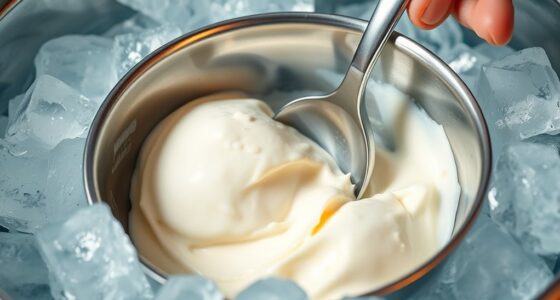

To prevent ice crystals and guarantee your gelato stays smooth and creamy, use the right stabilizers like guar gum or carrageenan, and stick to recommended amounts to avoid affecting flavor. Chill your mixture thoroughly before freezing and churn it steadily to incorporate air for a soft texture. Keep your freezer at a consistent, cold temperature and store the gelato tightly covered. Mastering these techniques will help you create irresistibly velvety gelato every time.
Key Takeaways
- Use stabilizers like guar gum or carrageenan in correct proportions to prevent large ice crystal formation.
- Chill the gelato mixture thoroughly before churning for more uniform freezing.
- Freeze quickly with a proper ice cream maker to minimize ice crystal growth.
- Store gelato in airtight containers with a plastic wrap layer directly on the surface to prevent moisture exposure.
- Serve at slightly softened temperature to maintain a smooth, creamy texture without crystallization.
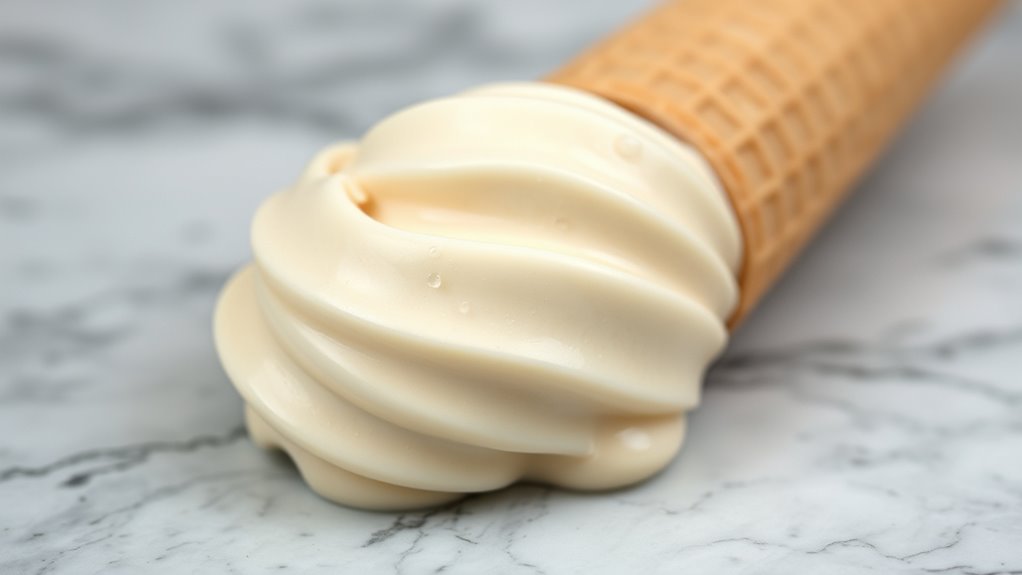
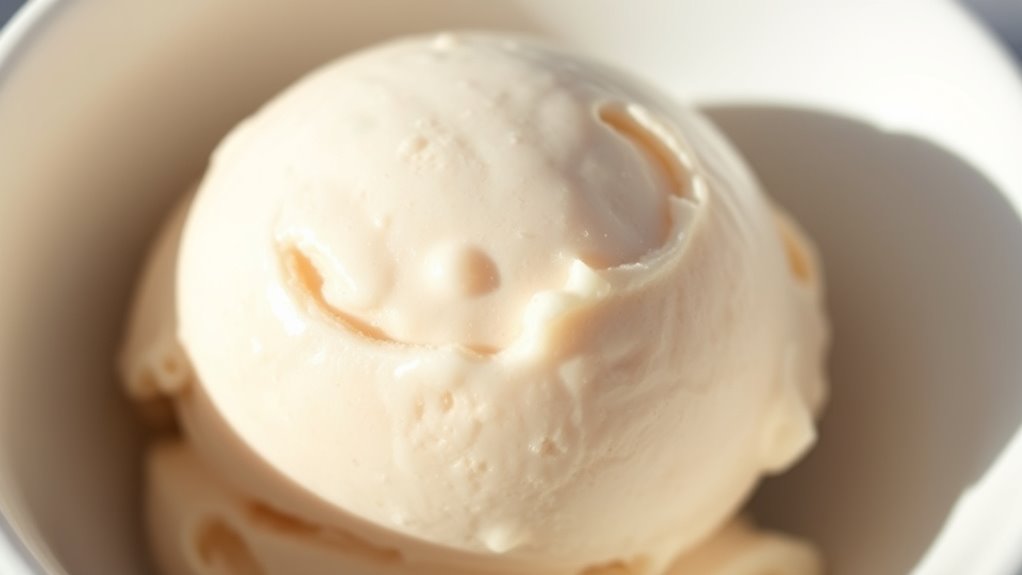
Ever wondered what makes gelato irresistibly smooth and creamy? The secret often lies in the careful balance of ingredients and techniques that prevent ice crystal formation. When you’re aiming for that silky texture, understanding how gelato stabilizers and milk fat content work together is essential. Gelato stabilizers are ingredients like guar gum, locust bean gum, or carrageenan that help maintain a smooth consistency by preventing ice crystals from growing too large during freezing. These stabilizers create a network that traps air and moisture, resulting in a more uniform and velvety texture. Without them, the natural tendency of frozen desserts is to develop coarse ice crystals, which disrupt that tender mouthfeel you’re after.
Equally important is paying attention to the milk fat content. Unlike traditional ice cream, gelato generally has a lower milk fat percentage, usually around 4-8%. This lower fat level contributes to its dense and creamy texture without being overly heavy. Milk fat acts as a natural emulsifier, helping to smooth out the mixture and give it that rich, luscious mouthfeel. If your milk fat content is too low, the gelato might feel a bit icy or watery; if it’s too high, it could become overly rich and lose that light, airy quality. Striking the right balance ensures the gelato remains smooth and soft, melting beautifully on your tongue.
To avoid ice crystals, it’s also pivotal to chill your mixture thoroughly before freezing. A cold base freezes faster and more uniformly, reducing the chances of large ice crystals forming. Using an ice cream maker with a built-in compressor or pre-frozen bowl can help maintain a consistent temperature during churning, further preventing crystal growth. Be sure to churn your gelato long enough to incorporate plenty of air, which not only improves texture but also helps keep it soft and scoopable. Properly incorporating stabilizers into your mixture, following recommended quantities, is key—too little won’t provide enough stabilization, and too much can affect the flavor and mouthfeel. Additionally, controlling the freezing temperature during storage can significantly impact ice crystal formation, ensuring a smoother final product.
Finally, storing your gelato properly is essential. Cover it tightly with plastic wrap directly on the surface to prevent ice crystals from forming due to moisture exposure. Serving your gelato slightly softened, letting it sit at room temperature for a few minutes before scooping, makes for a creamier experience. By carefully managing gelato stabilizers, milk fat content, and freezing techniques, you can craft a dessert that’s always smooth, luscious, and free of those unwanted icy crystals.

Benosen Guar Gum Powder 12 oz – Food Grade Thickener & Stabilizer for Baking, Sauces, Ice Cream & Gluten-Free Recipes – 100% Pure Vegan • Halal
🌿 100% Pure Food-Grade Guar Gum — single-ingredient thickening & stabilizing powder for kitchen and food-lab use
As an affiliate, we earn on qualifying purchases.
As an affiliate, we earn on qualifying purchases.
Frequently Asked Questions
Can Adding Alcohol Prevent Ice Crystal Formation?
Adding alcohol can help prevent ice crystal formation because it lowers the freezing point of your gelato mixture. When you include alcohol, it impacts the freezing process by making it harder for ice crystals to form, resulting in a smoother, creamier texture. Just be careful not to add too much, as excessive alcohol can prevent the gelato from freezing properly. A small amount enhances the texture without compromising the consistency.
What Is the Ideal Storage Temperature for Gelato?
Oh, the mystery of perfect gelato storage—fear not! You should keep your gelato at a steady -12°C (10°F) for ideal creaminess. Anything colder and you risk turning it into an icy disaster; too warm, and it melts faster than your patience. Mastering temperature control means your gelato stays smooth and luscious, so invest in a good freezer with precise storage conditions. Your taste buds will thank you!
Does Using Sugar Substitutes Affect Ice Crystal Development?
Using sugar alternatives can affect ice crystal development, often leading to larger crystals because they don’t lower the freezing point as effectively as sugar. This can result in a less smooth, creamy texture. Plus, sugar substitutes might alter the flavor impact, sometimes making the gelato taste different or less rich. To keep your gelato smooth and flavorful, consider balancing sugar alternatives carefully or combining them with small amounts of real sugar.
How Does Aging Gelato Mixture Influence Smoothness?
Aging your gelato mixture enhances its smoothness by allowing flavors to meld and the fat to partially crystallize, resulting in a creamier texture. When you let the mixture rest in the refrigerator for 4-24 hours, it thickens slightly, improving churning results. This process helps create a more uniform, velvety gelato, reducing ice crystal formation and ensuring you enjoy a luxuriously smooth and creamy dessert every time.
Are There Specific Equipment Tips to Minimize Ice Crystals?
To minimize ice crystals and improve gelato consistency, you should regularly maintain your equipment, ensuring the freezer and churning mechanism are clean and functioning properly. Use a well-calibrated ice cream maker with fast freezing capabilities, and keep the bowl well-chilled before churning. Proper equipment maintenance prevents ice crystal formation and results in smooth, creamy gelato every time. Remember, the right equipment and care are essential for the perfect texture.

Iceman by Chefman Ice Cream Maker, No Pre-Freezing with Built-In Compressor, Makes Ice Cream, Froyo, Sorbet, Sherbet, Italian Ice, Frozen Yogurt, Digital Display w/ 3 Presets, 2 Pint Inserts Included
YOUR FAVORITE FROZEN TREATS: Freeze delicious homemade ice cream, frozen yogurt, Italian ice, sorbet, sherbet, and more in…
As an affiliate, we earn on qualifying purchases.
As an affiliate, we earn on qualifying purchases.
Conclusion
Remember, the secret to that perfect, velvety gelato lies in gentle handling and patience. With a little care, you’ll create a frozen masterpiece that glides smoothly on the tongue, like a whisper of winter’s hush. Avoid rushing the process, and let your passion melt into each creamy spoonful. Soon enough, you’ll savor a delightful treat that feels like a soft, snowy cloud—an effortless indulgence, crafted with love and a touch of icy magic.

16 oz Ice Cream Containers with Airtight Silicone Lids ( 4-Pack ) Homemade Ice Cream Container perfect for storing Gelato, Sorbet & Frozen Yogurt, Reusable 1 Pint Ice Cream Container with Lids
Perfect for Homemade Treats: The best things in life are sweet, and your frozen treats just got a…
As an affiliate, we earn on qualifying purchases.
As an affiliate, we earn on qualifying purchases.
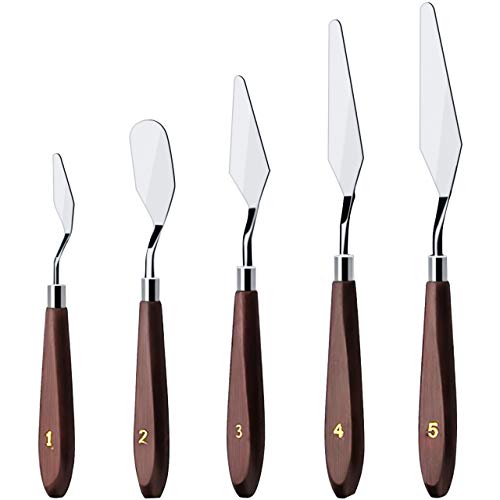
Cake Cream Spatula 5 Pieces/Set Stainless Steel Frosting Baking Pastry Tool Mixing Set Cake Icing Oil Painting Decorating Cream Toner Tool
As an affiliate, we earn on qualifying purchases.
As an affiliate, we earn on qualifying purchases.