Resting your gelato base allows natural enzymes to work, breaking down proteins and starches, which results in a smoother, creamier texture and enhances flavor development. It helps ingredients meld together, creating a richer and more balanced taste, while also stabilizing the mixture and reducing ice crystal formation. This step improves overall consistency and mouthfeel, giving you a more professional-quality gelato. Keep going to discover how this simple step can elevate your gelato craft even further.
Key Takeaways
- Resting enhances flavor development by allowing ingredients to meld and natural enzymes to break down complex compounds.
- It stabilizes the emulsion, reducing ice crystal formation for a creamier, smoother texture.
- Resting promotes natural fermentation, improving overall flavor depth and balance.
- It helps break down proteins and fats, resulting in a more refined and velvety mouthfeel.
- Patience during resting leads to a professional-quality gelato with better texture, taste, and consistency.
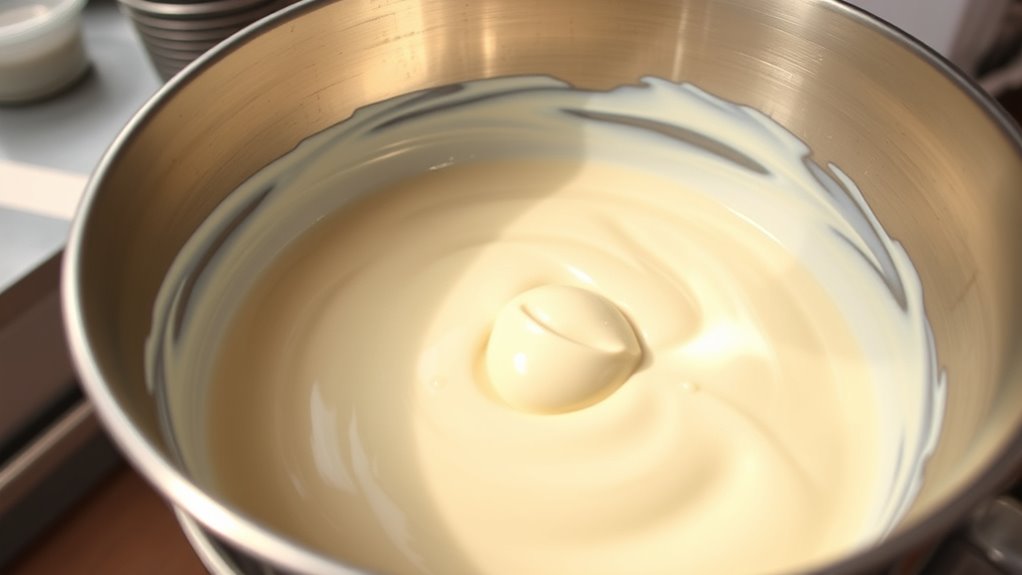
Have you ever wondered how aging transforms a mix, whether it’s a beverage, a sauce, or even a blend of ingredients? When it comes to gelato, resting the base isn’t just about waiting; it’s a vital step that influences the final product’s quality. During this aging period, fermentation enhancement occurs naturally, allowing the ingredients to interact and settle. This process helps break down complex proteins and fats, making the mixture smoother and more cohesive. As a result, the flavors become more refined, leading to a richer, more balanced taste in your finished gelato. Skipping or rushing this step can mean missing out on depth and complexity, leaving you with a less satisfying texture and less developed flavor profile.
When you let your gelato base rest, you give the ingredients time to meld together. This isn’t just about letting the mixture sit; it’s about actively improving its character. Fermentation enhancement during this period allows natural enzymes to work, breaking down starches and proteins into simpler compounds. These changes contribute profoundly to flavor development, giving your gelato a more nuanced and layered taste. The resting phase also helps to stabilize the emulsion, reducing ice crystal formation and resulting in a creamier texture. You’ll notice that the flavors become more pronounced and harmonious, with subtle notes becoming more distinct. Without this step, your gelato might taste flat or overly sweet, lacking the complexity that true craftsmanship can achieve. Proper resting can also help improve the overall stability of your gelato, ensuring a better mouthfeel and texture.
Furthermore, resting the base improves the overall consistency of your gelato. By giving the ingredients time to fully hydrate and integrate, you minimize the risk of a gritty or icy texture. This process also enhances the mouthfeel, making each spoonful smooth and velvety. When you incorporate fermentation enhancement into your routine, you’re fundamentally allowing the natural processes to do much of the work, leading to better flavor development without extra effort or additives. It’s a simple step that pays off in the end, giving you a professional-quality gelato with depth and finesse. So next time you prepare your mixture, remember that patience during the resting period isn’t just about waiting — it’s about actively cultivating a better, more flavorful, and smoother gelato.

ZICOTO Set of 2 Reusable Ice Cream Tub Containers 2 Quart Each – Perfect for Homemade Sorbet, Frozen Yogurt Or Gelato – Stackable Storage Containers, Stickers And Lids Stores Easily In Freezer
Perfect For Homemade Ice Cream & More: The ice cream tub set of 2 is a great way…
As an affiliate, we earn on qualifying purchases.
As an affiliate, we earn on qualifying purchases.
Frequently Asked Questions
How Does Aging Affect Gelato Texture?
Aging the gelato mix improves its texture by allowing fat and proteins to meld, resulting in better texture enhancement. It also promotes flavor development, making your gelato richer and more complex. When you rest the base, you give ingredients time to integrate fully, which leads to a smoother, creamier final product. So, don’t skip this step — it’s essential for achieving ideal texture and flavor in your gelato.
Can Aging Improve Gelato Flavor Depth?
Aging can definitely improve gelato flavor depth by allowing flavor enhancement and ingredient integration. When you rest the base, the flavors meld together more fully, creating a richer, more complex taste. This process also helps the ingredients harmonize, reducing harshness and boosting overall quality. So, if you want a deeper, more satisfying flavor, giving your gelato base time to rest is a smart step in your process.
What’s the Ideal Aging Duration for Gelato Base?
You should age your gelato base for at least 4 to 24 hours for ideal flavor development. During this time, proper mixing techniques ensure even flavor distribution, and storing the base in airtight containers prevents contamination and spoilage. This resting period allows flavors to meld, resulting in a creamier, more refined texture and richer taste, making your gelato truly exceptional.
Does Aging Reduce Ice Crystal Formation?
Yes, aging your gelato base helps reduce ice crystal formation by promoting crystal control, which results in a smoother, creamier texture. When you rest the mixture, the proteins and fats stabilize, preventing large crystals from forming during freezing. This process enhances the overall texture, making your gelato richer and more enjoyable. So, taking the time to age your base is essential for achieving that perfect, velvety consistency in every scoop.
Should Aging Be Done at Specific Temperatures?
Aging your gelato base is like marinating the flavors—timing matters. Yes, you should age it at specific temperatures, ideally around 4°C (39°F). Proper temperature control during storage conditions guarantees the mix develops a smoother texture and better flavor. Avoid fluctuating temperatures, which can cause unwanted crystallization. Keep your mix at a consistent, cool temperature to maximize the benefits of resting and achieve that perfect gelato consistency.

Stainless Steel Ice Cream Mould Ice Cream Making Tools Machine Diy Ice Cream Making
HIGH QUALITY: Constructed with premium stainless steel, this ice cream mould ensures superior durability and safe for all…
As an affiliate, we earn on qualifying purchases.
As an affiliate, we earn on qualifying purchases.
Conclusion
So, next time you make gelato, remember that aging your mix isn’t just a step—it’s the secret ingredient to creamy perfection. Think of it as giving your base a little time to rest and develop its full potential, like a good story waiting to unfold. Skipping this step is like rushing a masterpiece; you might miss out on that velvety texture and rich flavor. Trust the process, and your gelato will thank you.

The Ciao Bella Book of Gelato and Sorbetto: Bold, Fresh Flavors to Make at Home: A Cookbook
As an affiliate, we earn on qualifying purchases.
As an affiliate, we earn on qualifying purchases.
![Perfect Gelato [Gelato Stabilizer] ☮ Vegan ✡ OU Kosher Certified - 400g/14oz (stabilizes and prevents crystal formation in gelato recipes)](https://m.media-amazon.com/images/I/41F9P+YoBtL._SL500_.jpg)
Perfect Gelato [Gelato Stabilizer] ☮ Vegan ✡ OU Kosher Certified – 400g/14oz (stabilizes and prevents crystal formation in gelato recipes)
Perfect stabilizer for gelato products
As an affiliate, we earn on qualifying purchases.
As an affiliate, we earn on qualifying purchases.