
When you freeze food, it dulls your perception of flavor by lowering the volatility of aroma and taste molecules. Cold temperatures slow down the movement of these molecules, making them less likely to bind with your taste receptors. This results in foods tasting muted, less vibrant, and often duller than when warm. As you explore further, you’ll discover how temperature influences not just taste but also aroma, shaping the entire flavor experience.
Key Takeaways
- Freezing reduces the volatility of flavor and aroma compounds, making them less perceptible.
- Cold temperatures slow down the movement of flavor molecules, diminishing their ability to trigger taste receptors.
- Sensory adaptation occurs, causing initial flavor intensity to fade and altering overall flavor perception.
- Cold foods often taste blander or duller because of suppressed flavor molecule activity and aroma release.
- Slight warming of frozen foods can reveal nuanced flavors that are subdued at freezing temperatures.
Have you ever wondered how freezing temperatures influence the way we perceive flavors? When you sip a cold beverage or bite into frozen fruit, your experience of taste changes dramatically compared to warmer foods. This shift happens because cold affects the way flavor molecules interact with your taste buds and olfactory receptors. At lower temperatures, flavor molecules become less volatile, meaning they don’t readily evaporate into the air to stimulate your sense of smell. As a result, the aroma, which contributes considerably to flavor, diminishes, making the overall taste seem muted or less complex.
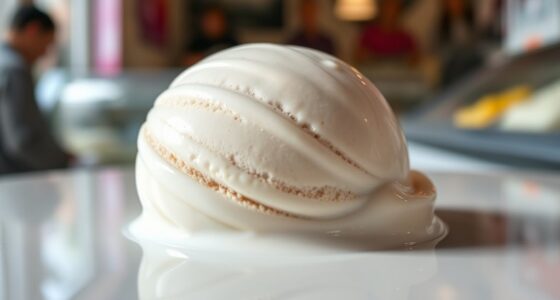
Cold temperatures can also influence sensory adaptation, which is your body’s way of adjusting to ongoing stimuli. When you eat something frozen or chilled, your taste buds and olfactory receptors become less sensitive over time. This adaptation means the initial burst of flavor you experience may fade quickly, leaving behind a more subdued sensation. That’s why ice cream, for example, initially hits your palate with sweetness and richness, but as it melts and warms slightly, your senses start to pick up more nuanced flavors. Conversely, colder foods tend to suppress the intensity of certain flavor molecules, especially those responsible for sweetness or bitterness, leading to a different perception overall. Additionally, temperature-dependent flavor perception plays a key role in how we experience taste, as it influences the activity of flavor molecules and sensory receptors. Understanding how temperature affects flavor molecules helps clarify why these changes occur and how they impact our sensory experience.
Cold foods reduce sensory sensitivity over time, making flavors fade and creating a subtler, less intense taste experience.
Flavor molecules are highly sensitive to temperature changes. When frozen, their movement slows down considerably, reducing their ability to bind with taste receptors on your tongue. This slowdown means that the flavor profile you perceive at cold temperatures is often less vibrant, which is why cold foods can taste bland or dull compared to their warm counterparts. Additionally, since aroma compounds are less volatile in the cold, your sense of smell plays a smaller role in flavor perception when foods are icy or frozen, making taste seem more muted and less layered. Moreover, the interaction between temperature and aroma release affects how we perceive the overall flavor profile of cold foods. Your brain processes these changes by adjusting how it interprets signals from your taste buds and nose. As sensory adaptation occurs, your perception of flavors shifts, often making cold foods seem less intense but sometimes highlighting different qualities, like creaminess or freshness. This is why certain foods taste different when cold—your sensory receptors respond differently, and your brain recalibrates its expectations. Fundamentally, freezing tempers the activity of flavor molecules and alters sensory adaptation, creating a unique and often subdued taste experience. Furthermore, understanding the impact of temperature on flavor perception helps explain why cold foods taste different—and sometimes less flavorful—than warm ones.

Alpha Grillers Instant Read Meat Thermometer Digital, Cooking, Food, Grill
- Fast Temperature Reading: Responds in 1-2 seconds with high accuracy
- Versatile Cooking Tool: Suitable for meats, liquids, frying, and candy
- Easy to Read Display: Bright blue backlight for clear visibility
As an affiliate, we earn on qualifying purchases.
As an affiliate, we earn on qualifying purchases.
Frequently Asked Questions
Can Freezing Alter the Nutritional Value of Food Flavors?
Freezing can slightly impact the flavor retention of foods, but it generally preserves their nutritional stability well. When you freeze food properly, you prevent spoilage and nutrient loss, maintaining most vitamins and minerals. However, improper freezing or thawing can cause flavor changes and nutrient degradation. So, while freezing helps keep food nutritious and flavorful, follow best practices to guarantee maximum flavor retention and nutritional stability.
How Does Freezing Affect the Aroma Molecules in Food?
Imagine opening a frosted jar; the cold locks in aroma molecules, reducing aroma compound volatility. Freezing stabilizes flavor compounds, preventing them from escaping easily. As a result, the food’s aroma becomes muted, like a whisper trapped beneath ice. When thawed, these molecules regain their freedom, restoring the vibrant scent. Freezing consequently acts as a temporary pause, preserving aroma molecule stability and keeping flavor profiles fresh until you’re ready to enjoy them.
Do Different Flavors React Differently to Freezing Temperatures?
Different flavors react uniquely to freezing temperatures. You’ll notice some flavors, like berries, maintain their intensity, while others, such as delicate herbs, may lose their vibrancy. Freezing can cause texture alteration, making certain foods feel mushy or icy, which impacts how you perceive flavor intensity. This variation occurs because some compounds freeze more easily or are more sensitive to temperature, affecting both taste and texture during storage.
How Long Should Food Be Frozen to Change Flavor Perception?
You’ll notice flavor perception changes after about one to several months of freezing. During this time, flavor intensity can diminish as aromas escape, and texture alteration may occur, making foods less appealing. The longer you freeze, the more these changes compound, so for ideal flavor, aim to consume frozen foods within a few months. Coincidentally, shorter freezing times better preserve both flavor and texture, ensuring your food tastes fresher when eaten.
Can Freezer Burn Impact Flavor Perception After Freezing?
Freezer burn can definitely impact your flavor perception after freezing. Ice crystal formation causes dehydration and damage to the food’s surface, leading to flavor diffusion loss. This results in a dry, off-taste and alters the original flavor profile. When you notice freezer burn, it’s best to trim away affected areas, as the damaged surface affects how flavors are perceived, making the food taste less fresh and vibrant.
Conclusion
As you venture into the icy domain of freezing temperatures, think of your senses as a delicate garden, where each flavor is a blooming flower. Cold acts like a gentle frost, pausing the bloom, hiding the true essence beneath a layer of ice. But remember, just as spring awakens a garden, warming reveals the vibrant colors and rich scents you’ve overlooked. Embrace temperature’s role, and reveal the full symphony of flavors waiting to be discovered beneath the frost.