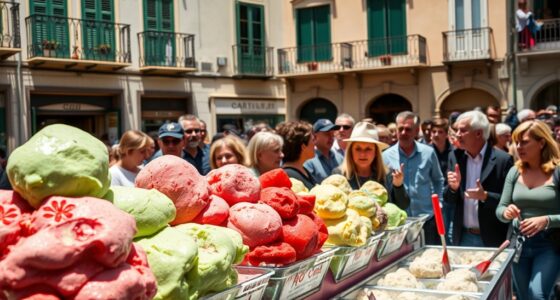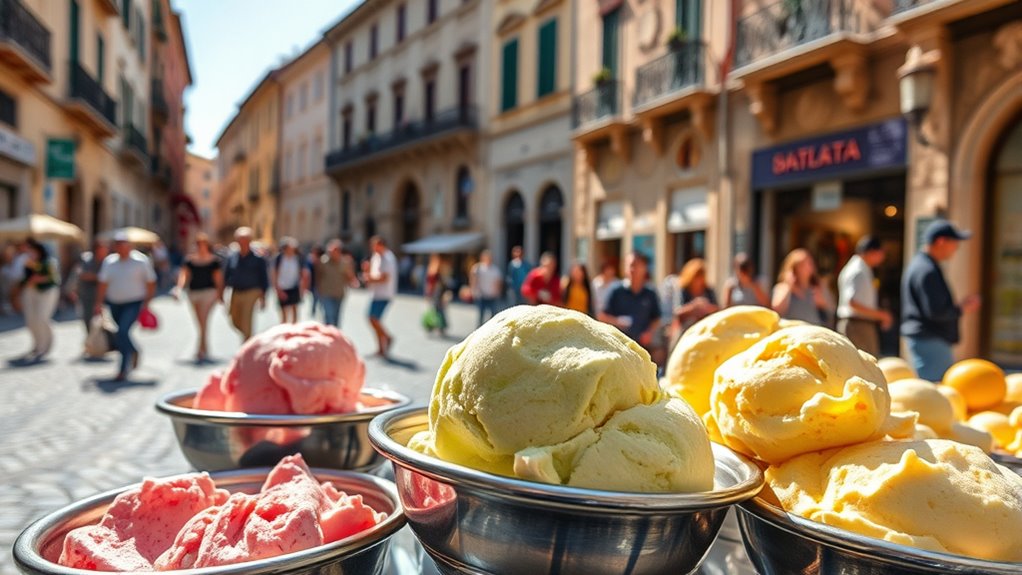

Gelato is a true symbol of Italy’s culture, reflecting its history, traditions, and regional diversity. When you enjoy a scoop, you connect with centuries of craftsmanship, local ingredients, and community spirit. Each region offers unique flavors that showcase Italy’s rich culinary heritage. Sharing gelato with others emphasizes social bonds, turning it into more than just a dessert. If you continue exploring, you’ll uncover how gelato embodies Italy’s pride and cultural identity in every bite.

Get baking supplies delivered free — and shop member deals
- Fast, free delivery on millions of items
- Access to Prime Big Deal Days deals on October 6–7
- Prime Video, Amazon Music and more included
Key Takeaways
- Gelato reflects Italy’s rich culinary heritage, showcasing regional flavors and traditional craftsmanship.
- It symbolizes Italian pride, artistry, and the preservation of centuries-old techniques.
- Gelato fosters social bonding and community through shared experiences in local gelaterias.
- Regional diversity in flavors highlights Italy’s agricultural traditions and local ingredients.
- Serving and enjoying gelato is a cultural ritual that embodies Italy’s love for beauty, flavor, and social connection.

Gelato isn’t just a delicious treat; it’s a vibrant expression of culture that reflects the history, traditions, and artistry of its place of origin. When you indulge in a scoop of gelato, you’re connecting with centuries of Italian heritage. The gelato traditions have been passed down through generations, shaping the way Italians enjoy and celebrate this iconic dessert. These traditions aren’t just about flavor—they embody a sense of community, artistry, and pride. From small family-run gelaterias to bustling piazzas, gelato is woven into the daily life and social fabric of Italy. Its cultural significance goes beyond mere taste; it’s a symbol of Italian craftsmanship and a reflection of regional identities. Each region boasts its own unique flavors and techniques, showcasing local ingredients and culinary history. For example, Sicily’s pistachio gelato highlights the island’s famous nut production, while Tuscany’s hints of honey and olive oil showcase its agricultural bounty. This regional diversity underscores the importance of gelato as a cultural marker, celebrating Italy’s rich local traditions.
You’ll notice that in Italy, the act of eating gelato often takes on a social dimension. It’s common to see friends and families gather at gelaterias, sharing stories over scoops of colorful flavors. This communal aspect emphasizes the cultural significance of gelato, making it more than just a dessert—it’s a shared experience. The artistry involved in making gelato also contributes to its cultural value. Skilled artisans master techniques that have been refined over centuries, ensuring each batch maintains authenticity and quality. You might even notice how the texture and temperature are carefully controlled to deliver the perfect scoop, a tribute to Italy’s dedication to culinary excellence. The pride Italians take in their gelato is evident in how they preserve traditional methods while occasionally innovating with new flavors. This balance of tradition and creativity keeps gelato a living part of Italy’s cultural identity. Additionally, understanding the culinary history behind gelato reveals how it has evolved while still maintaining its traditional roots.
Ultimately, gelato serves as a delicious reminder of Italy’s cultural significance. It’s more than just a sweet treat; it’s a symbol of tradition, craftsmanship, and regional pride. When you enjoy gelato, you’re participating in a centuries-old cultural practice that connects people and celebrates Italy’s rich culinary history. It’s a national symbol that embodies Italy’s love for beauty, flavor, and community—making every scoop a small but meaningful act of cultural expression.
As an affiliate, we earn on qualifying purchases.
Frequently Asked Questions
How Is Traditional Gelato Made Differently From Ice Cream?
Traditional gelato differs from ice cream through its methods and ingredients. You make gelato with traditional methods by using more milk and less cream, which results in a denser, creamier texture. You also incorporate fewer eggs and churn it at a slower speed, preventing over-aeration. These ingredient differences and techniques create gelato’s rich flavor and smooth consistency, setting it apart from regular ice cream.
What Are the Most Popular Regional Gelato Flavors in Italy?
You’ll find that popular regional gelato flavors in Italy reflect local ingredient traditions and regional ingredient variations. In Tuscany, you might enjoy rich chestnut or almond gelato, while Sicily offers pistachio and lemon flavors influenced by citrus groves. In Venice, you’ll find unique flavors like saffron or rose. These regional variations showcase Italy’s diverse ingredient traditions, making each area’s gelato distinct and delicious.
How Has Gelato Influenced Italian Tourism and Economy?
Imagine gelato as Italy’s sweet ambassador, drawing travelers like moths to a flame. You see how gelato marketing transforms local shops into tourism hotspots, boosting the economy. Every scoop shared creates a connection, encouraging visitors to explore more. Your experience with gelato fuels Italy’s reputation, making it a must-visit destination. Its influence extends beyond taste, enriching local culture and economy through vibrant, irresistible gelato attractions.
Are There Any Specific Festivals Celebrating Gelato in Italy?
Yes, you’ll find gelato festivals and regional celebrations across Italy. During these events, you can enjoy tastings, watch live demonstrations, and learn about traditional flavors. Popular festivals like the Gelato Festival in Florence and regional celebrations in Sicily highlight local craftsmanship and ingredients. These festivities invite you to experience Italy’s rich gelato culture firsthand, making them a delicious way to celebrate Italy’s beloved frozen treat.
How Does Gelato Reflect Italy’s Regional Culinary Diversity?
You see how gelato reflects Italy’s regional culinary diversity through its unique gelato art and regional ingredients. In the North, you find flavors like hazelnut and chestnut, while in the South, citrus and pistachio dominate. Each area uses local ingredients, showcasing their traditions. This regional variation highlights Italy’s rich food culture, making gelato a delicious expression of local identity and craftsmanship across the country.
Conclusion
So, next time you savor a scoop of gelato, remember you’re tasting more than just a dessert—you’re experiencing Italy’s soul, its history, and its vibrant culture. It’s like holding a piece of the Renaissance in your hand, or a slice of La Dolce Vita. Gelato isn’t just food; it’s a timeless symbol of Italy’s passion, art, and tradition, connecting centuries of history with your modern-day moment. Bellissimo, isn’t it?
Halloween Picks
halloween
As an affiliate, we earn on qualifying purchases.