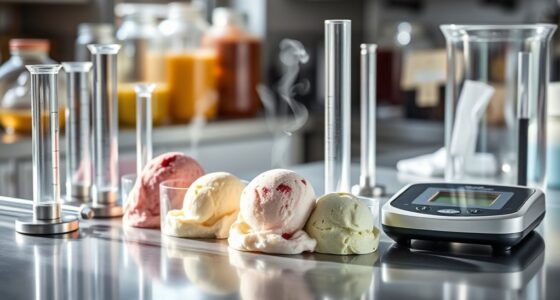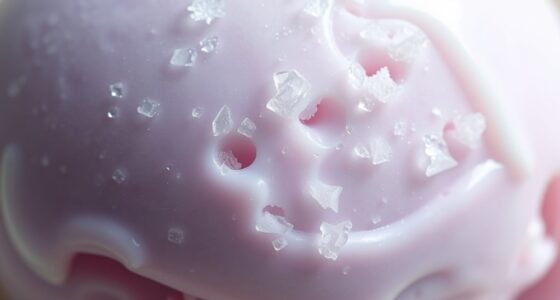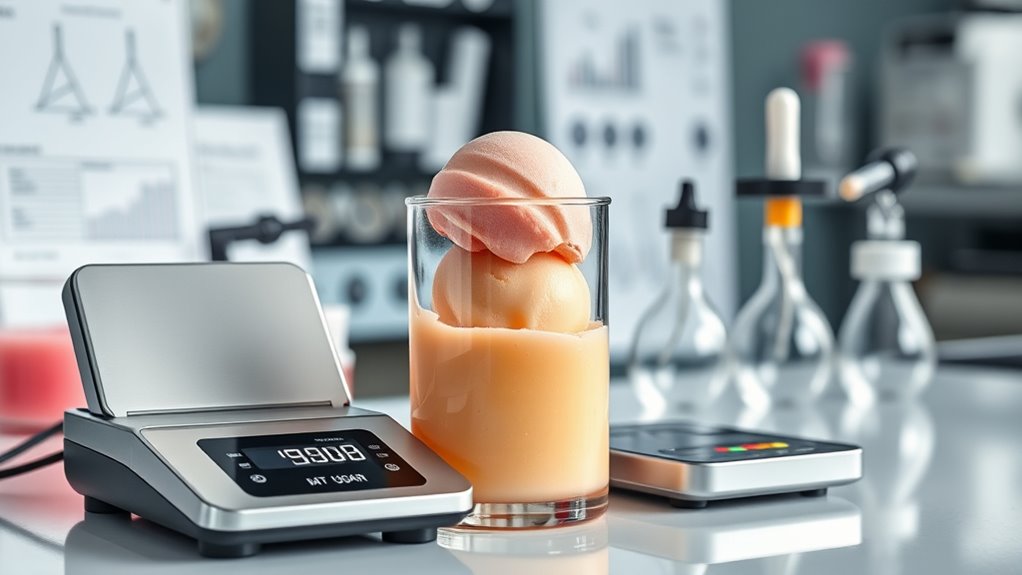

To master advanced gelato balancing, you need to precisely calculate and adjust sugar and fat ratios. Focus on selecting the right type and amount of sugars to control crystallization and avoid graininess while ensuring enough sweetness for flavor and proper freezing. Simultaneously, optimize fat emulsification for a smooth, velvety texture. Fine-tuning these components enhances creaminess and prevents icy or greasy results. Continue exploring these techniques to perfect your gelato craft.
Key Takeaways
- Use refractometers to measure total soluble solids, ensuring optimal sugar concentration for texture and freezing point control.
- Calculate precise sugar ratios (sucrose, dextrose, glucose syrup) to prevent large crystal formation and achieve smoothness.
- Balance fat content and emulsification to ensure uniform distribution, preventing separation and enhancing creaminess.
- Adjust sugar and fat levels based on desired firmness, sweetness, and mouthfeel, considering effects on ice crystal size.
- Employ emulsification tests and calculations to optimize fat droplet stability, ensuring a velvety, consistent gelato texture.
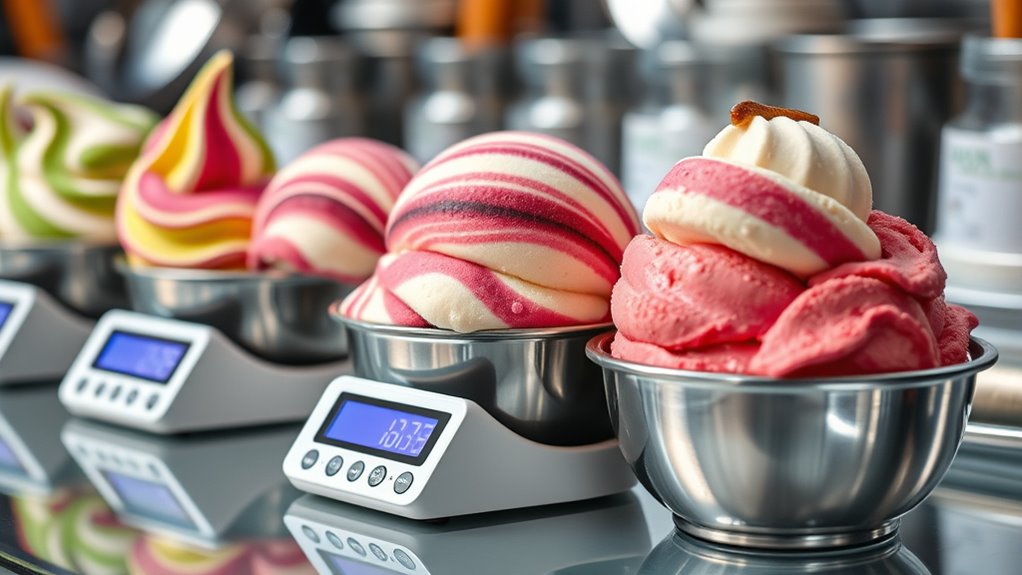
Have you ever wondered how expert gelato makers achieve that perfectly smooth and creamy texture? It all comes down to understanding the delicate balance of sugars and fats in the recipe. When crafting gelato, controlling sugar crystallization is essential. Too much sugar, or the wrong type, can lead to unwanted ice crystal formation, making your gelato grainy rather than silky. To prevent this, you need to carefully select and measure your sugars, such as sucrose, dextrose, or glucose syrup, which influence crystallization. These sugars interfere with ice crystal growth by lowering the freezing point and disrupting the formation of large crystals. The goal is to keep the ice crystals tiny, which you can achieve by adjusting sugar levels precisely. This not only improves texture but also enhances flavor perception, as sweeter components tend to mask off-flavors and add richness.
Alongside sugar management, fat emulsification plays a *crucial* role in achieving smoothness. Gelato typically contains less fat than traditional ice cream, but that doesn’t mean fat isn’t *vital*. Proper emulsification of fats ensures a uniform distribution throughout the mixture, preventing the separation of fats and liquids during freezing. When fats emulsify well, they form tiny droplets stabilized by proteins and emulsifiers, which contributes to the gelato’s velvety mouthfeel. This process allows the fat to coat the taste buds evenly, delivering a consistent flavor experience. Achieving good fat emulsification involves selecting the right fats—like milk fats, cream, or added emulsifiers—and blending them thoroughly into your base. The emulsification process impacts not just texture but also how flavors are carried and released during consumption.
In practice, balancing sugars and fats involves precise calculations and understanding how each component interacts during freezing. Too much sugar can hinder freezing and cause a slushy consistency, while too little can result in a hard, icy texture. Similarly, improper fat emulsification might lead to a greasy or gritty mouthfeel. To optimize your gelato, start with a standard formulation and then tweak the sugar and fat ratios based on your desired outcome. Using tools like refractometers to measure sugar content or emulsion tests can help you fine-tune your process. Remember, the key is maintaining that perfect harmony—where sugar inhibits crystallization without over-sweetening, and fats are emulsified enough to deliver that signature smooth, creamy finish. Mastering these calculations empowers you to craft gelato that’s not just delicious but also impeccably textured.
refractometer for sugar measurement
As an affiliate, we earn on qualifying purchases.
As an affiliate, we earn on qualifying purchases.
Frequently Asked Questions
How Does Humidity Affect Gelato Sugar and Fat Calculations?
Humidity impact can substantially affect your gelato sugar and fat calculations. High humidity can cause moisture absorption, leading to ingredient instability and altering the intended balance of sugars and fats. This means you might need to adjust your recipes, reducing added sugars or fats to compensate for extra moisture. Monitoring humidity levels helps you maintain consistency, ensuring your gelato’s texture and flavor stay perfect despite environmental changes.
Can Alternative Sweeteners Be Used Without Disrupting Balance?
Yes, you can use natural sweeteners without compromising the balance, but you should consider their flavor impact. Natural sweeteners like honey, agave, or maple syrup have different sweetness levels and moisture content, which can alter the gelato’s texture and flavor. Adjust the sugar and fat ratios accordingly, and taste test your base to ensure the final product maintains its desired consistency and flavor profile.
What’s the Ideal Sugar-To-Fat Ratio for Vegan Gelato?
Think of sugar and fat as dance partners in your vegan gelato—finding perfect harmony is key. The ideal sugar-to-fat ratio generally hovers around 1:1 to 1.5:1 for vegan formulations, ensuring smooth texture and rich flavor without sacrificing creaminess. Keep in mind, balancing these ingredients creates that sweet spot where your gelato feels indulgent yet perfectly structured, delighting every spoonful with that irresistible sugar-fat harmony.
How Do Different Milk Types Influence Sugar and Fat Adjustments?
Different milk types influence your sugar and fat adjustments because of their unique milk composition and fat content. For example, coconut milk adds more fat, so you might reduce added fats or sugars, while almond milk has less fat, requiring different balancing. You need to account for these variations to achieve the desired creaminess and flavor. Adjusting your recipe based on milk composition helps make certain a perfect gelato texture and taste.
Are There Specific Considerations for Alcohol-Infused Gelato Recipes?
When making alcohol-infused gelato, you should consider alcohol flavor enhancement and alcohol content regulation. Alcohol can affect texture and freezing point, so you might need to reduce sugars or adjust fats to maintain creaminess. Keep the alcohol content within safe limits for consistency and taste, and remember that higher alcohol levels may require more stabilizers. Always test small batches to perfect balancing the flavors and texture.
Conclusion
Now that you’ve mastered balancing sugars and fats, you’re well on your way to creating gelato that’s both rich and perfectly textured. Remember, even the most seasoned artisans faced their “Eureka!” moments in the kitchen. With your newfound skills, you can craft flavors that wow your friends and family—no need to call in the cavalry. Keep experimenting, stay patient, and soon, you’ll be serving gelato that’s as legendary as a tale from the Renaissance.