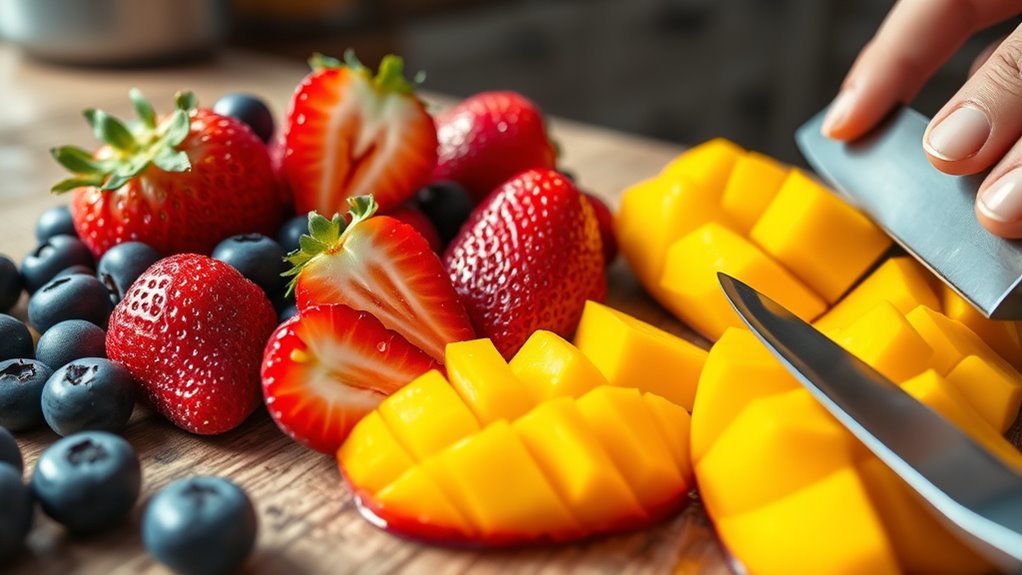

When preparing fresh fruits for gelato, choose ripe, firm fruit with vibrant color and aroma, and handle gently to avoid bruising. Wash thoroughly under cold water and dry completely before chopping into uniform pieces for even blending. Store soft fruits in the refrigerator or freeze overripe fruits for later use. Proper selection, handling, and storage guarantee the fruit’s natural sweetness and flavor shine through in your gelato. To discover more tips, continue exploring how to perfect your ingredient prep.
Key Takeaways
- Gently wash fruits under cold water and dry thoroughly to remove dirt without adding excess moisture.
- Peel, pit, or chop fruits into uniform pieces for even blending and optimal texture.
- Use ripe, seasonal fruits with vibrant color and aroma for the best natural flavor.
- Handle delicate fruits carefully to prevent bruising and preserve quality.
- Freeze or refrigerate fruits appropriately to maintain freshness before incorporating into gelato.
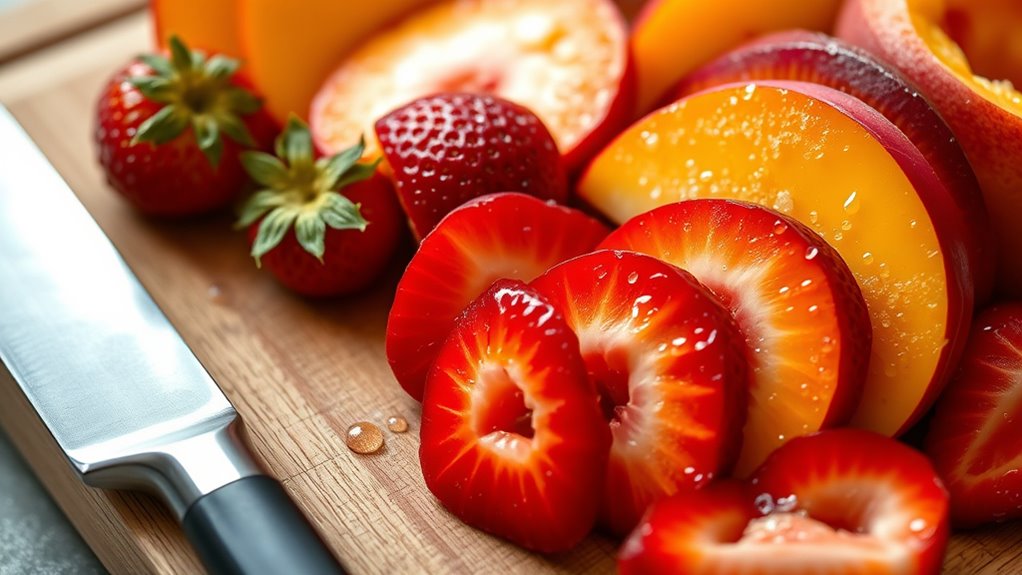
Have you ever wondered why some recipes turn out perfectly while others fall flat? When it comes to making vibrant, flavorful gelato with fresh fruits, your success hinges on the quality of your ingredients and how you handle them. Fruit selection is vital—choosing ripe, seasonal fruits ensures your gelato will have the natural sweetness and bright flavor you desire. Look for fruits that are firm but yield slightly to gentle pressure, with vibrant color and a fresh aroma. Avoid fruits with bruises, mold, or overly soft spots, as these can compromise the texture and taste of your final product. The better the quality of your fruit, the less you’ll need to add extra sugar or flavor enhancers, resulting in a purer, more authentic gelato experience.
Once you’ve picked the perfect fruits, proper storage techniques become essential. Fresh fruits are highly perishable, so storing them correctly preserves their flavor and prevents spoilage. Keep berries, grapes, and other soft fruits refrigerated at about 32°F (0°C). Place them in breathable containers or perforated bags to allow airflow and prevent moisture buildup, which can lead to mold. For fruits like peaches, nectarines, or apricots, store them at room temperature until they’re ripe, then move them to the fridge. Ripe fruits are more delicate, so avoid stacking them heavily to prevent bruising. If you need to store fruits for a longer period, consider freezing them—just wash, dry, and spread them on a tray before transferring to airtight containers or vacuum-sealed bags. Proper freezing prevents ice crystals from forming in the flesh, which can affect texture in your gelato. Additionally, understanding the growth process of your fruits can help determine the best harvest time to maximize flavor and nutritional value.
Handling your fruits with care during prep is equally important. Wash them gently under cold running water to remove dirt and pesticides, then dry thoroughly to avoid adding excess water to your mixture. Depending on your recipe, you may need to peel, pit, or chop the fruits into uniform pieces to ensure even blending and consistent flavor. Overripe or overly soft fruits should be used promptly to prevent fermentation or spoilage, but they can still be perfect for gelato, where texture is less critical than flavor. Remember, the fresher and better stored your fruits are, the more vibrant and natural your gelato will taste. By selecting high-quality fruits and mastering storage techniques, you set a strong foundation for creating a luscious, memorable dessert that highlights the true essence of fresh fruit.
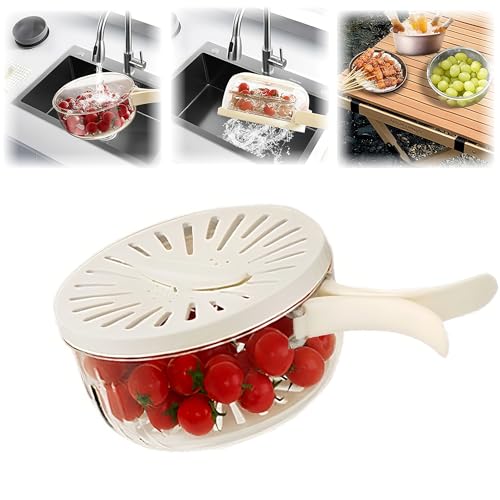
Multifunctional Fruit Washing Bowl with Strainer,2 in 1 Drain basket and Fruit Strainer Container with Lid,Fruit Washer Bowl for Kitchen,Fridge,Picnic & Camping(1QT)
- Efficient Water Drainage: Fast draining to keep fruits crisp
- Convenient Hidden Handle: Easy grip for lifting and rinsing
- Multi-Functional Design: Use as a strainer, bowl, or storage container
As an affiliate, we earn on qualifying purchases.
As an affiliate, we earn on qualifying purchases.
Frequently Asked Questions
How Do I Prevent Fruit From Browning in Gelato?
To prevent fruit from browning in gelato, focus on oxidation prevention by adding a bit of lemon juice or ascorbic acid to your fruit. These acids help preserve color and slow down browning. Make sure to work quickly when preparing and incorporate the fruit into your gelato promptly. Proper storage in airtight containers also helps maintain vibrant color and freshness, ensuring your gelato looks as appetizing as it tastes.
Which Fruits Are Best for Making Gelato?
Just as timing is everything, choosing the right fruits makes your gelato exceptional. You’ll want to pick seasonal fruit, like berries in summer or stone fruits in fall, for ideal flavor and texture. Use flavor pairing strategies, combining fruits that complement each other’s sweetness and acidity. Strawberries, peaches, and blueberries are excellent choices because they blend well and hold their color, ensuring your gelato is vibrant and delicious.
How Do I Adjust Sweetness for Different Fruits?
To adjust sweetness for different fruits, start by considering their ripening stage, as riper fruits are naturally sweeter. Taste the fruit first, then modify sugar ratios accordingly—add more sugar for less ripe or tart fruits, and reduce it for very ripe ones. Always keep in mind that balancing ripening and sugar ratios guarantees your gelato achieves the perfect sweetness without overpowering the fruit’s natural flavor.
Can I Use Frozen Fruits Instead of Fresh?
Yes, you can use frozen fruits instead of fresh, but keep in mind that their texture and flavor intensity may differ. Frozen fruits tend to be softer and may release more water, which can affect your gelato’s texture. To get the best results, thaw and drain excess liquid thoroughly, and consider adjusting sweeteners since frozen fruits can be less vibrant in flavor. This way, your gelato stays creamy and delicious.
How Long Should I Let Fruit Sit Before Using?
You should let the fruit sit for about 15-30 minutes after preparation to enhance flavor infusion. This allows the fruit’s natural juices to meld with any added ingredients, boosting overall flavor. During this time, gently mash or stir the fruit to help release more aroma and taste. Proper fruit preparation guarantees your gelato has a vibrant, well-rounded flavor, making it a delightful treat for everyone.
Conclusion
Now that you know how to prep fresh fruits for gelato, think of your ingredients as the vibrant colors in a painter’s palette. Each piece adds its own unique hue to create a masterpiece of flavor and texture. When you handle your ingredients with care and creativity, you’re crafting a delicious work of art that will delight everyone’s senses. So, go ahead—dive in and let your culinary imagination run wild!